Out of India Theory is a Debate which looks increasingly clinched in its favor. Aryan Invasion Theory and Aryan Migration Theory are already looking for a place in the graveyard.
I think nothing in the world is going to shake the pillars of entire nations as a clinched Out-of-India Theory. Looking for roots and identity is one of the most basic human trait.
Till now with the various models for the Urheimat, the Original Home, which pointed to South Russia, or Anatolia, etc. were models which were mapping the homes of European languages to dead civilizations - somewhere in Eurasia. But Out-of-India Theory changes all that. Now the Urheimat doesn't point to dead civilizations to a live and kicking civilization - the Indian Civilization, with a rich ancient heritage, much of it birthed before the migrations took place.
The Out-of-India Theory says that Indians seeded many civilizations in Eurasia with our knowledge, language and to some extent with our genes as well.
The repercussions of Out-of-India Theory are at civilizational level.
Nothing would boost the self-image of Indians like a universal acknowledgement of OIT. And we know self-image of Indians has been a major culprit in the way we have approached our strategic discussions.
Why Discuss it here in Strategic Forum?
Because the repercussions are going to be so widespread, that it would be having strategic consequences.
This is a theory we need to embrace and we need to project it prominently. The General Discussion Forum would not do justice to its immense importance.
What comes here?
Everything which contributes to its validation, everything concerned with its dissemination, and everything around its consequences.
It is how we are projecting Indian Civilization outwards! It is an Indian Interest.
I hope the topic can stay in the Strategic Forum. I thank everybody for contributing to it.
Out-of-India - From Theory to Truth
Re: Out-of-India - From Theory to Truth
Please list other organizations and academic location which have also started to discuss this debate and have started to demolish AIT and AMT
Re: Out-of-India - From Theory to Truth
I agree with your basic premise about changing the game and image-boosting for Indians. There have been AIT-related threads on BRF before, and it came to the point where AIT discussions were strongly discouraged (don't want to use the word "banned").
AIT is on its deathbed, that much is evident. It hasn't been formally acknowledged by the western world, and I don't think it ever will be, unless Indians aggressively push its acknowledgment - for obvious reasons. I certainly hope Indian textbooks at least have stopped teaching it as "history," though going by the track record of the education system in India, it doesn't seem likely.
However, I haven't been following this AIT vs. OIT debate much recently. Do you have any references to justify the first statement below? (The second statement is true, certainly).
Just trying to learn the latest.
Thanks,
Sudarshan
AIT is on its deathbed, that much is evident. It hasn't been formally acknowledged by the western world, and I don't think it ever will be, unless Indians aggressively push its acknowledgment - for obvious reasons. I certainly hope Indian textbooks at least have stopped teaching it as "history," though going by the track record of the education system in India, it doesn't seem likely.
However, I haven't been following this AIT vs. OIT debate much recently. Do you have any references to justify the first statement below? (The second statement is true, certainly).
Just trying to learn the latest.
Thanks,
Sudarshan
RajeshA wrote:Out of India Theory is a Debate which looks increasingly clinched in its favor. Aryan Invasion Theory and Aryan Migration Theory are already looking for a place in the graveyard.
-
member_22872
- BRFite
- Posts: 1873
- Joined: 11 Aug 2016 06:14
Re: Out-of-India - From Theory to Truth
RajeshA garu, since GDF is restricted, someone should post relevant posts from there back to this thread?
Re: Out-of-India - From Theory to Truth
Vedic Chronology & Linguistics
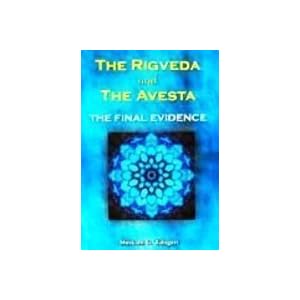
Publication Date: January 2, 2008
X-Posted from GDF
ManishH ji,
it seems Shrikant G. Talageri has done extensive work in comparing Rig-Veda, Avesta and Mitanni Texts in his book: Rigveda and the Avesta: The Final Evidence.
Here is from Koenraad Elst's Review of the Book
Review By Virendra Parekh
04 Jan 2009
Demolished once for all: Aryan Invasion Theory: Vijayvaani
Review by S. Kalyanraman: Sarasvati Research Centre
Hindu civilizational continuum-- linguistic, textual and limitedarchaeological evidences
-------------------------------------------------------------------
Then there was a to and fro between this chap Arnaud and Talageri
Here a critical review of the book by Arnaud Fournet.
A Detailed Reply to a Joker’s “Review” of my Book: Talageri
Arnaud's Reply to Talageri
More Jokes from Fournet: Talageri (Final Response from Talageri)
-------------------------------------------------------------------
The Indo-Aryan Controversy
Evidence and Inference in Indian History
Edited by Edwin F. Bryant and Laurie L. Patton
Page 345: Textual Evidence
--- The Rigveda as Source of Indo-European History
--- By Srikant G. Talageri
--------------------------------------------------------------------
Publication Date: January 2, 2008
X-Posted from GDF
ManishH ji,
it seems Shrikant G. Talageri has done extensive work in comparing Rig-Veda, Avesta and Mitanni Texts in his book: Rigveda and the Avesta: The Final Evidence.
I myself am uninitiated in linguistics, nor have I read the 3rd edition, so I can simply offer some conclusions others have arrived at.ManishH wrote:Rajeshji, I have read the 2nd edition, but not the 3rd edition. If you have any specific arguments from the book, please do bring up for discussion. I'll be glad to learn from that.
Here is from Koenraad Elst's Review of the Book
-------------------------------------------------------------------Koenraad Elst wrote:In the present book, Talageri strengthens his thesis with a lot of new evidence, and refines it considerably. The master key for discerning historical expansions and migrations is the internal chronology of the Rg-Veda. Basing himself on two centuries of Western scholarship, from 19th-century German Veda scholar Oldenburg to present-day AIT champion Prof. Michael Witzel, Talageri compares the contents of the oldest layer, largely coinciding with books 6, 3 and 7; of the middle layer, books 2 and 4; and the youngest layer, comprising books 1, 5, 8, 9 and 10. Covering every verse and every instance of every category considered, and comparing the three periods, he finds a shifting focus in the names of animals, plants, rivers, landscape features, technology, ancestors, ethnic groups, and in personal name types and verse forms.
The result is of such clarity and consistency that most scholars who have been working in this field will feel envy and embarrassment at never having noticed the contours of the scenario before. It is this: the old layer was indubitably composed in the Yamuna/Sarawati region, which was to remain the centre of gravity of Vedic culture; the middle layer’s horizon expands westwards as far as the Indus; while the youngest parts are also familiar with Afghanistan. This is exactly the opposite of what the AIT predicts. In an invasionist scenario, the oldest layer would obviously be based in Afghanistan and be as yet unfamiliar with India’s interior, which would then only be settled in the younger period.
Another spectacular finding is that the early Avesta, involving Zarathustra, coincides in time with the youngest period of the Rigveda. The material and religious culture, along with the vocabulary and the name-types, allow us to link a number of datable extra-Indian connections to the youngest layer of the Rigveda. The remnants of Indo-Aryan vocabulary in the West-Asian Kassite (17th BC) and Mitanni (15th BC) culture, bequeathed by Indo-Aryan-speaking emigrant groups of at least several generations earlier, belong to the youngest period. This implies that the Rigveda must have been completed by ca. 2000 BC.
Another emigrant group is the one whose settlement has been dug up in Sintashta, on the eastern slopes of the Ural mountains in Russia. This is where the oldest horse-drawn chariots have been found, dated to ca. 2000 BC. The burials show a number of ritual features which Witzel has connected to the Rigveda in a bid to buttress his thesis that the Sintashta people were proto-Indo-Aryans on the way to India. But of each of these features, including the fabled horse sacrifice, Talageri shows that they are typical of the late period of the Rigveda, unattested in the older periods. So, more likely, the Sintashta people were part of a succession of small westward emigrations (small by India’s demographic standards but highly noticeable in the thinly-populated countries of settlement) around the end of the period of Rigvedic composition. This time seems to coincide with the end of the urban Harappan period, probably due to desiccation, when north-western India became less capable of supporting its dense population.
An Indo-Aryan presence in Russia was noticed by the ancient Greeks (e.g. the Sindoi in the Crimea) and remains visible in dozens of loanwords in the Uralic languages. The latter too have often been presented as testimony of the Indo-Aryans’ stay among the Uralic peoples while on their way to India. But from the unidirectional pattern of borrowing, with not a single Uralic loan in Indo-Aryan, Talageri shows that this is impossible. On the contrary, the pattern fits the opposite scenario: the Indo-Aryan loans in Uralic, like those in Mitanni-Hurrian and in Kassite, were the gift of emigrant groups from the Indo-Aryan heartland, which was India. Here, Talageri has made up for his lack of knowledge of the Uralic languages with a penetrating logical analysis of the relevant findings of other, AIT-bound scholars. Indeed, logic is where this non-specialist outshines all the specialists and manages to use their own data in support of conclusions opposite to the ones they profess.
Review By Virendra Parekh
04 Jan 2009
Demolished once for all: Aryan Invasion Theory: Vijayvaani
-------------------------------------------------------------------Talageri’s point of departure is the internal chronology of the Rigveda. The Rigveda, the oldest book in the world and the most primary source of knowledge about ancient India, consists of 1028 hymns divided in ten Books, or Mandalas. The composition of these hymns, their collation and compilation in the present form, must have been a gradual process stretching over a vast geographical expanse, spanning several centuries if not millennia, and involving generations of seers, kings and other actors.
The Rigveda itself provides strong and massive internal evidence that all of it was not composed at the same time. There is general agreement among scholars that Books II to VII, known as family books, are older, whereas Books I, VIII, IX and X came later. The family books are composed either entirely (as in the case of Book VI) or almost entirely (as in Books III and VII) by seers of a single family; or entirely (as in Books IV and II) by the members of a single family with a few hymns composed by a family related to them; and they use simple meters.
But among the family books, Book V is regarded as the latest. Descendants of composers of other family books are composers of hymns in this Book; and although it belongs to the Atri family, it has composers from as many as six families. In meters, it uses mainly four-line Anushtup in preference to the three-line Gayatri which is more prominent in older family books; the five-line Pankti meter makes its appearance here. These characteristics become stronger in later Books. Book I, VIII, IX and X, for instance, each has hymns composed by seers from many families, and uses not only the five-line Pankti, but also the six-line Mahapankti and the seven-line Sakvari. And personalities and events of the earlier Books are referred to as belonging to the distant past and so on.
In ‘The Rigveda: A Historical Analysis,’ Talageri has analysed the internal evidence in great detail and established the detailed chronological order of all ten Books as follows: Books VI, III and VII are the oldest (Early Books), followed by Books II and IV (Middle Books) and then come Books V, I, VIII, IX and X (Late Books) in that order.
However, his argument in the present book is not dependent on this detailed chronology. The generally accepted division by scholars of the ten Books into Old Books (II, III, IV, VI, VII), and Late Books (I, V, VIII, IX and X) is enough to support his argument.
That argument can be simply stated. Rigveda and Avesta have a lot in common—names of people, animals, meters, geography. However, the Early Books of Rigveda have very little in common with Avesta, while the Middle Books have a little more. But it is the Late Books of Rigveda that have a lot in common with Avesta, pointing to a period of contemporary development.
Take just one example. The Early Books have few Iranian names: two related kings (Abhyavartin Cayamana, Kavi Cayamana), one priest (Kavasa) and four tribes (Prthu/Parthava, Parsu/Parsava, Paktha and Bhalanas). All these names occur only in three hymns; none of these names of persons or tribes finds any reference in the Middle or Late Books. The three hymns pertain to the historical battles in the Early period and these names refer to enemy Iranians then located in the eastern and central Punjab. Besides, there is a hymn which mentions a sage Usana and his father Kavi Bhargava who played a very important role in the later mythology built on Indo-Iranian conflicts. All these names have equivalents in the Avesta.
In the Middle Books, we find names of four sages, which are not mentioned at all in the Early Books, but find numerous mentions in the Middle and the Late Books and are referred to in Avesta as well. They are: Turviti, Gotama, Trita and Krsanu; in the Avesta they are called Taurvaeti, Gaotama, Thrita and Keresani. All these personalities are Vedic and pre-Zoroastrian. Taurvaeti in the Avesta is an early figure, the father or the ancestor of Fracya (Yast 13.115). Thrita is specifically mentioned in Yasna 9.10 as an ancient personality belonging to a period far earlier to Pourushaspa, the father of Zarathustra.
But the main case rests on dozens of names and name-elements common to the Rigveda and the Avesta. These Vedic name elements like asva, ayana, rta, rna, atithi, brhad, ratha, syava, sura, and names such as Yama, Krishna, Aptya, Vrsni, Varaha, Vivasvat, Atharvan, Kashyapa have their equivalents in the earliest parts of the Avesta, but they are found exclusively in the Late Books and hymns of the Rigveda, and in later Vedic and Sanskrit texts.
To sum up, the Early and Middle Books have only 8 hymns containing these name-elements common to Avesta, and all eight of these hymns are identified as late or interpolated by ancient text Aitareya Brahmana or by western scholars like Oldenberg. On the other hand, the Late Books have no fewer than 386 hymns containing such name-elements.
Apart from names and name-elements, there is the evidence of the development and use of meters used in various hymns of the different Books. The earliest hymns in the Avesta, the Gathas, composed by Zarathustra, use the six-line Mahapankti meter, which is used only in the Late Books of the Rigveda. On this parameter also, the evidence points to the same conclusion: the common development of the joint Indo-Iranian culture represented by these two sacred books took place in the period of Late Books of Rigveda. The Early and the Middle Books of Rigveda belong to a period which is older than the period of the development of this joint culture.
The next question is: in which area were the Early and the Middle Books composed? Where were the Vedic Aryans living in the period before the development of this joint Indo-Iranian culture?
The geographical evidence of Rigveda is very clear and unambiguous. It shows that the Vedic Aryans, in the period of the Early and the Middle books, were inhabitants of interior parts of India, to the east of river Sarasvati and were only just expanding into and becoming acquainted with areas further west.
The geographical horizon of the Rigveda extends from (at least) western Uttar Pradesh in the east to eastern and southern Afghanistan in the West. Let us divide it in three regions: the eastern region comprising the Sarasvati and areas to its east, mainly modern Haryana and western UP; the western region comprising the Indus and areas to its west, mainly the Northwest Frontier Province of Pakistan, Afghanistan and contiguous areas of southern Central Asia; and the central region comprising Saptasindhu or Punjab between the Sarasvati and Indus.
The eastern region is clearly known to the whole of the Rigveda. Copious references to the rivers such as Sarasvati, Drshadvati, Hariyupiya, Yavyavati, Ashmanvati, Yamuna, Ganga, places such as Ilayaspada, Kikata, and animals such as elephant, buffalo, peacock and spotted deer are scattered all over the Rigveda, but particularly in the Early books.
In sharp contrast, the western region is totally unknown to the Early Books, only very newly familiar to the Middle Books, but quite familiar to the Late Books. The western places (except a solitary reference to Gandharva in a late hymn), animals, lakes and mountains are totally unknown to the Early as well as the Middle Books, and exactly three rivers are mentioned in Book IV, which represents the western-most thrust of the Vedic Aryans in the Middle period.
The late books, on the other hand, are strewn with references to rivers such as Sindhu, Amitabha, Rasa, Svetya, Kubha, Krumu, Gomati, Sarayu and Susoma; places such as Gandhari, mountains such as Arjikya and Mujawat, lakes such as Saryanavat, and animals such as Bactrian camel, Afghan horse, mountain sheep, mountain goat and boar.
Most interesting are the references to the central region—the Saptasindhu or Punjab between Indus and Sarasvati. Very significantly, the Nadi Sukta lists the rivers from the east to the west. Book VI, the oldest book, does not know any of the five rivers of Punjab. The second oldest book, Book III, mentions only the two easternmost rivers—Vipas (Beas) and Sutudri (Sutlej). The third oldest book, Book VII, mentions Parushni (Ravi), the third river from the east, with reference to the Battle of Ten Kings in which the non-Vedic enemies figure as western people of the fourth river Asikni (Chenab). Even the phrase Saptasindhu first appears in the Middle Books.
Significantly, Iranian texts also confirm the movement of the Anu-s (an Aryan clan that later became Iranians) from the east to the west. The first chapter of Vendidad lists 16 holy lands rendered unfit for man by Angra Manyu, the evil spirit of Zend Avesta. The first of these is Airyano Vaejo, bitterly cold and full of snow. If there is doubt that this refers to Kashmir, the designation of one more land as Hapta Hindu, that is Sapta-Sindhu (Punjab), should remove it.
Review by S. Kalyanraman: Sarasvati Research Centre
Hindu civilizational continuum-- linguistic, textual and limitedarchaeological evidences
-------------------------------------------------------------------
Then there was a to and fro between this chap Arnaud and Talageri
Here a critical review of the book by Arnaud Fournet.
A Detailed Reply to a Joker’s “Review” of my Book: Talageri
Arnaud's Reply to Talageri
More Jokes from Fournet: Talageri (Final Response from Talageri)
-------------------------------------------------------------------
The Indo-Aryan Controversy
Evidence and Inference in Indian History
Edited by Edwin F. Bryant and Laurie L. Patton
Page 345: Textual Evidence
--- The Rigveda as Source of Indo-European History
--- By Srikant G. Talageri
--------------------------------------------------------------------
Last edited by RajeshA on 02 May 2012 14:44, edited 1 time in total.
Re: Out-of-India - From Theory to Truth
This is more than 20 years old. We need references to current books and current publications from academia. Please post them
-
member_22872
- BRFite
- Posts: 1873
- Joined: 11 Aug 2016 06:14
Re: Out-of-India - From Theory to Truth
But where should this start in terms of dates? 90k years ago out Africa migration to India and then to the rest of the world as per genetic study carried out by Dr. Stephen Oppenheimer are they relevant to this thread?
http://www.amazon.com/The-Real-Eve-Mode ... 323&sr=8-1
http://www.amazon.com/The-Real-Eve-Mode ... 323&sr=8-1
-
member_22872
- BRFite
- Posts: 1873
- Joined: 11 Aug 2016 06:14
Re: Out-of-India - From Theory to Truth
genetic as well as cultural....mostly genetic
http://www.bradshawfoundation.com/journey/
http://www.bradshawfoundation.com/journey/
Re: Out-of-India - From Theory to Truth
From Koenraad Elst's latest blogpost:
George Thompson as a case study in racist Invasionism
George Thompson as a case study in racist Invasionism
“The debate over whether there ever was an Aryan invasion has raged (and I mean raged) for two decades, and if there had been such evidence for the Vedic people seeing themselves as invaders and others as natives, it would have been plastered all over the affected discussion forums including this one. So no, there is no such evidence.
“Françoise Bader in her textbook of Indo-European linguistics tries to derive ‘Arya’ (the self-reference term of both Iranians and Vedic Indo-Aryans) from ‘alia’, related to Latin/English ‘alien’, in the sense of ‘the foreigners, the invaders’.But even among the Aryan Invasion believers, she never found many takers for this rather oxymoronic explanation of a self-referential term as meaning ‘the others’.
“In the Rg-Veda, the terms ‘Dasa’ and ‘Dasyu’, which are also known in ethnic meanings in Iranian languages, refer without any doubt to Iranians, i.e. fellow Indo-Europeans, whiter than or at least as white as the Vedic people. Not to Mundas or Dravidians. The Rg-Vedic Battle of the Ten Kings and Varshagira Battle (the first on the Ravi banks in West Panjab, the second beyond the Bolan Pass in southern Afghanistan, after the westward expansion rendered possible by Vedic kind Sudas's victory in the first battle), were very definitely between Iranians and Vedic Indo-Aryans. The second of these battles is also alluded to in the younger Avesta, where the same battle leaders are mentioned: Rjashva/Arjasp and Somaka/Humayaka on the Indian side, Vishtaspa/Ishtashva on the Iranian side. RV 1:122:13 mentions Ishtâshva, the Sanskrit form of Iranian "Vishtâspa", well-known as Zarathustra's royal patron: "What can Ishtâshva, Ishtarashmi or any other princes do against those who enjoy the protection (of Mitra and Varuna)?" Thus the interpretation of Sayana and SK Hodiwala, as reported by Shrikant Talageri, The Rigveda, a Historical Analysis, p.215-221, and also followed, at least in the names given, by HH Wilson and KF Geldner in their RV translations. It is a rare treat in studies of ancient literature when a single event is reported in two independent sources, which moreover represent the two opposing parties in the event.
“John, your question for evidence is an eminently good one. When people say, for example, that Krishna, though described as belonging to one of the Vedic ‘five nations’, is called ‘black because he was a non-Aryan indigenous tribal leader’, it is indeed right and necessary to ask them for their evidence."
[...]
This argumentation of mine contains one non-essential mistake, viz. the Vârshâgira Battle took place on the eastern, Indian side of the Bolan pass, not on the Western, Afghan side. But it was a battle between Vedic Indians and Avestan Iranians. Terms like Dâsa, Dasyu and Asura are well-attested in Iranian but nowhere attested in “tribal” languages.
[...]
It remains a fact that Iranian refers a hundred times in a self-referential or at least partially Iranian sense to the terms which the Vedas use to name their enemies. None of the tribal languages, not even the Dravidian languages, do so. They also do not have the so-called deshi (vernacular but not attested in Sanskrit) words for Hindi plant names, which are non-existent in the non-Indian Indo-European languages only because it is no use retaining a word for a (in Europe) non-existent plant. All the Kuipers of this world cannot change that.
Re: Out-of-India - From Theory to Truth
X-post...
nawabs wrote:Another nail in the Aryan coffin
The Aryan theory has gone through many revisions: Historians and archaeologists like A L Basham and Mortimer Wheeler advocated an invasion theory where invaders triumphed over the natives due their military prowess and superior weapons. These invaders originated in Central Asia: one branch migrated to Europe and the other to Iran, eventually reaching India. By the time of historian Romila Thapar, the invasion theory morphed into a migration theory. According to Ms Thapar there is no evidence of large scale invasion, but migrations by Indo-Aryan speakers who bought their language and culture to India.
Though the theory changed, two factors remained constant: the existence of two separate groups (Dravidians and Aryans) and their identification as natives and foreigners. The scholarly consensus is that the Indo-Aryan speakers arrived in North-West India following the decline of the Harappan civilisation. These horse riding migrants introduced Vedic religion and Sanskrit language and culturally transformed a region bigger than ancient Mesopotamia and Egypt combined, non-violently.
Now a new paper published in the American Journal of Human Genetics states that current Indian population is derived from two ancestral populations—the Ancestral North Indians (ANI) and Ancestral South Indians (ASI)—both of which are older than 3500 Years Before Present (YBP). Though this seems to confirm the Aryan-Dravidian divide and the migration which happened after 1900 BCE, the paper actually does the opposite; it refutes the large scale migration version of the Aryan theory.
Researchers led by Mait Metspalu of Evolutionary Biology Group of Estonia studied 600,000 Single Nucleotide Polymorphism (SNP) markers among 30 ethnic groups in India. The human genomes consists of chromosomes, represented by the double helix and specific locations on the chromosome can be identified using markers with the common ones being micro-satellite markers and SNP markers. Among the two, SNP markers are popular for gene fine mapping. The study takes data from existing genetic studies and combines it with new data from North Indian and South Indian population to trace the external influences from Europe.
One of the ancestral components—the ANI—is common not just in South Asia, but also in West Asia and Caucasus while the ASI is limited to South Asia. While this may seem to clearly demarcate the natives and the foreign migrants, it does not. Except for some Astroasiatic tribes and two small Dravidian tribes in Tamil Nadu and Kerala, all other South Indians have more than 40% of the ANI component. This means that everyone except these few groups are not purely native.
The important question then is this: When did the ANI mix with the ASI?. If that period is between 1900 BCE and 1500 BCE, then it would confirm the many versions of Aryan theory in existence right now. When these researchers modeled the data, they could not find any evidence of a dramatic Central Asian migration for this period. So they went back and till about 12500 Years Before Present (YBP) they could not find any evidence. Thus the mixing of the ANI and ASI did not happen 140 generations before as was believed, but probably more than 500 generations back (Each generation is 25 years). The paper explicitly mentions Max Muller’s theory and says that it is hard to find evidence for such a migration following the collapse of the Harappan civilization.
Few years back, researchers working on this project suggested that the ANI emerged 40,000 years back and mixed with the ASI at a later date. So as it stands now, the mixing between the two groups happened some time between 40,000 YBP and 12,500 YBP. So if there is a European component in Indian genes, that event happened much earlier than the decline of the Harappan civilisation and not because of the hypothetical Aryan migration around 1500 BCE.
Going back 12,500 years we have to wonder what event was responsible for this shared ancestry between the ANI and Europeans? Did it happen during the Out of Africa migration phase? Humans reached India first before moving to Europe in which case the European gene pool would be derived from the much diverse South Asian pool. Or was there any other incident much later which was responsible for this?
Coming back to the period following the decline of the Harappan civilisation there are more questions for scholarly head scratching. Even though the ANI-ASI mixture may happened quite earlier, there must have been constant migration of people in both directions which was not large enough to leave a genetic footprint. If you accept that premise, how did this minor trickle of people change the region culturally. If these are the people who bought horses to India, why don’t we see a proliferation of horse bones following this period?
The current models don’t have a convincing explanation for many such questions.
-
member_22872
- BRFite
- Posts: 1873
- Joined: 11 Aug 2016 06:14
Re: Out-of-India - From Theory to Truth
And then, how can we forget Kaushal Ji's work, linking pdf presentation from 2006 I guess:
http://www.indicstudies.us/IRF%20South% ... ion%20.pdf
http://www.indicstudies.us/IRF%20South% ... ion%20.pdf
Re: Out-of-India - From Theory to Truth
I think again this is a primarily racial approach, and that could sidetrack from the main issue -- the origin and locus of the core of Arya civilization.ramana wrote:X-post...nawabs wrote:Another nail in the Aryan coffin
Now a new paper published in the American Journal of Human Genetics states that current Indian population is derived from two ancestral populations—the Ancestral North Indians (ANI) and Ancestral South Indians (ASI)—both of which are older than 3500 Years Before Present (YBP). Though this seems to confirm the Aryan-Dravidian divide and the migration which happened after 1900 BCE, the paper actually does the opposite; it refutes the large scale migration version of the Aryan theory.
AFAIK, Bharatvarsha has always had 3 main racial-cultural "petals" radiating from its core (gurus please correct or add) -
1. uttara-patha: representing the flanks and part of the body of northern India, and going all the way upto Iranic Khorasan including Tajikistan.
2. dakshina-patha: representing the peninsular India and parts of central India, and with ancient maritime trade links to Middle East, Egypt, Ethiopia and other parts of Africa on one side, and parts of Australasia and Indochina on the other.
3. prAg-jyotisha: representing eastern India including Bengal, etc. and maybe Bihar (?), and going out into Tibet and Khmer SE Asia.
So genetically and culturally, there will be ample give and take with those regions - Iranic in the first case, East Asian in the last case, and a mix of both, plus African in the second case. The genetic findings alone cannot give the locus of the core civilization that attracted these migrations. Migrations, trade and even invasions come and go, but civilizational cores can endure with certain characteristics based on the ecology and demographics of certain areas of Earth, and the spiritual ties that it has with that area. sthAnabalam.
Re: Out-of-India - From Theory to Truth
Wiki Links:
http://en.wikipedia.org/wiki/Uttarapatha
and
http://en.wikipedia.org/wiki/Dakshinapatha
Wish there was a map!
http://en.wikipedia.org/wiki/Uttarapatha
and
http://en.wikipedia.org/wiki/Dakshinapatha
Wish there was a map!
-
member_22872
- BRFite
- Posts: 1873
- Joined: 11 Aug 2016 06:14
Re: Out-of-India - From Theory to Truth
balck and white image of Uttarapatha from:
http://trueindianhistory-kvchelam.blogs ... patha.html
http://trueindianhistory-kvchelam.blogs ... patha.html
-
Theo_Fidel
Re: Out-of-India - From Theory to Truth
Next question would be migration or invasion. IMHO the word invasion is most unfortunate. People migrate all the time.venug wrote:genetic as well as cultural....mostly genetic
http://www.bradshawfoundation.com/journey/
-
member_22872
- BRFite
- Posts: 1873
- Joined: 11 Aug 2016 06:14
Re: Out-of-India - From Theory to Truth
Now Invasion theorists talk about migration, but, the migration direction too was found to be from east to west, Sarasvati river bank settlements point toward this direction of movement.
Re: Out-of-India - From Theory to Truth
GENETICS
Published on Dec 10, 2011
By Kumar Chellappan
New research debunks aryan invasion theory: DNA India
Blog
Published on Dec 10, 2011
By Kumar Chellappan
New research debunks aryan invasion theory: DNA India
.Chennai
In what could be a major setback to dravidian parties in tamil nadu, an inter-continental research in cellular molecular biology has debunked the aryan invasion theory.
“We have conclusively proved that there never existed any aryans or dravidians in the indian sub continent. the aryan-dravidian classification was nothing but a misinformation campaign carried out by people with vested interests,” Prof Lalji Singh, Vice-chancellor, Banaras Hindu University, told DNA.
The findings of a three-year research by a team of scientists, including Prof Singh and others from various countries, has been published by American Journal of Human Genetics in its issue dated december 9.
“The study effectively puts to rest the argument that south indians are dravidians and were driven to the peninsula by aryans who invaded north india,” said Prof Singh, a molecular biologist and former chief of Centre for Cellular and Molecular Biology, Hyderabad.
According to Dr Gyaneshwer chaubey, Estonian Biocentre, Tartu, Estonia, who was another indian member of the team, the leaders of dravidian political parties may have to find another answer for their raison d'être. “we have proved that people all over india have common genetic traits and origin. all indians have the same dna structure. no foreign genes or dna has entered the indian mainstream in the last 60,000 years,” dr chaubey said.
Dr Chaubey had proved in 2009 itself that the aryan invasion theory is bunkum. <b>“that was based on low resolution genetic markers. this time we have used autosomes, which means all major 23 chromosomes, for our studies.</b> the decoding of human genome and other advances in this area help us in unraveling the ancestry in 60,000 years,” he explained.
However, Gnani Shankaran, noted dravidian thinker, said the time for writing the last word on dravidian philosophy has not yet come. “We have to find out the credentials of the authors of this research paper and their hidden agenda. In Tamil Nadu, the dravidian and aryan ties are inter-related. the dalits in our land are the descendents of the dravidian brahmins who were pushed to the lowest strata of society by the aryans,” shankaran said.
According to Prof Singh, Dr Chaubey, and Dr Kumarasamy Thangaraj, another member of the team, the findings disprove the caste theory prevailing in India. interestingly, the team found that instead of aryan invasion, it was indians who moved from the subcontinent to europe. “That’s the reason behind the findings of the same genetic traits in eurasiain regions,” said Dr Thangaraj, senior scientist, CCMB.
“Africans came to india through Central Asia during 80,000 to 60,000 BCE and they moved to Europe sometime around 30,000 BCE. The Indian Vedic literature and the epics are all silent about the aryan-dravidian conflict,” said Dr S Kalyanaraman, a proponent of the saraswathi civilization which developed along the banks of the now defunct river Saraswathi
Blog
The original paper can be downloaded here:Indian diversity. Last genetic nail driven into the AMT-Aryan-Dravidian divide coffin: (Metspalu, Gyaneshwer Chaubey et al, AJHG, Dec. 2011)
Genetic study finds no evidence for Aryan Migration Theory--On the contrary, South Indians migrated to north and South Asians migrated into Eurasia
What geneticists consider a landmark paper has just been published in a highly reputed scientific journal, American Journal of Human Genetics, authored by an international group of geneticists including Metspalu, Gyaneshwer Chaubey, Chandana Basu Mallick (Evolutionary Biology Group in Tartu, Estonia), Ramasamy Pitchappan (Chettinad Academy of Research and Education, Chennai), Lalji Singh, and Kumarasamy Thangaraj (CCMB, Hyderabad). The study is titled: Shared and Unique Components of Human Population Structure and Genome-Wide Signals of Positive Selection in South Asia, The American Journal of Human Genetics (2011), doi:10.1016/j.ajhg.2011.11.010
The study is comprehensive, unlike previous studies of human genome and is unique, because it focuses on large number of populations in South Asia, and India, a region which harbours one of the highest levels of genetic diversity in Eurasia and currently accounts for one sixth of human population in the world.
The study analysed human genetic variation on a sample of 1310 individuals that belong to 112 populations, using new genome-wide data contains more than 600,000 single nucleotide polymorphic sites among 142 samples from 30 ethnic groups of India. The most important scientific findings of the study are:
• South Asian genetic diversity is 2nd in the world, next only to Africa, mainly due to long periods of indigenous development of lineages and with complex population structure where one can see the different caste and tribal populations.
• Two genetic components among Indians are observed: one is restricted to India and explains 50% genetic ancestry of Indian populations , while, the second which spread to West Asia and Caucasus region. Technically called “haplotype diversity”, it is a measure of the origin of the genetic component. The component which spread beyond India has significantly higher haplotype diversity in India than in any other part of world. This is clear proof that this genetic component originated in India and then spread to West Asia and Caucasus. The distribution of two genetic components among Indians clearly indicates that the Aryan-Dravidian division is a myth, Indian population landscape is clearly governed by geography.
• A remarkable finding is that the origin of these components in India is <u>much older than 3500 years which clearly refutes Aryan Invasion theory of the type enunciated by Max Mueller!</b> The study also found that haplotypic diversity of this ancestry component is much greater than in Europe and the Near East (Iraq, Iran, Middle East) thus pointing to an older age of the component and/or long-term higher effective population size (that is, indigenous evolution of people).
• Haplotype diversity associated with dark green ancestry is greatest in the south of the Indian subcontinent, indicating that the alleles underlying it most likely arose there and spread northwards.
• The study refutes Aryan migrations into India suggested by the German orientalist Max Muller that ca. 3,500 years ago a dramatic migration of Indo-European speakers from Central Asia shaping contemporary South Asian populations, introduction of the Indo-European language family and the caste system in India. A few past studies on mtDNA and Y-chromosome variation have interpreted their results in favor of the hypothesis, whereas others have found no genetic evidence to support it. The present study notes that any migration from Central Asia to South Asia should have introduced readily apparent signals of East Asian ancestry into India. The study finds that this ancestry component is absent from the region. The study, therefore, concludes that if such at all such a dispersal ever took place, it should have occurred 12,500 years ago. On the contrary, there is evidence for East Asian ancestry component reaching Central Asia at a later period.
• India has one of the world’s fastest growing incidence of type 2 diabetes as well as a sizeable number of cases of the metabolic syndrome, both of which have been linked to recent rapid urbanization. The study points to a possible genetic reasons and recommends further researches on four genes – DOKS, MSTN, CLOCK, PPARA – implicated in lipid metabolism and etiology of type 2 diabetes.
Kalyanaraman
Dec. 9, 2011
Last edited by RajeshA on 02 May 2012 14:57, edited 2 times in total.
Re: Out-of-India - From Theory to Truth
A very relevant blog on how the West created the Aryan Invasion myth:
http://2ndlook.wordpress.com/tag/uttarapatha/
http://2ndlook.wordpress.com/tag/uttarapatha/
-
Theo_Fidel
Re: Out-of-India - From Theory to Truth
Yes, there was much mixing. Historically Central asia to India was all one people. Genetics too bear this out. For instance almost no Indians are lactose intolerant despite the cow getting here quite late. How were the residents Meluha lactose tolerant as is obvious from their sculptures. No one mentions the numerous Indian markers found in Central Asia too. Or for that matter in Europe.venug wrote:Now Invasion theorists talk about migration, but, the migration direction too was found to be from east to west, Sarasvati river bank settlements point toward this direction of movement.
The question is when certain cultural technologies got to different places. For instance the Chariot got to India at a certain time. Sugar and Rice may have gone the other direction. North and south India do have a slightly different cultural inheritance. For instance the Tamarind tree came from West Africa 7000 years ago.
Also Paternal and maternal genetic lines show different things.
Story is very very complicated. British wanted to bracket India into a linear trend to justify the white mans burden.
Genetically, Indian lines are very old and incredibly diverse. There are hundreds of very old maternal and paternal lines present only in India. In evolutionary terms a bush. Europe is very genetically uniform by contrast. In evolutionary terms a single branch. Evolutionary theory says bush goes to branch not the other way.
At somepoint research needs to ge carried out on the Paternal 'F' Haplogroup that just about every single non-African male on earth is descended from. including Native Americans. Take a look at where it originated. And how many branches of old 'F' live in India. Many still undiscovered.
Re: Out-of-India - From Theory to Truth
This will do nicely, thank you
 . Just to clarify my interest in this thread. This person (American) from my literary critique group read my novel and critiqued it (I'd previously critiqued his novel - a typical - though well-written - thriller type). In my story, in one of the chapters, the main character (Indian) educates his friend (American) on British rule in India in general (many Americans I've talked to have this view that the British were a benign influence on India, bringing India "up to speed" on "modern" technology and English education). The chapter, of course, included comments on the debunked Aryan Invasion Theory, and what kind of effect it's had on the Indian psyche. I mentioned the genetic tests as the clinching evidence against the AIT.
The critiquer was pretty open to the info and the novel in general, especially considering it must have been a new experience for him to read a book set entirely in India, from a wholly Indian/Hindu perspective (in fact, he did mention, jokingly, that it wasn't so flattering to be on the receiving end of stereotypes). However, he said it would help out if there were some kind of references to the genetic tests and other proofs of the debunking of the AIT. I originally hadn't thought that references would be relevant in a work of fiction, but a brief mention of the authors of the studies above would help make that section of the story more credible to western (and even Indian) readers. If there are convincing proofs for the OIT also, in the form of papers or studies, I'd appreciate a couple of pointers, so I could (briefly) mention those also in the story.
I was reluctant to start asking questions in this forum on the proofs against the AIT, because the AIT previously became unpalatable to the forum (some years ago). But this thread will help a lot.
As an aside - how come so many of the authors of this study are Estonian? What's the connection?
Sudarshan
-
member_20292
- BRF Oldie
- Posts: 2059
- Joined: 11 Aug 2016 06:14
Re: Out-of-India - From Theory to Truth
^^^^
The research center where this study was carried out is in Estonia.
No "patriotic" link there, between Estonia and India, I believe.
In fact, the thing with studies like the one done by Lalji Singh and co-authors is, that the conclusions and inferences tend to become patriotic archaeology, rather than cold hard facts.
Note; I dont doubt the DNA data and the graphs in the paper by Lalji Singh and Estonian co-authors...but to CONCLUSIVELY say, that out of India theory supersedes the Aryan Invasion theory , is not possible at the moment.
After reading this thread in the morning, I googled and googled and googled....and I cannot conclude either ways, that AIT is correct or OIT.
The research center where this study was carried out is in Estonia.
No "patriotic" link there, between Estonia and India, I believe.
In fact, the thing with studies like the one done by Lalji Singh and co-authors is, that the conclusions and inferences tend to become patriotic archaeology, rather than cold hard facts.
Note; I dont doubt the DNA data and the graphs in the paper by Lalji Singh and Estonian co-authors...but to CONCLUSIVELY say, that out of India theory supersedes the Aryan Invasion theory , is not possible at the moment.
After reading this thread in the morning, I googled and googled and googled....and I cannot conclude either ways, that AIT is correct or OIT.
Re: Out-of-India - From Theory to Truth
Ok, makes sense. Thanks.mahadevbhu wrote:^^^^
The research center where this study was carried out is in Estonia.
No "patriotic" link there, between Estonia and India, I believe.
Been there (google), done that (googled and googled and googled), and came to the same conclusion, pretty much, as regards OIT anyways. AIT has had one foot in the grave for a while now, moving the other foot in little by little. It would help if Indian textbooks stopped lending it credence.In fact, the thing with studies like the one done by Lalji Singh and co-authors is, that the conclusions and inferences tend to become patriotic archaeology, rather than cold hard facts.
Note; I dont doubt the DNA data and the graphs in the paper by Lalji Singh and Estonian co-authors...but to CONCLUSIVELY say, that out of India theory supersedes the Aryan Invasion theory , is not possible at the moment.
After reading this thread in the morning, I googled and googled and googled....and I cannot conclude either ways, that AIT is correct or OIT.
OIT is a different beast, and seems to be simply a counter-theory to AIT, kind of like "taking the fight to the enemy." I'd love to be proved wrong on this, but googling hasn't yielded much useful info on this theory. Which is why I was trying to find out from maha-gurus in this thread what the current status of OIT was. Wikipedia is of course useless, since I've seen edits and re-edits of wiki pages by people with agendas. Caveatitis comes to mind.... But even non-wiki sources are ambiguous at best as regards to OIT.
Sudarshan
Re: Out-of-India - From Theory to Truth
No country discusses like this. Other countries do no do reasearch like this to their population. This is a colonial project and is mainly to keep the Euro centric white supremacist prove their theories.Theo_Fidel wrote:
Genetically, Indian lines are very old and incredibly diverse. There are hundreds of very old maternal and paternal lines present only in India. In evolutionary terms a bush. Europe is very genetically uniform by contrast. In evolutionary terms a single branch. Evolutionary theory says bush goes to branch not the other way.
Indians should not encourage the colonial studies.
-
member_22872
- BRFite
- Posts: 1873
- Joined: 11 Aug 2016 06:14
Re: Out-of-India - From Theory to Truth
Genetic studies are too difficult to follow at least to a common man like me, unfortunately, the burden of proving and debunking is heaped on us. It is so easy to say it happened and then question each and every proof that is shown to them. In Telugu there is a proverb "adige vadiki cheppavadu lokuva" which roughly translates to "To the questioner, the one who answers is always a subject of ridicule. (for the questioner can always look down on the one who answers)". This is the strategy of AIT theorists. Present them with genetic proof, they will obfuscate it and muddle it with other nonsensical counter theories. Now it takes lot of effort to prove the counter claims to be wrong, and as soon as that is done, they are ready with some more.
Even if we manage to debunk AIT once and for all, how are you going to educate aam admi ? unless the government takes it on the task, it could prove difficult, if not impossible.
Even if we manage to debunk AIT once and for all, how are you going to educate aam admi ? unless the government takes it on the task, it could prove difficult, if not impossible.
-
Theo_Fidel
Re: Out-of-India - From Theory to Truth
Acharya,
Are you aware of the Solutrian Hypothesis.
Are you aware of the Solutrian Hypothesis.
-
member_20317
- BRF Oldie
- Posts: 3167
- Joined: 11 Aug 2016 06:14
Re: Out-of-India - From Theory to Truth
I thought I would do my first ROTFL and scoot but this is graced by all the usual suspects
I would like to understand the Cultural Migration better. The Genetics will take care of itself. Pretty hard to argue against that. Hainji. The incremental benefits, the NPV of all future knowledge flows in my view can only be maximised by cutting up the Kharpatwar (Hindi for weeds) that covers up these understandings.
There was a claim I had read some time back regarding Gymnosophists (Jains by that claim) in Egypt. Now thats interesting part of 'Out of India' if it is so.
I would like to understand the Cultural Migration better. The Genetics will take care of itself. Pretty hard to argue against that. Hainji. The incremental benefits, the NPV of all future knowledge flows in my view can only be maximised by cutting up the Kharpatwar (Hindi for weeds) that covers up these understandings.
There was a claim I had read some time back regarding Gymnosophists (Jains by that claim) in Egypt. Now thats interesting part of 'Out of India' if it is so.
-
member_20292
- BRF Oldie
- Posts: 2059
- Joined: 11 Aug 2016 06:14
Re: Out-of-India - From Theory to Truth
sudarshan wrote:
Wikipedia is of course useless, since I've seen edits and re-edits of wiki pages by people with agendas. Caveatitis comes to mind.... But even non-wiki sources are ambiguous at best as regards to OIT.
Sudarshan
I found the wiki articles on AIT and OIT to be a good summary of the AIT proponents' counter points to the OIT.sudarshan wrote:
Wikipedia is of course useless, since I've seen edits and re-edits of wiki pages by people with agendas. Caveatitis comes to mind.... But even non-wiki sources are ambiguous at best as regards to OIT.
Sudarshan
What I am convinced about being true:
1. Indians and Europeans are related. The DNA changes from India to Europe are in a functional gradient of markers. The DNA of Indians and Caucasians can be clearly seen to be part of the same branch, same grouping of race. Indians and Europeans are closely related, far more so than, say Indians and East Asians or Europeans and Africans.
2. This is also borne out by the Indo-European language links, and is very strongly proven linguistically.
3. Look at this Rosenberg plot about genetic similiarity and race family trees.
http://en.wikipedia.org/wiki/File:Rosenberg2007.png

Europeans’ DNA smoothly mingles into Balochi and Irani DNA, to Hindi (north Indian) to South Indian and Tamilian. Smooth gradation from North Indian to South Indian. Amazing! This means that Aryan invasion theory, which would have clearly shown two different race markers DNA mixing and a clear separation and difference between the original DNA of the two, and the final DNA arrived in the regions of India where they mixed.
Thus, the Aryan invasion theory and ‘Dravidians being different from north indians’ theory is truly bunkum. Indians are one.
Having said that the Aryan Invasion theory is nonsensical in the above manner, I also hold the following viewpoint from a different angle:
Now, OIT and AIT is basically about,
"who came first, the Indians or the Aryans?"
And my own answer to this question is; Indians.
Why?
a. GENETIC DIVERSITY IN INDIA
India within its boundaries, has the second largest genetic diversity within one geographical demarcation, after Africa, a far larger continent.
Thus, if Africa is the mother continent, with people coming from there millions of years ago, mixing and genetic diversity coming from this cross breeding, then India, with the second largest genetic pool, seems to be another mother continent, with another very large number of intermixing events taking place there.
b. Geography.
Seems like the ancient Africans migrated in a route from central Africa to Ethiopia to Yemen, to Iran/Pakistan/India and then to north India.
Then settled in northern India, and then migrated outward to Iran and then the fertile crescent and onward to the Caucasus and Eastern Europe.
The Aryan Invasion theory proposes what? Africans moved to the Ural Mountains and then came to India?
The latter explanation sounds far more implausible than the first one.
[Remember that the Arabian Peninsula was joined to both Africa and Iran at that time. Moses parting the red sea is the legend that comes from that time....the formation of the red sea happened within our conscious knowledge and was codified as a legend.]
THEY BOTH MAY BE INCORRECT:-
But, at the same time, it is not necessary that Europeans are DERIVED from Indians. Which means that OUT of India theory and Aryan Invasion theory BOTH MAY BE INCORRECT.
How about this theory..which I am basing on this image from wikipedia….Africans migrated out of Africa.
One branch went to Egypt, the fertile crescent, and beyond to the Caucasus mountains.
The other branch went to Ethiopia through to Yemen to India.
This is what is shown in this image from Wikipedia showing human migrations:
http://en.wikipedia.org/wiki/File:Map-o ... ations.jpg

-
member_22872
- BRFite
- Posts: 1873
- Joined: 11 Aug 2016 06:14
Re: Out-of-India - From Theory to Truth
If you look at the slides of Dr.Oppenheimer, the africans pretty much did 'beach combing' which dictated the path they took. Africans moved out of Africa around 90k years ago. Because of volcanic eruptions around 75k, they pretty much got trapped in the Indian sub continent before they migrated out being one of the reasons for genetic diversity. If genetic markers like R1A1 are proof of that, that means as per Dr.Oppenheimer, all races apart from Africans not just Europeans have their roots in Indian Subcontinent.
Aryans Invasion they talk about is around 1500BC. So they don't seem to be a continuity in how they came from Africa to Europe to India as you said. More over there is no such thing as Aryan, using that word itself to mean a race means that we are keeping a dead idea alive deliberately or not.
Aryans Invasion they talk about is around 1500BC. So they don't seem to be a continuity in how they came from Africa to Europe to India as you said. More over there is no such thing as Aryan, using that word itself to mean a race means that we are keeping a dead idea alive deliberately or not.
-
Theo_Fidel
Re: Out-of-India - From Theory to Truth
Mahadev,
Your timeline is mixed up per genetic studies.
- There were 2 migrations out of Africa.
- First one was 80,000-90,000 years ago. Andaman Tribals, Moros phillipines, etc belong to this group.
- 90%+ of Indian women (M* Haplogroup and below) are descendent from this line.
- There was a second migration 50,000 to 60,000 created the male 'F' Haplogroup in India that then went on to father 90% of Males outside Africa.
- There is no OIT. Things are a lot more fine grained and complex.
Vast majority of genetic variation outside Africa has happened in India. Genetics indicates these lines are very very old. We are the only genetically diverse population outside Africa. Says something right there.
Your timeline is mixed up per genetic studies.
- There were 2 migrations out of Africa.
- First one was 80,000-90,000 years ago. Andaman Tribals, Moros phillipines, etc belong to this group.
- 90%+ of Indian women (M* Haplogroup and below) are descendent from this line.
- There was a second migration 50,000 to 60,000 created the male 'F' Haplogroup in India that then went on to father 90% of Males outside Africa.
- There is no OIT. Things are a lot more fine grained and complex.
Vast majority of genetic variation outside Africa has happened in India. Genetics indicates these lines are very very old. We are the only genetically diverse population outside Africa. Says something right there.
Re: Out-of-India - From Theory to Truth
These hypothesis was proposed in the 60s and 70s.Theo_Fidel wrote:Acharya,
Are you aware of the Solutrian Hypothesis.
But the AIT dates back to 1850s which si the first real imagination for the colonial exploiters to study human migration. Racism was part of this study and giving legitamacy to their project was one of the goals of this group in that period.
Re: Out-of-India - From Theory to Truth
Problem I see is that westerners are studying Indians after thorough dissection, and Indians don't do the same on westerners. Even in BRF, pischo analysts studied pakis thoroughly, but haven't yet started that on westerners.
We need to study people who study us to find out what their true studies are.
We need to study people who study us to find out what their true studies are.
Re: Out-of-India - From Theory to Truth
Its already done in India Forum (IF). IF was started precisely to study issues verboten on BRF.
Look at the multiple AIT threads in IF.
Look at the multiple AIT threads in IF.
Re: Out-of-India - From Theory to Truth
What he is suggesting is the de colonization of the western mind and western narrative
Re: Out-of-India - From Theory to Truth
Totally different timescale. I don't see how it can have any relevance to the current discussion.venug wrote:genetic as well as cultural....mostly genetic
http://www.bradshawfoundation.com/journey/
-
member_20292
- BRF Oldie
- Posts: 2059
- Joined: 11 Aug 2016 06:14
Re: Out-of-India - From Theory to Truth
Nandu wrote:Totally different timescale. I don't see how it can have any relevance to the current discussion.venug wrote:genetic as well as cultural....mostly genetic
http://www.bradshawfoundation.com/journey/
fantastic graphic all the same. Really good.
Understanding the Toba catastrophe theory now.
Whats with all the ice ages and its affects on us?
As I can see, we've in India, had it pretty good. Long history, warm climate, perennial rivers leading to fertile soil.
The brutality that one sees in other cultures is actually a consequence of their climate, IMO.
You cant develop yoga and fine spirituality on an empty stomach. Being the oldest civilization on the planet, having plenty to eat and drink...and then you can think of yoga, and spirituality and vegetarianism.
If the climate is harsh...no way are you going to be able to grow more than one crop a year, leading to non vegetarianism.
Re: Out-of-India - From Theory to Truth

http://forums.bharat-rakshak.com/viewto ... 7#p1275347
There is no way to prove for sure whether it was indians who went to europe or vice versa. If you look at the caucasian table(italian, french, roosie etc), they have visible indian genes in them. How did that happen? The best explanation is that caucasians and indians branched out from a single group a very very long time ago.This is gene clustering done in 2007.
http://en.wikipedia.org/wiki/Human_genetic_clustering
It seems that there are 7 major races in the world. Indians acquired a unique gene pool a very very
long time ago. It happened way before any kind of commerce took place so it didn't bring other
races. It was way before the invasions. You can see from the above image that the islamic invaders
only managed to alter 25% genes of the punjabis and the sindhis but they still managed to remain
75% indian. Majority of the indians are still 95% indian.
Somehow, the russians seem to have 10% indian genes. Also all major caucacians seem to have a
little indian in them. Many north and southern indians too seem to carry a miniscule gene pool from the caucasian.
Some prehistoric mixing perhaps.
The balochi and the pashtuns are more than 50% indian. Also hazara and uygur are 1/5th indian.
The punjabi, sindhi, pashtun hybrid blood is no doubt a recent mixing from centuries of religious conquests. Arguably, indian blood existed in full form as long as afghanistan borders. The mixing is a proof that caucasians have been invading indian lands and diluting indian genes into vulnerability.
The native indians on americas too have been going through large scale mixing. The ongoing dilution will no doubt endanger the native genes into extinction(maybe another 3-5 centuries at most?).
That's how you kill a race. The slowest death there is.
Re: Out-of-India - From Theory to Truth
Indo-Mitanni Connection
By Subhash C. Kak
Published on Jul 17, 2003
Akhenaten, Sūrya, and the Rigveda
The Mitanni
The Mitanni, who worshiped Vedic gods, were an Indic kingdom that had bonds of marriage across several generations with the Egyptian 18th dynasty to which Akhenaten belonged. The Mitanni were known to the Egyptians as the Naharin (N'h'ryn'), connected to the river (nahar), very probably referring to the Euphrates. At its peak, the Mitanni empire stretched from Kirkuk (ancient Arrapkha) and the Zagros mountains in western Iran in the east, through Assyria to the Mediterranean sea in the west. Its center was in the region of the Khabur River, where its capital, Wassukkani was probably located (Figure 1).
The first Mitanni king was Sutarna I (good sun). He was followed by Baratarna I (Paratarna, great sun), Paraśukṣatra (ruler with axe), Saustatar (Saukṣatra, son of Sukṣatra, the good ruler), Paratarna II, Artadāma (Ṛtadhāman, abiding in cosmic law), Sutarna II, Tushratta (Daśaratha), and finally Matiwazza (Mativāja, whose wealth is thought) during whose lifetime the Mitanni state appears to have become a vassal to Assyria.
The early years of the Mitanni empire were occupied in the struggle with Egypt for control of Syria. The greatest Mitanni king was Saukṣatra who reigned during the time of Tuthmose III. He was said to have looted the Assyrian palace at Ashur. Under the reign of Tuthmose IV, more friendly relations were established between the Egyptians and the Mitanni.
The daughter of King Artadāma was married to Tuthmose IV, Akhenaten's grandfather, and the daughter of Sutarna II (Gilukhipa) was married to his father, Amenhotep III, the great builder of temples who ruled during 1390-1352 BC ("khipa" of these names is the Sanskrit kṣipā, night). In his old age, Amenhotep wrote to Tushratta many times wishing to marry his daughter, Tadukhipa. It appears that by the time she arrived Amenhotep III was dead. Tadukhipa was now married to the new king Akhenaten, becoming famous as the queen Kiya (short for Khipa).
The Egyptian kings had other wives as well. Akhenaten's mother, Tiye, was the daughter of Yuya, who was a Mitanni married to a Nubian. It appears that Nefertiti was the daughter of Tiye's brother Ay, who was to become king himself. The 18th dynasty had a liberal dose of Indic blood. But how could an Indic kingdom be so far from India, near Egypt? A plausible scenario is that after catastrophic earthquakes dried up the Sarasvati river around 1900 BC, many groups of Indic people started moving West.
This idea of westward movement of Indic people is preserved in the Vedic and Purāṇic texts.
We see Kassites, a somewhat shadowy aristocracy with Indic names and worshiping Sūrya and the Maruts, in Western Iran about 1800 BC. They captured power in Babylon in 1600 BC, which they were to rule for over 500 years. The Mitanni, another group that originated thus, ruled northern Mesopotamia (including Syria) for about 300 years, starting 1600 BC, out of their capital of Vasukhāni. (For Mitanni names, I give standard Sanskrit spellings rather than the form that we find in inscriptions in the inadequate cuneiform script, such as Wassukkani for Vasukhāni, "a mine of wealth".) Their warriors were called marya, which is the proper Sanskrit term for it.
In a treaty between the Hittites and the Mitanni, Indic deities Mitra, Varuṇa, Indra, and Nāsatya (Aśvins) are invoked. A text by a Mitannian named Kikkuli uses words such as aika (eka, one), tera (tri, three), panza (panca, five), satta (sapta, seven), na (nava, nine), vartana (vartana, round). Another text has babru (babhru, brown), parita (palita, grey), and pinkara (piṅgala, red). Their chief festival was the celebration of viśuva (solstice) very much like in India. It is not only the kings who had Sanskrit names; a large number of other Sanskrit names have been unearthed in the records from the area.
Documents and contract agreements in Syria mention a warrior caste that constituted the elite in the cities. The ownership of land appears to have been inalienable. Consequently, no documents on the selling of landed property are to be found in the great archives of Akkadian documents and letters discovered in Nuzi. The prohibition against selling landed property was dodged with the stratagem of "adopting" a willing buyer against an appropriate sum of money.
Information of the mythology of the Hurrians of the Mitanni is known from related Hittite and Ugaritic myths. The king of the gods was the weather god Teshub who had violently deposed Kumarbi paralleling the killing of Vṛtra by Indra. Major sanctuaries of Teshub were located at Arrapkha (modern Kirkuk) and at Halab (modern Aleppo) in Syria. Like Indra, Teshub also had a solar aspect. In the east his consort was the goddess of love and war Shaushka (Venus), and in the west the goddess Hebat (Hepat). In addition, a considerable importance was attributed to impersonal gods such as heaven and earth as well as to deities of mountains and rivers. Temple monuments of modest dimensions have been unearthed.
The general Indic influence in the area may also be seen in the comprehensiveness of the god lists. The most "official" god list, in two Ugaritic copies and one Akkadian translation, consists of 33 items, exactly as is true of the count of Vedic gods. These gods are categorized into three classes, somewhat like the three classes of the Vedic gods, although there are difference in details.
Greek accounts tell us that the Ugaritic believed in a cosmic egg out of which the earth emerged which is reminiscent of brahmāṇṇa of the Vedic view.
How do we know that the Mitanni were Indic and not Iranian? There are several reasons, but to be brief, I shall only give three: 1. the deities Indra, Mitra, Varuṇa, and Nāsatya are Indian deities and not Iranian ones, because in Iran Varuṇa is unknown and Indra and Nāsatya appear as demons; 2. the name Vasukhāni makes sense in Sanskrit as a "mine of wealth" whereas in Iranian it means "good mine" which is much less likely; 3. satta, or sapta, for seven, rather than the Iranian word hapta, where the initial `s' has been changed to `h'.
Why could not the Mitanni be the descendents of a pre-Vedic people as in the Gimbutas model of the spread of the Indo-Iranian people from the Kurgan culture of the steppes of Central Asia? They would then have had no particular affinity for Indic deities. If the pre-Vedic people in Central Asia already had Indin deities, how would these small bands of people impose their culture and language over what was perhaps the most densely populated region of the ancient world. Furthermore, that view does not square with our knowledge of the astronomical tradition within India. The Vedic Saṃhitās have very early astronomical and its geography is squarely within India. The Vedāṅga Jyotiṣa, a late Vedic text, already belongs to the middle of the second millennium BC. The earlier texts remember events within the Indic geographical area going back to the third and the fourth millennia BC. The theory of a proto-Indoaryan people in Iran from whom the Aryans of India descended in the second millennium BC does not work for the same reasons.
The idea of invasion or large-scale immigration of outsiders into India displacing the original population in the middle of the second millennium BC has been rejected since it is not in accord with archaeological facts, skeletal records, and the continuity of the cultural tradition. In a recent synthesis, it was concluded that "there is no archaeological or biological evidence for invasions or mass migrations into the Indus Valley between the end of the Harappan Phase, about 1900 BC and the beginning of the Early Historic period around 600 BC." Other scholars see no break in the cultural tradition between 4500 BC and 600 BC.
The Indian textual tradition also does not permit us to accept the Gimbutas model because of the length of time required for the rise of the voluminous Indian literature. Pāṇini already in the 500 BC knows of the Bh¹rata and the Mahābhārata in one of his sūtras (6.2.38). This means that the epic was substantially complete by 500 BC, although it may have undergone further modifications and interpolations in subsequent centuries. The evidence of the sūtra by Pāṇini seems to have escaped most historians although V.S. Agrawala did call attention to it decades ago.
The Mahābhārata tradition itself acknowledges that the text was originally 8,800 verses, composed by Kr.s.ṇa Dvaipāyaṇa Vyāsa, when it was still called Jaya. Later, it was enlarged to 24,000 verses and came to be called Bhārata. It was transmitted by Vyāsa to Vaiśampāyaṇa and finally recited by Ugraśravas as the familiar Mahābhārata of the 100,000 verses; the two latter bards appear thus to be responsible for its enlargements. Since the enlargements of the Mahābhārata are likely to have stretched over several centuries, it is unlikely that the text would not remember the migrations out of Central Asia as is required in the Gimbutas model.
Furthermore, the astronomical references related to the Aśvamedha rite in the Mahābhārata point to its extreme antiquity going back to the 4th millennium BC, which cannot be squared with the Gimbutas model.
Indic Names in West Asia
Over fifty years ago, Roger T. O'Callaghan and W.F. Albright published in Analecta Orientalia of Rome a list of 81 names (13 from the Mitanni, 23 from the Nuzi, and 45 from the Syrian documents) with Indic etymologies. Out of this list, Dumont provided the etymology of 45 names in the much more readily available Journal of the American Oriental Society of 1947.
A few of these names with the Sanskrit cognates in parentheses are:
Considering the language, it is clearly an Indic dialect because the initial v is replaced by b, while medial v becomes the semivowel w. Like Middle Indic (Prakrit) dialects, the medial pt transforms into tt, as in sapta becoming satta.
Dumont stresses its relationship to Sanskrit in the characteristic patronymic names with the vṛddhi-strengthening of the first syllable, like in Saumati (the son of Sumati) or Sauṣapti (the son of Suṣapti). The worship of the Vedic gods like Indra, Vāyu, Svar, Soma, Ṛta, Vasus has already been noted. The fact the the Mitanni names suggest a Middle Indic dialect is supportive of the thesis that the emigration of the various groups from India took place after the early Vedic period had come to an end.
Vedic Religion in West Asia Our argument actually goes beyond the presence of people in West Asia whose languages were Indic, as was the case with the Mitanni. There is evidence that Indic religion and culture had adherents even outside of groups with Indic speech.
The Avesta speaks of the struggle between the worshipers of Ahura Mazdā and the daevas. This opposition in the Zoroastrian texts is expressed as one between the Mazdayasnas and the Daēvayasnas. It is a conflict in which Zoroaster wished to defeat and convert the worshipers of the daēva religion. The Yašts speak of legendary heroes and kings who participated in this struggle. The wars against the Daēvayasnas by Vištāspa (Yt. 5.109, 113; 9.30-31), Jāmāspa (Yt. 5.68-70), and Vistaru of the Naotara family (Yt. 5.76-77) represent this ongoing conflict in the historical period.
In the Vendidad, the Zoroastrians are encouraged to take possession of the lands, waters, and harvests of the daēva worshipers (Vd. 19.26). Elsewhere (Vd. 7.36-40), it is recommended that the art of medicine should be first tried on the daēva-worshipers and if they survive then it should be attempted on the Mazdayasnians.
Although the Zoroastrian heresy triumphed in Iran and the great Persian kings of the middle of 1st millennium BC followed the religion of Ahura Mazdā, the daēva worshipers survived, especially in the West, in the Mesopotamian religion.
Whether Zarathuštra belonged to the second millennium BC or later, it is clear that the Vedic gods survived for a pretty long time in corners of Iran. The evidence of the survival of the Vedic gods from the daiva- inscription of Xerxes (ruled 486-465 BC). The revolt by the daēva worshipers in West Iran is directly referred to:
Proclaims Xerxes the King: When I became king, there is among these countries one which was in rebellion. Afterwards Ahura-mazda bore me aid. By the favor of Ahuramazda I smote that country and put it down in its place.
And among these countries there was a place where previously daiva were worshiped. Afterwards, by the favor of Ahuramazda I destroyed that sanctuary of daiva, and I made proclamation:
'The daiva shall not be worshiped!' Where previously the daiva were worshiped, there I worshiped Ahuramazda at the proper time and in the proper manner. And there was other business that had been done ill. That I made good. That which I did, all I did by the favor of Ahuramazda. Ahuramazda bore me aid until I completed the work.
The analysis of early Persian history has shown that the Māzandarān, the region south of the Caspian sea and the Alburz mountain range, remained for long a centre of daēva worship. It has been suggested that the Xerxes inscription refers to the suppression of these people.
Burrow takes the daēva worshiping people to be proto-Indoaryans and sees them as the remnants of a population that stretched from West Asia to India. The Iranians coming down from the northeast drove a wedge between this belt, leading to the eventual assimilation of the western daēva worshipers in the course of centuries.
Irrespective of what the original movement of the Indoaryans was before the fourth or fifth millennium BC, it is clear that since their Indian branch recognizes the geography of only their region, it is either necessary to push back the proto-Indoaryan phase to the fourth or the fifth millennium BC or to postulate their movement out of India as is suggested in the Purāṇas.
By Subhash C. Kak
Published on Jul 17, 2003
Akhenaten, Sūrya, and the Rigveda
The Mitanni
The Mitanni, who worshiped Vedic gods, were an Indic kingdom that had bonds of marriage across several generations with the Egyptian 18th dynasty to which Akhenaten belonged. The Mitanni were known to the Egyptians as the Naharin (N'h'ryn'), connected to the river (nahar), very probably referring to the Euphrates. At its peak, the Mitanni empire stretched from Kirkuk (ancient Arrapkha) and the Zagros mountains in western Iran in the east, through Assyria to the Mediterranean sea in the west. Its center was in the region of the Khabur River, where its capital, Wassukkani was probably located (Figure 1).
The first Mitanni king was Sutarna I (good sun). He was followed by Baratarna I (Paratarna, great sun), Paraśukṣatra (ruler with axe), Saustatar (Saukṣatra, son of Sukṣatra, the good ruler), Paratarna II, Artadāma (Ṛtadhāman, abiding in cosmic law), Sutarna II, Tushratta (Daśaratha), and finally Matiwazza (Mativāja, whose wealth is thought) during whose lifetime the Mitanni state appears to have become a vassal to Assyria.
The early years of the Mitanni empire were occupied in the struggle with Egypt for control of Syria. The greatest Mitanni king was Saukṣatra who reigned during the time of Tuthmose III. He was said to have looted the Assyrian palace at Ashur. Under the reign of Tuthmose IV, more friendly relations were established between the Egyptians and the Mitanni.
The daughter of King Artadāma was married to Tuthmose IV, Akhenaten's grandfather, and the daughter of Sutarna II (Gilukhipa) was married to his father, Amenhotep III, the great builder of temples who ruled during 1390-1352 BC ("khipa" of these names is the Sanskrit kṣipā, night). In his old age, Amenhotep wrote to Tushratta many times wishing to marry his daughter, Tadukhipa. It appears that by the time she arrived Amenhotep III was dead. Tadukhipa was now married to the new king Akhenaten, becoming famous as the queen Kiya (short for Khipa).
The Egyptian kings had other wives as well. Akhenaten's mother, Tiye, was the daughter of Yuya, who was a Mitanni married to a Nubian. It appears that Nefertiti was the daughter of Tiye's brother Ay, who was to become king himself. The 18th dynasty had a liberal dose of Indic blood. But how could an Indic kingdom be so far from India, near Egypt? A plausible scenario is that after catastrophic earthquakes dried up the Sarasvati river around 1900 BC, many groups of Indic people started moving West.
This idea of westward movement of Indic people is preserved in the Vedic and Purāṇic texts.
We see Kassites, a somewhat shadowy aristocracy with Indic names and worshiping Sūrya and the Maruts, in Western Iran about 1800 BC. They captured power in Babylon in 1600 BC, which they were to rule for over 500 years. The Mitanni, another group that originated thus, ruled northern Mesopotamia (including Syria) for about 300 years, starting 1600 BC, out of their capital of Vasukhāni. (For Mitanni names, I give standard Sanskrit spellings rather than the form that we find in inscriptions in the inadequate cuneiform script, such as Wassukkani for Vasukhāni, "a mine of wealth".) Their warriors were called marya, which is the proper Sanskrit term for it.
In a treaty between the Hittites and the Mitanni, Indic deities Mitra, Varuṇa, Indra, and Nāsatya (Aśvins) are invoked. A text by a Mitannian named Kikkuli uses words such as aika (eka, one), tera (tri, three), panza (panca, five), satta (sapta, seven), na (nava, nine), vartana (vartana, round). Another text has babru (babhru, brown), parita (palita, grey), and pinkara (piṅgala, red). Their chief festival was the celebration of viśuva (solstice) very much like in India. It is not only the kings who had Sanskrit names; a large number of other Sanskrit names have been unearthed in the records from the area.
Documents and contract agreements in Syria mention a warrior caste that constituted the elite in the cities. The ownership of land appears to have been inalienable. Consequently, no documents on the selling of landed property are to be found in the great archives of Akkadian documents and letters discovered in Nuzi. The prohibition against selling landed property was dodged with the stratagem of "adopting" a willing buyer against an appropriate sum of money.
Information of the mythology of the Hurrians of the Mitanni is known from related Hittite and Ugaritic myths. The king of the gods was the weather god Teshub who had violently deposed Kumarbi paralleling the killing of Vṛtra by Indra. Major sanctuaries of Teshub were located at Arrapkha (modern Kirkuk) and at Halab (modern Aleppo) in Syria. Like Indra, Teshub also had a solar aspect. In the east his consort was the goddess of love and war Shaushka (Venus), and in the west the goddess Hebat (Hepat). In addition, a considerable importance was attributed to impersonal gods such as heaven and earth as well as to deities of mountains and rivers. Temple monuments of modest dimensions have been unearthed.
The general Indic influence in the area may also be seen in the comprehensiveness of the god lists. The most "official" god list, in two Ugaritic copies and one Akkadian translation, consists of 33 items, exactly as is true of the count of Vedic gods. These gods are categorized into three classes, somewhat like the three classes of the Vedic gods, although there are difference in details.
Greek accounts tell us that the Ugaritic believed in a cosmic egg out of which the earth emerged which is reminiscent of brahmāṇṇa of the Vedic view.
How do we know that the Mitanni were Indic and not Iranian? There are several reasons, but to be brief, I shall only give three: 1. the deities Indra, Mitra, Varuṇa, and Nāsatya are Indian deities and not Iranian ones, because in Iran Varuṇa is unknown and Indra and Nāsatya appear as demons; 2. the name Vasukhāni makes sense in Sanskrit as a "mine of wealth" whereas in Iranian it means "good mine" which is much less likely; 3. satta, or sapta, for seven, rather than the Iranian word hapta, where the initial `s' has been changed to `h'.
Why could not the Mitanni be the descendents of a pre-Vedic people as in the Gimbutas model of the spread of the Indo-Iranian people from the Kurgan culture of the steppes of Central Asia? They would then have had no particular affinity for Indic deities. If the pre-Vedic people in Central Asia already had Indin deities, how would these small bands of people impose their culture and language over what was perhaps the most densely populated region of the ancient world. Furthermore, that view does not square with our knowledge of the astronomical tradition within India. The Vedic Saṃhitās have very early astronomical and its geography is squarely within India. The Vedāṅga Jyotiṣa, a late Vedic text, already belongs to the middle of the second millennium BC. The earlier texts remember events within the Indic geographical area going back to the third and the fourth millennia BC. The theory of a proto-Indoaryan people in Iran from whom the Aryans of India descended in the second millennium BC does not work for the same reasons.
The idea of invasion or large-scale immigration of outsiders into India displacing the original population in the middle of the second millennium BC has been rejected since it is not in accord with archaeological facts, skeletal records, and the continuity of the cultural tradition. In a recent synthesis, it was concluded that "there is no archaeological or biological evidence for invasions or mass migrations into the Indus Valley between the end of the Harappan Phase, about 1900 BC and the beginning of the Early Historic period around 600 BC." Other scholars see no break in the cultural tradition between 4500 BC and 600 BC.
The Indian textual tradition also does not permit us to accept the Gimbutas model because of the length of time required for the rise of the voluminous Indian literature. Pāṇini already in the 500 BC knows of the Bh¹rata and the Mahābhārata in one of his sūtras (6.2.38). This means that the epic was substantially complete by 500 BC, although it may have undergone further modifications and interpolations in subsequent centuries. The evidence of the sūtra by Pāṇini seems to have escaped most historians although V.S. Agrawala did call attention to it decades ago.
The Mahābhārata tradition itself acknowledges that the text was originally 8,800 verses, composed by Kr.s.ṇa Dvaipāyaṇa Vyāsa, when it was still called Jaya. Later, it was enlarged to 24,000 verses and came to be called Bhārata. It was transmitted by Vyāsa to Vaiśampāyaṇa and finally recited by Ugraśravas as the familiar Mahābhārata of the 100,000 verses; the two latter bards appear thus to be responsible for its enlargements. Since the enlargements of the Mahābhārata are likely to have stretched over several centuries, it is unlikely that the text would not remember the migrations out of Central Asia as is required in the Gimbutas model.
Furthermore, the astronomical references related to the Aśvamedha rite in the Mahābhārata point to its extreme antiquity going back to the 4th millennium BC, which cannot be squared with the Gimbutas model.
Indic Names in West Asia
Over fifty years ago, Roger T. O'Callaghan and W.F. Albright published in Analecta Orientalia of Rome a list of 81 names (13 from the Mitanni, 23 from the Nuzi, and 45 from the Syrian documents) with Indic etymologies. Out of this list, Dumont provided the etymology of 45 names in the much more readily available Journal of the American Oriental Society of 1947.
A few of these names with the Sanskrit cognates in parentheses are:
- Abirata (Abhirata, pleased, contented)
- Aitagama (Etagama, with the gait of an antelope)
- Aitara (the son of Itarā)
- Artamanyu (Ṛtamanyu, revering the divine Law)
- Ardzawīya (Ārjavīya, straight, honest)
- Bīrasēna (Vīrasena, possessing an army of heroes)
- Biridāšwa (Bṛhadāsva, possessing great horse)
- Bardašwa (Vārddhāśva, the son of Vṛddhāśva)
- Bāyawa (Vāyava, the son of Vāyu)
- Bīryašura (Vīryaśūra, the hero of valour)
- Bīryawādza (Vīryavāja, owning the prize of valour)
- Bīryasauma (Vīryasoma, the moon-god of valour)
- Bīrya (Vīrya, valour)
- Indarota (Indrota, upheld by Indra)
- Kalmašūra (Karmaśūra, the hero of action)
- Purdāya (Purudāya, giving much)
- Ručmanya (Rucimanya, revering light)
- Satuara (Satvara, swift)
- Šaimašūra (Kṣemaśūra, the hero of security)
- Subandu (Subandhu, being good kinsmen)
- Sumāla (having beautiful garlands)
- Sumīda (Sumīḍha, bountiful)
- Swardāta (Svardāta, given by heaven)
- Tsitriyara (Citrya-rai, having distinguished property)
- Urudīti (Urudīti, having wide splendour)
- Warasama (Varasama, equal to the best)
- Wāsasatta (Vāsasāpta, possessing seven dwellings)
- Wasdāta (Vasudāta, given by the Vasus)
- Yamiuta (Yamyūta, favoured by Yamin)
Considering the language, it is clearly an Indic dialect because the initial v is replaced by b, while medial v becomes the semivowel w. Like Middle Indic (Prakrit) dialects, the medial pt transforms into tt, as in sapta becoming satta.
Dumont stresses its relationship to Sanskrit in the characteristic patronymic names with the vṛddhi-strengthening of the first syllable, like in Saumati (the son of Sumati) or Sauṣapti (the son of Suṣapti). The worship of the Vedic gods like Indra, Vāyu, Svar, Soma, Ṛta, Vasus has already been noted. The fact the the Mitanni names suggest a Middle Indic dialect is supportive of the thesis that the emigration of the various groups from India took place after the early Vedic period had come to an end.
Vedic Religion in West Asia Our argument actually goes beyond the presence of people in West Asia whose languages were Indic, as was the case with the Mitanni. There is evidence that Indic religion and culture had adherents even outside of groups with Indic speech.
The Avesta speaks of the struggle between the worshipers of Ahura Mazdā and the daevas. This opposition in the Zoroastrian texts is expressed as one between the Mazdayasnas and the Daēvayasnas. It is a conflict in which Zoroaster wished to defeat and convert the worshipers of the daēva religion. The Yašts speak of legendary heroes and kings who participated in this struggle. The wars against the Daēvayasnas by Vištāspa (Yt. 5.109, 113; 9.30-31), Jāmāspa (Yt. 5.68-70), and Vistaru of the Naotara family (Yt. 5.76-77) represent this ongoing conflict in the historical period.
In the Vendidad, the Zoroastrians are encouraged to take possession of the lands, waters, and harvests of the daēva worshipers (Vd. 19.26). Elsewhere (Vd. 7.36-40), it is recommended that the art of medicine should be first tried on the daēva-worshipers and if they survive then it should be attempted on the Mazdayasnians.
Although the Zoroastrian heresy triumphed in Iran and the great Persian kings of the middle of 1st millennium BC followed the religion of Ahura Mazdā, the daēva worshipers survived, especially in the West, in the Mesopotamian religion.
Whether Zarathuštra belonged to the second millennium BC or later, it is clear that the Vedic gods survived for a pretty long time in corners of Iran. The evidence of the survival of the Vedic gods from the daiva- inscription of Xerxes (ruled 486-465 BC). The revolt by the daēva worshipers in West Iran is directly referred to:
Proclaims Xerxes the King: When I became king, there is among these countries one which was in rebellion. Afterwards Ahura-mazda bore me aid. By the favor of Ahuramazda I smote that country and put it down in its place.
And among these countries there was a place where previously daiva were worshiped. Afterwards, by the favor of Ahuramazda I destroyed that sanctuary of daiva, and I made proclamation:
'The daiva shall not be worshiped!' Where previously the daiva were worshiped, there I worshiped Ahuramazda at the proper time and in the proper manner. And there was other business that had been done ill. That I made good. That which I did, all I did by the favor of Ahuramazda. Ahuramazda bore me aid until I completed the work.
The analysis of early Persian history has shown that the Māzandarān, the region south of the Caspian sea and the Alburz mountain range, remained for long a centre of daēva worship. It has been suggested that the Xerxes inscription refers to the suppression of these people.
Burrow takes the daēva worshiping people to be proto-Indoaryans and sees them as the remnants of a population that stretched from West Asia to India. The Iranians coming down from the northeast drove a wedge between this belt, leading to the eventual assimilation of the western daēva worshipers in the course of centuries.
Irrespective of what the original movement of the Indoaryans was before the fourth or fifth millennium BC, it is clear that since their Indian branch recognizes the geography of only their region, it is either necessary to push back the proto-Indoaryan phase to the fourth or the fifth millennium BC or to postulate their movement out of India as is suggested in the Purāṇas.
-
member_20292
- BRF Oldie
- Posts: 2059
- Joined: 11 Aug 2016 06:14
Re: Out-of-India - From Theory to Truth
jiteshn wrote:
The punjabi, sindhi, pashtun hybrid blood is no doubt a recent mixing from centuries of religious conquests. Arguably, indian blood existed in full form as long as afghanistan borders. The mixing is a proof that caucasians have been invading indian lands and diluting indian genes into vulnerability.
.
This mixing IMO is not really a mixing of Arabs and Indians...I think its a simple branching out. A simple variation due to geography from Sindhi to Tamil.
No mixing, IMO between Arabs and Indians.
Re: Out-of-India - From Theory to Truth
Unfortunately or fortunately, the best way to prove history is to repeat it. When Pakis are scattered westward (by force rather than just Canadian vijja) and the region comes under Indian suzerainty, then the world will have to shut up and accept that such a thing could have happened before.