This a place for discussion on conservation issues, enforcement of Project Tiger and many many many related things. Let's start with bad news. This news tells us about the enforcement of Project Tiger.
http://economictimes.indiatimes.com/Ear ... 084317.cms
9 tiger deaths in Kaziranga in 3 months
GUWAHATI: If the disappearance of tigers
from Sariska National Park was shocking, this news is absolutely chilling. Authorities at Kaziranga
National Park have admitted to the deaths of nine big cats in the past three months, the biggest casualty ever in a national park over such a brief period.
Wildlife experts fear the numbers are much higher and suspect forest officers at Kaziranga are deliberately quoting a lower figure to avert a full-blown investigation.
Speaking to TOI, Kaziranga National Park director S N Buragohain claimed the reason behind the deaths ranged from poisoning by villagers to infighting among tigers and old age. Experts, however, rubbished the argument and said several deaths had occurred due to poaching at the park.
“Rhino poachers are behind the killings. I have credible information that the poachers have confessed to killing at least four tigers in the recent past. The real figure must be higher,” said P K Sen, former director of Project Tiger.
The National Tiger Conservation Authority had sounded an alert a few days ago but the authorities at Kaziranga turned a deaf ear. “The Park authorities should immediately pull up socks and report the deaths to the Centre,” Sen said.
A decomposed tiger carcass was found at Agoratoli range on December 21 and bones of a male tiger were recovered on January 10. On January 21, the body of a tigress was detected at the Park.
The Dehradun-based Wildlife Institute of India (WII) 2008 country-wide status of tigers pegged the figure in Assam at 70. Though forest officers here had refuted the study and claimed there were 86 tigers at Kaziranga alone, the claims have now come under a cloud. There has been no official census at Kaziranga since 2000 when the 86 headcount was reported. But forest authorities continue to quote the figure to buttress their claim that the 863 sq km reserve has a healthy cat density.
Buragohain, however, insisted that poaching was not the sole reason behind the deaths. “Since tigers are highly territorial animals, there are frequent incidents of infighting. With their habitat shrinking, the big cats often stray into neighbouring villages in search of food. Regular cases of cattle-lifting makes the endangered animal vulnerable to retaliatory killings by humans,” he said.
Note: changed title to signify wider scope.
Rahul.
Nature Conservation in India News & Discussion
Re: Nature Conservation in India News & Discussion
Tiger found dead in Uttar Pradesh
Stray_man-eater_tiger_shot_in_UP
Twin_tigers_relocation_within_a_fortnight
Census counts 150 big cats in Simlipal
(uses pug mark method, which is notoriously inaccurate)
WII_carries_out_census_of_animal_population_in_Bhopal
Depleting tiger population worries wildlife authorities in Madhya Pradesh
Tiger_poaching_in_Uttarakhand
4_poachers_held_for_killing_Corbett_tiger
Govt-orders-a-census-of-endangered-Kashmiri-Hangul
Into_the_wild_on_celluloid
Stray_man-eater_tiger_shot_in_UP
Twin_tigers_relocation_within_a_fortnight
Census counts 150 big cats in Simlipal
(uses pug mark method, which is notoriously inaccurate)
WII_carries_out_census_of_animal_population_in_Bhopal
Depleting tiger population worries wildlife authorities in Madhya Pradesh
Tiger_poaching_in_Uttarakhand
4_poachers_held_for_killing_Corbett_tiger
Govt-orders-a-census-of-endangered-Kashmiri-Hangul
Into_the_wild_on_celluloid
-
sanjaykumar
- BRF Oldie
- Posts: 6866
- Joined: 16 Oct 2005 05:51
Re: Nature Conservation in India News & Discussion
Chinese are so trusting. How do they know some animal rights ecoterrorists haven't laced that tiger penis or rhinocerous horn with arsenic or polonium?
Re: Nature Conservation in India News & Discussion
that would be a good story to spread ! 
Re: Nature Conservation in India News & Discussion
They eat everything living. Lizards, roaches, snakes, alligator eggs. Holy cow! They just stop short of eating 'you know what' of humans!Chinese are so trusting. How do they know some animal rights ecoterrorists haven't laced that tiger penis or rhinocerous horn with arsenic or polonium?

Last edited by KrishG on 10 Feb 2009 17:14, edited 2 times in total.
Re: Nature Conservation in India News & Discussion
You cant eat a human fart.
-
sanjaykumar
- BRF Oldie
- Posts: 6866
- Joined: 16 Oct 2005 05:51
Re: Nature Conservation in India News & Discussion
They just stop short of eating 'you know what' of humans!
Actually they don't.
They eat the human. Strange but true. Nauseating maybe but hey, the Chinese are a civilised race, the Middle Kingdom. The givers of civilisation to the world.
Of course anymore economic slowdown, China's population may yet mysteriously decline. hehehehe
Actually they don't.
They eat the human. Strange but true. Nauseating maybe but hey, the Chinese are a civilised race, the Middle Kingdom. The givers of civilisation to the world.
Of course anymore economic slowdown, China's population may yet mysteriously decline. hehehehe
-
sambywamby
- BRFite -Trainee
- Posts: 1
- Joined: 20 Feb 2009 03:54
Re: Nature Conservation in India News & Discussion
sanjaykumar wrote:They just stop short of eating 'you know what' of humans!
Of course anymore economic slowdown, China's population may yet mysteriously decline. hehehehe
LOL!! Good one..!
Environmentalism
EDIT: Thanks to whoever moved this. I couldn't find this thread.
In all the hustle and bustle of India Shining, people have forgotten that India is none other Bharat Mata, Mother India. When the GDP comes down and the development reaches a moderation, people are going to look back and realize how much environment was destroyed in the wake.
A rather poignant story about with my own title. It's a rather short but interesting article in Tehelka.
The commercialization of Vrindavana
http://tehelka.com/story_main38.asp?fil ... rishna.asp
In all the hustle and bustle of India Shining, people have forgotten that India is none other Bharat Mata, Mother India. When the GDP comes down and the development reaches a moderation, people are going to look back and realize how much environment was destroyed in the wake.
A rather poignant story about with my own title. It's a rather short but interesting article in Tehelka.
The commercialization of Vrindavana
http://tehelka.com/story_main38.asp?fil ... rishna.asp
Re: Nature Conservation in India News & Discussion
Here comes the new eco-protectionism game:
http://www.washingtonpost.com/wp-dyn/co ... 02452.html
Note that their conservationist attitudes don't allow for low-greenhouse nuclear tech to be transferred abroad.
http://www.washingtonpost.com/wp-dyn/co ... 02452.html
Note that their conservationist attitudes don't allow for low-greenhouse nuclear tech to be transferred abroad.
Re: Nature Conservation in India News & Discussion
In His Majesty's Den (Frontline)


The area in google maps
The historical distribution of the Asiatic lion, which morphologically differs from its African counterpart in having a belly fold, stretched from Syria, across West Asia to eastern India. In his book The Gir Lion, Indian Forest Service officer H.S. Singh concludes that the present range of Gir lions is limited to the three Gujarat districts of Junagadh, Amreli and Bhavnagar, covering a total area of 8,500 sq km. If the areas recently visited by some lions, especially nomads, are also included, this range or Greater Gir is as large as 10,500 sq km. Conflict with people, in the form of depredation of cattle, is high outside the Gir Protected Area. People retaliate occasionally by poisoning the lions or electrocuting them using power stolen from government supply lines.
The area in google maps
Besides the Gir Protected Area (which includes the Mitiyala wildlife sanctuary,18 sq km), other key lion habitats in Greater Gir are Girnar (180 sq km), the Coastal Forests (110 sq km) and the Hipavadli zone (250 sq km). The Gujarat government plans to develop the Barda area (ca 500 sq km), not connected to Greater Gir, as the second home for the lion. It intends not to restore the habitat connectivity between Barda and Greater Gir in the hope that any disease affecting Gir lions will not be transmitted to Barda lions and vice versa. Sustained and systematic efforts, on the contrary, will be made to strengthen the existing connectivities between the Gir Protected Area and the habitats of the satellite populations.
One worrying problem about Gir lions, whether it is inside the protected area or outside it, is their predilection for livestock, which are easily hunted and commonly available. Nearly 50 per cent of the Gir lion diet is reported to be livestock and the rest comprises prey such as the chital, the sambar, the nilgai and the wild pig. This dependency on livestock often leads to attacks on humans, more frequently outside the protected area. Our enquiries revealed that the lions inside the Gir forest are much more tolerant of people. The people inside Gir are also capable of avoiding sudden encounters with lions – an ability not much evident in the people who live outside.
Like all other protected area in the country, Gir also faces the problem of having numerous settlements on the periphery as well as inside. There are about 97 revenue villages on the periphery with a population of about 150,000 and 14 forest settlement villages with about 4,500 people and 4,000 livestock. Fortunately, except for two forest villages the rest are on the fringes of the protected area and therefore their impact on the protected area may not be serious.
Around 1985, forest officials in north and central India were baffled by incidents of poaching in which bones of the slain tigers were taken away. In some instances the skins were left behind. This was the time when tiger poaching for bones, which are used in traditional Chinese medicine (TCM), was spreading into Indian tiger habitats. This depleted the tiger numbers in many of our reserves and even led to the extinction of the tiger in places such as the Sariska Tiger Reserve in 2004. No one thought that this demand for tiger bones would lead to the traders promoting lion poaching.
In April 2004, a lion was found in the Dedakadi forest range, near the Gir headquarters at Sasan, with its right paw nearly ripped off – a sure sign of the use of a leg-hold jaw trap, which is commonly used to kill tigers. Soon officials detected organised poaching of lions, and there were reports of bones being removed from carcasses, and it came to light that tribal poachers from Madhya Pradesh, disguised as agricultural labourers, were killing the lions. The needle of suspicion pointed persistently to the TCM business as it is difficult to differentiate bones of lions from those of tigers.
Conservationists, already upset with the episodes of tiger-poaching incidents, created a furore about the lion poaching, which made Gujarat Chief Minister Narendra Modi visit Gir twice in April and May 2007. The Chief Minister held discussions with the village elders and senior forest officials to identify the problems that hindered effective protection. When problems such as the lack of young staff (there had been no recruitment for several decades) and the paucity of equipment such as wireless and firearms were pointed out, the Chief Minister issued orders to rectify the situation. Young villagers were recruited as watchers and forest guards and sufficient firearms and wireless sets were secured. The effectiveness of the intervention was evident when we walked through the forest – we were accompanied by many young staff and we did not come across illegal activities such as tree felling in the forests, which were reported to be rampant as late as a year ago.
However, numerous problems such as increasing pilgrimage and vehicular traffic within Gir, the threat of new developments breaking corridor connectivity, declining tolerance for wildlife in the younger generation and the rapid increase in human population in the Greater Gir area endanger the lion and its habitat. Meanwhile, some suggestions that can be more immediately addressed come to my mind.
Teak trees, which provide neither food nor quality shade in summer and whose dry leaf litter is a fire hazard, have crowded certain parts of central and western Gir. There is an urgent need to thin and remove them in certain locations so as to create open areas that will benefit the most abundant chital deer, thus increasing the prey biomass available to the lions. Open wells within the forest as well as in the neighbouring agricultural fields frequently take their toll on the lions, and such wells should be securely covered.
Re: Nature Conservation in India News & Discussion
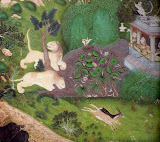
Lions were seen in Rajasthan, MP, and Haryana till the 19th century. They became extinct in these places because their habitat was easy to convert into farmland. They were also easier to hunt than tigers. And because they lived in prides, any hunt would lead to the killing of several members of a family.
The planned re-introduction of lions into the Kuno reserve (Madhya Pradesh) will help the future of the species. But the danger is the presence of tigers in the neighboring forests. In the previous century the Maharaja of Gwalior attempted to introduce African lions into a reserve in his state; most of these animals took to cattle-lifting and had to be killed. One lion was mauled to death by a tiger in whose territory it strayed.
Re: Nature Conservation in India News & Discussion
The idea of Kuno is that, during the first 5 years or so, livestock will used as the buffer prey for lions and will make up upto 50% of the lions diet until wild species like Cheetal, Neelgai and Sambar populations increase.Airavat wrote:
Lions were seen in Rajasthan, MP, and Haryana till the 19th century. They became extinct in these places because their habitat was easy to convert into farmland. They were also easier to hunt than tigers. And because they lived in prides, any hunt would lead to the killing of several members of a family.
The planned re-introduction of lions into the Kuno reserve (Madhya Pradesh) will help the future of the species. But the danger is the presence of tigers in the neighboring forests. In the previous century the Maharaja of Gwalior attempted to introduce African lions into a reserve in his state; most of these animals took to cattle-lifting and had to be killed. One lion was mauled to death by a tiger in whose territory it strayed.
The problem with that African Lion incident was that only a couple of animals were actually released and they were still unaware of Indian prey. So, cattle was a easy option. As zoo lions bred lions will be introduced into Kuno they may face similar situation. That's why in this case they will remain in an enclosed area of the forest and will be gradually introduced to wild prey. Their instincts will take over and by the time the third generation of lions come about they will be completely wild and will be capable of hunting prey on their own.
The whole Kuno project could have been fast-tracked if the Gujrat Government had accepted to send wild lions from Gir. As they have not done so, we have the extra work of making zoo-bred lions wild again and then continue with reintroduction.
Re: Nature Conservation in India News & Discussion
kuno... folks thanks for the inputs. very interesting stuff. is kuno dry deciduous?
wiki page:
krish are you involved in this?
wiki page:
Wildlife Institute of India researchers confirmed that the Palpur-Kuno Wildlife Sanctuary is the most promising location to re-establish a free ranging population of the Asiatic lions and certified it ready to receive its first batch of translocated lions[1] from Gir Wildlife Sanctuary where they are highly overpopulated. There are large scale deaths in the population annually because of ever increasing competition between the human and animal overcrowding. Asiatic lion prides require large territories but there is limited space at Gir wildlife sanctuary, which is boxed in on all sides by heavy human habitation.[2]
The Kuno Wildlife Sanctuary was selected as the reintroduction site for critically endangered Asiatic lion because it is in the former range of the lions before it was hunted into extinction in about 1873.[3] It was selected following stringent international criteria and internationally accepted requirements & guidelines developed by IUCN/SSC Reintroduction Specialist Group[4] and IUCN/SSC Conservation Breeding Specialist Group[5] which are followed before any reintroduction attempt anywhere in the world.
check references.Asiatic lions
Currently the Asiatic Lion Reintroduction Project is underway. The lions are to be reintroduced from Gir Wildlife Sanctuary in the neighboring Indian state of Gujarat where they are currently overpopulated. This has involved the displacement of twenty four villages of the Sahariya tribe, which had lived in the remote core area set aside for the reintroduction of the Asiatic lions, who agreed to move out.[6] Zoo-bred pair of asiatic lions from Hyderabad, one male from Bhopal and a female from Delhi will be introduced into the forest as Gujarat rejected the idea of Kuno being an alternate habitat for the asiatic lion. Comment passed by Gujarat Govt “Since Kuno Palpur sanctuary has had some tigers, it’s not advisable to shift Gir lions there, as there are bound to be frequent clashes between the two kings over territories. It has been observed that tigers and lions can never co-exist”
Feral cattle
Feral cattle also roam the sanctuary, left behind by the relocated Sahariya tribal herders. The cattle are intended to serve as buffer prey for Asiatic Lions until wild prey populations are revived.[2]
krish are you involved in this?
Re: Nature Conservation in India News & Discussion
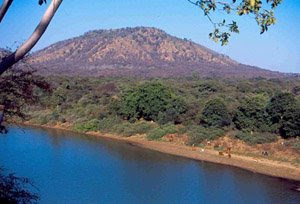
wooded area along the Kuno River, with dry brush among the distant hills:shaardula wrote:is kuno dry deciduous?
This is what concerns some naturalists. Historically lions inhabit the open grasslands and tigers the wooded hills and swamps. Introducing lions into an area frequented by tigers may lead to a conflict.shaardula wrote:Comment passed by Gujarat Govt “Since Kuno Palpur sanctuary has had some tigers, it’s not advisable to shift Gir lions there, as there are bound to be frequent clashes between the two kings over territories. It has been observed that tigers and lions can never co-exist”
In the Kotah princely state there were both lions and tigers, but inhabiting different habitats. The earlier painting showed a pair of lions at a waterhole in Kotah around 1820. This painting shows a tiger hunt around that same time in a more wooded habitat:

Re: Nature Conservation in India News & Discussion
No. Grasslands are the preferred habitat of African Lions, especially East African ones which are the biggest and the largest prides in the world. Even Gir is not a grassland, it is a dry deciduous woodland (dry teak forest to be exact). You should see the place in Monsoon. It will more like a thick jungle in those times and the lions particularly hate this sort of habitat.Airavat wrote:wooded area along the Kuno River, with dry brush among the distant hills:shaardula wrote:is kuno dry deciduous?
This is what concerns some naturalists. Historically lions inhabit the open grasslands and tigers the wooded hills and swamps. Introducing lions into an area frequented by tigers may lead to a conflict.shaardula wrote:Comment passed by Gujarat Govt “Since Kuno Palpur sanctuary has had some tigers, it’s not advisable to shift Gir lions there, as there are bound to be frequent clashes between the two kings over territories. It has been observed that tigers and lions can never co-exist”
In the Kotah princely state there were both lions and tigers, but inhabiting different habitats. The earlier painting showed a pair of lions at a waterhole in Kotah around 1820. This painting shows a tiger hunt around that same time in a more wooded habitat:
Kuno has identical shurblands and dry forests and also grasslands to an extent.

Gir transformed during Monsoon season
Also the fact that a Tiger can be as dangerous to a lion as another lion. There have always been confrontations between two tigers and two lions. So, it doesn't mean that all Tigers will have to be seperately. Similarly, in the case of lions and tigers, there such undoable risk involved. A male tiger will treat a Lion like it treats any other male Lion.
The only problem would be confrontations between a male Tiger and Lioness with cubs. Even if this scenario arises, the pridal structure of asiatic lions involving 2-3 lionesses will be well defended. And also, a full grown Bengal Tigress can take on an Asiatic Lion as they are similar in size.
As of now, officially there are no Tigers in Kuno, only some reported sightings, which could be Lions. Anyway, the whole thing has thought through and all possible risks to the animals will be addressed.
Re: Nature Conservation in India News & Discussion
oh! man! thats lush. but i would think as long the terrain is flat it should be ok. but do we really have any grasslands in india? bar the sholas high up in the mountains, i dont recall any other grasslands. perhaps that is why asiatic lions are sdre wct, tfta african ones.
btw. is their a reason to prefer african lions to indian ones? wouldn't they bring in their african pathologies to indian forests? in anycase, african ones have all sorts of attention and monies. but what about the sdre indian ones?
meanwhile, vembanaaDu is going to the dogs. the same thing happened with goa too. there is now good amount of resentment against tourism in goa, and if my tea leafs are right, even in kerala.
btw. is their a reason to prefer african lions to indian ones? wouldn't they bring in their african pathologies to indian forests? in anycase, african ones have all sorts of attention and monies. but what about the sdre indian ones?
meanwhile, vembanaaDu is going to the dogs. the same thing happened with goa too. there is now good amount of resentment against tourism in goa, and if my tea leafs are right, even in kerala.
Re: Nature Conservation in India News & Discussion
UNESCO Designates 22 New Biosphere Reserves among them three from India:
Nokrek, India, is a biological hotspot in the state of Meghalaya featuring undisturbed natural ecosystems and landscapes. Inhabited by elephants, tigers, leopards and hollock gibbons, the area is noted for its wild varieties of citrus fruits that provide a genepool for commercially produced citrus.
Pachmarhi, India, in Madhya Pradesh state includes tiger and other wildlife reserves. At the interface of tropical, moist and dry forests as well as sub-tropical hill forests, the area is considered a botanist’s paradise. Local tribes contribute to conservation of the forest while using its resources for nutrition, agriculture and income generation.
Similipal, India, is a tiger reserve in the eastern Indian state of Orissa, which used to be the hunting ground of the Maharajah of Mayurbhanj. This tropical environment is inhabited by elephants, panthers, deer and numerous plant species, making it a living laboratory for environmental scientists. The tribal inhabitants depend on agriculture, hunting and collection of forest products for their livelihoods but need additional sources of income.
Nokrek, India, is a biological hotspot in the state of Meghalaya featuring undisturbed natural ecosystems and landscapes. Inhabited by elephants, tigers, leopards and hollock gibbons, the area is noted for its wild varieties of citrus fruits that provide a genepool for commercially produced citrus.
Pachmarhi, India, in Madhya Pradesh state includes tiger and other wildlife reserves. At the interface of tropical, moist and dry forests as well as sub-tropical hill forests, the area is considered a botanist’s paradise. Local tribes contribute to conservation of the forest while using its resources for nutrition, agriculture and income generation.
Similipal, India, is a tiger reserve in the eastern Indian state of Orissa, which used to be the hunting ground of the Maharajah of Mayurbhanj. This tropical environment is inhabited by elephants, panthers, deer and numerous plant species, making it a living laboratory for environmental scientists. The tribal inhabitants depend on agriculture, hunting and collection of forest products for their livelihoods but need additional sources of income.
Re: Nature Conservation in India News & Discussion
Its dry deciduous so only riverine areas are likely to be lush. The area is pretty large by Indian standards so it looks promising. BTW, we do have some grasslands left, Ranebennur in Karnataka, Nanaj in Maharashtra and some in AP are still present. Karnataka has a few large areas set aside as cattle grazing grounds (called Kaval) and other grassland fauna exist there - wolves, foxes, etc. Then there are the wet grasslands in the terai (more like swamps).shaardula wrote:oh! man! thats lush. but i would think as long the terrain is flat it should be ok. but do we really have any grasslands in india? bar the sholas high up in the mountains, i dont recall any other grasslands. perhaps that is why asiatic lions are sdre wct, tfta african ones.
But grasslands are declining as a whole, being reclaimed by agriculture, often illegally. That's one reason that cheetahs, were any to be reintroduced, won't survive long because of lack of viable habitat.
Only Asiatic lions will be introduced into Kuno not African lions. They are different species after all! There were never African lions existing naturally in the wild (a few were introduced but died out) in India so no question of introducing them now.shaardula wrote:btw. is their a reason to prefer african lions to indian ones? wouldn't they bring in their african pathologies to indian forests? in anycase, african ones have all sorts of attention and monies. but what about the sdre indian ones?
Re: Nature Conservation in India News & Discussion
Pachmarhi is part of the Satpura-Bori complex and a truly lovely place. There are caves here with paintings dating back almost 10K years among other things. A good decision. Simlipal is now supposedly a tiger reserve only in name, there are likely to be very few tigers left here. Joins the infamous Sariska, Panna and Namdapha "tiger" areas.Airavat wrote:UNESCO Designates 22 New Biosphere Reserves among them three from India:
Nokrek, India, is a biological hotspot in the state of Meghalaya featuring undisturbed natural ecosystems and landscapes. Inhabited by elephants, tigers, leopards and hollock gibbons, the area is noted for its wild varieties of citrus fruits that provide a genepool for commercially produced citrus.
Pachmarhi, India, in Madhya Pradesh state includes tiger and other wildlife reserves. At the interface of tropical, moist and dry forests as well as sub-tropical hill forests, the area is considered a botanist’s paradise. Local tribes contribute to conservation of the forest while using its resources for nutrition, agriculture and income generation.
Similipal, India, is a tiger reserve in the eastern Indian state of Orissa, which used to be the hunting ground of the Maharajah of Mayurbhanj. This tropical environment is inhabited by elephants, panthers, deer and numerous plant species, making it a living laboratory for environmental scientists. The tribal inhabitants depend on agriculture, hunting and collection of forest products for their livelihoods but need additional sources of income.
Re: Nature Conservation in India News & Discussion
Rajasthan Forest Dept. plans to reintroduce cheetahsmerlin wrote:But grasslands are declining as a whole, being reclaimed by agriculture, often illegally. That's one reason that cheetahs, were any to be reintroduced, won't survive long because of lack of viable habitat.
According to additional chief secretary (social infrastructure) Parmesh Chandra, "We are planning to bring back the cheetah to India. Currently, a proposal is being prepared by the department for bringing the African cheetah to the sub-continent. The proposal will be then sent to the Union government seeking its approval."
The cheetahs are fast disappearing worldwide. There are about 12,400 cheetahs in the world, mainly in 25 African countries, with Namibia having the most at about 2,500. Another fifty to sixty critically endangered Asiatic cheetahs remain in Iran. In India, they have been extinct for the past 50 years. They are included on International Union for Conservation of Nature (IUCN) list of vulnerable species as well as on the US Endangered Species Act.
"We would tentatively be preparing the Gajner forest area for introducing the cheetah. The predator needs arid climate and a flat land to survive and both these factors are there at Gajner," Chandra added.


The Gajner sanctuary (above), located about 32 kms from Bikaner, used to be the hunting grounds of the erstwhile rulers. The department has already floated plans of making the area a conservation reserve. It boasts of a sparkling lake and a variety of wild animals like the imperial sandgrouse, wild fowls, black bucks, desert foxes, wild boars, deer, antelopes, nilgais and the chinkaras.
Re: Nature Conservation in India News & Discussion
a plan was floated to clone the extinct Indian chettah using the iranian cheetah and release the products into the wild.
while a good move, at least getting the iranian cheetah would have been better, it's more closely related to the Indian variety than the african one.
added later : iran has refused to loan a chetah or even allow DNA samples !
http://www.iranian.ws/cgi-bin/iran_news ... cgi/3/8133
while a good move, at least getting the iranian cheetah would have been better, it's more closely related to the Indian variety than the african one.
added later : iran has refused to loan a chetah or even allow DNA samples !
http://www.iranian.ws/cgi-bin/iran_news ... cgi/3/8133
Mullahs' regime says "No" to cloning of Cheetah
Jul 9, 2005
Iranian.ws
India's ambitious plan to clone the cheetah, which vanished from the subcontinent in 1962 due to largescale hunting, has run into a dead end.
Iran has refused to send two cheetahs � a male and a female � to India for research purposes. They have also refused to allow a team of scientists from Hyderabad-based Centre for Cellular and Molecular Biology (CCMB) to travel to Iran to collect sperm and tissue samples from a cheetah in a zoo there.
Re: Nature Conservation in India News & Discussion
If we want to introduce cloned Iranian Cheetahs into the wild, we'll be requiring some grown African individuals. The actual plan was that a leopard would act as a surrogate to the cloned cub. But if we want to reintroduce Cheetahs to the grassland, a leopard as a surrogate wouldn't work. Even African cheetahs would require rigorous training to introduce them to their new prey which would be Chinkara and Black-bucks.Rahul M wrote:a plan was floated to clone the extinct Indian chettah using the iranian cheetah and release the products into the wild.
while a good move, at least getting the iranian cheetah would have been better, it's more closely related to the Indian variety than the african one.
added later : iran has refused to loan a chetah or even allow DNA samples !
http://www.iranian.ws/cgi-bin/iran_news ... cgi/3/8133
Mullahs' regime says "No" to cloning of Cheetah
Jul 9, 2005
Iranian.ws
India's ambitious plan to clone the cheetah, which vanished from the subcontinent in 1962 due to largescale hunting, has run into a dead end.
Iran has refused to send two cheetahs � a male and a female � to India for research purposes. They have also refused to allow a team of scientists from Hyderabad-based Centre for Cellular and Molecular Biology (CCMB) to travel to Iran to collect sperm and tissue samples from a cheetah in a zoo there.
On the other hand, Iranian cheetahs prey on Chinkara which is present from Iran to India. So african Cheetahs could be trained to hunt Indian prey as they are similar in size and speed to Africa's Thompson's Gazelle.
This experiment has already been tried in reverse. In 2002 a bunch of South-African naturalists bought 2 Bengal tigers so that they could introduce them into their game park in South Africa. There were a male and female who were siblings (Mating was never planned). They successfully trained the tigers to hunt wilderbeasts, zebras, gazelle and even ostriches. In 1 year the tigers could hunt almost anything on the African savannah.
the same thing, to an extent, could be done with African Cheetahs and impregnating them with Iranian cheetah eggs. It could work provided we maintain seperate blood-lines of about 50 individuals9that's the number of Cheetah in Iran) and if we could prevent it from mixing with the african bloodline.
Re: Nature Conservation in India News & Discussion
chinkara and black buck are very similar animals to the thompson's gazelle, they shouldn't have much problem.
regarding the cloning issue, I think the object was to create a small pool which then could be released in the wild after training. but its my assumption only.
btw, they didn't consider the leopard as a surrogate, only to carry the feotus and donate an egg cell. I don't how that would have affected the cheetah gene pool.
cross-breed cubs of tigers and lions for example are sterile.
regarding the cloning issue, I think the object was to create a small pool which then could be released in the wild after training. but its my assumption only.
btw, they didn't consider the leopard as a surrogate, only to carry the feotus and donate an egg cell. I don't how that would have affected the cheetah gene pool.
cross-breed cubs of tigers and lions for example are sterile.
Re: Nature Conservation in India News & Discussion
Iran has its own Cheetah Project and they claim that their cheetah population base is too small for the Indian project.
However the project for cloning the Asiatic cheetah has not been abandoned; the Centre for Cellular and Molecular Biology (CCMB) lab was inaugurated early last year and named the Laboratory for the Conservation of Endangered Species (LaCONE). "We hope that we will still be able to convince Iran to help in the project," Dr Lalji Singh had said at the inauguration.
However the project for cloning the Asiatic cheetah has not been abandoned; the Centre for Cellular and Molecular Biology (CCMB) lab was inaugurated early last year and named the Laboratory for the Conservation of Endangered Species (LaCONE). "We hope that we will still be able to convince Iran to help in the project," Dr Lalji Singh had said at the inauguration.
Re: Nature Conservation in India News & Discussion
Reintroduction of cheetahs back into the Indian wild is a bad idea. The causes for its extinction are still around and unless the causes are addressed the re-introduced populations will meet the same fate.
Re: Nature Conservation in India News & Discussion
We will have to address the issues which led to their extinction but that doesn't mean that doesn't mean that until then there shouldn't be any conservation efforts. Cloning is not a simple process and an artificially inseminated egg may not develop properly or the zygote might not have formed properly. It takes tens and hundreds of tries for a successful cloning. That would take anywhere from 3 years to a decade. We need to sort out all the issues we have regarding this and go ahead. If a population 20 lions can multiply into 350 and so on and thrive in our forests, we can do the same with Cheetahs with better law enforcement and rehabilitation.merlin wrote:Reintroduction of cheetahs back into the Indian wild is a bad idea. The causes for its extinction are still around and unless the causes are addressed the re-introduced populations will meet the same fate.
Re: Nature Conservation in India News & Discussion
we didn't have *ANY* conservation law back then. it's wrong to say nothing has changed.merlin wrote:Reintroduction of cheetahs back into the Indian wild is a bad idea. The causes for its extinction are still around and unless the causes are addressed the re-introduced populations will meet the same fate.
mind you, it's still bad but not that bad.
Re: Nature Conservation in India News & Discussion
Over 50 blackbucks recently died out of shock, following unexpected cloudburst and thunderstorm at the Tal Chappar Wildlife Sanctuary in Churu District of Rajasthan.
The game warden and rangers of the Tal Chappar Wildlife Sanctuary, some 100 kilometers from Bikaner, are of the view that the number of deaths could be high as they are continuously recovering more carcasses since the heavy rains, which lashed the region on May 28 and continued for quite a long time.
It has also been observed by the rangers that the dead deer were mostly old and young fawns since they were unable to withstand the sudden change of climate. A team of three veterinaries in the sanctuary is treating the deer, which have survived the storm.

Tal Chappar Wild Life Sanctuary is spread over 1334 square kilometers. It is home to nearly 2,000 blackbuck.
The game warden and rangers of the Tal Chappar Wildlife Sanctuary, some 100 kilometers from Bikaner, are of the view that the number of deaths could be high as they are continuously recovering more carcasses since the heavy rains, which lashed the region on May 28 and continued for quite a long time.
It has also been observed by the rangers that the dead deer were mostly old and young fawns since they were unable to withstand the sudden change of climate. A team of three veterinaries in the sanctuary is treating the deer, which have survived the storm.
Tal Chappar Wild Life Sanctuary is spread over 1334 square kilometers. It is home to nearly 2,000 blackbuck.
Re: Nature Conservation in India News & Discussion
Nothing has changed. Laws exist only on paper. Even the most glamorous of our animals - the tiger - gets poached even in the most well protected national parks. What chance does the cheetah have?Rahul M wrote:we didn't have *ANY* conservation law back then. it's wrong to say nothing has changed.merlin wrote:Reintroduction of cheetahs back into the Indian wild is a bad idea. The causes for its extinction are still around and unless the causes are addressed the re-introduced populations will meet the same fate.
mind you, it's still bad but not that bad.
-
RamaY
- BRF Oldie
- Posts: 17249
- Joined: 10 Aug 2006 21:11
- Location: http://bharata-bhuti.blogspot.com/
Re: Nature Conservation in India News & Discussion
India needs a nature conservation policy that suits our culture and implemented it without compromise.
My dream is to have the population centered around, say 100, cities each having 30x30=900 sq KM serving ~10m population each. At least 30% national land mass must be left for forests and nature. All the highways going thru these forests can either be elevated or tunneled so the animals do not die crossing the roads (a common feature in the US).
If man is an evolved, and is king of nature, then he should learn to live with minimum inputs from nature, instead of exploiting the nature to no end.
My dream is to have the population centered around, say 100, cities each having 30x30=900 sq KM serving ~10m population each. At least 30% national land mass must be left for forests and nature. All the highways going thru these forests can either be elevated or tunneled so the animals do not die crossing the roads (a common feature in the US).
If man is an evolved, and is king of nature, then he should learn to live with minimum inputs from nature, instead of exploiting the nature to no end.
Re: Nature Conservation in India News & Discussion
No tigers in MP’s Panna means Gir keeps lions’ share, says Gujarat
http://www.indianexpress.com/news/No-ti ... rat/476408
http://www.indianexpress.com/news/No-ti ... rat/476408
Desperate to hold on to its monopoly as the last wild habitat of the Asiatic Lion, Gujarat has come up with new reasons to stall sharing its ‘pride’ with Madhya Pradesh....................The central Indian state, says Gujarat, has not done a very good job of conserving its tigers, citing the example of Panna Tiger Reserve, where the big cats have been completely wiped out — as was confirmed by MP Forest Minister Rajendra Shukla just this week............In its response to a Supreme Court case that seeks to create a second habitat for Gujarat’s Gir Sanctuary lions, the state has also argued that tigers and lions cannot coexist..........“The population of tigers was reducing in many parts of the country including Madhya Pradesh, while the Asiatic Lion population has increased from 177 in 1968 to more than 350 in 2005,” the affidavit filed by the Gujarat Government says. “A newspaper report saying ‘Experts Fear No Tigers Left in Panna’, also indicates there is enough reason for concern,” it goes on to state. ......................“Lions need to be moved from Gujarat. The argument of lions and tigers fighting in this case doesn’t hold. As both are large predators, they will not co-occur in the same forest, but in the same region. Kuno does not have a large population of tigers, but only a small number of transient tigers from Ranthambhore. Extensions of the Gir sanctuary, which have been made in Mitiyala and Girnar do not protect from the threat of epidemic extension. The point is to create another population far away from Gir. Though Kuno can be improved as a habitat, it is still the best choice for relocation of lions in India,” says Qamar Qureshi, from the Wildlife Institute of India (WII).
Re: Nature Conservation in India News & Discussion
Airavat,Airavat wrote:Over 50 blackbucks recently died out of shock, following unexpected cloudburst and thunderstorm at the Tal Chappar Wildlife Sanctuary in Churu District of Rajasthan.
The game warden and rangers of the Tal Chappar Wildlife Sanctuary, some 100 kilometers from Bikaner, are of the view that the number of deaths could be high as they are continuously recovering more carcasses since the heavy rains, which lashed the region on May 28 and continued for quite a long time.
It has also been observed by the rangers that the dead deer were mostly old and young fawns since they were unable to withstand the sudden change of climate. A team of three veterinaries in the sanctuary is treating the deer, which have survived the storm.
Tal Chappar Wild Life Sanctuary is spread over 1334 square kilometers. It is home to nearly 2,000 blackbuck.
Just a small technical quibble, the Blackbuck is an antelope, like the Chinkara, while the Chital is a Deer...

Re: Nature Conservation in India News & Discussion
http://timesofindia.indiatimes.com/Rajk ... 645988.cms
The reality and the politics of lion conservation... While politics unfortunately dictates the question of establishing a second home for the Asiatic Lions at Kuno, corruption is sadly and literally eating away at their proposed second home in Gujarat at Barda...
The reality and the politics of lion conservation... While politics unfortunately dictates the question of establishing a second home for the Asiatic Lions at Kuno, corruption is sadly and literally eating away at their proposed second home in Gujarat at Barda...
At a time when the state government is mulling shifting lions from Gir to Barda wildlife sanctuary in Porbandar and Jamnagar, information sought under the Right to Information Act (RTI) revealed rampant mining activities in the surrounding areas.
The sanctuary is spread over 192.31 sq km falling in Jamnagar and Porbandar districts. According to Wildlife Protection Act (1972), mining is not permissible in 5 km periphery of the sanctuary.
An RTI application filed by Bhanu Odedara, a resident of Porbandar, has revealed how a number of mining licences have been given within the 5-km area of Barda wildlife sanctuary since 2002 till date.
Re: Nature Conservation in India News & Discussion
Yes, I know, that was copy-pasted from a report in the TOI.Pranay wrote:Airavat,
Just a small technical quibble, the Blackbuck is an antelope, like the Chinkara, while the Chital is a Deer...
The Chinkara is more accurately a gazelle.
-
BajKhedawal
- BRFite
- Posts: 1205
- Joined: 07 Dec 2008 10:08
- Location: Is it ethical? No! Is it Pakistani? Yes!
Re: Nature Conservation in India News & Discussion
Translocation protests gain momentum
Staff Reporter | Bhopal
Protests over translocation of tigers in the near future to Panna as part of the revival plan of big cats there are gathering momentum. Two tigresses were relocated to Panna from Kanha and Bandhavgarh national parks in March and a male is also likely to be shifted there from either Kanha or Bandhavgarh in the near future. Conservationists like Ajay Singh president district panchayat Umaria have already opposed the plan. Singh has said that tigers should be kept, where they are secure.
He has said that efforts should be made to conserve the tigers and not the parks and affiliated hotel businesses. He has said that locals from Bandhavgarh would oppose the move to relocate the tigers from Bandhavgarh to Panna.
-
BajKhedawal
- BRFite
- Posts: 1205
- Joined: 07 Dec 2008 10:08
- Location: Is it ethical? No! Is it Pakistani? Yes!
Re: Nature Conservation in India News & Discussion
State panel to begin probe at Panna on July 2
Vivek Trivedi | Bhopal
The probe panel formed by the State Government for looking into the mysterious decline in the big cat population in Panna will land in the park for starting the inquiry on July 2. The panel is likely to hold public hearings, interrogate officials and also seek relevant documents required for the probe. A separate panel formed by the Centre has already probed the issue recently.
The State probe panel comprises of National Tiger Conservation Authority (NTCA) Member Secretary Rajesh Gopal, State Principal Chief Conservator Forest (PCCF Wildlife) HS Pabla, former director Wildlife Institute of India HS Pawar, former State PCCF JJ Dutta and World Wildlife Fund's former member Ravi Singh.
The panel has decided to land in Panna on July 2 and conduct the inquiry for 2-3 days. The persons concerned with the probe have already reportedly been summoned for handing written or oral evidence before the panel.
The panel in its first meeting had discussed the points to be included in the probe and the possible corrective measures for the park. The inaugural meeting of the panel formed by the State Government for probing the causes responsible for disappearance of big cats from Panna met here on Friday.
The meeting had discussed what points should be included in the probe, what are the documental evidences, which will be required in the probe, how should various responsibilities be distributed regarding the probe.
The panel was formed by the State Government to probe the mysterious disappearance of the big cat community and also suggest corrective measures for avoiding this kind of situation in future.
The probe panel formed by the Centre has already submitted its report, in which it has mentioned that there were no tigers left in Panna and also has expressed apprehension that a large number of big cats might have fallen prey to poachers.
-
BajKhedawal
- BRFite
- Posts: 1205
- Joined: 07 Dec 2008 10:08
- Location: Is it ethical? No! Is it Pakistani? Yes!
Re: Nature Conservation in India News & Discussion
In situ breeding at 11 tiger reserves: What about prey base?
Prerna Singh Bindra | New Delhi
In what can only be described as the last-ditch attempt to prevent a Sariska-like situation in nearly a dozen tiger reserves across the country, the National Tiger Conservation Authority (NTCA) has advised an in situ build-up of tiger population in 11 reserves.
The advisory, sent on May 27, 2009, to the Chief Wildlife Wardens concerned, suggests that to save tigers from local extinction, the reserves must opt for active managerial intervention which essentially entails having “a founder population of two adult tigresses and a tiger in a large enclosure, built in situ within the reserve, to protect it from poaching and other decimating factors”.
The letter details that the tigers must be translocated from the same habitat or landscape, that the enclosure should contain natural prey base and, importantly, that this is to be a one-time intervention. The tigers should be radio-collared and released after the first generation of cubs reaches two years of age. The 11 reserves include Valmiki (Bihar), Palamu (Jharkhand), Manas (Assam), Nagarjunasagar (Andhra Pradesh), Namdapha (Arunachal Pradesh), Indravati (Chhattisgarh), Buxa (West Bengal), Kalakad Mundanthurai (Tamil Nadu), Dampa (Manipur), Sanjay-Dubri (Madhya Pradesh) and Simlipal (Orissa).
However, the directive has become the subject of a heated debate. Says Dr Ullas Karanth, conservation scientist with the Wildlife Conservation Society, “Such reintroduction exercises — and I am including Sariska and Panna — do not reflect optimal use of resources and I do not see them as priority. They fail to address the real issue of tiger decline and take the focus away from protecting viable tiger habitats where recovery can naturally take place.”
Also, points out another conservationist, is it practical to invest considerable resources into this programme when the reserves are unsafe? How can we ensure that the reserves will be safe two to four years later when the tigers are ready for release? And surely, this couldn’t be a blanket solution for 11 reserves. While it may be the answer in say, Buxa, where the lack of tigers has been an ‘open secret’, areas like Manas require a rethink. Though there is little doubt that tiger numbers are low, there is a need to scientifically assess the population first. Besides, though the situation is improving, their protection leaves much to be desired. Strengthening the existing infrastructure and capacity for protection of wildlife and its habitat are a priority.
Dr Rajesh Gopal, member-secretary NTCA, stresses that this strategy is supplementary to protection and an essential one-time managerial intervention only for those reserves where tiger population is in dire straits.
Elaborates PK Sen, former director of Project Tiger, “These directives have not been issued to all reserves; only where there is no viable population of tigers. It does not preclude protection, which is in fact primary, following which the population may be built up using in situ enclosures. The first consideration is protection by strengthening personnel, developing intelligence and adequate infrastructure. However, this has little meaning in reserves where the tiger population has almost died out and must therefore be augmented by such interventions.” Should these reserves, he reasons, be allowed to become other Sariskas or Pannas?
Most of these reserves are still viable habitats with unviable tiger populations, mainly transient tigers which are very vulnerable. “The in situ build-up of both tiger and prey is an ecological imperative to conserve the genetic pool of that particular region to ensure that the population does not die out,” says Dr Rajesh Gopal. Equally important, he emphasises, is backing it with sound protection measures, strong leadership and habitat management, ie notification and management of buffer zones.
It is hoped
Panna is a prime example, points out a senior official, where the State continued to be in denial for years, till all its tigers were gone. Most States have not learnt the lesson and continue to inflate tiger numbers and deny that reserves — including Buxa, Sunjay-Dubri and Palamu — have negligible tiger populations.
They also continue to ignore repeated warnings and advisories for strict protection measures from the Centre. In the face of such apathy, it is envisaged that such an intervention will provide for a base population that can be strictly monitored and conserved — and the State held responsible for any laxity, lest there be any more Sariskas or Pannas.
-
BajKhedawal
- BRFite
- Posts: 1205
- Joined: 07 Dec 2008 10:08
- Location: Is it ethical? No! Is it Pakistani? Yes!
Re: Nature Conservation in India News & Discussion
Avoid Panna-type disasters, MP CM told
With such a pathetic records they expect Gujarat to hand over Lions to MP? Problem is MP saw Tigers as a cash crop for tourism and not as a national pride. In their complacency they just thought about raking in the money, not even bothered about checking unabated poaching. Sorry, no sir! Let the lions be. They are safe and sound where they are at now.
Forest Dept under fire over missing tigersM Madhusudan | New Delhi
Environment and Forests Minister Jairam Ramesh has sought Madhya Pradesh Chief Minister Shivraj Singh Chouhan’s “personal intervention to avoid Panna-type disasters” in the State’s six tiger reserves and called for the initiation of “urgent administrative and ecological” actions on the findings of a special investigation report which confirmed that the reserve had no resident tiger.
HC to State Govt: Reply on tigers’ declineStaff Reporter | Bhopal
The State Forest Department is under immense pressure now with the double jolt being received on the issue of diminishing tiger population across the State, especially in Panna National Park. The State High Court on the one hand has sought a reply from the State Government over the declining tiger population in the State, while the Union Government on the other has also reportedly issued orders for acting against the forest officials responsible for the Panna episode.
…………. The committee in its recently submitted report has mentioned that widespread poaching might be responsible for the drastic decline in the population of the big cat in Panna. The Union Government has also taken strong objection to the fact that State Forest Department constantly handed misleading figures of big cats in Panna.
My point in posting all this recent, relevant, and valid articles is:Pioneer News Service | Jabalpur
The Madhya Pradesh High Court on Thursday directed the State and Union Government to submit a detailed report on the protection of the tigers and other wildlife animals facing extinction.
The court also directed to take action in compliance of the Central Steering Committee and the State Steering Committee constituted under the provision of the Wildlife Protection Act within four weeks. A division bench comprising Chief Justice Anang Kumar Patnaik and Justice Ajeet Singh issued these directices while hearing the Public Interest Litigation petition of Navneet Kabra, challenging the State's inaction for not taking suitable measures to protect the wildlife animals, including the tiger breed, reducing their number from 710 tigers in forest and five national tiger sanctuaries to half…….
With such a pathetic records they expect Gujarat to hand over Lions to MP? Problem is MP saw Tigers as a cash crop for tourism and not as a national pride. In their complacency they just thought about raking in the money, not even bothered about checking unabated poaching. Sorry, no sir! Let the lions be. They are safe and sound where they are at now.
-
Jamal K. Malik
- BRFite
- Posts: 637
- Joined: 27 Mar 2009 23:03
Re: Nature Conservation in India News & Discussion
Native land of oranges gets Unesco recognition
http://www.ddinews.gov.in/Social/Nokrek ... eserve.htm
http://www.ddinews.gov.in/Social/Nokrek ... eserve.htm
Nokrek Biosphere Reserve in Garo Hills district of Meghalaya which has been added to Unesco's list of Worldwide Network of Biosphere Reserves has another distinction of having world's first citrus gene sanctuary.