I would like to know what took so long (~67 years) to chronicle a British war? Most of the participants relatives are dead by now.
With that timeline we can forget official history of 1962 war.
And also how that book dealt with the INA?
Indian Army: News and Discussions 15 Apr 2012
Re: Indian Army: News and Discussions 15 Apr 2012
AFAIK, the official history of Indian Army in World War II existed since 1960s. It has only been republished now, as the same was out of print. Old copies must be available in Govt Libraries.
Indian World War II history republished
Indian World War II history republished
Re: Indian Army: News and Discussions 15 Apr 2012
The book by Brigadier Dalvi (Himalayan Blunder)- who commanded the ill-fated 7 Bde at Namka Chu is a must. It covers the first hand account of the difficulties faced his bde and the formations therein. Apart from that, it gives a very good details of happenings at the highest level in military and political domains.Katare wrote:What would be a good book to read on 1962 war? Looking to read more on to the military side of it rather than the political side.
Also, my suggestion is one should read the book by Naville Maxwell - India's China War - to understand the western (and Chinese) narrative about the war. It is said that he was shown a copy of Henderson Brook's Report on 1962 and lot of it made its way into the book - of course, he would have used it to buttress his arguments.
I am yet to come across a single book which covers the battles in all the sectors - from Ladakh to NEFA to Walong. You would definitely want to read up on battles in Ladakh in North and Walong Sector in extreme east - the conduct of senior leadership with spine is evident from how these battles were fought. After the neglect of the bravery of men of 7 Bde, I think the most unsung aspect of 1962 war is the Army's conduct in Walong Sector.
For starters, do read the account of the battle here:
http://www.bharat-rakshak.com/LAND-FORC ... along.html
-
vivek_ahuja
- BRF Oldie
- Posts: 2394
- Joined: 07 Feb 2007 16:58
Re: Indian Army: News and Discussions 15 Apr 2012
Basically if reading up om personal memoirs is not a deal-breaker, you can read up everything from small unit commanders up till Kaul and Sen.rohitvats wrote:The book by Brigadier Dalvi (Himalayan Blunder)- who commanded the ill-fated 7 Bde at Namka Chu is a must. It covers the first hand account of the difficulties faced his bde and the formations therein. Apart from that, it gives a very good details of happenings at the highest level in military and political domains.
Also, my suggestion is one should read the book by Naville Maxwell - India's China War - to understand the western (and Chinese) narrative about the war. It is said that he was shown a copy of Henderson Brook's Report on 1962 and lot of it made its way into the book - of course, he would have used it to buttress his arguments.
I am yet to come across a single book which covers the battles in all the sectors - from Ladakh to NEFA to Walong. If anyone has such a reference, please let me know.
Maj-Gen Niranjan Prasad (4 Div. Commander during the rout) released a book in the early 1980s called "The Fall of Tawang, 1962" in which he fills the gaps between Brigadier Dalvi's book (Himalayan Blunder) and Lt-Gen Kaul's testimony (The Untold Story). Between the three books its a comprehensive read about the Tawang side of the war.
A very nice read on the intelligence collection era 1950-1962 as well as the civilian government actions during the war can be found in B. N. Mullik's (The head of the IB at the time before RAW came into existence) book: "My Years with Nehru".
And of course, there are the unit histories. I agree with Rohit in that its all spread over the place. Maxwell's book is possibly one of the few books that details a complete narrative.
Re: Indian Army: News and Discussions 15 Apr 2012
BTW, how many of us knew about this:
The first officer to be bestowed the prestigious Param Vashist Seva Medal was Gen BM Kaul, a distant kin of Nehru. The citation read – ” For successfully completing the project ‘Amar’ which entailed the construction of 1,450 quarters for troops in Ambala. This was the first project of its kind and was completed through hot weather and the monsoons in the face of numerous problems. Lt.-Gen. Kaul overcame these difficulties by dint of hard work and initiative of the highest order. He displayed organising ability, drive, and resourcefulness. It was by his determination, leadership and personal example that the task was completed by due date.”
-
vivek_ahuja
- BRF Oldie
- Posts: 2394
- Joined: 07 Feb 2007 16:58
Re: Indian Army: News and Discussions 15 Apr 2012
Yeah, I knew about that. If you read his memoirs, its mentioned in great detail. He was a man who really loved the administrative side of his job. Too bad it didn't translate well into an understanding for logistics when the crap hit the fan.rohitvats wrote:BTW, how many of us knew about this:
The first officer to be bestowed the prestigious Param Vashist Seva Medal was Gen BM Kaul, a distant kin of Nehru. The citation read – ” For successfully completing the project ‘Amar’ which entailed the construction of 1,450 quarters for troops in Ambala. This was the first project of its kind and was completed through hot weather and the monsoons in the face of numerous problems. Lt.-Gen. Kaul overcame these difficulties by dint of hard work and initiative of the highest order. He displayed organising ability, drive, and resourcefulness. It was by his determination, leadership and personal example that the task was completed by due date.”
Re: Indian Army: News and Discussions 15 Apr 2012
A very detailed description of the battle of Walong:
Excerpt:
Out of a total Indian garrisson strength of 2191, the killed were 17%,wounded 13% and 16% were taken POW – making a total casualty figure of 46% – which is pretty awesome.
The gallantry awards were one Maha Vir Chakra and nine Vir Chakras.
As for the Chinese, the three large grave yards at Bathithwang, Tithong and Chikhong, are ample testimony to their war dead.
In the final analysis, the units at Walong, even in defeat, upheld the name and honor of the Indian Army and made the nation proud.
Re: Indian Army: News and Discussions 15 Apr 2012
Let me know the format, what kind of information needs to be there and other details. Let me see if I can get someone interested in telling his story so that I can create one such page.Surya wrote: the Army veteran page needs to get started and we get promises but no one seems to be interested
Re: Indian Army: News and Discussions 15 Apr 2012
Worth reading..
http://www.indianexpress.com/news/-nobo ... /1023745/0
http://www.indianexpress.com/news/-nobo ... /1023745/0
You were the only one who returned alive from that battle... So, when you narrated that story, did your commanders believe you?
Yadav: Only one commander believed me. D D Shukla, who was the adjutant... He said every word of what he is saying is true. Then Dhingra saab also believed this, and the brigade commander, he too accepted the real story...
But when you came to Delhi, and your debriefing took place, did people believe you?
Yadav: The atmosphere in Delhi was such that I did not even feel like having food. Because, if I give a statement, and that statement is contradicted immediately by my commander...
Why did your commander contradict your statement?
Yadav: He said I had gone crazy, he warned me I could be court-martialled, he said we could not have killed so many Chinese.
So they were saying you were so few people, you could not have killed so many Chinese?
Yadav: Right. So I said, saab, ek baat hai, aap haalaat ko dekhiye (Sir, please see the circumstances). You come there and I will tell you how we killed so many. I said, you note down these three points: Major saab’s body, his gloves with his blood; in the Company, you will find every jawan with bullet wounds on his chest, you will not get wounds on their backs; nursing assistant Dharam Pal, he put bandages on 32 wounded soldiers, and he died while bandaging his comrades.
So, tell me more.
Yadav: The jawan, he is holding the light machine gun, and he has bullets in his chest, and is dead...But the machine gun hasn’t fallen from his hands even when he is dead, he is clasping the machine gun. And the jawan throwing the grenade, dead, with the grenade still in his hands, the Chinese couldn’t take the grenade off his hand.
And many were found with their bayonets too?
Yadav: Yes, with their bayonets in their hands, in a crouching position, bullets in their chest, dead, holding the naked bayonet in a fighting stance.
Their bodies had frozen.
Yadav: Yes, the bodies were all frozen. Our commander saab (Brigadier Raina, who later became the Army Chief) became so emotional that his artificial eye moved from its position. He burst into tears. He was told, ‘Sir, have courage, calm down, this is war, the jawans have done their very best...’ Those who came from Delhi were told, ‘Come with us to the quarter master’s.’ They said, ‘No, this is enough. We have seen what we had to see. Whatever you had said was actually an understatement. Each one of you killed 10 Chinese, and then you died.’ So, this was the battle of Rezang La
Re: Indian Army: News and Discussions 15 Apr 2012
Received by email
An unusual and most thought provoking article Written by Lt Gen K K Khanna is placed below. It is certainly worth reading !!
Do we need the Indian Army?
Pandit Nehru believed that the Indian Army was quite unnecessary, in fact dangerous, because generals seized power. Having struggled to gain power, even accepting partition of the Country in the process, the politicians were not going to lose it to some ambitious General! Also, we believed in Ahimsa and Panchsheel.
Since our neighbours had different philosophies, India suffered on account of this attitude.
India had an Army because we inherited it from the British not because we needed it. Since it was there it was made as toothless as possible. That the Armed Forces are an important instrument of the State to be used in the best interests of a Nation was not the belief of Indian politicians nor the compliant bureaucrats. This was due to both fear and ignorance.
The situation now is the opposite. Having created this huge organisation, after the Sino Indian Conflict, spending thousands of crores of precious public money every year no one knows how to make the best use of it. A few examples are necessary to illustrate.
It is well understood, even in India, that War is a continuation of the Policy (of the State) by other means. No one in his right senses would recommend War, till the ‘other means’ are fully exhausted.
If so, what are the issues which can lead to War? External threats come from external powers. The MEA handles International Relations till they can. Only when the situations go beyond them, are the Armed Forces called in for acting in the best interests of the Nation.
If this be the modus operandi, closer interaction of the MEA and the Armed Forces would be in the best interest of the Nation. Though a few military officers do serve in our foreign missions, the Nation would gain by better integration of different services. Not only can the MEA be better aware of military capabilities, the MEA can utilise service officers to meet its shortage of diplomats. For this officers of the Armed Forces themselves must be better aware of International Relations, even pursue formal studies in Universities and receive any training the MEA may like to impart.
Next and more frequent utilisation of the Armed Forces is to combat the ever increasing Internal Threat. It is common knowledge that insurrections break out against self-serving and corrupt governance and callous administration. The Army is called in to restore normalcy so that the same or similar corrupt Governments continue to govern. In doing so, the Army is often blamed for excesses. No one is interested in why the people were agitated in the first place or whether they are happy later. The governments are happy since the Army draws the flak, while they continue to (mis)rule. The ‘Intellectuals’ or the Academia living in the metros have only a hazy idea of the state of affairs, making ocassional trips to the capitals of the disturbed regions once in a while, pick up ‘grapevine’, to appear knowledgable. The Army, having first hand knowledge of the problems, produces no such ‘intellectuals’. Generals talk only of military affairs.
If the Army is to be involved so often to restore normalcy, it time to learn something about Governance. This was discouraged by the British. Their method of restoring normalcy was as seen at Jallianwala Bagh. Do Indians realise things have changed over 65 years? It is time for Army officers to learn the basics of Governance and administration and keep collecting their own Intelligence all the time.
The Wars of 1947- 48, 1965, and Kargil Operations were thrust upon us, hence we had no options. But the 1962 and 1971 wars, our misadventure in Srilanka, and our numerous internal conflicts till date, should teach us many lessons.
The Sino Indian War was totally due our blunders by the MEA, and by the IB and to a lesser extent, incompetance of a few Army Generals. The Indian Public was never informed of the true picture.
Zhou En lai was the PM cum foreign minister of PRC. A Conference was organised at Geneva on 08 May 54 to decide the future of Indo China. At the conference Zhou En lai emerged as the most clever and skillful diplomat who acted in the best interests of China. the Vietminh had defeated the French. Yet at the Conference Zhou worked out a deal with France to divide Vietnam at the 17th Parallel, let France rule South Vietnam to the exclusion of USA. Ho Chi Minh didn’t cry about a Chinese ‘Betrayal’. He gathered his forces to defeat yet another power and unified his Nation. Did we learn any lessons?
Mr Nehru trusted the Chinese blindly thanks to poor Intelligence, even ignoring a written warning by Sardar Patel, the Dy PM, and resignation of General Thimayya.
In the Parliament India made much of Aksai Chin. What did we do when Aksai Chin was with us after 1947? Did any Indian even visit Aksai Chin? Or even fly over it to get an aerial view? We learned about the Chinese road years after its construction. Due to the Great Himalayan Range we find it difficult to maintain the people of Ladakh and Kargil. What would be our capability to maintain forces and civilians across the Karakoram Ranges in Aksai Chin? Who has calculated that? MEA or MHA? Has anyone analysed our requirement of Armed Forces to guard Aksai Chin? Is this kept in mind when our diplomats discuss the Border Dispute with China?
As part of Indian disinformation campaign, the Chinese are blamed for ‘aggression’ and ‘betrayal’ in 1962. This is utter rubbish as per all reports of the period; we don’t have to read the report of Henderson Brooks. The War was a result of blunders by the MEA whose inputs were provided by the IB and directions of the PM, ignoring sane advice of the Army.
Even now there is no hype of a ‘Chinese victory in 1962’ as we celebrate our victories of 1971 and others. In fact before the 62 Conflict, it was China which frequently called for talks that Mr Nehru rejected every time. The last such rejection was on 14 November 1962. What other option did China have but to teach the aggressive Indians a lesson? 50 years later do we have the moral courage to publish the truth?
If China wanted war with India, it has had many opportunities in the past. In 1962 itself China called for unilateral ceasefire and withdrew. China has shown no hostile activity in any Indo Pak War. In 1999 they did not support Pakistan’s aggression in Kargil. Economic rivalry, desire for access to the Indian Ocean and desire to dominate areas in the South China Sea cannot be seen as aggression on India.
It is NOT suggested that we give up our National interests to please China as we did in the 50s. We must understand Chinese actions in support of their own National interests and policies. Aggressive policies based on preconceived ideas and deliberate disinformation can be disastrous for the Nation, once again.
On the other hand Pakistan will continue its hostility against India and fish in troubled waters. It is their cheapest option. Therefore improvement of Governance in all parts of India is essential to defeat Pakistan’s designs. Since this will remain a utopian dream, the Army will have to be prepared to fight terrorism and insurgencies to support the misrule in various States. It would be in National interest if MHA consults the Army before taking major decisions such as location of NSG all over the Country and react to mass SMSs (Info War), but the MHA has many advisors to prevent this.
In other words it is time to either utilise the Armed Forces optimally or do away with them to save precious resources for development of the Nation. For the Generals, it is essential to change with time and to learn to contribute meaningfully both in External Affairs and Internal Development cum Governance. Foundation for this must be laid at the IMA.
Lt Gen KK Khanna is a veteran of the Indian Army now with the Doon University, Dehradun
-
member_23629
- BRFite
- Posts: 676
- Joined: 11 Aug 2016 06:14
Re: Indian Army: News and Discussions 15 Apr 2012
Army chief to brief CCS on need for mountain strike corps
Last updated on: November 07, 2012 16:34 IST
The China-focused mountain corps will include three mountain divisions (20,000 soldiers each), complete with tactical airlift capability, armed with necessary armoured regiments and artillery components, and deployment of C-130J Hercules aircraft, reveals R S Chauhan.
General Bikram Singh, Chief of the Army Staff, is slated to brief the Cabinet Committee on Security on the need to raise a new mountain strike corps, primarily aimed at countering a potential threat from China on India's northern borders.
Highly placed sources in the defence ministry told Rediff.com that the Chiefs of Staff Committee -- essentially a forum of all the three service chiefs -- has reconsidered the 2011 proposal to raise a mountain strike corps and come up with a comprehensive plan that will be presented to the CCS, the country's highest decision-making body on security matters, later this month.
The proposal, first mooted in 2010 and given in-principle clearance by the government in 2011, involved recruiting over 80,000 new soldiers and nearly 500 officers to man the strike corps -- an offensive formation -- to counter China's growing capabilities across the border in Tibet [ Images ].
It was estimated that the new corps would cost about Rs 65,000 crore (Rs 650 billion). India has three strike corps, all geared towards offensive operations against Pakistan. They are I (located at Mathura), II (Ambala) and XXI (Bhopal).
Former army chief General V K Singh was a forceful advocate of forming the mountain strike corps, proposed to be based at Panagarh in West Bengal [ Images ]. The government, however, had second thoughts especially because raising an offensive formation for mountains involved massive expenditure. The finance ministry initially raised objections to such huge investment.
The Prime Minister's Office too felt that accretion of such a huge force may raise Beijing's [ Images ] hackles at a time when India-China relations are on an even keel.
The third factor was the apparent disconnect between the Indian Army [ Images ] and the Indian Air Force in asking for resources.
The PMO sent back the proposal to the defence ministry and asked for a comprehensive joint proposal. The Chiefs of Staff Committee asked Headquarter Integrated Defence Staff to come up with a revised draft for the mountain strike corps which is now ready.
The new proposal now given final shape, includes raising of three more mountain divisions (20,000 soldiers each), complete with tactical airlift capability and armed with necessary armoured regiments and artillery components.
The IAF has also projected its requirement in this plan. It includes deployment of the C-130J Hercules aircraft meant for Special Operations like para-dropping.
General Bikram Singh will personally outline the proposal to the CCS later this month so that India's defences along the China border get a further boost. He is also expected to brief the CCS on the slippages in building infrastructure in the difficult mountain terrain of Arunachal Pradesh and Sikkim in the Eastern Command.
India's plans to build border infrastructure including roads, air strips and living quarters for additional troop deployment, has not kept pace with the need.
Since 2009 India has raised two mountain divisions, one each deployed under the Tezpur-based 4 Corps and the Dimapur-based 3 Corps.
If the CCS clears the proposal to raise the mountain strike corps, it will take anywhere between three and four years to recruit, train and deploy troops in a manner that acts a strong deterrent against any Chinese adventurism.
Re: Indian Army: News and Discussions 15 Apr 2012
3 divisions with organic helicopter support and airlift.... 
 .....no wonder it will cost 65000 crores!!!!
VK Singh seems to have planned for assault on Lhsasa...!!!!
.....no wonder it will cost 65000 crores!!!!VK Singh seems to have planned for assault on Lhsasa...!!!!
Re: Indian Army: News and Discussions 15 Apr 2012
I'm trying to imagine what Vivek's scenario might have been like if we had forces such as these in place.rohitvats wrote:3 divisions with organic helicopter support and airlift....
VK Singh seems to have planned for assault on Lhsasa...!!!!

I am however highly skeptical of this ever coming to fruition. Especially considering the price tag. And of course the usual decade+ delays that we have in trying to acquire essential hardware. They may be able to get the 60K extra soldiers and even tanks (if they buy more T-90s, which never seems to be a problem). But the extra artillery, helicopters and APC's needed? Where will they come from?
-
RamaY
- BRF Oldie
- Posts: 17249
- Joined: 10 Aug 2006 21:11
- Location: http://bharata-bhuti.blogspot.com/
Re: Indian Army: News and Discussions 15 Apr 2012
Rohitvats ji,rohitvats wrote:3 divisions with organic helicopter support and airlift....
VK Singh seems to have planned for assault on Lhsasa...!!!!
Remember our discussion a year+ ago? If an dumb a$$ like me can come up with the idea that India needs such military preparedness, I am sure more knowledgeable people in south block can easily plan this. The Rs 65,000 ($10-12b) appears to be too much for us but it is not that much amount if you see the indian budget and economic potential. The UPA2 scams in 2011-12 alone are totaled at >$50B.
It is a different matter if we cannot realize our economic potential.
***
I think these 3 divisions should be headquartered in NE itself, perhaps based on local recruitment. That is 80,000+ employment generation in that region.
Re: Indian Army: News and Discussions 15 Apr 2012
Saar....IA projected the requirement in mid-80s itself, IIRC reading somewhere.RamaY wrote: Rohitvats ji,
Remember our discussion a year+ ago? If an dumb a$$ like me can come up with the idea that India needs such military preparedness, I am sure more knowledgeable people in south block can easily plan this. The Rs 65,000 ($10-12b) appears to be too much for us but it is not that much amount if you see the indian budget and economic potential.<SNIP>
Then post Parakram, IA did internal assessment and from what I read, it projected requirement for - hold your breadth - 7-11 more divisions. So, 2 x mountain divisions already raised plus 3 x mountain divisions planned. That is only 5. At least 2-3 more to go in Northern Sector as per my estimate.

As for money - it is not the amount that I'm surprised about. Sure - we can afford it and also, this will be spread across at least 5-7 years or even more. The important thing to understand is the way military has started thinking - they want to take the battle into the enemy heartland. You have Cold Start in West and now, the force accretion in east. Only think remaining is beefing up of Northern Command - starting with 14 Corps. Even here, 1 x armored bde and 1 x infantry bde are already sanctioned.
As for basing these formations and employment angle - well, the troops will come from all across the nation. The +ve impact is when you base them in NE proper...the presence of large cantonment(s) is economic activity driver. On the location angle - please also to understand that in any shooting match with Pukes to our west, the entire Corps with all its goodies can move west. Rest assured, pukes are going to have nightmares if such a powerful formation take shape in India.
Re: Indian Army: News and Discussions 15 Apr 2012
Arm yourself because noone else here will help you.
Re: Indian Army: News and Discussions 15 Apr 2012
From the "thought provoking email"
1. Pakistan's perfidy is a direct result of nuclear derived terrorism and we all know who has helped there. So Chicom is acting inimically to us all the time.
Even the NPA's accept that pakistan's first CHIC-4 test took place at Lop Nur.
2. Freedom of navigation in the SCS is a national priority. We are going to be importing fuel from far eastern russia (Sakhalin) and north america (kitimat, Canada) via that route in the near future
3. most of our merchandise trade is now with east asia.
4. Chicom activities in '99. Jaankar know what chicom did, I will not elaborate.
5. Chicom in '71 , Khanate was doing the heavy hitting, Chicom could have happily sat on the sidelines.
especially after the IA had taught Chicom a lesson in '67.
Between '67 and now, Chicom simply has not been confident enough to take on IA again. And we are going to make sure it stays that way.
1. Pakistan's perfidy is a direct result of nuclear derived terrorism and we all know who has helped there. So Chicom is acting inimically to us all the time.
Even the NPA's accept that pakistan's first CHIC-4 test took place at Lop Nur.
2. Freedom of navigation in the SCS is a national priority. We are going to be importing fuel from far eastern russia (Sakhalin) and north america (kitimat, Canada) via that route in the near future
3. most of our merchandise trade is now with east asia.
4. Chicom activities in '99. Jaankar know what chicom did, I will not elaborate.
5. Chicom in '71 , Khanate was doing the heavy hitting, Chicom could have happily sat on the sidelines.
especially after the IA had taught Chicom a lesson in '67.
Between '67 and now, Chicom simply has not been confident enough to take on IA again. And we are going to make sure it stays that way.
Re: Indian Army: News and Discussions 15 Apr 2012
Afghan troops to be trained at Indian Army's jungle warfare school
New Delhi: India has agreed to train upto 600 Afghan Army officers every year in India under a pact that President Hamid Karzai is expected to sign with India early next week, highly placed sources have told NDTV.
The program is the first concrete follow-up on military-to-military cooperation under the umbrella of the Strategic Partnership Agreement that was signed between Kabul and New Delhi in 2011 when President Karzai was given a grand reception in India.
:
:
Re: Indian Army: News and Discussions 15 Apr 2012
VinodTK wrote:Afghan troops to be trained at Indian Army's jungle warfare schoolNew Delhi: India has agreed to train upto 600 Afghan Army officers every year in India under a pact that President Hamid Karzai is expected to sign with India early next week, highly placed sources have told NDTV.
The program is the first concrete follow-up on military-to-military cooperation under the umbrella of the Strategic Partnership Agreement that was signed between Kabul and New Delhi in 2011 when President Karzai was given a grand reception in India.
:
:
Are there jungles in Afghanistan ?
-M
Re: Indian Army: News and Discussions 15 Apr 2012
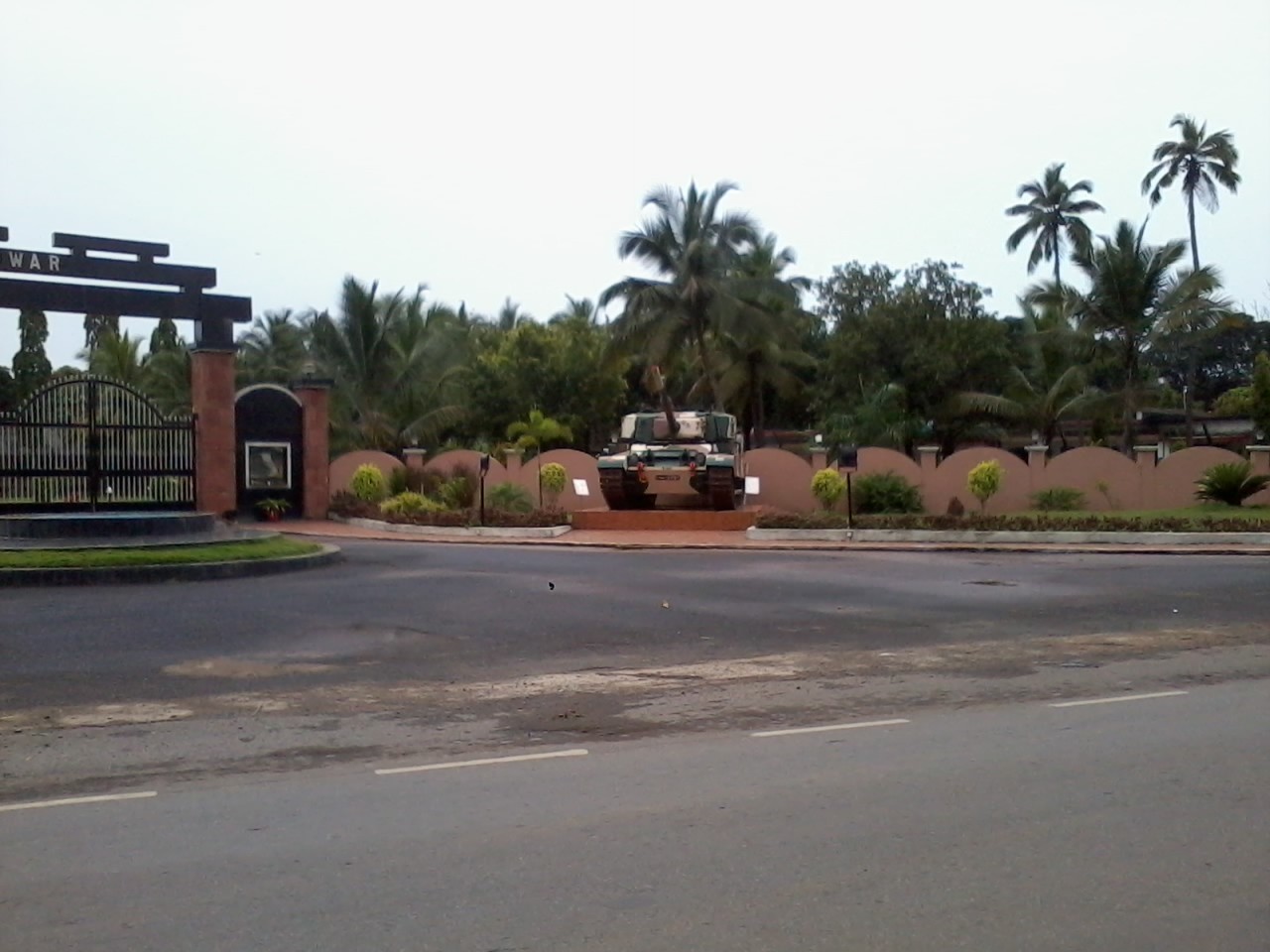
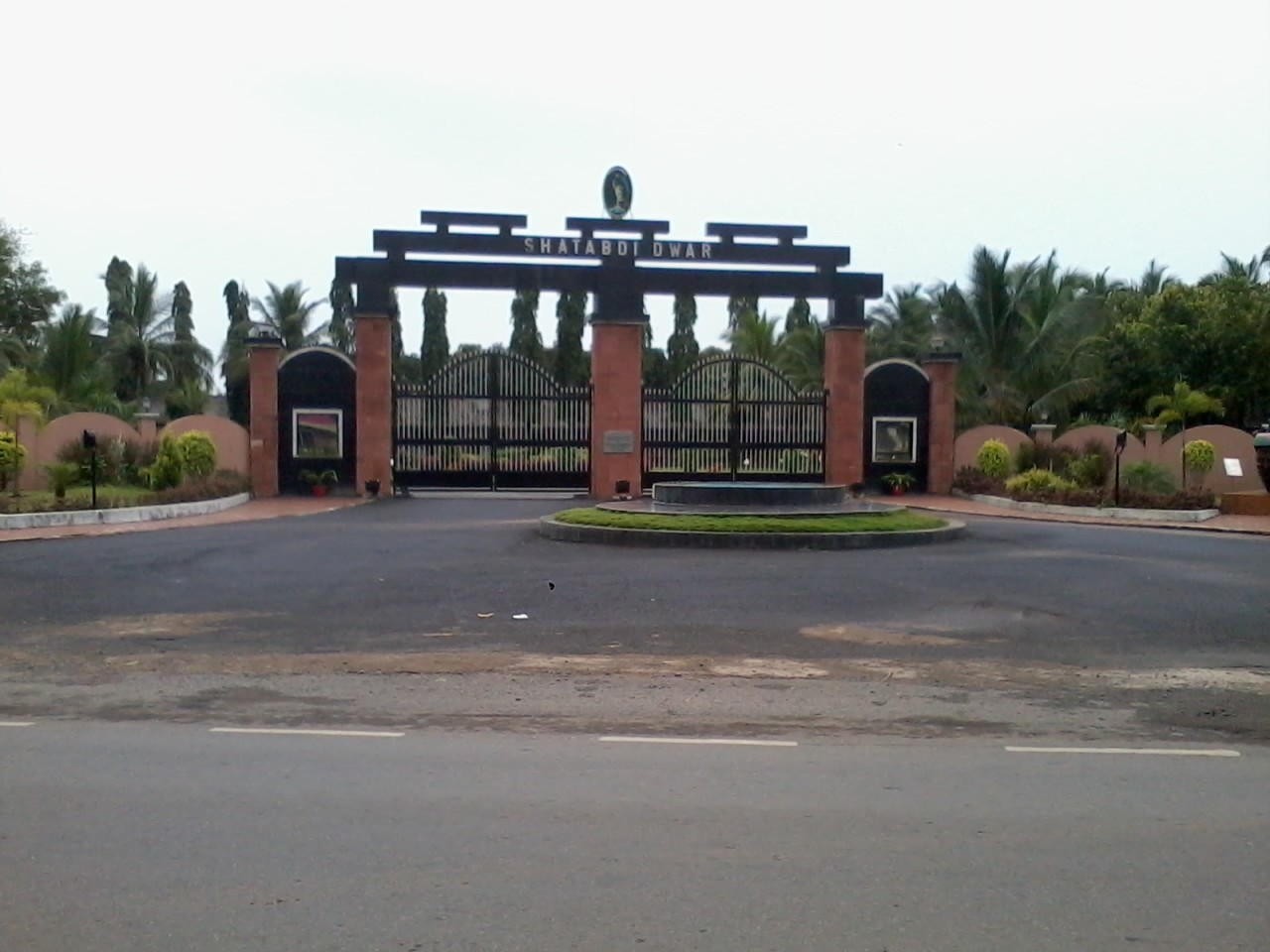
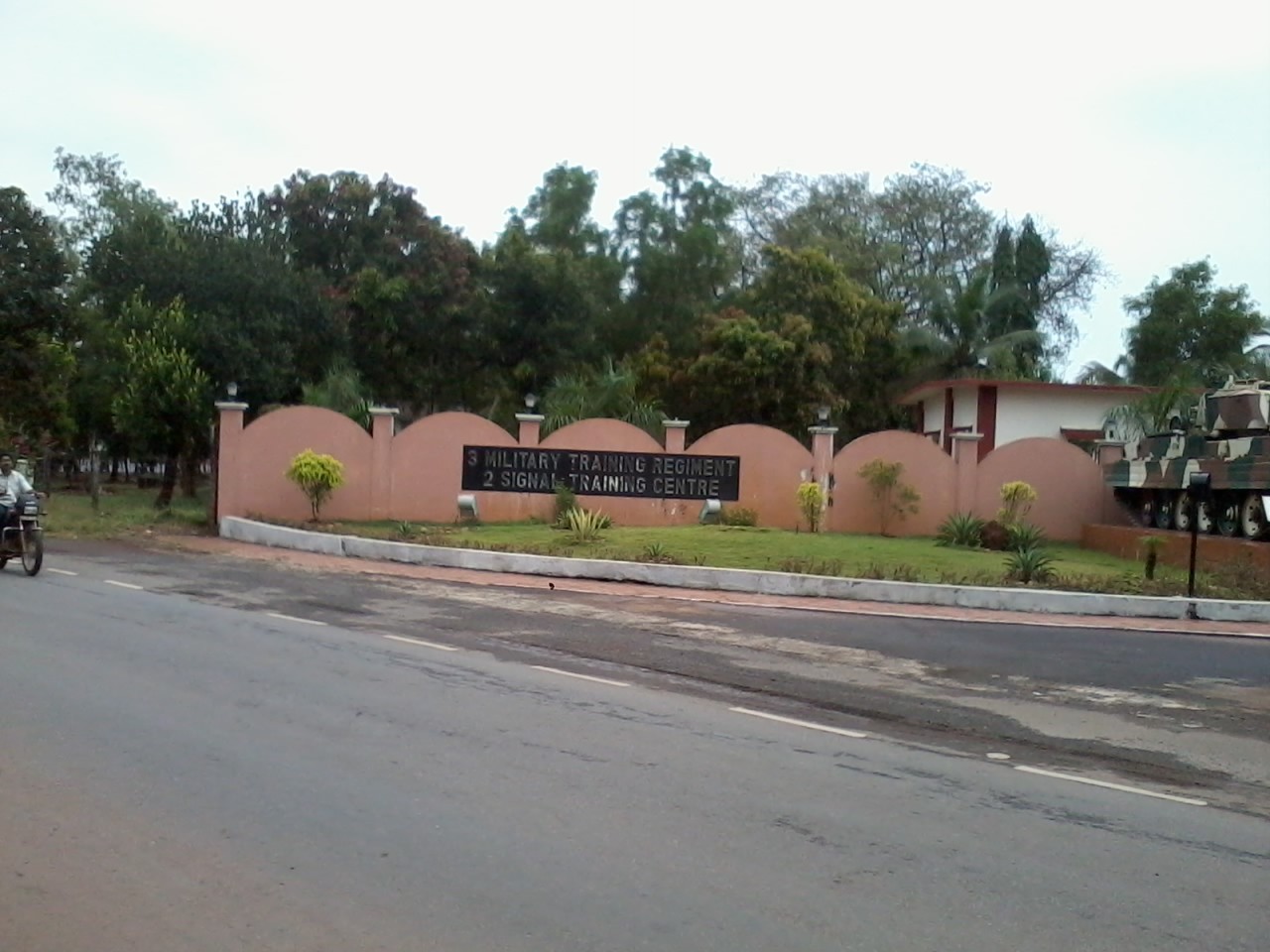
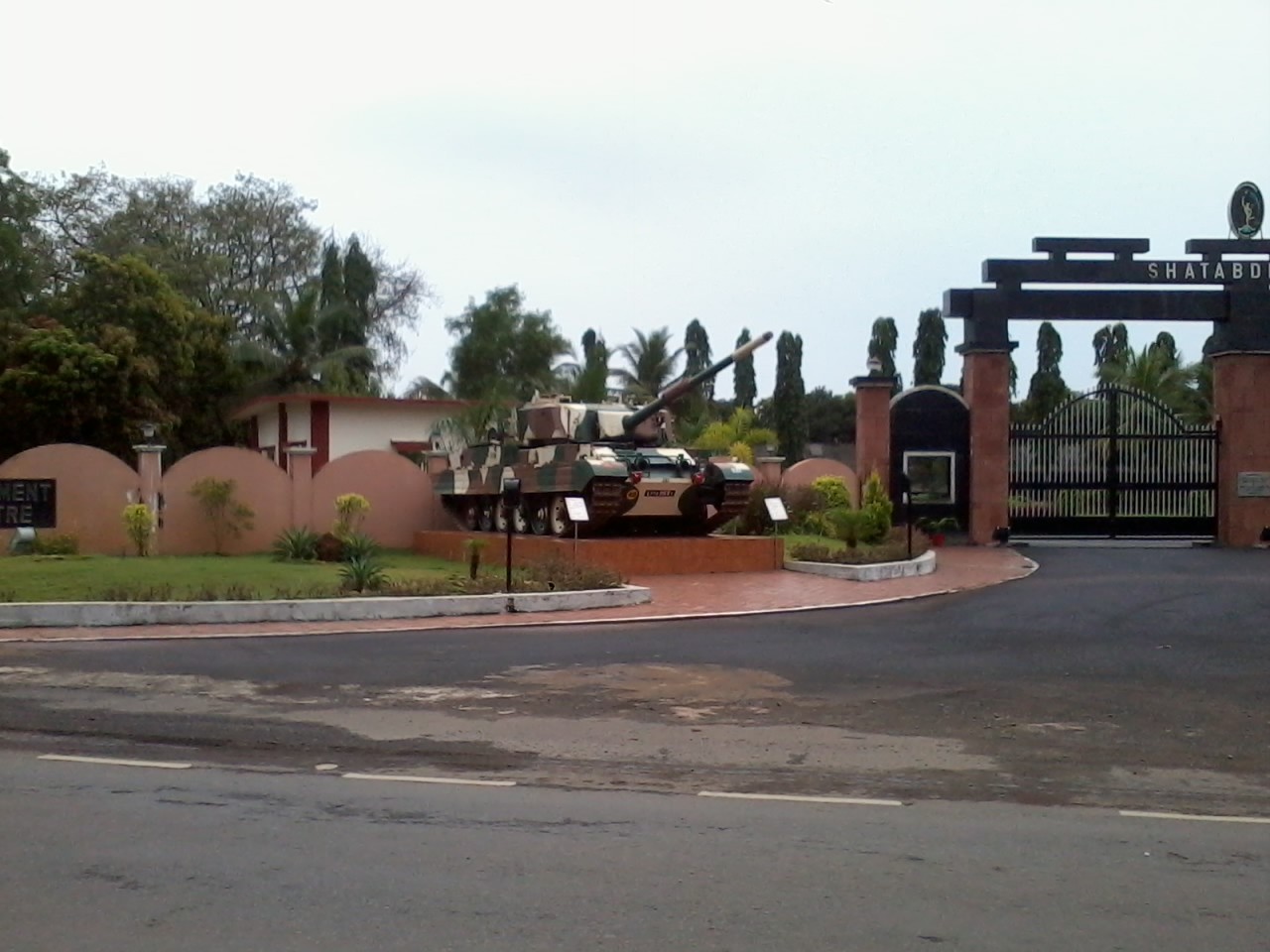
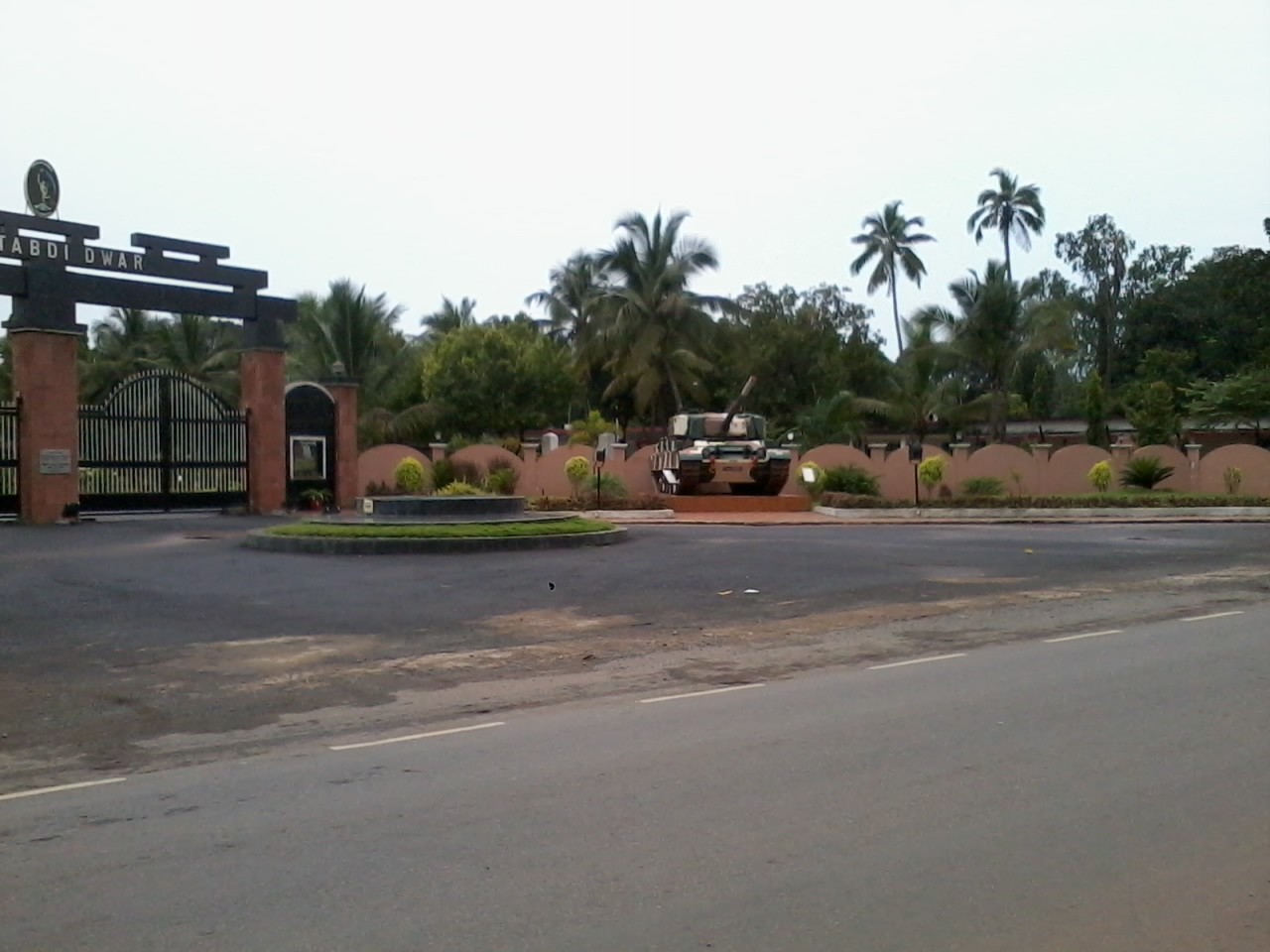
Came across this some where in South Goa
http://i44.servimg.com/u/f44/15/54/62/79/2012-110.jpg
http://i44.servimg.com/u/f44/15/54/62/79/2012-111.jpg
http://i44.servimg.com/u/f44/15/54/62/79/2012-112.jpg
http://i44.servimg.com/u/f44/15/54/62/79/2012-113.jpg
http://i44.servimg.com/u/f44/15/54/62/79/2012-114.jpg
http://i44.servimg.com/u/f44/15/54/62/79/2012-115.jpg
http://i44.servimg.com/u/f44/15/54/62/79/2012-110.jpg

http://i44.servimg.com/u/f44/15/54/62/79/2012-111.jpg
http://i44.servimg.com/u/f44/15/54/62/79/2012-112.jpg
http://i44.servimg.com/u/f44/15/54/62/79/2012-113.jpg
http://i44.servimg.com/u/f44/15/54/62/79/2012-114.jpg
http://i44.servimg.com/u/f44/15/54/62/79/2012-115.jpg
Re: Indian Army: News and Discussions 15 Apr 2012
Jungle warfare school teaches much more than Jungle warfare including Counter Insurgency.Mihaylo wrote:
Are there jungles in Afghanistan ?
-M
Re: Indian Army: News and Discussions 15 Apr 2012
Why are we so keen to reveal our hard won secrets??darshhan wrote:Jungle warfare school teaches much more than Jungle warfare including Counter Insurgency.Mihaylo wrote:
Are there jungles in Afghanistan ?
-M
Re: Indian Army: News and Discussions 15 Apr 2012
no saar, we are probably more keen on developing india friendly afghan leaders
Re: Indian Army: News and Discussions 15 Apr 2012
How not to procure a lightweight bulletproof jacket
Anil Kaul on why shaking up entrenched bureaucracy has to precede reform of defence procurement
Anil Kaul on why shaking up entrenched bureaucracy has to precede reform of defence procurement
Bureaucracy. Management. Administration. Call it what you will, every organisation has to have a hierarchical authority, numerous offices and fixed procedures so that it can function properly. But the administrative structure of a large or complex organisation can also impede effective action if it follows rigid procedures that baffle and frustrate.
The military bureaucracy does not go out and fight a war -- it is supposed to offer the support system for organised use of force. For historical reasons rooted in colonial rule, the military bureaucracy is supposed to be a pioneering and model bureaucracy. It is closely intertwined with the government and civilian bureaucracy, which are responsible for deciding how a nation defends its borders and when it should go to war.
The officer corps is politically aware but the military rank and file are more often working class in origin, and trained to give unquestioning obedience.
In India, military bureaucracy is divided into two parts: The controlling part and the executing part. While the Ministry of Defence is responsible for laying down policy, rules, regulations and adhering to budget allocations, the latter is responsible for ensuring the same in letter and spirit. Whereas the former lacks any hands-on experience of armed forces functioning, the latter due to inherent customs and regulations follows a straight and narrow path, hemmed as it is between the various statutes. In essence, innovative ideas get bogged down in red tape.
Changes that adversely affect entrenched bureaucratic empires in the military are resisted most of all. Fundamental changes in military organisation or doctrine often require outside intervention, for example by civilian political elites. A reason for the conservatism of military forces is that most of them are at war only a small fraction of time, and in between wars there is no 'marketplace' test of the current doctrines. Internal conservatism is one reason why militaries are notorious for ‘being prepared to fight the previous war’.
Ongoing efforts at modernisation of the armed forces, unless accompanied by significant political reforms, may fail to change our military-strategic position, particularly with respect to Pakistan and China. Despite importing large numbers of conventional weaponry over the last three decades, if we wish to effectively confront critical security challenges, we must address a civil-military imbalance that hampers coordination and an illegitimate procurement process that threatens to further entrench government corruption.
What makes the problem worse is that India is pouring money into its military. Yet those making the decisions tend to be politicians and bureaucrats with little understanding of how to invest the cash. Procurement procedures are arcane and the military suffers from the regular lash of red tape wielded by bureaucrats who are afraid of losing turf. That the integrity of these bureaucrats is doubtful does not help. New Delhi is crawling with middlemen acting for various companies and brokering defence deals. Unfortunately, nothing is being done to bring transparency or efficiency to the system.
If we are to become the global player we aspire to be, we have to reform our defence establishment. The recent controversies have exposed the deep rot that has set into the Indian system and can set the agenda for long overdue reforms.
What is shocking is that significant operations, logistics or even welfare related provisions related to the defence services which require a decision at defence minister or government level, including even those which have received an in-principle assent of the political executive, are junked by junior babus who do not even care to put up the file to their seniors and append misleading file notings. Similarly, the men or women in uniform, following their mentors in South Block, seldom question arbitrary decisions and accept everything as a fait accompli.
A typical examples of how military bureaucracy works is as follows: A lightweight bulletproof jacket is required. Its importance has come to light when an infantry jawan combating terrorists is killed wearing such a cumbersome jacket. The item is available off-the-shelf internationally.
Army 11,29,900 9,60,000
Air Force 1,27,200 1,40,000
Paramilitary forces 13,00,586 9,87,821
Navy 58,350 55,000
Coast Guard 9,550
Typically, the requirement would be raised by the main users, the Infantry. A request for provision would be sent by the directorate general of Infantry (DG INF) duly approved by its Director General, an officer of the rank of Lt General, equivalent to a joint secretary in the government to his counterpart in the directorate general of weapons and equipment, (DGWE), both sitting approximately 500 metres apart, connected by telephone and on the intranet. A running file in hard copy and a duplicate file would be generated. The DGWE would then send the said file on a formula one circuit to ascertain, first, whether at all a replacement of the said item would be required or not; second whether it could be produced in the country or needed to be imported, and finally for its cost evaluation. The file would wind its way from the DGWE’s office to that of the operations directorate, on to the ordnance, completing its journey at the perspective planning and financial planning directorates. Keeping in mind the working days, holidays, absenteeism of concerned officials and the normal fact-finding gestation period, the onward and return journeys would take at least six months.
In the meantime, 10 more fatal casualties due to similar equipment fault would have taken place and converted to statistics.
Having got a unanimous clearance that it was needed, it had to be imported and was available off the shelf at a competitive price, and that adequate funds from the yearly budget were available for procurement of ‘X’ number of items, a note for procurement would be sent to the concerned section in the Ministry of Defence (MoD).
The lowest rung in the MoD, a section officer who has never seen a bullet let alone a bulletproof jacket, would be the first one to comment on the note duly approved by no less a person than the COAS. The file would then take off on a perilous journey covering the chain up to the Secretary of Defence, with each one in the chain either initialing the file or putting his own version of disagreement with the proposal. The secretary, not wanting to be seen in a poor light for outright rejecting the proposal, would forward it to his counterpart in the department of defence production to ascertain why shining India could not produce this item. The journey would then end at the doorstep of the defence research and development organisation (DRDO) and the ordnance factory board (OFB).
The DRDO would be quick off the block and would immediately commission a team of scientists and other officers of the MoD and OFB to visit foreign countries to assess the availability and efficacy of the requested item. The procedure of selection, sanction to travel, issue of visas and booking of tickets as also arranging their stay and demonstrations in the host country would take another three months or so. From the time the proposal had reached the MoD we are looking at roughly six months down the line. The team’s visit over a few samples would be imported from various countries for evaluation and user trials on one hand and an effort at reverse engineering in our own ordnance factories.
The field trials would be conducted in actual combat-infested areas and the results would filter up the chain of command to the MoD. An average gestation period of three months for this to happen would be reasonable. Simultaneously, the efforts at reverse engineering would be going on and the DRDO and OFB would claim to be able to produce an even better version than the original -- however, with a rider that it would take at least one year to produce a prototype and, if approved, another couple of years for its introduction in service.
In the interim, 20 more casualties both fatal and seriously wounded would have occurred and been reported.
Finally, the MoD would constitute a committee to evaluate the foreign bids as also the home product. A global tender would be issued and the price negotiating committee set up. This would take another six months if not more to fructify. The end result the firm declared as LI or the lowest bidder would be identified and an order placed.
Just as the order was to be executed there would be a leak in the media that a particular ministers kin who was the front man for the foreign supplying company had influenced the deal and a vast sum of money had crossed hands for the same. Uproarious scenes erupt in Parliament, news channels run evening debates addressed by a host of retired army officers and bureaucrats, all condemning the disgraceful act. The company is banned and the order scrapped.
In the interim, 20 more casualties, both fatal and seriously wounded including four young officers have occurred. They, like all those before them, join the ranks of the Unknown Soldier.
Cut to the ceremony at the Amar Jawan Jyoti at India Gate on 26 January. The Prime Minister, the defence minister and the three service chiefs, among others, pay homage to the martyrs, surrounded by gun-toting personnel of various agencies all wearing the obsolete and ineffective bulletproof jacket.
Col (retired) Anil Kaul is the author of Better Dead Than Disabled published by Parity Paperbacks.
fwletters@gmail.com
Re: Indian Army: News and Discussions 15 Apr 2012
http://www.tribuneindia.com/2012/20121112/main4.htm
Army’s Ghatak infantry platoons to go more deadly
Army’s Ghatak infantry platoons to go more deadly
All “Ghatak platoons” of the Army will soon start getting the first lot of the latest weaponry aimed at equipping the troops to tackle newer forms of threats. Each of the 350 infantry battalions of the Army have “Ghatak platoons”. These largely comprise trained commandos that carry out specific tasks.
As there are 20 Ghatak personnel in each infantry battalion of 800, 7,000 Army personnel are set to get the latest weapons. The new weapons will be in addition to the existing sniper rifles and rocket launchers. With the changing scenario, four different sets of equipment would be added to the armoury of the “Ghatak platoons”, source said.
This would include new automatic sub-machine guns having rapid-fire and night firing capabilities. A contract to acquire 1,568 of these guns had been signed with B&T, Switzerland, for Rs 25 crore. The first priority would be to equip the 130 infantry battalions stationed in the North and the North-East, followed by other battalions. The delivery of the gun was expected to start anytime now, source said.
The second part of the weaponry would comprise specialised breaching ammunition that would be handy in case the enemy was hiding behind a brick wall or a door. This would be effective in urban warfare and counter-insurgency operations with terrorists taking refuge in people’s houses or farmhouses. At present, the NSG uses such ammunition.
Handheld ballistic shield would form the third part of the weaponry. The soldiers would be well-protected with bulletproof jackets and headgear. The shield would allow the soldier to see the enemy through it while his own face would remain protected.
The fourth and last item would be the “stun grenades”. These do not cause any collateral damage but are used to provide an effect by which a person is immobilised and rendered incapable of firing back. This is expected to be used against militants and even in case of a war. Capturing a militant or an enemy alive could yield a whole lot of information. All this is part of the efforts made to address the critical “hollowness” within the Army. Army Chief General Bikram Singh, when he joined on June 1 this year, made it clear that his focus would be on the force and replacing its ageing weaponry.
Besides ramping up the “Ghatak platoons”, the process to acquire new assault rifles for the entire Army is also at its final stages. Around 60,000 rifles would be purchased in the first lot. The transfer of technology would facilitate licensed production in India.
ON PURCHASE LIST
SET-ONE:New automatic sub-machine guns having rapid-fire and night-fire capability
SET-TWO: Specialised breaching ammunitions for use against enemy hiding behind walls etc.
SET-THREE: Handheld ballistic shield allowing soldiers to see the enemy while keeping their own face protected
SET-FOUR: Stun grenades to immobilise a person without causing any collateral damage
Re: Indian Army: News and Discussions 15 Apr 2012
That would mean mp9. Interesting choice. I would have thought that they would go for a carbine instead of smg.wig wrote:http://www.tribuneindia.com/2012/20121112/main4.htm
Army’s Ghatak infantry platoons to go more deadly
<snip>
This would include new automatic sub-machine guns having rapid-fire and night firing capabilities. A contract to acquire 1,568 of these guns had been signed with B&T, Switzerland, for Rs 25 crore.
<snip>
Re: Indian Army: News and Discussions 15 Apr 2012
how about combat shotguns ? seems like a portable artillery in its own way. or are they deemed worldwide as too much of a "broad area room clearing" weapon to use in situations were civilians and hostages are embedded with the enemy?
Re: Indian Army: News and Discussions 15 Apr 2012
^^^Ghatak platoon's main purpose is to undertake operations in conventional war and hence, the choice of weapon system. Civilians and hostage situation is not something you need to equip the Ghatak platoons across the army for.
Re: Indian Army: News and Discussions 15 Apr 2012
Then why the submachine guns? Where are they supposed to be used on the battlefield? Wouldn't something like an MTAR or Micro-Tavor which the IA already uses be more useful?rohitvats wrote:^^^Ghatak platoon's main purpose is to undertake operations in conventional war and hence, the choice of weapon system. Civilians and hostage situation is not something you need to equip the Ghatak platoons across the army for.
-
vivek_ahuja
- BRF Oldie
- Posts: 2394
- Joined: 07 Feb 2007 16:58
Re: Indian Army: News and Discussions 15 Apr 2012
Not to mention the stun grenades and riot shields?nachiket wrote:Then why the submachine guns? Where are they supposed to be used on the battlefield? Wouldn't something like an MTAR or Micro-Tavor which the IA already uses be more useful?rohitvats wrote:^^^Ghatak platoon's main purpose is to undertake operations in conventional war and hence, the choice of weapon system. Civilians and hostage situation is not something you need to equip the Ghatak platoons across the army for.
I always thought that the Ghatak platoons were designed from the outset for COIN and other urban operations in J&K originally and then elsewhere. The rest of the Battalion is already tailored for regular combat operations. Unless you meant SF operations during war, but then we have regular units for that as well, don't we?
Re: Indian Army: News and Discussions 15 Apr 2012
Army Orders for Local Sights
Link
Link
Re: Indian Army: News and Discussions 15 Apr 2012
Nice. What is the CEP of these devices when used for target acquisition at a distance of say 3 or 4 km?koti wrote:Army Orders for Local Sights
Link
Re: Indian Army: News and Discussions 15 Apr 2012
koti wrote:Army Orders for Local Sights
Link
Nice news, the LRF should also have the designating function in order to guide smart munitions.
Re: Indian Army: News and Discussions 15 Apr 2012
Vivek ji, I think that Ghatak platoons attached to RR battalions are used for COIN ops. However the Ghatak platoons which are attached to regular infantry battalions will be used for supporting regular combat operations. I was reading somewhere that these Ghataks can be used for operations requiring shallow ingress thereby freeing Special forces to carry out operations deep behind enemy lines. Also SF targets will be relatively more strategic in nature.vivek_ahuja wrote: I always thought that the Ghatak platoons were designed from the outset for COIN and other urban operations in J&K originally and then elsewhere. The rest of the Battalion is already tailored for regular combat operations. Unless you meant SF operations during war, but then we have regular units for that as well, don't we?
The idea is to provide the commanding officer of the battalion with his own mini SF detatchment.
Re: Indian Army: News and Discussions 15 Apr 2012
The concept of Ghatak platoon IMO is not in context to the COIN operations. They were meant to be the 'strike and recce' elements for the battalion from what I know. Grenadier Yogendra Singh of Tiger Hill fame was part of such a Ghatak Platoon.vivek_ahuja wrote:<SNIP>I always thought that the Ghatak platoons were designed from the outset for COIN and other urban operations in J&K originally and then elsewhere. The rest of the Battalion is already tailored for regular combat operations. Unless you meant SF operations during war, but then we have regular units for that as well, don't we?
Added later: From the news item it is clear that these weapon systems are being added in addition to what is available at present. So, an Infantry Battalion would be capable of handling threats in COIN as well as Urban Warfare. The concept of having men with more advanced training is being given more teeth now with these weapon systems.
Last edited by rohitvats on 13 Nov 2012 12:04, edited 1 time in total.