I agree. I think JN Chaudhuri was incompetent, and a political appointee.fanne wrote:Will it be proper to say that Gen. Choudhary almost belw the war for us (retreat till Beas!! Give me a break) and it was Gen Harbax Singh who carried the day for us in 1965.
rgds,
fanne
1965 India Pakistan War: Forty Years Since
He was not a political appointee. He was the senior most General when the previous chief Thapar quit and by the time tested seniority rule, he became COAS. There was no political interference at that stage.RajeevT wrote:
I agree. I think JN Chaudhuri was incompetent, and a political appointee.
I think we are also generalising it on the basis of one incident. A truely incompentant general would have overruled harbaksh and forced him to withdraw (like many a pakistani general is said to have done - or like our very own Se La Debacle). Atleast Chaudhury listened to Harbaksh and let him have his way.
1965 war in a very important event in the history of modern India. The perception of India among the world powers and asian nation changed with 1962 and 1965 war. It changed the Indian trajectory in the international arena.ramana wrote:Despite all this Gen. JNC restored Army confidence which was shaken by the Kaul antics and the 1962 debacle. 1965 War also needs a deep study to understand what was happening and how it affected all of us in and outside India.
1965 was the first war after PM Nehru death.
1962 war was to change the perception of India in the eys of the asian countries.
1965 war was to change the perception in the eyes of the muslim world
Last edited by svinayak on 09 Sep 2005 04:29, edited 1 time in total.
The other thing we cannot divorce from the situation is the general climate, the self confidene. Today even giving up an inch of land is unthinkable, remember, we just faught a war with a newclear enemy over a land where hardly any indian lived (Tiger hill and all) or a blade of grass grew (Compared to 1962 muttering of Nehru in parliament about loss of Aksai Chin...Not even a single blade of grass grows there). We were willing to take unacceptable damages if it ever came to that for barren mountains. This should clarify anyone who has any doubt over our resolve.
We today talk about punishing the enemy, about how to be victorious, not about if we will loose. The thing is the IA, IAF and IN is so big that we can afford to loose few battles and still win the war.
The cool thing would be to make that assesment part of enemy Phsyche by building up a strong force. (Since we are 10 times bigger in almost every respect, even if we had 5 times bigger force, we will achieve this). Imagine 10 armoured corp or maybe 65 sq IAF with 40 Sq of frontline planes, or navy with 30 subs and 4 AC. Then trust me there wont be any x border terrorism, they would give up.
rgds,
fanne
We today talk about punishing the enemy, about how to be victorious, not about if we will loose. The thing is the IA, IAF and IN is so big that we can afford to loose few battles and still win the war.
The cool thing would be to make that assesment part of enemy Phsyche by building up a strong force. (Since we are 10 times bigger in almost every respect, even if we had 5 times bigger force, we will achieve this). Imagine 10 armoured corp or maybe 65 sq IAF with 40 Sq of frontline planes, or navy with 30 subs and 4 AC. Then trust me there wont be any x border terrorism, they would give up.
rgds,
fanne
I think JNC was a bit indecisive and over cautious. Plus, not aggressive enough. He gave up quite a bit of Punjab, so as to speak, before the battle was fought.Jagan wrote:He was not a political appointee. He was the senior most General when the previous chief Thapar quit and by the time tested seniority rule, he became COAS. There was no political interference at that stage.RajeevT wrote:
I agree. I think JN Chaudhuri was incompetent, and a political appointee.
I think we are also generalising it on the basis of one incident. A truely incompentant general would have overruled harbaksh and forced him to withdraw (like many a pakistani general is said to have done - or like our very own Se La Debacle). Atleast Chaudhury listened to Harbaksh and let him have his way.
Indian army of 1965 was not exactly the same as it is today. The memory of 62 debacle was very very fresh and economy was confused so was the political leadership. The general reflected the political indecision in meeting military objective. 65 was definitely not a "good war " for india look at how the gains we made were squanderd awayon conference table..Gen chowdhury was a typical british type general who went by the book some what unimaginative if it may be said so
Why Pakistan lost Akhnur by Brig Shaukat Qadir
http://in.rediff.com/news/2005/sep/09war1.htm
Also an explanation as to why he was earlier referred to as PAF...
http://in.rediff.com/news/2005/sep/09war1.htm
Also an explanation as to why he was earlier referred to as PAF...
Brigadier Shaukat Qadir, who began his military career aspiring to be a pilot in the Pakistan Air Force in 1964, but left the PAF three years later. He then joined the Pakistan army and served for 30 years, retiring as brigadier.
Part III of brig. Shaukat Qadir's Series on the 1965 War:
The Fog Of War
http://us.rediff.com/news/2005/sep/12war.htm
The Fog Of War
http://us.rediff.com/news/2005/sep/12war.htm
While essentially a Book Review, AM Patneys piece has some interesting viewpoints on the airwar ..
http://www.ipcs.org/newIpcsBookReview.jsp
http://www.ipcs.org/newIpcsBookReview.jsp
I was in the 8th Std then, in BCBS, Bangalore. Followed all the stories about the Keelors and others. But Pukistan was very, very far away from my mind then. When Shastri died I remember I heard about it while we were camping next to the Seringapattam river near Mysore, after a day's mahseer fishing.
Although, with all due respect to the senior members of this forum, a suggestion may be proposed by me for the respect that is believed by me, which may be accorded duly to the leaders that have led India.
Analogously, the same parlance may not be used by me with respect to the politicians that are in existence today, but it may be mentioned that a similar case was not true of the time after the independence of India.
It has been reminiscised by my grandmother, that the request for forfeiting of one time's meal was given by Shastriji during the war that was fought between India and Pakistan in 1965.
Trenches were dug by the members of the Rashtriya Swayamsewak Sangh in New Delhi, and the request to the citizens for the coverage of tubelights by brown paper was made by them.
I may be excused by member Ved, but the above statement may be reffered as "when Shastriji passed away".When Shastri died
Analogously, the same parlance may not be used by me with respect to the politicians that are in existence today, but it may be mentioned that a similar case was not true of the time after the independence of India.
It has been reminiscised by my grandmother, that the request for forfeiting of one time's meal was given by Shastriji during the war that was fought between India and Pakistan in 1965.
Trenches were dug by the members of the Rashtriya Swayamsewak Sangh in New Delhi, and the request to the citizens for the coverage of tubelights by brown paper was made by them.
http://www.navhindtimes.com/stories.php ... y_ID=09145
1965 Indo-Pak War Was Bhutto’s War!
by Kuldip Nayar
RETIRED Air Marshal Nur Khan’s disclosure about the 1965 war is correct in the sense that Pakistan imposed the war on India. But the person responsible for it was not General Mohammed Ayub Khan, then the Pakistan President, but his Foreign Minister Zulfikar Ali Bhutto. My contention is based on the conversation I had with Ayub in 1972, soon after the Bangladesh war. By then he had retired and lived at his bungalow in Islamabad. As irony had it, Bhutto was the President. While going over the discussions at Tashkent, where I met Ayub for the first time, the reference to the 1965 war also cropped up. I was keen to know who had started hostilities. Ayub refused to say anything. My persistence evoked one comment from him: You would be meeting Bhutto, find out from him. It was his war. That very afternoon, I met Bhutto. I repeated what Ayub had said, blaming him for the war. Bhutto did not deny his role. His case was that he thought Pakistan could beat India at that time. The various ordinance factories which Delhi had established, he said, had not yet gone into full production then and once they did, India would be too strong to beat. Bhutto explained his reasoning in a taped interview. It is a long one. I am reproducing a part of it here:
“There was a time when militarily, in terms of the big push, in terms of armour, we were superior to India because of the military assistance we were getting and that was the position up to 1965. Now that the Kashmir dispute was not being resolved and its resolution was also essential for the settlement of our disputes and as it was not being resolved peacefully and we having had this military advantage, we were blamed for it. So it would, as a patriotic prudence, be better to say, all right, let us finish this problem and come to terms and come to a settlement. It has been an unfortunate thing. So that is why up to 1965, I thought that with this edge that we had we could have morally justified it. Also, because India was committed to self-determination and it was not being resolved and we had this situation. But now this position does not exist. I know it does not exist. I know better than anyone else that it does not exist and that it will not exist in the future also...”
Bhutto had also been taken in by certain happenings in India at that time. He had interpreted the DMK demand for autonomy, the Akali movement for Punjabi Suba and the Maharashtra-Mysore border dispute as evidence of India falling apart. Therefore, his thesis was: the sooner Pakistan decided to “settle its scores” with India, the better it was.
Long before the war, Bhutto had prepared a working paper which came to be known as the “Bhutto Plan”. Infiltration in Kashmir in September, according to the plan, was a sequel to the Rann of Kutch operation in January-April, 1965. What started in the Rann of Kutch was a clash between the border police. It soon involved the armed forces of both sides. Pakistan seemed to have prepared for the battle; it had troops ready. It also had not only an airport near the Rann of Kutch but also a network of roads, over which it could bring up armour.
Most Indian cabinet ministers wanted an all out offensive in this area. But Prime Minister Lal Bahadur Shastri and General J N Chaudhari, then chief of the Army Staff, were opposed to it. The former did not want his strategy of having good relations with Pakistan rather than with China lost in what he called a swamp. Chaudhari’s assessment was that the Kutch operation was a diversionary attack to pin down as many Indian forces as possible for a later attack somewhere else. Probably it was. However, Rawalpindi’s calculation that there would be an uprising in Kashmir following the infiltration misfired. It was Kashmiris — Mohammed Din from Gulmarg and Wazir Mohammed from Mendhar, Jammu — who were the first to tell the Kashmir police about the infiltration. Pakistan’s plans to distribute arms and ammunition to the local population and to organise a revolt remained on paper.
On September 1, Ayub had broadcast that by supporting the people of Kashmir to exercise their right of self-determination Pakistan was doing no more than what it had always pledged. He asked the Kashmiris to rise like one man. When Ayub heard that there was no response, his comment was that it was Bhutto who made him go wrong in his assessment of the Kashmiris’ attitude. Bhutto told me later that he had no regrets about having persuaded Ayub to send in the infiltrators.
The war, as Pakistan calls it, or the conflict, as Indian official records say, lasted 23 days from September 1 to 23. Both sides claimed victory. For Pakistan it was its “finest hour” and for India it was the redemption of the honour it had lost in 1962 in the fighting against the Chinese. Rawalpindi claimed that Indian efforts to capture Lahore and Sialkot were rebuffed through better organisation, training, planning and dedication. I was told in Pakistan that Indians were dreaming of a banquet in Lahore but the dinner jackets were never worn as the DJ-wallas were all slaughtered by our valiant fighters. Many asked me whether it was a fact that Chandni Chowk and Connaught Place in Delhi and Hall Bazaar in Amritsar had been so heavily bombed that they were beyond recognition.
New Delhi said its aim was to destroy Pakistan’s armour, not to occupy territory; therefore, all those who wanted to measure gain in terms of key towns like Lahore and Sialkot were wrong. Both General Chaudhari and Air Marshal Arjun Singh said that India essentially fought a war of attrition and achieved its aim. But the Indians were generally disappointed that neither Lahore nor Sialkot was captured. Then Egyptian president Nasser told Dr Radhakrishnan, then India’s president, who was returning to New Delhi via Cairo, that if India had captured Lahore its prestige would have gone up.
Chaudhari has explained in his book, Defence of India that “politically the destruction of Lahore was most unwise and militarily this would have meant the use of far more troops than were available. Whatever the explanation, the fact was that neither side registered a decisive victory, though India did have an edge over Pakistan, particularly when it wrested Haji Pir and Tithwal, two important positions in Azad Kashmir. The overall gains were minimal”. In the words of Lt Gen Harbaksh Singh, then heading the Western Command, “although we did succeed in whittling down Pakistan’s fighting potential, especially armour and occupied chunks of her territory, most of our offensive actions fizzled into a series of stalemates without achieving any decisive results”.
1965 Indo-Pak War Was Bhutto’s War!
by Kuldip Nayar
RETIRED Air Marshal Nur Khan’s disclosure about the 1965 war is correct in the sense that Pakistan imposed the war on India. But the person responsible for it was not General Mohammed Ayub Khan, then the Pakistan President, but his Foreign Minister Zulfikar Ali Bhutto. My contention is based on the conversation I had with Ayub in 1972, soon after the Bangladesh war. By then he had retired and lived at his bungalow in Islamabad. As irony had it, Bhutto was the President. While going over the discussions at Tashkent, where I met Ayub for the first time, the reference to the 1965 war also cropped up. I was keen to know who had started hostilities. Ayub refused to say anything. My persistence evoked one comment from him: You would be meeting Bhutto, find out from him. It was his war. That very afternoon, I met Bhutto. I repeated what Ayub had said, blaming him for the war. Bhutto did not deny his role. His case was that he thought Pakistan could beat India at that time. The various ordinance factories which Delhi had established, he said, had not yet gone into full production then and once they did, India would be too strong to beat. Bhutto explained his reasoning in a taped interview. It is a long one. I am reproducing a part of it here:
“There was a time when militarily, in terms of the big push, in terms of armour, we were superior to India because of the military assistance we were getting and that was the position up to 1965. Now that the Kashmir dispute was not being resolved and its resolution was also essential for the settlement of our disputes and as it was not being resolved peacefully and we having had this military advantage, we were blamed for it. So it would, as a patriotic prudence, be better to say, all right, let us finish this problem and come to terms and come to a settlement. It has been an unfortunate thing. So that is why up to 1965, I thought that with this edge that we had we could have morally justified it. Also, because India was committed to self-determination and it was not being resolved and we had this situation. But now this position does not exist. I know it does not exist. I know better than anyone else that it does not exist and that it will not exist in the future also...”
Bhutto had also been taken in by certain happenings in India at that time. He had interpreted the DMK demand for autonomy, the Akali movement for Punjabi Suba and the Maharashtra-Mysore border dispute as evidence of India falling apart. Therefore, his thesis was: the sooner Pakistan decided to “settle its scores” with India, the better it was.
Long before the war, Bhutto had prepared a working paper which came to be known as the “Bhutto Plan”. Infiltration in Kashmir in September, according to the plan, was a sequel to the Rann of Kutch operation in January-April, 1965. What started in the Rann of Kutch was a clash between the border police. It soon involved the armed forces of both sides. Pakistan seemed to have prepared for the battle; it had troops ready. It also had not only an airport near the Rann of Kutch but also a network of roads, over which it could bring up armour.
Most Indian cabinet ministers wanted an all out offensive in this area. But Prime Minister Lal Bahadur Shastri and General J N Chaudhari, then chief of the Army Staff, were opposed to it. The former did not want his strategy of having good relations with Pakistan rather than with China lost in what he called a swamp. Chaudhari’s assessment was that the Kutch operation was a diversionary attack to pin down as many Indian forces as possible for a later attack somewhere else. Probably it was. However, Rawalpindi’s calculation that there would be an uprising in Kashmir following the infiltration misfired. It was Kashmiris — Mohammed Din from Gulmarg and Wazir Mohammed from Mendhar, Jammu — who were the first to tell the Kashmir police about the infiltration. Pakistan’s plans to distribute arms and ammunition to the local population and to organise a revolt remained on paper.
On September 1, Ayub had broadcast that by supporting the people of Kashmir to exercise their right of self-determination Pakistan was doing no more than what it had always pledged. He asked the Kashmiris to rise like one man. When Ayub heard that there was no response, his comment was that it was Bhutto who made him go wrong in his assessment of the Kashmiris’ attitude. Bhutto told me later that he had no regrets about having persuaded Ayub to send in the infiltrators.
The war, as Pakistan calls it, or the conflict, as Indian official records say, lasted 23 days from September 1 to 23. Both sides claimed victory. For Pakistan it was its “finest hour” and for India it was the redemption of the honour it had lost in 1962 in the fighting against the Chinese. Rawalpindi claimed that Indian efforts to capture Lahore and Sialkot were rebuffed through better organisation, training, planning and dedication. I was told in Pakistan that Indians were dreaming of a banquet in Lahore but the dinner jackets were never worn as the DJ-wallas were all slaughtered by our valiant fighters. Many asked me whether it was a fact that Chandni Chowk and Connaught Place in Delhi and Hall Bazaar in Amritsar had been so heavily bombed that they were beyond recognition.
New Delhi said its aim was to destroy Pakistan’s armour, not to occupy territory; therefore, all those who wanted to measure gain in terms of key towns like Lahore and Sialkot were wrong. Both General Chaudhari and Air Marshal Arjun Singh said that India essentially fought a war of attrition and achieved its aim. But the Indians were generally disappointed that neither Lahore nor Sialkot was captured. Then Egyptian president Nasser told Dr Radhakrishnan, then India’s president, who was returning to New Delhi via Cairo, that if India had captured Lahore its prestige would have gone up.
Chaudhari has explained in his book, Defence of India that “politically the destruction of Lahore was most unwise and militarily this would have meant the use of far more troops than were available. Whatever the explanation, the fact was that neither side registered a decisive victory, though India did have an edge over Pakistan, particularly when it wrested Haji Pir and Tithwal, two important positions in Azad Kashmir. The overall gains were minimal”. In the words of Lt Gen Harbaksh Singh, then heading the Western Command, “although we did succeed in whittling down Pakistan’s fighting potential, especially armour and occupied chunks of her territory, most of our offensive actions fizzled into a series of stalemates without achieving any decisive results”.
Several information hidden in this article by KN.Jagan wrote:http://www.navhindtimes.com/stories.php ... y_ID=09145
1965 Indo-Pak War Was Bhutto’s War!
by Kuldip Nayar
Bhutto had also been taken in by certain happenings in India at that time. He had interpreted the DMK demand for autonomy, the Akali movement for Punjabi Suba and the Maharashtra-Mysore border dispute as evidence of India falling apart. Therefore, his thesis was: the sooner Pakistan decided to “settle its scores” with India, the better it was.
Then Egyptian president Nasser told Dr Radhakrishnan, then India’s president, who was returning to New Delhi via Cairo, that if India had captured Lahore its prestige would have gone up.
The key assumption by Bhutto regarding the status of India's internal situation is very critical to overall view of India in the eyes of the Paki elite. It has always been that way and willalso in future.
But most of the analysis and information regarding the internal situation in India is given to Pak by uncle which has the largest organization for social analysis of India.
The perception in the Arab world about India fighting a muslim nation is still in the iffy status. But 1965 could have been a decisive war to change the perception once for all so that no muslim nation would have supported jihad against India ever after.
http://in.rediff.com/news/2005/sep/13war.htm
The Rediff Special/Brigadier (retd) Shaukat Qadir
Lahore and after
September 13, 2005
In the concluding part of his series on the 1965 war, retired Pakistan Brigadier Shaukat Qadir looks at the battle in the Lahore sector, and the opportunities that both India and Pakistan failed to capitalise on.
The Rediff Special/Brigadier (retd) Shaukat Qadir
Lahore and after
September 13, 2005
In the concluding part of his series on the 1965 war, retired Pakistan Brigadier Shaukat Qadir looks at the battle in the Lahore sector, and the opportunities that both India and Pakistan failed to capitalise on.
Jagan & Sameer: Sree brought your book to the Bay Area BR-IF meet and I browsed throught the book. Very good job. When I buy it I too will demand a author signed copy 
Looks forward to your next project.
BTW the cover colour scheme would be better if it was a shade lighter. JMT.
Looks forward to your next project.
BTW the cover colour scheme would be better if it was a shade lighter. JMT.
Last edited by Arun_S on 14 Sep 2005 10:25, edited 1 time in total.
Wow, Qadir has been smoking some very good quality maal. Why he doesn't share, I don't know. Just have a dekko at what this illustrious man has to say about the war:
"For fighter planes, relying almost exclusively on virtually obsolescent F-86s, which had been found wanting against MIG-19s by the American pilots in the Korean War, trusting their superior training and maintenance, the PAF out-flew and out-fought the IAF who had not only MIG-19s, but also MIG-21s and even MIG-23s."
Unbelievable.
"For fighter planes, relying almost exclusively on virtually obsolescent F-86s, which had been found wanting against MIG-19s by the American pilots in the Korean War, trusting their superior training and maintenance, the PAF out-flew and out-fought the IAF who had not only MIG-19s, but also MIG-21s and even MIG-23s."
Unbelievable.
Hi Arun,
Glad you liked the book. I guess I can ship you a book and you can get samirs signture if you visit the east coast.. how does that sound? otherwise the limited edition copies signed by both authors are over - with the exception of one copy kept for the big boss.
Samir,
That para sounds very familiar. I am quite sure I read it an year back in some pakistani newspaper, perhaps the same source that rediff credits.. we had a good laugh at the mig19s and mig23s.
cheers
Jagan
Glad you liked the book. I guess I can ship you a book and you can get samirs signture if you visit the east coast.. how does that sound?
otherwise the limited edition copies signed by both authors are over - with the exception of one copy kept for the big boss.Samir,
That para sounds very familiar. I am quite sure I read it an year back in some pakistani newspaper, perhaps the same source that rediff credits.. we had a good laugh at the mig19s and mig23s.
cheers
Jagan
My many thanks to the originator and the various contributors in this thread.
I was born well after the war of 1971, let alone 1965. As such, all I know about them are through the words of elders, which are mainly anecdotal. The only "wars" I have experienced as a civilian would be the terrorism in Kashmir by Pakistanis and the Kargil war of 1999.
This discussion has been supremely informative and educational.
Thanks once again.
(and to any service personnel reading this, thank you.)
I was born well after the war of 1971, let alone 1965. As such, all I know about them are through the words of elders, which are mainly anecdotal. The only "wars" I have experienced as a civilian would be the terrorism in Kashmir by Pakistanis and the Kargil war of 1999.
This discussion has been supremely informative and educational.
Thanks once again.
(and to any service personnel reading this, thank you.)
For fighter planes, relying almost exclusively on virtually obsolescent F-86s, which had been found wanting against MIG-19s by the American pilots in the Korean War, trusting their superior training and maintenance, the PAF out-flew and out-fought the IAF who had not only MIG-19s, but also MIG-21s and even MIG-23s.

With dunces like Brig.Shaukat Quadir TSP/A/AF/N needs no enemies

Oxymoron = military intelligence = Brig.Shaukat Quadir
-
member_6642
- BRFite -Trainee
- Posts: 2
- Joined: 11 Aug 2016 05:32
Folks, no typos re Brigadier Qadir: here's how he introduced himself to me:
"Shaukat Qadir began his military career aspiring to be a pilot in the
PAF in 1964. The PAF soon saw through him and before he could
do serious damage, they got rid of him in 1967. the army, like
all armies, being denser took him in, and it took them thirty long years,
in which they continued to promote him to the rank of Brig, before
they realised the serious error they were about to make and
passed him over for the next rank. Having been discovered, Shaukat Qadir decided to attempt a new career. He is now a visiting faculty at the
Fatima Jinnah University in Rawalpindi, writes a weekly article for
the Daily Times and besides attempting research, baby sits his grand
children, with great pleasure".

"Shaukat Qadir began his military career aspiring to be a pilot in the
PAF in 1964. The PAF soon saw through him and before he could
do serious damage, they got rid of him in 1967. the army, like
all armies, being denser took him in, and it took them thirty long years,
in which they continued to promote him to the rank of Brig, before
they realised the serious error they were about to make and
passed him over for the next rank. Having been discovered, Shaukat Qadir decided to attempt a new career. He is now a visiting faculty at the
Fatima Jinnah University in Rawalpindi, writes a weekly article for
the Daily Times and besides attempting research, baby sits his grand
children, with great pleasure".
ramana wrote:x-posted form the TSP news and discussion thread by Harish.
Qadir wonders what prompted Ayub to launch the twin operations. A clue might be found in an article in Foreign Affairs written by Ayub Khan in May 1964(or 63?) where he whines about the US aid to India would reduce the Indian window of vulnerability as it modernizes its military. Please go thru the back issues to find this and a couple of articles by J.L. Nehru in 1963 and Mrs G in 1977. I am still looking for the landmark article that Nehru wrote in Foreign Affiars in 1939 outlining the FP of an independent India.TSP Brigadier speaks on the 1965 war. First of a four part series in rediff. Let's see how many lies come out! Posting in full below.
The Rediff Special/Brigadier Shaukat Qadir (retd)
Operation Gibraltar: Battle that never was
September 08, 2005
Brigadier Shaukat Qadir (retd), who served in the Pakistan Air Force during the 1965 war, begins a four-part analysis of that war.
Today: Operation Gibraltar
Unfortunately most of our history, particularly that relating to the conduct of military operations, remains shrouded in mystery, since none of the actual details is made public. Consequently, even those like myself who possess some knowledge of the actual events need to piece these together with educated speculations to fill in the gaps. Today, 40 years after this war, the true story remains untold.
Within the military an effort has been made to detail and analyse the actual events, but even these efforts might not be the whole truth, nor have they been made public. Therefore, those who choose to read this version with skepticism might be more sensible than those who consider this an accurate version, but I will attempt to relate the events as I am aware of them. If these read like a comedy of errors, I can only suggest that occasionally truth is indeed stranger than fiction.
Early the same year Pakistan army had successfully defended itself against the Indian attempted incursion in the Rann of Kutch, but that chapter was closed since the dispute had been referred for arbitration. Why therefore should Pakistan embark on a venture that might lead to war remains an unanswered question to date, particularly when we were aware that such a venture in which we were considered the aggressor would result in the severance of aid from the US, which ultimately happened?
It is a matter of historical record that Zulfiqar Ali Bhutto, then foreign minister, convinced Ayub Khan, the president, that the Indian response to our incursions in Kashmir would not be across the international boundary and would be confined to Kashmir.
He must have offered powerful diplomatic arguments as forcefully and articulately as he could, but despite that I find it difficult to comprehend how Ayub accepted such an argument which was militarily untenable and, while Ayub could be accused of many things, he was far from being militarily unwise.
Secondly, the undertaking of guerrilla operations necessitate special conditions, not only must the terrain be suitable, which it was, but there must be guaranteed local support, without which guerrilla operations are not sustainable. Preferably there should be a preliminary reconnaissance and liaison which sets the ground for such an operation.
For some obscure reason, Pakistan undertook Operation Gibraltar, without preparing the grounds for it, or seeking guarantees of local support, or even attempting to assess the mood of the Kashmiri people. They only relied on the assessment offered by some adventurous element of Kashmiris from Azad Kashmir without verifying this assessment. One cannot but wonder why? What was the reason for such haste, even if such an adventure was to be undertaken? I am afraid that I can only speculate an answer to that question.
1965 witnessed a number of events. First, two of Ayub's sons kidnapped the daughter of the IG Police. This was more than even the ever loyal Nawab of Kalabagh could bear and, when Ayub prevented him from taking any action, he resigned.
1965 was also the year that Ayub contested the elections against Fatima Jinnah. Personally speaking, her election to office would have been disastrous and, in my opinion, Ayub would have won any way.
Nonetheless, not only did two of his sons open fire on demonstrators in Karachi killing 30-odd people and wounding many more, but it was commonly accepted that the elections had been rigged. There were also a number of other incidents that began to come to light in this period, relating to Ayub's nepotism.
As a consequence of all these events, Ayub had lost a lot of political ground. Perhaps he felt that by becoming the liberator of Kashmir he would redeem himself in the eyes of the people, or that through such a venture he hoped to unite the people, for there is little doubt that there has never been greater unity in the country than in the period of the war and immediately after.
Whatever his reasons, Pakistan went into Operation Gibraltar without any preliminary preparations and undertook a guerrilla operation inside Indian held Kashmir with a large number of regular soldiers, some SSG elements and a smattering of irregulars, expecting to be welcomed by the local population and raise them up in arms against the Indian government.
They were destined to be rudely disillusioned.
Far from rising up in arms, the local population denied any support and, in many instances handed over the infiltrators to Indian troops. An act for which they should not be held to blame in any way, since by then they were reconciled to staying within the Indian Union and Pakistan had made no preparations for such a venture.
It was to take another 24 years for them to rise indigenously against the Indian Union. Gibraltar soon became a disaster. The majority of the infiltrators were captured by the Indian troops, though some managed to ex-filtrate.
In 1965, the division responsible for the defense of Kashmir and Northern Areas had about 400 miles to defend and was stretched thin on the ground. Gibraltar necessitated the release of more troops for infiltration, since acclimatization was a major consideration and these were the only troops acclimatized to operate in the inhospitable terrain of Kashmir.
The failure of Gibraltar was followed by a number of Indian assaults on various posts held by the Pakistan army which fell to the Indians. Major General Akhtar Malik, the divisional commander, was an intelligent and bold commander who led from the front.
However, in this situation there was little that he could do; stretched thin on ground, with little or no reserves, with a front of 400 miles to cover, he could not even reach the localities under attack, let alone influence events in any way. Since Gibraltar had been planned to succeed, there were no contingencies catering for its failure, another inexplicable oversight, since all militaries are taught to consider all possibilities and be prepared for the one they have not thought of. It was in this environment that Operation Grand Slam was launched to set things right.
The international response to the Rann of Kutch episode in early 1965 confirmed their chances of prying Kashmir. At that time the UK stepped in and forced arbitration. So it was a case of TSP winning either way- on ground or in arbitration panel.
-
member_6642
- BRFite -Trainee
- Posts: 2
- Joined: 11 Aug 2016 05:32
No typo, my friend. here's how Qadir introduced himself to me:Jagan wrote:http://cities.expressindia.com/fullstor ... sid=147597
The year was 1965
Forty years down the line, these men of honour recollect a war that changed the course of history.
Jaskiran Kaur & Sheveta Aggarwal
---------------------------------------------------
On a different note, shaukat qadir was from the Pak Army. I guess REdiff made a typo
"Shaukat Qadir began his military career aspiring to be a
pilot in the
PAF in 1964. The PAF soon saw through him and before he could
do
serious damage, they got rid of him in 1967. the army, like
all
armies, being denser took him in, and it took them thirty
long years,
in which they continued to promote him to the rank of Brig,
before
they realised the serious error they were about to make and
passed him
over for the next rank. Having been discovered, Shaukat Qadir
decided
to attempt a new career. He is now a visiting faculty at the
Fatima
Jinnah University in Rawalpindi, writes a weekly article for
the Daily
Times and besides attempting research, baby sits his grand
children,
with great pleasure".
Ramananda Sengupta
Deputy Managing Editor
rediff.com/India Abroad
Nice to see someone from Rediff here
Vishnu and Aman will have company.
Admin note: post authenticated ...cough...edited..
Added later: Thanx Jagan. Nice Glycodin that.
Vishnu and Aman will have company.
Admin note: post authenticated ...cough...edited..
Added later: Thanx Jagan. Nice Glycodin that.
Last edited by Manne on 19 Sep 2005 18:30, edited 1 time in total.
Dear Ramananda,
Good to see you over on this forum. I did read part two of Brig Shaukat;s piece and then realised he was exPAF transfered to Army. Posted a clarification too. All in all , its entertaining and educative reading, inspite of that last para on the PAF, I found Shaukats articles to be concise and informative on the land war.
Its a great job that rediff had been doing with commemorating India's conflicts (not just this one, but the 1962, IPKF and Kargil wars too). And I look forward to reading more!
regards
Jagan
Good to see you over on this forum. I did read part two of Brig Shaukat;s piece and then realised he was exPAF transfered to Army. Posted a clarification too. All in all , its entertaining and educative reading, inspite of that last para on the PAF, I found Shaukats articles to be concise and informative on the land war.
Its a great job that rediff had been doing with commemorating India's conflicts (not just this one, but the 1962, IPKF and Kargil wars too). And I look forward to reading more!
regards
Jagan
Posted: 09 Sep 2005 06:47 pm Post subject:
--------------------------------------------------------------------------------
Why Pakistan lost Akhnur by Brig Shaukat Qadir
http://in.rediff.com/news/2005/sep/09war1.htm
Also an explanation as to why he was earlier referred to as PAF...
Quote:
Brigadier Shaukat Qadir, who began his military career aspiring to be a pilot in the Pakistan Air Force in 1964, but left the PAF three years later. He then joined the Pakistan army and served for 30 years, retiring as brigadier.
Todays update on rediff
http://in.rediff.com/news/2005/sep/19war.htm
Major General Afsir Karim (retd) : The 1965 War: Lessons yet to be learnt
The next installment is an interview with Marshal of the Air Force Arjan Singh.
http://in.rediff.com/news/2005/sep/19war.htm
Major General Afsir Karim (retd) : The 1965 War: Lessons yet to be learnt
The next installment is an interview with Marshal of the Air Force Arjan Singh.
Here we go - Part 1 of the interview
http://us.rediff.com/news/2005/sep/21wa ... &file=.htm
The Rediff Special/Marshal of the Indian Air Force Arjan Singh : 'The Indian Air Force wanted to fight'
http://us.rediff.com/news/2005/sep/21wa ... &file=.htm
The Rediff Special/Marshal of the Indian Air Force Arjan Singh : 'The Indian Air Force wanted to fight'
Interesting article. 1965 indeed shaped the future of south asia. Till that war, the Paki military junta kept convincing the bengalis that "the defence of the east lies in the west". A friend's father was a rare bengali colonel in Pakistan Army in 1960s (eventually he would be arrested and forced to pass the 1971 war in captivity, but that's another story) and he mentioned in a memoir that Pak officers were so 'convinced' of their superiority that they were sure that had India attacked and captured the eastern flank (ie, Bangladesh) they would be in Delhi the next dayVamsee wrote: The Pakistani people were not informed about the failure of Operation Gibraltar, the attempted infiltration into Kashmir and thereafter of Operation Grand Slam, the attack on Jammu. The Indian counterattack in the Lahore sector was depicted as Indian aggression. The decimation of the Pakistani armoured division by a poorly armed Indian armoured brigade through superior tactics at Khem Karan was also not told to the Pakistani people.
But all these attempts at obfuscation did not deceive a leader like Sheikh Mujibur Rahman, considered the father of Bangladesh. When the question was raised about the security of what was then East Pakistan vis-à-vis India in case of another war, Bhutto, as foreign minister, implied in his answer that Pakistan depended on Beijing to ensure the security of that part of its territory.
Ofcourse this was a fallacy and ironically it was the East Bengal Regiment that held at Lahore somehow from the advancing Indian army when the ceasefire took place in 1965. So the exact opposite - 'defence of the west actually was in the east' happenned. But since then, the bengalis were convinced that they were totally being ignored by the west (there were plenty of other reasons as well) and Sheikh Mujib aka 'Bangabandhu' started the famous '6 Dofa' (six demands) movement that eventually led to 1971. One of those demands was that the defence of the East has to be handled by a force raised and based in the east (till then about 90% of the armed forces were from the west, though bengalis were more than half of the population).
Bonanza of stories from Tribune.

Forty years ago on this day in 1965 Sept 23 - It rained bombs in city
http://www.tribuneindia.com/2005/20050922/aplus.htm#1
It was all for one and one for all
http://www.tribuneindia.com/2005/20050922/aplus.htm#2
Radio Jhuthistan
http://www.tribuneindia.com/2005/20050922/aplus.htm#3
When Patton Tanks had to retreat…
http://www.tribuneindia.com/2005/20050922/aplus.htm#4
Havildar Abdul Hamid’s supreme sacrifice
http://www.tribuneindia.com/2005/20050922/aplus.htm#5
Forty years ago on this day in 1965 Sept 23 - It rained bombs in city
http://www.tribuneindia.com/2005/20050922/aplus.htm#1
It was all for one and one for all
http://www.tribuneindia.com/2005/20050922/aplus.htm#2
Radio Jhuthistan
http://www.tribuneindia.com/2005/20050922/aplus.htm#3
When Patton Tanks had to retreat…
http://www.tribuneindia.com/2005/20050922/aplus.htm#4
Havildar Abdul Hamid’s supreme sacrifice
http://www.tribuneindia.com/2005/20050922/aplus.htm#5
http://www.greaterkashmir.com/full_stor ... 855&cat=11
The war of 1965 Part 1
Abdul Majid Mattu has some clarifications on the war that left some indelible marks on the political history of the sub continent
While going through Kuldip Nayar’s article, “It was Bhutto’s war,” that appeared in the September 14 issue of The Kashmir Times I observed omissions regarding the background and aftermath of this misadventure. Notwithstanding the contention of the author based on his conversations with Ayub Khan and Bhutto that the person responsible for this war was Bhutto, which I partially agree with, I feel it pertinent to throw some more light on this issue to put the records straight and to present them in their right perspective. I have great respect for Mr. Kuldip Nayar and do not mean to contest any of his valuable views on the matter.
The conflict of 1965 was waiting to happen with both India and Pakistan suffering from a sense of insecurity. Ever since partition the two countries had distrusted each others intentions. There was a fear in political as well as military quarters in Pakistan about their counterparts in Delhi secretly hoping and believing that the whole Pakistan project would fail and the sub continent would be reunited. India on the other hand had its own concerns; after its humiliating defeat at the hands of China in 1962 the country was faced with a major crisis of confidence. Regional politics had also a role in galvanizing the conflict. The improving relationship with China affected to large extent Pakistan’s perceptions of its strength vis-a -vis India. The March 1965 visit of China by Ayub Khan secured China’s firm support to Pakistan for a plebiscite in Kashmir. He also visited Moscow. Even though the results of the Soviet trip were not as striking the fact that a Pakistani leader was cordially received in Moscow inevitably caused concern in Delhi.
Encouraged further by their perception of the state of opinion in Kashmir following the disappearance of the Holy Relic from Hazratbal Ayub Khan and his foreign minister Zulfikar Ali Bhutto believed that the people of Kashmir were ready for a fight. As recorded by Stanely Wolpert in his book Zulfikar Ali of Pakistan: his Life and Times, page 78, Zulfikar Ali Bhutto said the people of Kashmir were ‘in revolt. Unmistakably in revolt’. The levels of discontent had indeed reached new heights in Kashmir. Bhuto believed that, given an assurance that removing the Indians was a real possibility, the people of Kashmir would rapidly join an anti- Indian uprising. There were also signs of Sheikh Abdullah pursuing an increasingly independent line. His meeting with the Chinese Prime Minister, Chou En-Lai in March 1965 had annoyed India. In his book The Pakistan Army War, 1965, major general (Retd.) Shaukat Riza has recorded the views of Sheikh Abdullah, expressed just a few days before the encounter, thus: ‘We did not make those sacrifices all these years for our rights in vain, and we will not leave it now because of fear of India’s might. It is wrong to say that Pakistan is instigating us.’
Ayub Khan had given high priority to creating an effective military machine and by the early 1960s, it was believed that he had succeeded. Although it had less manpower than India, the close Pakistan-US relationship had ensured that Pakistan military was better trained and better equipped. Pakistan felt increasingly prepared to test its strength. Ever since becoming Ayub Khans foreign minister in 1963, Bhutto had focused on the Kashmir dispute and itched for an opportunity to test Pakistan’s strength. By late 1964 Pakistan developed a strategy that became known to the world as Operation GIBRALTER and GRANDSLAM. In Operation GIBRALTER armed military would cross into Kashmir and instigate a general revolt. They could be backed up, if necessary, by Operation GRANDSLAM in which Pakistan troops would be deployed with the same objective. The idea was to restrict any fighting to Kashmir itself and to avoid an escalation into a full-scale war.
Excited by the prospect of a decisive action in Kashmir, Zulfikar Ali Bhutto advised Ayub Khan that the time had come to fight. Both UN resolutions and bilateral talks, he argued, had failed. He also spoke of the possibility that China would intervene on Pakistan’s side. Arguing further that an opportunity had already been missed by failing to move troops into Kashmir in 1962, when the Indians were in total disarray’ , he cautioned Ayub Khan against making the same mistake again.
As he considered his options, Ayub Khan took heart from the outcome of a recent military clash between India and Pakistan over the Rann of Kutch. The dispute had far more symbolic than strategic importance as the area had no economic significance whatsoever.
Fighting in the Rann began in early 1965 with a series of small scale exchanges in which the two sides attacked each other’s posts. As the monsoon approached, both countries recognized the inevitable; the forces deployed in the area would have to stop fighting because the area would become flooded. Both India and Pakistan agreed to a British sponsored ceasefire that also allowed for a UN tribunal of three members to resolve the basic dispute in the Rann of Kutch. The international diplomacy eventually took both sides to Geneva where a three-man panel (with representatives from Yugoslavia, Iran and Sweden) considered the issue and looked for a settlement. India had thus conceded the principle that it would, after all, accept international mediation to resolve a bilateral dispute with its neighbour. Ironically, in the matter of the dispute over Jammu and Kashmir, it is defying all persuasions to accept this suggestion.
In July 1965 Ayub finally made up his mind and decided to take Bhutto’s advice. The infiltration into Kashmir, outlined in operation GIBRALTER began and on 10 August, a body no Kashmiri had previously heard of, the Revolutionary Council, called on the people to rise up against their Indian occupiers. The Council declared that, having formed a National Government of Jammu and Kashmir, it would henceforth be ‘the sole lawful authority in our land.’ The anticipated Kashmiri revolt, however, never occurred. Pakistan had not put up the necessary preparations in place. It also appeared that Kashmiri leaders had not been taken into confidence about Operation GIBRALTER, and some of them even suspected that infiltrators were Indian provocateurs.
--To be concluded
(The author is Secretary Diplomatic Affairs, Jammu and Kashmir Muslim League, and a political analyst)
The war of 1965 Part 1
Abdul Majid Mattu has some clarifications on the war that left some indelible marks on the political history of the sub continent
While going through Kuldip Nayar’s article, “It was Bhutto’s war,” that appeared in the September 14 issue of The Kashmir Times I observed omissions regarding the background and aftermath of this misadventure. Notwithstanding the contention of the author based on his conversations with Ayub Khan and Bhutto that the person responsible for this war was Bhutto, which I partially agree with, I feel it pertinent to throw some more light on this issue to put the records straight and to present them in their right perspective. I have great respect for Mr. Kuldip Nayar and do not mean to contest any of his valuable views on the matter.
The conflict of 1965 was waiting to happen with both India and Pakistan suffering from a sense of insecurity. Ever since partition the two countries had distrusted each others intentions. There was a fear in political as well as military quarters in Pakistan about their counterparts in Delhi secretly hoping and believing that the whole Pakistan project would fail and the sub continent would be reunited. India on the other hand had its own concerns; after its humiliating defeat at the hands of China in 1962 the country was faced with a major crisis of confidence. Regional politics had also a role in galvanizing the conflict. The improving relationship with China affected to large extent Pakistan’s perceptions of its strength vis-a -vis India. The March 1965 visit of China by Ayub Khan secured China’s firm support to Pakistan for a plebiscite in Kashmir. He also visited Moscow. Even though the results of the Soviet trip were not as striking the fact that a Pakistani leader was cordially received in Moscow inevitably caused concern in Delhi.
Encouraged further by their perception of the state of opinion in Kashmir following the disappearance of the Holy Relic from Hazratbal Ayub Khan and his foreign minister Zulfikar Ali Bhutto believed that the people of Kashmir were ready for a fight. As recorded by Stanely Wolpert in his book Zulfikar Ali of Pakistan: his Life and Times, page 78, Zulfikar Ali Bhutto said the people of Kashmir were ‘in revolt. Unmistakably in revolt’. The levels of discontent had indeed reached new heights in Kashmir. Bhuto believed that, given an assurance that removing the Indians was a real possibility, the people of Kashmir would rapidly join an anti- Indian uprising. There were also signs of Sheikh Abdullah pursuing an increasingly independent line. His meeting with the Chinese Prime Minister, Chou En-Lai in March 1965 had annoyed India. In his book The Pakistan Army War, 1965, major general (Retd.) Shaukat Riza has recorded the views of Sheikh Abdullah, expressed just a few days before the encounter, thus: ‘We did not make those sacrifices all these years for our rights in vain, and we will not leave it now because of fear of India’s might. It is wrong to say that Pakistan is instigating us.’
Ayub Khan had given high priority to creating an effective military machine and by the early 1960s, it was believed that he had succeeded. Although it had less manpower than India, the close Pakistan-US relationship had ensured that Pakistan military was better trained and better equipped. Pakistan felt increasingly prepared to test its strength. Ever since becoming Ayub Khans foreign minister in 1963, Bhutto had focused on the Kashmir dispute and itched for an opportunity to test Pakistan’s strength. By late 1964 Pakistan developed a strategy that became known to the world as Operation GIBRALTER and GRANDSLAM. In Operation GIBRALTER armed military would cross into Kashmir and instigate a general revolt. They could be backed up, if necessary, by Operation GRANDSLAM in which Pakistan troops would be deployed with the same objective. The idea was to restrict any fighting to Kashmir itself and to avoid an escalation into a full-scale war.
Excited by the prospect of a decisive action in Kashmir, Zulfikar Ali Bhutto advised Ayub Khan that the time had come to fight. Both UN resolutions and bilateral talks, he argued, had failed. He also spoke of the possibility that China would intervene on Pakistan’s side. Arguing further that an opportunity had already been missed by failing to move troops into Kashmir in 1962, when the Indians were in total disarray’ , he cautioned Ayub Khan against making the same mistake again.
As he considered his options, Ayub Khan took heart from the outcome of a recent military clash between India and Pakistan over the Rann of Kutch. The dispute had far more symbolic than strategic importance as the area had no economic significance whatsoever.
Fighting in the Rann began in early 1965 with a series of small scale exchanges in which the two sides attacked each other’s posts. As the monsoon approached, both countries recognized the inevitable; the forces deployed in the area would have to stop fighting because the area would become flooded. Both India and Pakistan agreed to a British sponsored ceasefire that also allowed for a UN tribunal of three members to resolve the basic dispute in the Rann of Kutch. The international diplomacy eventually took both sides to Geneva where a three-man panel (with representatives from Yugoslavia, Iran and Sweden) considered the issue and looked for a settlement. India had thus conceded the principle that it would, after all, accept international mediation to resolve a bilateral dispute with its neighbour. Ironically, in the matter of the dispute over Jammu and Kashmir, it is defying all persuasions to accept this suggestion.
In July 1965 Ayub finally made up his mind and decided to take Bhutto’s advice. The infiltration into Kashmir, outlined in operation GIBRALTER began and on 10 August, a body no Kashmiri had previously heard of, the Revolutionary Council, called on the people to rise up against their Indian occupiers. The Council declared that, having formed a National Government of Jammu and Kashmir, it would henceforth be ‘the sole lawful authority in our land.’ The anticipated Kashmiri revolt, however, never occurred. Pakistan had not put up the necessary preparations in place. It also appeared that Kashmiri leaders had not been taken into confidence about Operation GIBRALTER, and some of them even suspected that infiltrators were Indian provocateurs.
--To be concluded
(The author is Secretary Diplomatic Affairs, Jammu and Kashmir Muslim League, and a political analyst)
Final concluding part
http://in.rediff.com/news/2005/sep/27war.htm
The Rediff Special/Marshal Arjan Singh
'We didn't want to capture Pakistan'
http://in.rediff.com/news/2005/sep/27war.htm
The Rediff Special/Marshal Arjan Singh
'We didn't want to capture Pakistan'
http://www.greaterkashmir.com/full_stor ... 905&cat=11
The war of 1965 -II
Abdul Majid Mattu has some clarifications on the war that left some indelible marks on the political history of the sub continent
The war of 1965 -II
Abdul Majid Mattu has some clarifications on the war that left some indelible marks on the political history of the sub continent
BTW , and in thisJagan wrote:Final concluding part
http://in.rediff.com/news/2005/sep/27war.htm
The Rediff Special/Marshal Arjan Singh
'We didn't want to capture Pakistan'
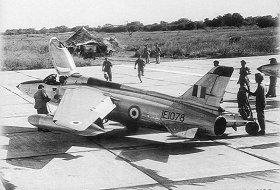 looks familier, because:
Photograph: A Gnat being readied for take off. Photograph courtesy: Bharat Rakshak

While the military consequences are quite well known the political consequences are still being figured out. Yes 1965 reestablished confidence in the Indian military and that led to many other consequences. The creation of RAW and the scenting of dissent in East Paksitan are quite well known.
I think the US felt that India was joining the FSU camp in the aftermath of the war and the political turmoil Syndicate etc. led to the Nixon moves to Red China.The FSU was playing its cards to the hilt as can be seen from the KGB archives. but thanks to firm hand at the helm India stayed the course.
Mr. Shastri and Mrs G saved the idea of India.
I think the US felt that India was joining the FSU camp in the aftermath of the war and the political turmoil Syndicate etc. led to the Nixon moves to Red China.The FSU was playing its cards to the hilt as can be seen from the KGB archives. but thanks to firm hand at the helm India stayed the course.
Mr. Shastri and Mrs G saved the idea of India.
India and China were made to take sides.ramana wrote:While the military consequences are quite well known the political consequences are still being figured out. Yes 1965 reestablished confidence in the Indian military and that led to many other consequences. The creation of RAW and the scenting of dissent in East Paksitan are quite well known.
I think the US felt that India was joining the FSU camp in the aftermath of the war and the political turmoil Syndicate etc. led to the Nixon moves to Red China.The FSU was playing its cards to the hilt as can be seen from the KGB archives. but thanks to firm hand at the helm India stayed the course.
Mr. Shastri and Mrs G saved the idea of India.
The FSU and PRC border clash was also a forced clash to split the communist block. India was made to take sides when the internal turmoil was launched by Uncle between 1965-1969
China's choices regarding Pakistan between 1969 and 1991 had everything to do with their struggle with the Soviets. The relationship of the US, USSR and PRC to India and Pakistan was crystallized by one momentous event, the Sino-Soviet border clashes of 1969. In fact it was those clashes that prompted the Soviets to end their policy of balance adopted in 1964 after the fall of Khrushchev, and seek a strategic relationship with India. For the Chinese the USSR was their most dangerous enemy, and the feeling was reciprocated.