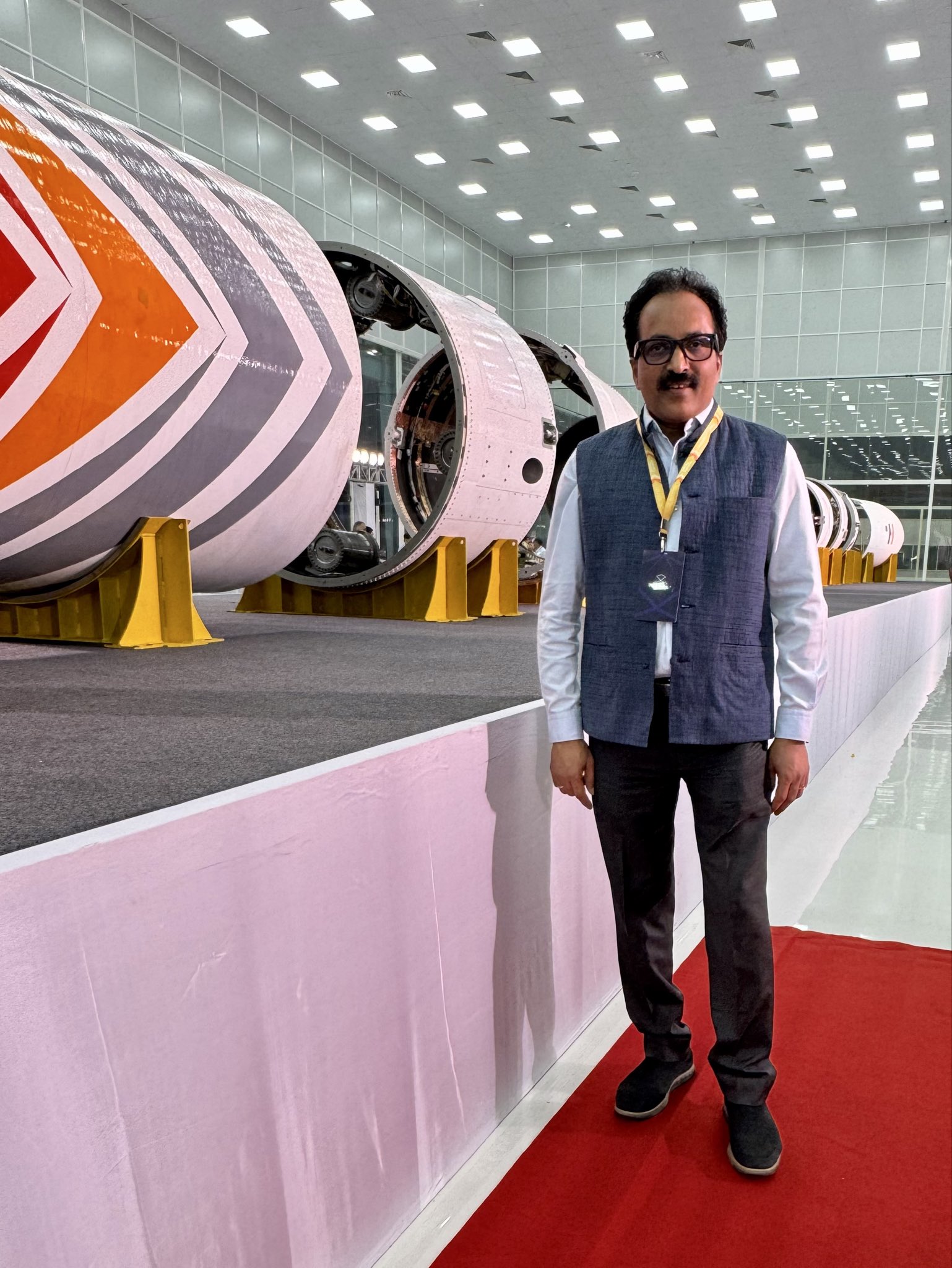
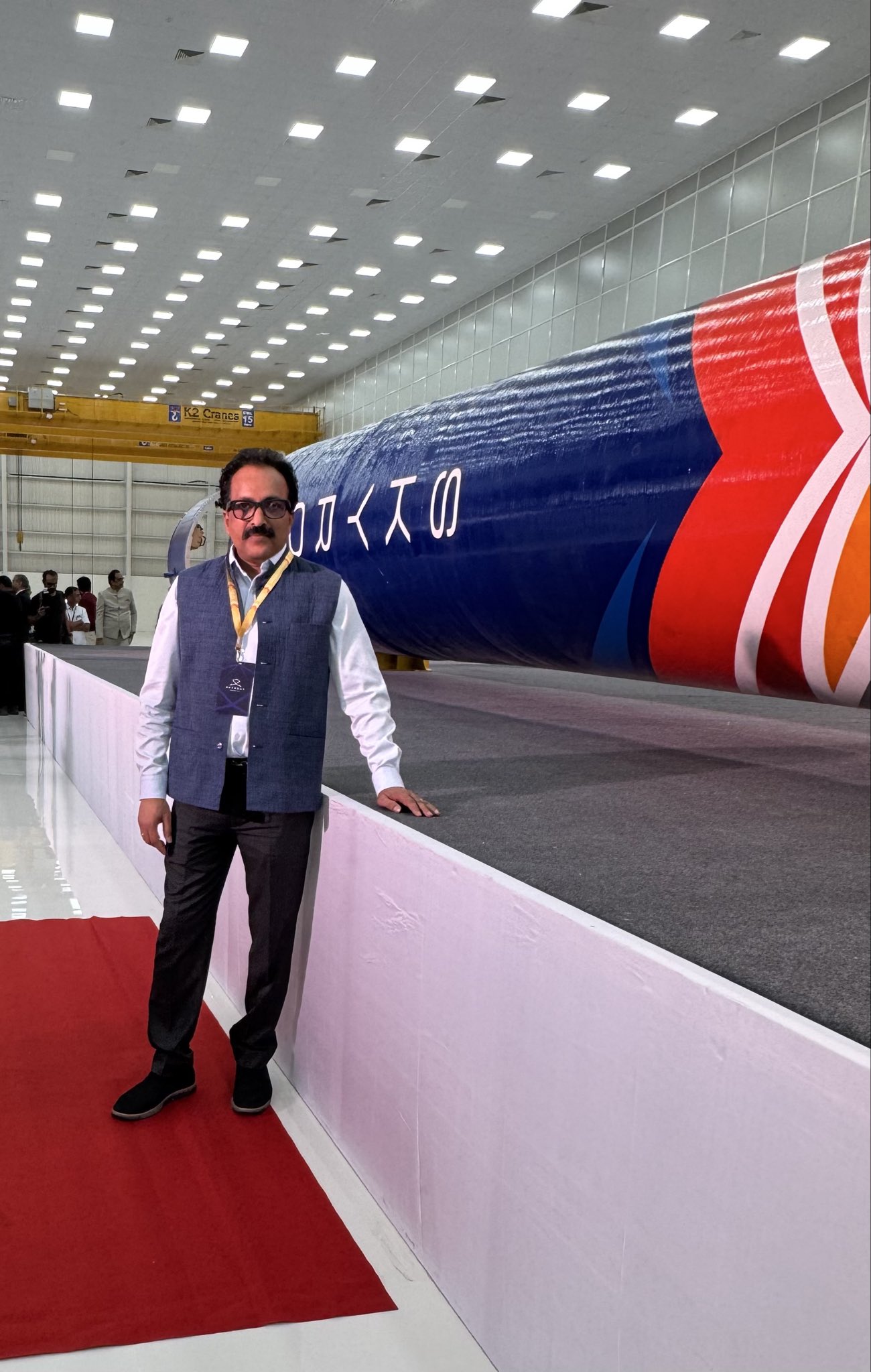
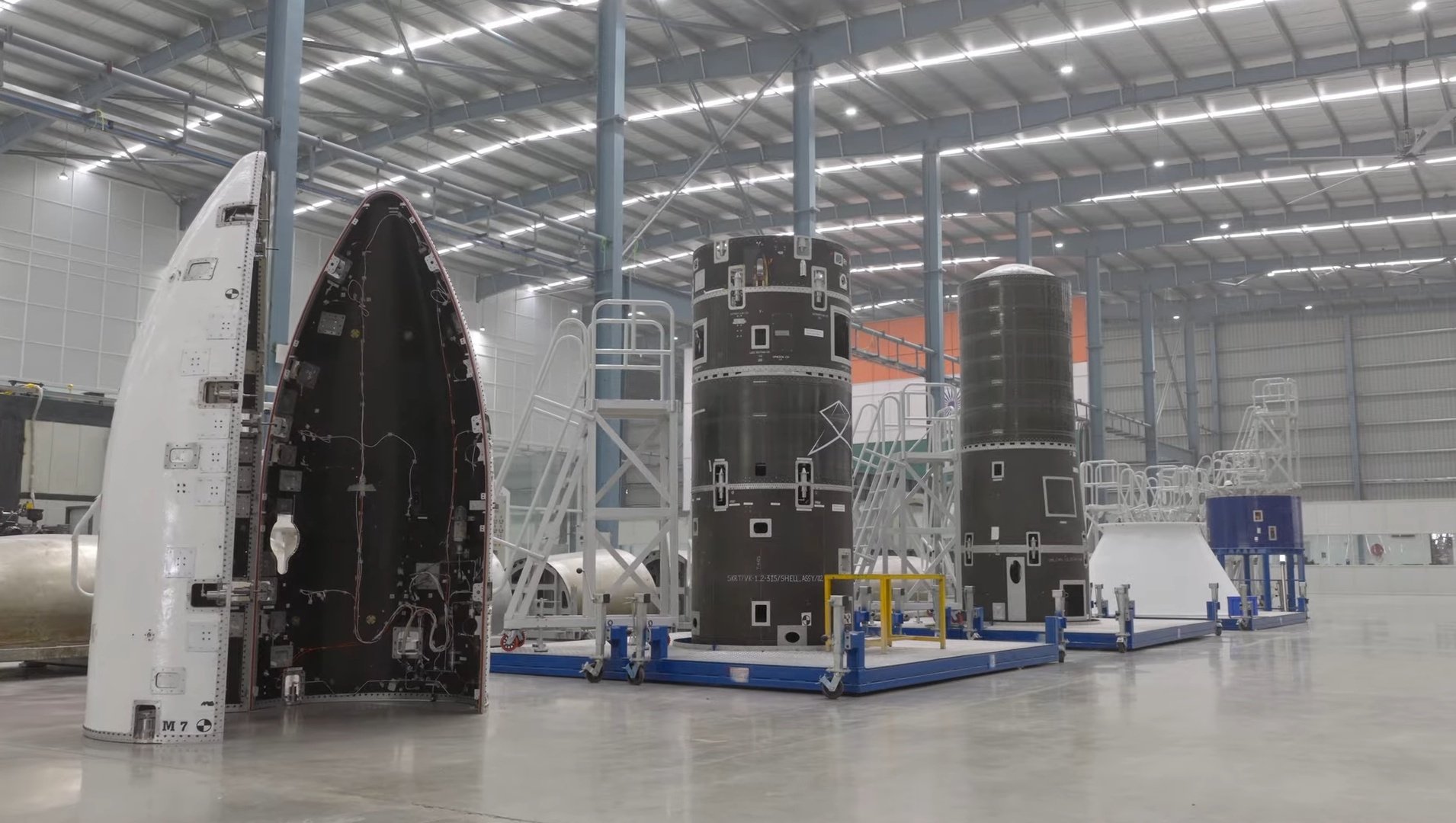
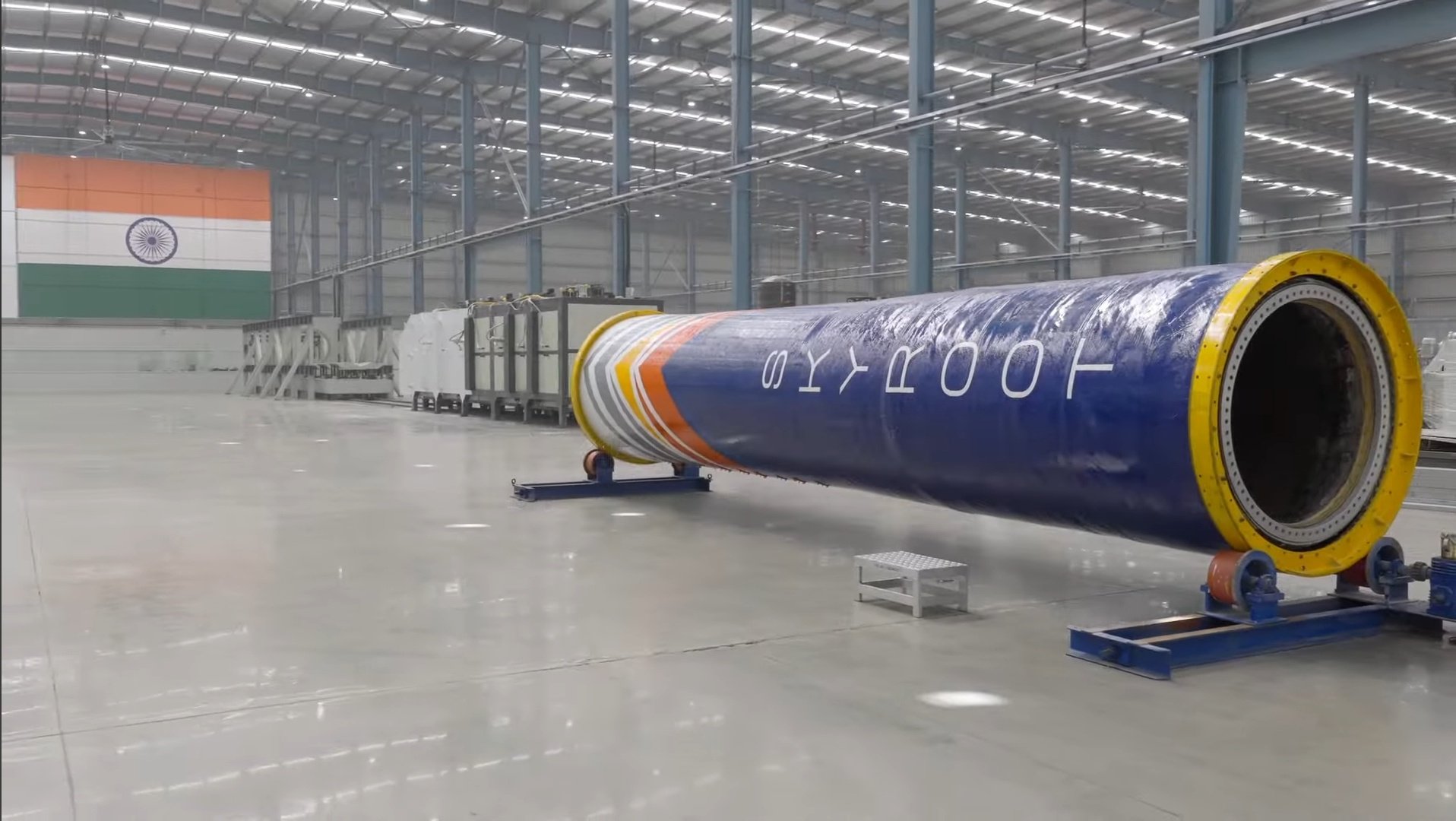
 1 rocket/month capacity 200,000 sq ft facility Set to contribute to Bharat reaching 50 launches/year by 2030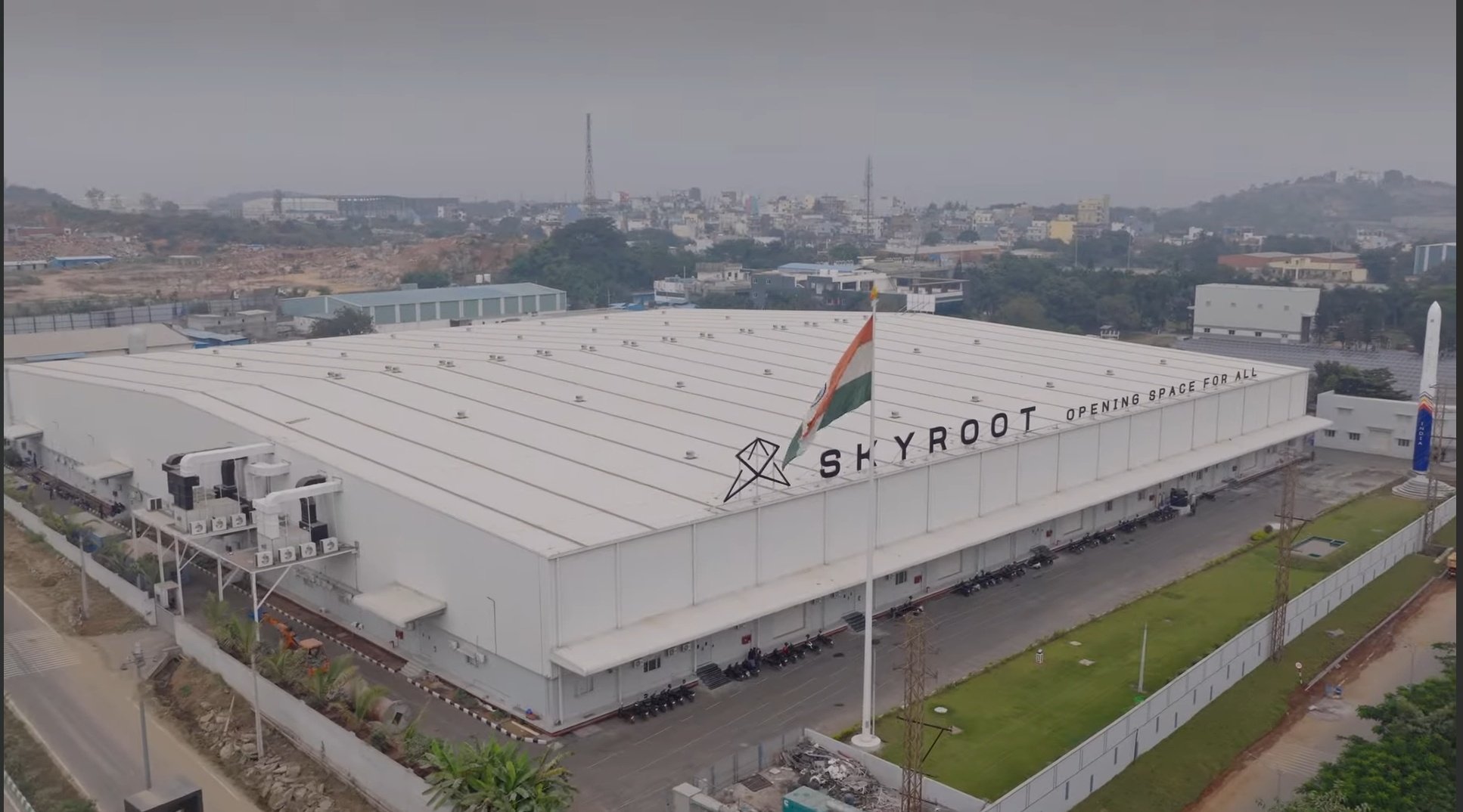

 , no dream is too big, no frontier is beyond reach.
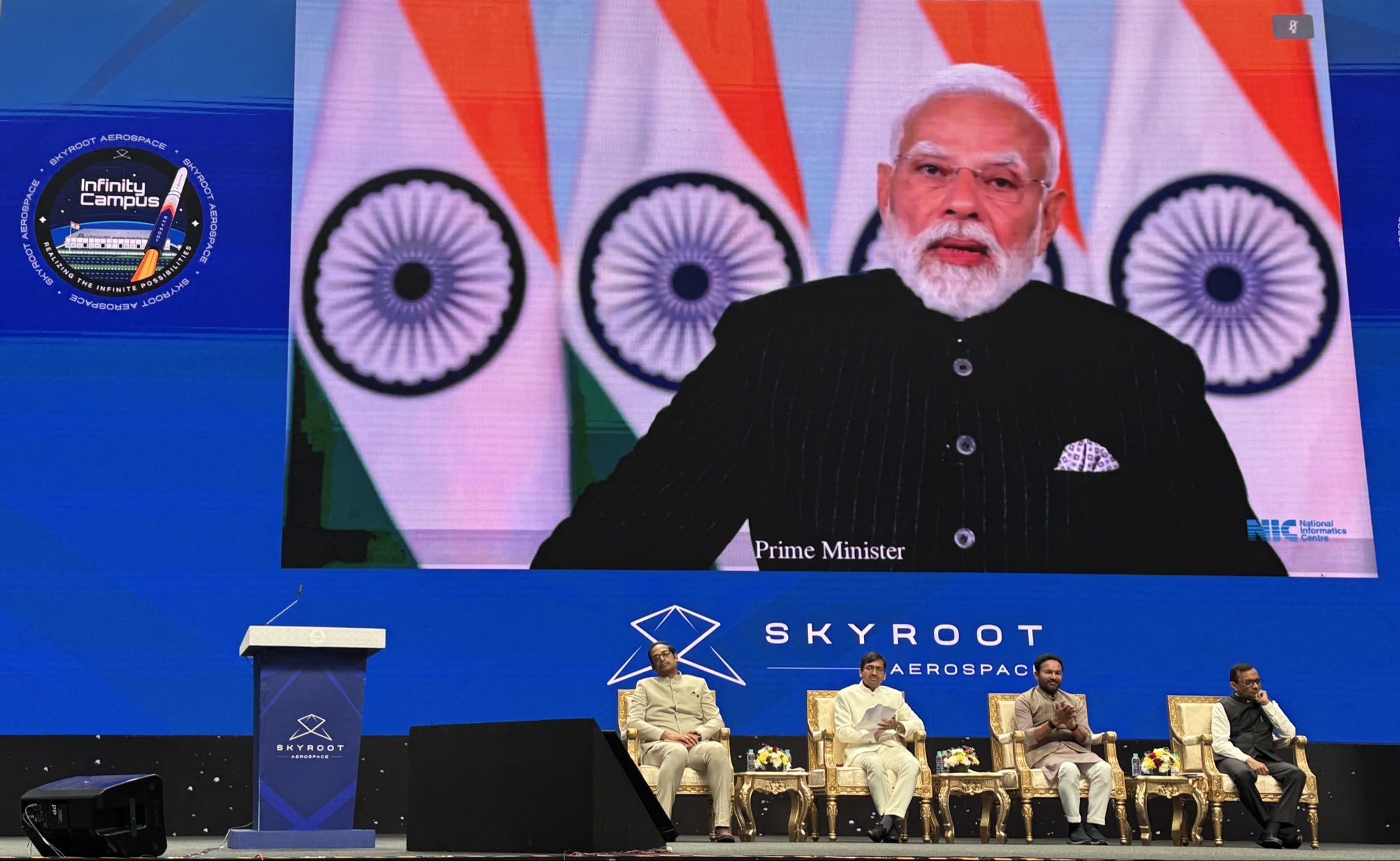
 Under the visionary leadership of Honourable Prime Minister Shri @narendramodi, the nation has unlocked unprecedented space opportunities, empowered bold innovation, and propelled our space-tech industry to new heights.
  We are deeply grateful to the Hon'ble Prime Minister for inaugurating Skyroot's Infinity Campus — India's largest private rocket factory. As the Hon'ble Prime Minister said, our Infinity Campus is a symbol of young India's bold ambitions.
  Thank you
 , Hon'ble PM, for continuously inspiring and pushing us to dream big and build big — right here in India.
 The CE20 cryogenic engine, powering the LVM3 upper stage, is already qualified for operation at thrust levels ranging from 19 to 22 tonnes in flight with a single start. The engine has also been qualified for the Gaganyaan missions. During nominal operation, the engine ignition is initiated under tank head conditions, followed by the start of turbopumps using a stored gas start-up system.
For future missions, multiple in-flight restarts of the CE20 engine will be required for mission flexibility towards multi-orbit missions. However, with the present configuration, each restart demands an additional start-up gas bottle and associated systems, leading to a reduction in vehicle payload capability. Hence, achieving boot-strap mode start - where the engine builds up to steady operation without external start-up assistance - is essential.
In this regard, a boot-strap mode start test on the CE20 Cryogenic engine was successfully conducted under vacuum conditions in the High-Altitude Test (HAT) facility at ISRO Propulsion Complex, Mahendragiri on 7th November 2025, for a duration of 10 seconds. A multi-element igniter was employed in both the thrust chamber and gas generator to facilitate boot-strap starting. In this test, following the ignition of the thrust chamber, the gas generator was ignited under tank head conditions, and the turbopumps were started without the use of the start-up system. Subsequently, boot-strap mode build-up and steady-state operation of the engine were successfully demonstrated.
With this achievement, ISRO has successfully demonstrated boot-strap mode starting of a gas-generator cycle cryogenic engine without any auxiliary start-up system, perhaps for the first time in the world - a significant milestone towards enhancing the restart capability and mission flexibility of future LVM3 flights.

‘RD-191’ is a workhorse engine used in Russia’s Angara series of rockets. ‘RD-191’ is also a throttleable engine, which means that it can significantly reduce or increase its thrust mid-flight, a crucial capability that enables precise flight control, recovery, and reuse of rocket stages.
Two main aspects are RD180 is two thust chambered with 400T thrust while RD191is 1 thrust chamber with half the thrust that fits directly into the current rocket system architecture, thus help pull in schedule with a proven engine. And there is lots 9f experience and knowhow diffusion that comes with it. The wide throttle range IMHO is an overkill for booster stage but very useful for second or upperstage to limit acceleration peak when fuel tanks are near empty. Alternatively v useful for reusable stage during recovery trajectory. Again it could be useful for baby steps of NGLV initial missions.drnayar wrote: ↑05 Dec 2025 14:54 @Haridas ., I am inclined to think the ISRO equivalent is still quite a few years away., and looking at a specific focus for a space station., would the RD 191 make more sense than an RD 180 ., to put the building blocks in place to LEO., apparently the 191 has more throttle capability that i assume would be useful ?
Not sure of muduler aspect.i also think the 191 being more "modular" fits into the ISRO NGLV systems ?
India is accelerating its space ambitions, targeting a sustained lunar presence within the next decade as part of its broader plan to become a developed economy by 2047.
“By 2035, we’ll have a space station called Bharatiya Antariksh Station and by 2040 hopefully Indian human being landing on the surface of the Moon,” India’s Space Minister Jitendra Singh said in an interview to Bloomberg News in Panchkula, about 260 kilometers from New Delhi, on Saturday.
Prime Minister Narendra Modi has intensified efforts to close the gap with countries such as China, which already operates its own space station and aims to send astronauts to the moon by 2030. India is increasingly turning to private investment to establish itself as a global leader in space technology.
“In space, we had a dismal economy until we opened up to the private sector, and now it has grown to about $8 billion,” Singh said. “The pace of growth is so high that in the next eight to 10 years, we may reach $40–45 billion.”
A large percentage of this target is to be achieved by India’s space startups, which have grown to about 400 now, and are involved in satellite manufacturing, launch services and space-based data analytics.
India aims to capture 8%–10% share of the global commercial space market over the next decade from less than 2% now, Indian Space Research Organisation Chairman V. Narayanan had said in August.
India achieved a major milestone in 2023 by becoming the first nation to land a robotic spacecraft near the moon’s south pole. The ISRO is on track for its first crewed mission into space in early 2027, Singh said.
The minister — who has a seat in the Prime Minister’s Office with responsibility for departments including Science, Space, and Atomic Energy — is overseeing Modi’s broader priority of boosting investment in deep-technology sectors.
The government last month announced a 1 trillion-rupee ($11.1 billion) Research, Development and Innovation Scheme to boost private-sector advances in deep-technology sectors through concessional financing. It will finance projects that have a so-called Technology Readiness Level of 4 or above, which means the project is closer to going to market.
In a boost to Indo-US space cooperation, Isro will launch its heaviest American commercial communication low-earth orbit satellite, the 6.5-tonne BlueBird-6, from the Sriharikota spaceport on Dec 15. Isro’s ‘Bahubali’ rocket LVM3 will put the US satellite into orbit.
AST SpaceMobile, a Texas-based company that has built the space-based cellular broadband network, said, “BlueBird-6, a US licensed satellite, is scheduled to launch on Dec 15. It is the first of AST SpaceMobile’s next-generation satellites. When launched, it will feature the largest commercial phased array in low earth orbit at nearly 2,400 sqft. This represents 3.5 times increase in size over BlueBirds 1-5 and supports ten times the data capacity.”
BlueBird-6 is a “Block-2” satellite and part of a larger plan by AST SpaceMobile to deploy a series of satellites to achieve non-continuous service, with further launches scheduled through 2026. Its aim is to bridge the “digital divide” by offering fast, unhindered direct-to-device mobile broadband service in areas with poor or non-existent terrestrial network coverage.
The BlueBird satellites are designed to deliver a high amount of bandwidth, with each unit capable of up to 10,000 MHz. They operate by partnering with existing mobile network carriers to enhance their networks using licensed spectrum.The BlueBird-6 satellite arrived in India from the US on Oct 19. It was later transported by road to Sriharikota for integration with launcher LVM3, fuelling and final checks ahead of its launch.
The liftoff is being handled by New Space India Limited (NSIL), Isro’s commercial wing. LVM-3 had recently put India’s heaviest CMS-3 satellite, weighing 4.4 tonnes, into its orbit on Nov 2. A three-stage launch vehicle, LVM3 rocket can carry payloads weighing up to 8,000 kg to low-Earth orbit (LEO) and 4,000 kg to geosynchronous transfer orbit (GTO). The human-rated version of this vehicle will fly three Indian astronauts to space, as part of the Gaganyaan mission, which is planned for 2027.
In this mission, LVM3-M6 will place the BlueBird Block-2 satellite, into the Low Earth Orbit and is the largest commercial communications satellite to be deployed in Low Earth Orbit. It will also be the heaviest payload to be launched by LVM3 from Indian soil.
ISRO has successfully completed a series of qualification tests for Drogue Parachutes for the development of deceleration system of Gaganyaan Crew Module at the Rail Track Rocket Sled (RTRS) facility of the Terminal Ballistics Research Laboratory (TBRL), Chandigarh, during December 18-19, 2025.
The deceleration system of Gaganyaan Crew Module comprises of a total of 10 parachutes of 4 types. The descent sequence begins with two apex cover separation parachutes that remove the protective cover of the parachute compartment, followed by two drogue parachutes that stabilize and decelerate the module. Upon release of the drogues, three pilot parachutes are deployed to extract three main parachutes, which further slow down the Crew Module to ensure a safe touchdown.
A crucial component of this system is the deployment of drogue parachutes, which play a pivotal role in stabilizing the Crew Module and also reducing its velocity to a safe level during re-entry.
The objective of this specific test series was to rigorously evaluate the performance and reliability of the drogue parachutes under extreme conditions. Both the RTRS tests on drogue parachutes were successfully conducted on December 18 & 19, 2025 achieving all the test objectives and confirming their robustness even under the situation of significant variation in flight conditions.
The successful completion of these tests marks another significant step toward qualifying the parachute system for human spaceflight, with active support and participation from the Vikram Sarabhai Space Centre (VSSC), ISRO, Aerial Delivery Research and Development Establishment (ADRDE), DRDO and Terminal Ballistic Research Laboratory (TBRL), DRDO.

Here's the brochure: Mission BrochureThe LVM3-M6 / BlueBird Block-2 Mission is a dedicated commercial mission onboard the LVM3 launch vehicle, which will launch the BlueBird Block-2 communication satellite of AST SpaceMobile, USA. This mission marks the 6th operational flight of LVM3.
LVM3, developed by ISRO, is a three-stage launch vehicle comprising two solid strap-on motors (S200), a liquid core stage (L110), and a cryogenic upper stage (C25). It has a lift-off mass of 640 tonnes, a height of 43.5 m, and a payload capability of 4,200 kg to Geosynchronous Transfer Orbit (GTO). In its earlier missions, LVM3 successfully launched Chandrayaan-2, Chandrayaan-3, and two OneWeb missions carrying 72 satellites. The previous launch of LVM3 was the LVM3-M5/CMS-03 mission, that was successfully accomplished on November 02, 2025.
In this mission, LVM3-M6 will place the BlueBird Block-2 satellite, into the Low Earth Orbit and is the largest commercial communications satellite to be deployed in Low Earth Orbit. It will also be the heaviest payload to be launched by LVM3 from Indian soil. The satellite is part of a next generation of BlueBird Block-2 communication satellites, designed to provide space-based cellular broadband connectivity directly to standard mobile smartphones.
Nice
 .
.December 30, 2025
ISRO carried out a successful static test of an improved version of the third stage (SS3) of Small Satellite Launch Vehicle (SSLV) on December 30, 2025 at the Solid Motor Static Test Facility of Satish Dhawan Space Centre, Sriharikota.
SSLV is a three stage all-solid launch vehicle developed by ISRO which is amenable to industrial production and can meet launch-on-demand with quick turn-around time between launches. The upper stage or third stage solid motor delivers as high as 4 km/s velocity to the launch vehicle and employs a monolithic composite motor case and a free-standing nozzle divergent to limit the stage inert mass.
The static test validated an improved version of the SS3 stage with a Carbon-epoxy Motor case, which has significantly reduced the mass of the stage, thereby improving the payload performance of SSLV by 90 kg. The stage also features an improved design for the igniter and nozzle system making the system more efficient and robust. The nozzle control is implemented through a fault-tolerant electro-mechanical actuation system with low power control electronics. The high-strength carbon filament wound motor case was realized at the Composites Entity of Vikram Sarabhai Space Centre, ISRO and the solid motor was cast at the Solid Motor production facilities at Satish Dhawan Space Centre, ISRO.
The motor was instrumented with around 233 measurements to capture parameters namely pressure, thrust, temperature, and vibration and control electronics and actuators parameters. All the measured parameters are observed close to predictions over the test duration of 108 seconds. With this successful static test firing test, improved version of SS3 motor is qualified for induction in flight.
The Launch of PSLV-C62 Mission is scheduled on 12 January 2026 at 10:17 hrs IST from First Launch Pad (FLP), SDSC SHAR, Sriharikota.
https://www.indiatoday.in/science/story ... 2026-01-06
The Indian Space Research Organisation (Isro) is set to resume orbital launches with the PSLV-C62 mission, scheduled for January 12, 2026, at 10:17 AM IST from the First Launch Pad (FLP) at the Satish Dhawan Space Centre, Sriharikota.
The launch will mark the 64th flight of the Polar Satellite Launch Vehicle (PSLV) and the 5th use of the PSLV-DL variant, equipped with two strap-on boosters.
The mission’s primary payload is EOS-N1 (Anvesha), an Earth observation satellite designed to enhance India’s remote sensing capabilities across agriculture, urban mapping, and environmental monitoring.
Alongside it, 18 co-passenger payloads from India and abroad will share the ride, making this a significant multi-satellite deployment.
PSLV
Notable among the co-passengers is AayulSAT, developed by Bengaluru-based OrbitAID Aerospace, touted as India’s first on-orbit refuelling mission, a key step toward reusable and sustainable satellite operations.
Hyderabad’s TakeMe2Space and EON Space will launch MOI-1, a compact 14-kilogram satellite capable of Earth imaging with onboard artificial intelligence data processing, demonstrating next-generation edge computing in orbit.
Adding an international flavour, the Indo-Mauritius Joint Satellite (IMJS) will symbolise deepening space cooperation between the two nations.
From Spain, Orbital Paradigm’s Kestrel Initial Demonstrator (KID) will test a 25-kilogram reentry capsule, potentially paving the way for low-cost recovery systems for microgravity research and sample return missions.
This upcoming flight holds particular importance as it marks the PSLV’s return to service following the failure of the PSLV-C61 mission in late 2025.
For Isro, the C62 mission represents its 101st orbital attempt overall and the first orbital launch of 2026, serving as both a technical and symbolic renewal for the world-renowned workhorse launcher.
If successful, PSLV-C62 will reaffirm Isro’s reliability in small and medium satellite deployment and bolster India’s growing ecosystem of private and international space collaborations.
When OrbitAid's 25-kg Ayulsat lifts off aboard Isro's PSLV-C62 Monday, the mission's success will bring India a step closer to becoming the second country in the world to demonstrate on-orbit satellite refuelling, a capability so far claimed only by China, reports Chethan Kumar.
Last year, China carried out a similar demonstration, but details remain limited and official disclosures sparse. No other spacefaring nation, including the US, has publicly demonstrated the technology in orbit. However, US firm Astroscale is developing a refuelling technology but is yet to launch {In-orbit refuelling, especially cryogenic fuel, is an essential component of successful Artemis-3 and other Gateway-dependent space exploration by NASA}.
Ayulsat won't demonstrate a full on-orbit re-fuelling. It is designed as a target satellite to validate fuel transfer in the space environment. Unlike more complex servicing missions involving two spacecraft, OrbitAid's first step focuses on internal refuelling within a single satellite, allowing engineers to study how fluids behave in microgravity under real orbital conditions. OrbitAid founder and CEO Sakthikumar R told TOI the first refuelling is expected to take place within four hours of launch.