Atmanirbhar Bharat in Defence: News & Discussion
Atmanirbhar Bharat in Defence: News & Discussion
Starting this thread to track all - and only increasing in number - the IDDM (Indigenously Designed, Developed and Manufactured) products.
Re: Atmanirbhar Bharat in Defence: News & Discussion
Atmanirbhar Indians | Ep 01 - Baba Kalyani
In a turbulent time, when sporadic conflicts, geopolitical realignments and economic warfare are changing the fate of nations. India calls for Atmanirbharta and India's Private-sector must answer. Chakra takes you to the visionaries and pathbreakers who are shaping the creation of a new ecosystem, where industry, innovation, and operational experience converge to build sovereign capability. Across platforms and domains, from submarines and tanks to armoured vehicles, drone warfare, cyberspace, and electronic warfare, meet the people shaping India’s strategic future. Meet the Atmanirbhar Indians. In Episode 1, Chakra meets Baba Kalyani, Chairman & Managing Director, Bharat Forge.
In a turbulent time, when sporadic conflicts, geopolitical realignments and economic warfare are changing the fate of nations. India calls for Atmanirbharta and India's Private-sector must answer. Chakra takes you to the visionaries and pathbreakers who are shaping the creation of a new ecosystem, where industry, innovation, and operational experience converge to build sovereign capability. Across platforms and domains, from submarines and tanks to armoured vehicles, drone warfare, cyberspace, and electronic warfare, meet the people shaping India’s strategic future. Meet the Atmanirbhar Indians. In Episode 1, Chakra meets Baba Kalyani, Chairman & Managing Director, Bharat Forge.
Re: Atmanirbhar Bharat in Defence: News & Discussion
https://x.com/raisinadialogue/status/20 ... 20800?s=20 ---> A core misstep by the Indian Army lies in not giving domestically produced Armoured Personnel Carrier (APC) variants a fair and rigorous opportunity to meet operational requirements: @KartikBommakan1
India Must Prioritise Indigenous Ground Combat Vehicles
https://www.orfonline.org/expert-speak/ ... t-vehicles
20 Jan 2026
India Must Prioritise Indigenous Ground Combat Vehicles
https://www.orfonline.org/expert-speak/ ... t-vehicles
20 Jan 2026
Re: Atmanirbhar Bharat in Defence: News & Discussion
watch video
VIDEO: hhttps://x.com/i/status/2016482777391366431
VIDEO: hhttps://x.com/i/status/2016482777391366431
LEGENDS NEVER DIE: They Just Go Unmanned.
The iconic Cheetah & Chetak helicopters have served the Indian Army for decades. Instead of retiring to a museum, a Bengaluru Deep-Tech Startup is giving them a lethal upgrade.
They are converting these vintage warhorses into High-Altitude Heavy-Lift Drones.
Beast Mode Payload
Standard electric drones struggle to lift 10–20kg in thin air. A converted Chetak? It can carry 200kg+ of ammo, rations, and medical supplies to forward posts. It brings heavy-lift capability that small drones simply can't match.
Zero Pilot Risk
The Himalayas are unforgiving. By removing the cockpit crew and installing autonomous fly-by-wire systems, we can resupply Siachen and Galwan in bad weather without risking a single human life.
The Ultimate Asset Utilization
Costs a fraction & is ready now. It turns a liability (aging fleet) into a tactical asset (expendable logistic mules).
Powered by Fuel, Not Batteries
Batteries die fast at -30°C. These choppers run on Aviation Turbine Fuel (ATF), already available at every airbase, ensuring massive endurance and range.
This is the perfect blend of Bengaluru Innovation and Indian Army Grit. We aren't just making new weapons; we are making our legends smarter.
Re: Atmanirbhar Bharat in Defence: News & Discussion
^ Excellent initiative. Success here might mean we can build unmanned Chetak helis with new components? Or are the various critical parts (which we have to procure from abroad) no longer available with OEMs?
Re: Atmanirbhar Bharat in Defence: News & Discussion
Whatever happened to Kalyani/Bharat Forge equivalent to M777??
Import Bahadurs wanted to extend the M order to exceed 500 more!!
If I remember correctly BF had two variants : on fully Titanium other an alloy (much cheaper but equally effective) and both Whirly bird transportable
Import Bahadurs wanted to extend the M order to exceed 500 more!!
If I remember correctly BF had two variants : on fully Titanium other an alloy (much cheaper but equally effective) and both Whirly bird transportable
Re: Atmanirbhar Bharat in Defence: News & Discussion
Each of the armed forces requires an advanced design org like the Indian Navy has already. This group will work with various entities like DRDO and private players e.g., L&T, Bharat Forge, Tata, etc to create products that work for them. This could be the conduit for appropriate products and also very advanced products, e.g. ramjet artillery. We need these systems to streamline things, not one of here and there. The armed force design bureau need to keep up with all the things happening in the world including things like Ukraine war and plan a path forward.
Re: Atmanirbhar Bharat in Defence: News & Discussion
Balu Forge Industries joins NATO supply chain for defence components
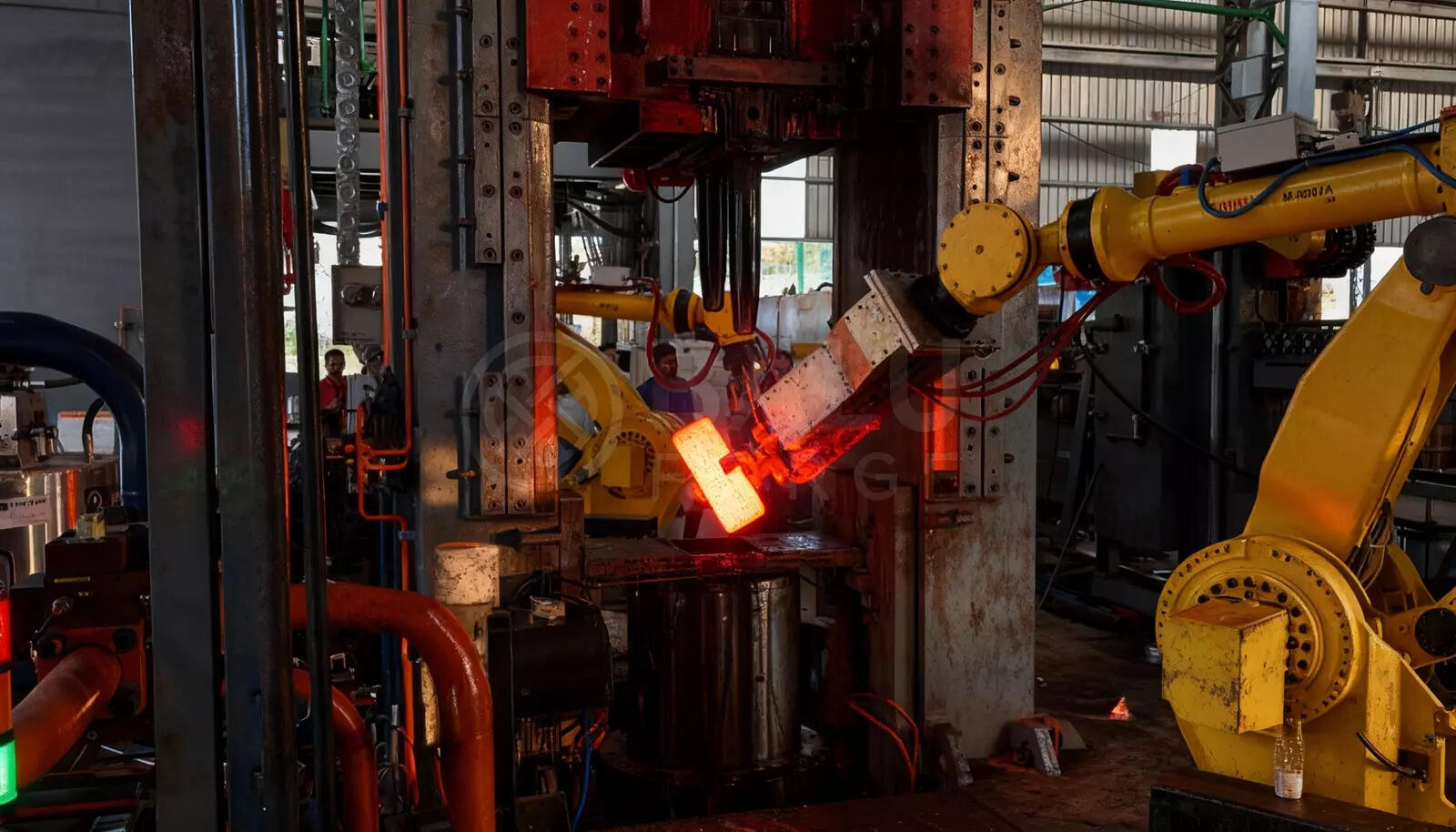
Balu Forge Industries Ltd has been formally inducted into the NATO supply chain, enabling the company to manufacture and supply artillery shell bodies and forged components to NATO member states. The move marks a significant expansion of the Indian firm’s defence sector operations. The company said the induction gives it the mandate to deliver high-specification components used in artillery and ammunition systems.
According to Balu Forge, its selection is based on its forging processes that support the production of components requiring high levels of precision.The firm uses closed-die forging and automated multi-axis CNC machines, including 7-axis and 11-axis systems, to manufacture complex geometries. It also operates heat-treatment and alloy-optimisation programmes designed to improve material performance under thermal and impact stress. The company said the development broadens its international presence and diversifies revenue streams. It added that membership in the NATO supply base creates a long-term growth platform as the alliance works to strengthen its industrial capability.
Balu Forge Industries Ltd has been formally inducted into the NATO supply chain, enabling the company to manufacture and supply artillery shell bodies and forged components to NATO member states. The move marks a significant expansion of the Indian firm’s defence sector operations. The company said the induction gives it the mandate to deliver high-specification components used in artillery and ammunition systems.
According to Balu Forge, its selection is based on its forging processes that support the production of components requiring high levels of precision.The firm uses closed-die forging and automated multi-axis CNC machines, including 7-axis and 11-axis systems, to manufacture complex geometries. It also operates heat-treatment and alloy-optimisation programmes designed to improve material performance under thermal and impact stress. The company said the development broadens its international presence and diversifies revenue streams. It added that membership in the NATO supply base creates a long-term growth platform as the alliance works to strengthen its industrial capability.
Re: Atmanirbhar Bharat in Defence: News & Discussion
World’s smallest 155 x 52 mm Mounted Gun System
https://chakranewz.com/critical-technol ... gun-system
28 Jan 2026
https://chakranewz.com/critical-technol ... gun-system
28 Jan 2026
Re: Atmanirbhar Bharat in Defence: News & Discussion
Rajnath praises DRDO scientists, asks them to increase appetite for risk in research
https://timesofindia.indiatimes.com/def ... 652141.cms
28 Jan 2026
https://timesofindia.indiatimes.com/def ... 652141.cms
28 Jan 2026
Re: Atmanirbhar Bharat in Defence: News & Discussion
The budget is due in the next few days. Let's see what is the allocation towards defense and specifically towards R&DRakesh wrote: ↑30 Jan 2026 19:05 Rajnath praises DRDO scientists, asks them to increase appetite for risk in research
https://timesofindia.indiatimes.com/def ... 652141.cms
28 Jan 2026
Re: Atmanirbhar Bharat in Defence: News & Discussion
Incidentally the feature article on the homepage of ToI right now is -
(quite detailed article, have taken only some important points from it)
Budget 2026: Why defence spending is back in sharp focus—and how experts want the money spent
(quite detailed article, have taken only some important points from it)
Budget 2026: Why defence spending is back in sharp focus—and how experts want the money spent
As Union finance minister Nirmala Sitharaman prepares to present the Union Budget for 2026–27 on February 1, defence expenditure has once again moved to the centre of policy discussions.
Although it is always a matter of interest to the experts about how one of the world’s largest economies spends on its defence, the backdrop is very different from a few years ago. Geopolitical tensions have intensified, conflicts have become more technology-driven and India’s own security calculus has expanded beyond conventional threats to include cyber warfare, space and hybrid challenges.
At first glance, India’s defence budget has been on a steady upward trajectory.
According to the official data, total defence expenditure has increased from about Rs 2.94 lakh crore in 2015–16 to Rs 6.81 lakh crore in 2025–26 (Budget Estimates). Defence capital expenditure, which funds modernisation and new acquisitions, has also grown in absolute terms—from Rs 83,614 crore in 2015–16 to Rs 1.92 lakh crore in 2025–26 (BE).
Yet, some experts believe in viewing the defence budget against the size of the economy.
Defence expenditure as a share of nominal GDP has declined over the past decade. In 2020–21, total defence spending stood at around 2.4% of GDP. By 2024–25 (RE) and 2025–26 (BE), this ratio had slipped to about 1.9% Defence capital expenditure has remained largely flat at around 0.5–0.6% of GDP for most of this period.
In Union Budget 2025–26, the government allocated a record Rs 6.81 lakh crore to the ministry of defence, a 9.53% increase over the previous year.
Of this, Rs 1.80 lakh crore was earmarked for capital outlay for the armed forces, with Rs 1.12 lakh crore reserved for procurement from domestic industries.
The emphasis on indigenous sourcing reflects a broader strategic objective: reducing import dependence while building domestic industrial capacity.
This push towards self-reliance has already begun to show tangible results. India’s indigenous defence production touched a record Rs 1,27,434 crore in FY 2023–24, marking a 174% jump from Rs 46,429 crore in 2014–15, driven by sustained policy support under the Atmanirbharta push, as per the official data.
As per data for 2025–26, 75% of the modernisation budget was reserved for procurement from domestic sources, with a significant portion specifically allocated to private sector participation.
The private sector’s role in defence manufacturing has been steadily expanding. While Defence Public Sector Undertakings (DPSUs) still account for about 77% of total defence production, the private sector’s share rose from 21% in FY 2023–24 to 23% in FY 2024–25, reflecting its growing importance in India’s defence ecosystem.
The 2025–26 Budget allocated Rs 26,816.82 crore to the Defence Research and Development Organisation (DRDO), a 12.4% increase over the previous year, with a large share earmarked for capital expenditure and collaborative projects with private players.
India’s defence exports have emerged as a key pillar of the self-reliance story. Defence exports reached a record Rs 23,622 crore in FY 2024–25, registering a 12.04% increase over Rs 21,083 crore in FY 2023–24. Of this, private sector exports accounted for Rs 15,233 crore, while DPSUs contributed Rs 8,389 crore.
Re: Atmanirbhar Bharat in Defence: News & Discussion
This is not minimizing dependence at all....
VIDEO: https://x.com/ANI/status/2018584868238844171?s=20 ---> Adani Defence & Aerospace and Leonardo announce strategic collaboration, Defence Secretary Rajesh Kumar Singh says," This MoU between Adani Defence and Leonardo in creating a rotary wing fleet ecosystem country marks the coming together of two entities. This MoU signing is important because it puts on the ground the aspirational elements that were part of the announced partnership. The Government of India's vision of Atmanirbhar Bharat in defence manufacturing aims to reduce import dependence and build a globally competitive industrial capability. You can't have 100% self reliance, but take steps that minimise dependence..."
VIDEO: https://x.com/ANI/status/2018584868238844171?s=20 ---> Adani Defence & Aerospace and Leonardo announce strategic collaboration, Defence Secretary Rajesh Kumar Singh says," This MoU between Adani Defence and Leonardo in creating a rotary wing fleet ecosystem country marks the coming together of two entities. This MoU signing is important because it puts on the ground the aspirational elements that were part of the announced partnership. The Government of India's vision of Atmanirbhar Bharat in defence manufacturing aims to reduce import dependence and build a globally competitive industrial capability. You can't have 100% self reliance, but take steps that minimise dependence..."
Re: Atmanirbhar Bharat in Defence: News & Discussion
Design, Simulation, Operation: The Three Layers of Software Dependency That Leave Indian Industry Vulnerable to Foreign Chokepoints
https://swarajyamag.com/commentary/desi ... hokepoints
30 Jan 2026
https://swarajyamag.com/commentary/desi ... hokepoints
30 Jan 2026
Re: Atmanirbhar Bharat in Defence: News & Discussion
https://x.com/Normal_2610/status/201859 ... 42613?s=20 ---> This is the JV trap everyone ignores. Adani gets to Skip Made in India on foreign designs. Elbit owns the IP. Leonardo owns the IP. The tech never moves to India. We are just doing final assembly and calling it self reliance. HAL spends 9% on R&D, where does Adani put its money. Leonardo was banned for a decade after the VVIP chopper scam. Now they are back with Adani. Italy gets market access, Adani gets a defence licence, and India gets another assembly line for AW169 and AW109. Same story as Embraer jets. We do 15 to 20% value, they keep the rest. The real winners are foreign OEMs. India has 100 helicopters per year demand for next ten years. That is a captive buyer. Adani brings land, labour, and political access. Leonardo brings the chopper and the profit margin.Rakesh wrote: ↑03 Feb 2026 18:31 This is not minimizing dependence at all....
VIDEO: https://x.com/ANI/status/2018584868238844171?s=20 ---> Adani Defence & Aerospace and Leonardo announce strategic collaboration, Defence Secretary Rajesh Kumar Singh says," This MoU between Adani Defence and Leonardo in creating a rotary wing fleet ecosystem country marks the coming together of two entities. This MoU signing is important because it puts on the ground the aspirational elements that were part of the announced partnership. The Government of India's vision of Atmanirbhar Bharat in defence manufacturing aims to reduce import dependence and build a globally competitive industrial capability. You can't have 100% self reliance, but take steps that minimise dependence..."
You will shut up and say China did the same thing, and that they replicated the entire process playbook of Tesla, BYD, and even German CNC machine makers. But you miss one thing. 15 years ago, you were joking about “Made in China,” saying this will never work. Today, they are creating global brands and filing biotech patents. Possibly India can learn from these JVs. But if, in parallel, we do not invest with a long-term approach in R&D, then none of these approaches will be fully utilised. And after China’s experience, I do not think companies will give India the same level of freedom that they once gave China. From an investor’s point of view, I like these deals.
https://x.com/VatsRishap/status/2018585 ... 26185?s=20 ---> Atmanirbharta, as a national project, is being taken apart in broad daylight, one sphere or platform at a time. This is no exaggeration at this point.
https://x.com/FinestYew/status/2018638237011755151?s=20 ---> A strategic collaboration where we won't own the IP, develop none of the key technologies & act as a glorified assembly line for another European weapon's manufacturer. Can't wait for our desi DG-ISPR to sell this Atmanirbhar Churan to everyone.
https://x.com/cvkrishnan/status/2018610 ... 81597?s=20 ---> At least he’s half honest. “The Government of India's vision of Atmanirbhar Bharat in defence manufacturing”. It is not Atmanirbhar Bharat in Defence technologies or solutions. Just manufacturing on foreign dependent technologies.
Re: Atmanirbhar Bharat in Defence: News & Discussion
An excellent summary on Technology Transfer....from level 0 to level 4. A must read. This tweet is dated 06 May 2024.
https://x.com/cvkrishnan/status/1787438 ... 60457?s=20 ----> Aatmanirbharta Series: The three frontiers of technology transfer.
This is first in a series of articles I plan to write on Aatmanirbharta, the various facets, processes and the technical and economic aspects involved. For years, or maybe even decades, we Indians have heard this term Transfer of Technology (ToT) as a fancy silver bullet for a lot of our technological decays. But what does technology transfer means? Does it mean a single type of a mechanism with a single type of outcome? Or are there multiple shades to it? I explore, what I believe are the three frontiers of a successful technology transfer in this article.
First, there’s a 0th frontier of Tech Transfer. Assembling as a workshare (screwdrivergiri).
This is what is most commonly passed on as transfer of technology in many international defense cases. This mostly involves assembling Completely Knocked Down (CKD) kits shipped from the Original Equipment Manufacturer (OEM) and its supplier to the contractors. This type is pushed through in cases where a nation is entering new into the segment and its industry has very little understanding of the product. Helps in jobs and some assembling skills but not beyond. It doesn’t add any expertise/know-how to the local companies. Useful for marketing both for business and the politician.
Let’s get down to the more realistic frontiers of technology transfer.
1. Mastering the manufacturing process
This is the second most common form of technology transfer that happens amongst fairly serious players. A system of system product is to be manufactured. The beneficiary partner gets the “know-how” manufacturing process documents, some design documents and handholding from the OEM in terms of process management, supply chain, value stream mapping and hands on training of its workers in the manufacturing process of the specific product and its subsystems. Over time, the beneficiary partner is able to manufacture the said parts without guidance and support of the OEM (know-how). One of the sub steps within this frontier is the ability to understand the manufacturing process and be able to apply it to manufacturing products that are parallel or nearby in terms of technological needs. Su-30MKI manufacturing by HAL and the upcoming C-295 manufacturing by Tata-Airbus are prime examples. The requirements needed to achieve this frontier is rather straightforward and is usually embedded in the contract documents itself as an obligation from the OEM.
2. Mastering the Technology
This is the next frontier to be conquered after mastering the manufacturing technology. This frontier can be achieved only when the beneficiary partner puts in their effort to take the ToT further from simply manufacturing to the drawings and specifications to understanding the engineering and physics aspect (know-why) of the shared platform and some of the associated subsystems. These are not written down in a design doc. There are no textbooks. But there are wealth of test data that provide the underlying engineering and multi-physics insights. These are seldom shared by the OEMs. The beneficiary team has to figure out, breaking their head, bench marking, testing specimens, reverse engineering, and absorbing the tech and analyzing from their own intrinsic fundamental knowledge. This is almost never part of a ToT deal. It requires the leadership, attitude, focus and perseverance of the team receiving the ToT to go beyond understanding manufacturing to specifications, to understanding the design process and the engineering physics. This helps in developing newer iterations with minor or major changes to the form, features and the performance of the product. Eg, BrahMos, SAAW, Vikas engine.
3. Mastering the Paradigm
I wouldn’t say this as the final frontier but this kind of is what one can achieve maximum possibly in a Transfer of Technology (ToT) scenario. In this realm, we go beyond mastering the specific product and the neighboring family of applications but get on with developing the next generation of the product family on their own reaching the state of the art and beyond for the family of technologies that exists in the known realm. This requires necessarily the vision of the govt (seldom do free markets enter this realm), copious funding and creating the talent and research base to be able to tap into and develop an ecosystem and master the paradigm. Eg, India’s missile program.
This is considered as the logical end of a Technology Transfer process for a large complex platform. The most simplistic understanding assumes that when we get a ToT of a complex technology, we reach the third frontier automatically. But in most cases, we stop at frontier-1 itself. Each step here requires not just what the technology benefactor gives, but even more as to how far the beneficiary entity goes in absorbing, assimilating and fostering the know-how or know-why got.

https://x.com/cvkrishnan/status/1787438 ... 60457?s=20 ----> Aatmanirbharta Series: The three frontiers of technology transfer.
This is first in a series of articles I plan to write on Aatmanirbharta, the various facets, processes and the technical and economic aspects involved. For years, or maybe even decades, we Indians have heard this term Transfer of Technology (ToT) as a fancy silver bullet for a lot of our technological decays. But what does technology transfer means? Does it mean a single type of a mechanism with a single type of outcome? Or are there multiple shades to it? I explore, what I believe are the three frontiers of a successful technology transfer in this article.
First, there’s a 0th frontier of Tech Transfer. Assembling as a workshare (screwdrivergiri).
This is what is most commonly passed on as transfer of technology in many international defense cases. This mostly involves assembling Completely Knocked Down (CKD) kits shipped from the Original Equipment Manufacturer (OEM) and its supplier to the contractors. This type is pushed through in cases where a nation is entering new into the segment and its industry has very little understanding of the product. Helps in jobs and some assembling skills but not beyond. It doesn’t add any expertise/know-how to the local companies. Useful for marketing both for business and the politician.
Let’s get down to the more realistic frontiers of technology transfer.
1. Mastering the manufacturing process
This is the second most common form of technology transfer that happens amongst fairly serious players. A system of system product is to be manufactured. The beneficiary partner gets the “know-how” manufacturing process documents, some design documents and handholding from the OEM in terms of process management, supply chain, value stream mapping and hands on training of its workers in the manufacturing process of the specific product and its subsystems. Over time, the beneficiary partner is able to manufacture the said parts without guidance and support of the OEM (know-how). One of the sub steps within this frontier is the ability to understand the manufacturing process and be able to apply it to manufacturing products that are parallel or nearby in terms of technological needs. Su-30MKI manufacturing by HAL and the upcoming C-295 manufacturing by Tata-Airbus are prime examples. The requirements needed to achieve this frontier is rather straightforward and is usually embedded in the contract documents itself as an obligation from the OEM.
2. Mastering the Technology
This is the next frontier to be conquered after mastering the manufacturing technology. This frontier can be achieved only when the beneficiary partner puts in their effort to take the ToT further from simply manufacturing to the drawings and specifications to understanding the engineering and physics aspect (know-why) of the shared platform and some of the associated subsystems. These are not written down in a design doc. There are no textbooks. But there are wealth of test data that provide the underlying engineering and multi-physics insights. These are seldom shared by the OEMs. The beneficiary team has to figure out, breaking their head, bench marking, testing specimens, reverse engineering, and absorbing the tech and analyzing from their own intrinsic fundamental knowledge. This is almost never part of a ToT deal. It requires the leadership, attitude, focus and perseverance of the team receiving the ToT to go beyond understanding manufacturing to specifications, to understanding the design process and the engineering physics. This helps in developing newer iterations with minor or major changes to the form, features and the performance of the product. Eg, BrahMos, SAAW, Vikas engine.
3. Mastering the Paradigm
I wouldn’t say this as the final frontier but this kind of is what one can achieve maximum possibly in a Transfer of Technology (ToT) scenario. In this realm, we go beyond mastering the specific product and the neighboring family of applications but get on with developing the next generation of the product family on their own reaching the state of the art and beyond for the family of technologies that exists in the known realm. This requires necessarily the vision of the govt (seldom do free markets enter this realm), copious funding and creating the talent and research base to be able to tap into and develop an ecosystem and master the paradigm. Eg, India’s missile program.
This is considered as the logical end of a Technology Transfer process for a large complex platform. The most simplistic understanding assumes that when we get a ToT of a complex technology, we reach the third frontier automatically. But in most cases, we stop at frontier-1 itself. Each step here requires not just what the technology benefactor gives, but even more as to how far the beneficiary entity goes in absorbing, assimilating and fostering the know-how or know-why got.
Re: Atmanirbhar Bharat in Defence: News & Discussion
Beyond Screwdrivergiri: Why The Defence Secretary Should Heed The Economic Survey
https://swarajyamag.com/defence/beyond- ... mic-survey
04 Feb 2026
https://swarajyamag.com/defence/beyond- ... mic-survey
04 Feb 2026
The Adani-Leonardo helicopter deal risks repeating screwdrivergiri unless joint ventures are tied to serious R&D investment and technology transfer, as the Economic Survey demands for true strategic self-reliance.
Re: Atmanirbhar Bharat in Defence: News & Discussion
Atmanirbhar Indians | Ep 02 - Nikunj Parashar, Sagar Defence Engineering
India’s naval power is entering a new era. From autonomous weaponised sea drones to unmanned surface vessels that sail thousands of miles without a crew, this episode of Atmanirbhar Indians takes you inside Sagar Defence Engineering, a Pune-based startup thats transforming Indian maritime warfare. Founder-CEO Captain Nikunj Parashar shares how indigenous drones are already flying from Indian warships, how the Navy trusted a startup with mission-critical systems, and how the historic Sagar Mala Parikrama proved India can build world-class autonomous vessels.
India’s naval power is entering a new era. From autonomous weaponised sea drones to unmanned surface vessels that sail thousands of miles without a crew, this episode of Atmanirbhar Indians takes you inside Sagar Defence Engineering, a Pune-based startup thats transforming Indian maritime warfare. Founder-CEO Captain Nikunj Parashar shares how indigenous drones are already flying from Indian warships, how the Navy trusted a startup with mission-critical systems, and how the historic Sagar Mala Parikrama proved India can build world-class autonomous vessels.
Re: Atmanirbhar Bharat in Defence: News & Discussion
CHAKRA EXCLUSIVE: Assam Rifles orders 1,013 ASMI SMGs
https://chakranewz.com/critical-technol ... -asmi-smgs
12 Feb 2026
https://chakranewz.com/critical-technol ... -asmi-smgs
12 Feb 2026
Re: Atmanirbhar Bharat in Defence: News & Discussion
There is supposedly a vision document for 2042 IAF indigenization, which is not public, but is referred to in various publications.
e.g.,
IAF fighter jet indigenization by 2042
https://vimanan.com/2026/01/08/iaf-figh ... opilot.com
08 Jan 2026
e.g.,
IAF fighter jet indigenization by 2042
https://vimanan.com/2026/01/08/iaf-figh ... opilot.com
08 Jan 2026
Re: Atmanirbhar Bharat in Defence: News & Discussion
An interview with Dr BalaMuraliKrishna of Defence Matallurgical Research Laboratory (DMRL) where he lays out DMRL's contributions to Atmanirbharata and the challenges.
Interview with DMRL director Dr BalaMuraliKrishna
Interview with DMRL director Dr BalaMuraliKrishna
Re: Atmanirbhar Bharat in Defence: News & Discussion
We have one of the highest reserves of bauxite and still we import mil grade Aluminum sheets,ingots !! what is Atmanirbharata then in this case?
Re: Atmanirbhar Bharat in Defence: News & Discussion
^^^ India indeed has large reserves of bauxite, the raw ore for aluminum. But producing military-grade aluminum sheets and specialized alloys is not just about having ore—it requires very advanced metallurgy, rolling mills, heat-treatment facilities, and strict aerospace certification.
India already produces large amounts of primary aluminum through companies like Hindalco Industries, National Aluminium Company (NALCO), and Vedanta Limited. However, some high-end aerospace and defence alloys (for aircraft skins, armor plate, etc.) still require specialized processing and qualification, which historically developed in countries with large aerospace industries such as the U.S., Russia, and Europe.
Bauxite → Alumina → Aluminum metal → Specialized alloys → Precision rolling/heat treatment → Aerospace certification.
India is strong in the first three stages, but some final high-spec products are still catching up. For perspective - even countries with huge aluminum industries import certain specialized products. (eg even U.S. imports some aerospace aluminum)
Having bauxite is only the first step; military-grade aluminum depends on advanced alloy metallurgy, rolling technology, and aerospace certification—areas where India is improving but still imports some niche products...gap India has been trying to close is downstream value-added metallurgy — high-strength plates, aerospace alloys, and large rolling capacity — not raw aluminum production..capability expansion promoted/needed under Atmanirbhar Bharat Abhiyan.
India already produces large amounts of primary aluminum through companies like Hindalco Industries, National Aluminium Company (NALCO), and Vedanta Limited. However, some high-end aerospace and defence alloys (for aircraft skins, armor plate, etc.) still require specialized processing and qualification, which historically developed in countries with large aerospace industries such as the U.S., Russia, and Europe.
Bauxite → Alumina → Aluminum metal → Specialized alloys → Precision rolling/heat treatment → Aerospace certification.
India is strong in the first three stages, but some final high-spec products are still catching up. For perspective - even countries with huge aluminum industries import certain specialized products. (eg even U.S. imports some aerospace aluminum)
Having bauxite is only the first step; military-grade aluminum depends on advanced alloy metallurgy, rolling technology, and aerospace certification—areas where India is improving but still imports some niche products...gap India has been trying to close is downstream value-added metallurgy — high-strength plates, aerospace alloys, and large rolling capacity — not raw aluminum production..capability expansion promoted/needed under Atmanirbhar Bharat Abhiyan.
Re: Atmanirbhar Bharat in Defence: News & Discussion
“India Must Step Up Its Military Diplomacy” Lt Gen Raj Shukla (Retd)
Re: Atmanirbhar Bharat in Defence: News & Discussion
https://youtu.be/0sycSnyxUR4?si=KqwibVIRzshClZZy
Interesting lessons from the recent wars on AI generation of target sets, integration of civil infrastructure with military data.
Also, any info on the pressure boosting engine Jha is working on? I didn't realize he was leading a tech company in addition to DDR.
Interesting lessons from the recent wars on AI generation of target sets, integration of civil infrastructure with military data.
Also, any info on the pressure boosting engine Jha is working on? I didn't realize he was leading a tech company in addition to DDR.
Re: Atmanirbhar Bharat in Defence: News & Discussion
DRDO is officially upgrading the Agni-5 into a specialized Bunker Buster that changes the game in Asia. It’s a conventional sledgehammer.
The world’s largest conventional payload on a ballistic missile. - 2,500 km (Optimized for precision strikes).
Mach 8 to Mach 20 terminal velocity. - Can punch through ~100 METERS of reinforced concrete.
Unlike the US GBU-57 which needs a B-2 bomber, India can launch this from a mobile truck.
The world’s largest conventional payload on a ballistic missile. - 2,500 km (Optimized for precision strikes).
Mach 8 to Mach 20 terminal velocity. - Can punch through ~100 METERS of reinforced concrete.
Unlike the US GBU-57 which needs a B-2 bomber, India can launch this from a mobile truck.
Re: Atmanirbhar Bharat in Defence: News & Discussion
Army wants domestic industry to focus on drones, AI & sat comm for borders
https://www.tribuneindia.com/news/top-h ... r-borders/
27 March 2026
https://www.tribuneindia.com/news/top-h ... r-borders/
27 March 2026
The Northern Command and the Central Command will be jointly hosting a ‘tech symposium’ in which domestic industry will present possible solutions to these specific demands.
Re: Atmanirbhar Bharat in Defence: News & Discussion
This is on OLA creating battery cells which is highly important for defence products.
https://x.com/KPSingh0809/status/2039983939360854301
Bhavish Aggarwal has built one of the most strategic assets in India’s industrial ecosystem — a lithium-ion cell manufacturing facility. It’s already operating at ~1.6 GWh capacity, with a clear roadmap to scale to ~6 GWh in the near term. This isn’t trivial — despite deep pockets, many large industrial houses haven’t been able to execute at this level in such a capital-intensive and technologically complex domain.
Through Ola Cell Technologies, the company has built a strong IP stack — 70+ patents specifically around its indigenous “Bharat” 4680 cell, and ~400 patents spanning NMC, LFP, and even solid-state chemistries. Add to that innovations in dry electrode manufacturing, targeting higher energy density and faster charging—this is deep, hard engineering, not superficial tech.
On R&D intensity, Ola Electric spent ₹507 crore in FY23—about 19.7% of its revenue. Compare that with NIFTY 50 companies, where R&D typically stays below 1% of net sales.
https://x.com/KPSingh0809/status/2039983939360854301
Bhavish Aggarwal has built one of the most strategic assets in India’s industrial ecosystem — a lithium-ion cell manufacturing facility. It’s already operating at ~1.6 GWh capacity, with a clear roadmap to scale to ~6 GWh in the near term. This isn’t trivial — despite deep pockets, many large industrial houses haven’t been able to execute at this level in such a capital-intensive and technologically complex domain.
Through Ola Cell Technologies, the company has built a strong IP stack — 70+ patents specifically around its indigenous “Bharat” 4680 cell, and ~400 patents spanning NMC, LFP, and even solid-state chemistries. Add to that innovations in dry electrode manufacturing, targeting higher energy density and faster charging—this is deep, hard engineering, not superficial tech.
On R&D intensity, Ola Electric spent ₹507 crore in FY23—about 19.7% of its revenue. Compare that with NIFTY 50 companies, where R&D typically stays below 1% of net sales.
Re: Atmanirbhar Bharat in Defence: News & Discussion
https://www.youtube.com/live/xi6Vo_nuqY ... CvXzWtJWoX
Follow up on the pressure boosting engine concept to aid hypersonic engines.
Follow up on the pressure boosting engine concept to aid hypersonic engines.
-
putnanja
- BRF Oldie
- Posts: 4780
- Joined: 26 Mar 2002 12:31
- Location: searching for the next al-qaida #3
Re: Atmanirbhar Bharat in Defence: News & Discussion
India has put out a EOI for 1000kg bomb, for design and development. And planning to purchase 600 bombs!
India moves to boost defence indigenisation with EoI for 1,000-kg aerial bomb
India moves to boost defence indigenisation with EoI for 1,000-kg aerial bomb
The Ministry of Defence has "issued an Expression of Interest (EoI) for design, development and procurement of 1,000-kg aerial bombs (akin to Mk-84) along with tail units and associated equipment under the provisions of the Defence Acquisition Procedure (DAP) 2020", the official said.
....
A total of "600 aerial bombs are planned to be procured" under the 'Buy (Indian-IDDM)' category in accordance with the DAP 2020 provisions, the officials said.
At present, Mk-84 class general-purpose bombs are procured from foreign original equipment manufacturers and are in service with the IAF, the senior official said.
...
Re: Atmanirbhar Bharat in Defence: News & Discussion
Only 600 or just the first batch? Or they will then open a tender for the next batch like in Light Tank.
A total of "600 aerial bombs are planned to be procured" under the 'Buy (Indian-IDDM)' category in accordance with the DAP 2020 provisions, the officials said.
Re: Atmanirbhar Bharat in Defence: News & Discussion
https://x.com/bhash/status/2041443827798679782
Ola's Bhavish Aggarwal - an IIT-Mumbai alumni says:
Our LFP cell is now ready!
Excited to announce: Our LFP cell is ready for prime time! This is our 46100 format cell — bigger than our current NMC cell. It will start entering our products from next quarter.
LFP is a big unlock:
- Further reduction in vehicle cost
- Faster acceleration of EV adoption
- Foundation for all battery storage products
- Next major phase of Gigafactory scale-up

Ola's Bhavish Aggarwal - an IIT-Mumbai alumni says:
Our LFP cell is now ready!
Excited to announce: Our LFP cell is ready for prime time! This is our 46100 format cell — bigger than our current NMC cell. It will start entering our products from next quarter.
LFP is a big unlock:
- Further reduction in vehicle cost
- Faster acceleration of EV adoption
- Foundation for all battery storage products
- Next major phase of Gigafactory scale-up
Re: Atmanirbhar Bharat in Defence: News & Discussion
DRDO chief Samir V. Kamat :
DRDO Chief Warns India Cannot Depend On Foreign Tech For Defence Future
TOI April 8, 2026
DRDO Chief Samir V. Kamat has warned that relying on foreign defence technology will keep India behind. The real challenge, he says, lies in building a complete ecosystem from materials to systems.
In another YT
Chairman DRDO lists out challenges faced by India in realising Atmanirbharta in Advanced Materials
𝐃𝐫 𝐒𝐚𝐦𝐢𝐫 𝐊𝐚𝐦𝐚𝐭, 𝐒𝐞𝐜𝐫𝐞𝐭𝐚𝐫𝐲 𝐃𝐞𝐩𝐚𝐫𝐭𝐦𝐞𝐧𝐭 𝐨𝐟 𝐃𝐞𝐟𝐞𝐧𝐜𝐞 𝐑&𝐃 & 𝐂𝐡𝐚𝐢𝐫𝐦𝐚𝐧 𝐃𝐑𝐃𝐎 gave out a remarkably clear assessment of the 𝐚𝐝𝐯𝐚𝐧𝐜𝐞𝐝 𝐦𝐚𝐭𝐞𝐫𝐢𝐚𝐥𝐬 𝐚𝐧𝐝 𝐚𝐝𝐝𝐢𝐭𝐢𝐯𝐞 𝐦𝐚𝐧𝐮𝐟𝐚𝐜𝐭𝐮𝐫𝐢𝐧𝐠 𝐬𝐜𝐞𝐧𝐚𝐫𝐢𝐨 for Defence & Aerospace applications. He was delivering the Inaugural Address at the Advanced Materials & Additive Manufacturing seminar organised by the Centre for Aerospace Power and Strategic Studies (CAPSS) and IMR Media (Indian Military Review) at the Air Force Auditorium, New Delhi.
He captured the systemic, economic, technological, and strategic challenges faced by India as follows :
▶ 𝐓𝐫𝐚𝐧𝐬𝐥𝐚𝐭𝐢𝐨𝐧 𝐠𝐚𝐩 (“𝐕𝐚𝐥𝐥𝐞𝐲 𝐨𝐟 𝐃𝐞𝐚𝐭𝐡”): Only 2–3 out of 100 materials developed in labs reach industrial production due to scalability and manufacturability issues.
▶ 𝐇𝐢𝐠𝐡 𝐢𝐧𝐝𝐮𝐬𝐭𝐫𝐢𝐚𝐥𝐢𝐳𝐚𝐭𝐢𝐨𝐧 𝐜𝐨𝐬𝐭𝐬: Setting up production facilities for new materials often requires investments exceeding ₹1,000 crores, unsustainable for low‑volume defence applications.
▶ 𝐅𝐨𝐫𝐞𝐢𝐠𝐧 𝐩𝐫𝐢𝐜𝐞 𝐜𝐨𝐦𝐩𝐞𝐭𝐢𝐭𝐢𝐨𝐧: Even after indigenous production, foreign suppliers drop prices, making imports more attractive than local sourcing.
▶ 𝐓𝐢𝐭𝐚𝐧𝐢𝐮𝐦 𝐬𝐩𝐨𝐧𝐠𝐞 𝐜𝐚𝐬𝐞 𝐬𝐭𝐮𝐝𝐲: Despite India’s reserves, small‑scale plants (500 tons/year) struggle against global giants (10,000 tons/year), making competitiveness difficult.
▶ 𝐒𝐭𝐞𝐞𝐥 𝐟𝐨𝐫 𝐧𝐚𝐯𝐚𝐥/𝐬𝐮𝐛𝐦𝐚𝐫𝐢𝐧𝐞 𝐡𝐮𝐥𝐥𝐬: Defence demand (~20,000 tons/year) is minuscule compared to India’s 110 million ton steel capacity, requiring costly plant adjustments.
▶ 𝐋𝐨𝐧𝐠 𝐦𝐚𝐭𝐞𝐫𝐢𝐚𝐥 𝐝𝐞𝐯𝐞𝐥𝐨𝐩𝐦𝐞𝐧𝐭 𝐜𝐲𝐜𝐥𝐞𝐬: 10–15 years for new materials, while defence systems evolve in 5 years or less, creating a mismatch.
▶ 𝐂𝐞𝐫𝐭𝐢𝐟𝐢𝐜𝐚𝐭𝐢𝐨𝐧 𝐡𝐮𝐫𝐝𝐥𝐞𝐬: Traditional certification methods don’t suit additive manufacturing, requiring new frameworks.
▶ 𝐃𝐞𝐩𝐞𝐧𝐝𝐞𝐧𝐜𝐞 𝐨𝐧 𝐢𝐦𝐩𝐨𝐫𝐭𝐬: Powders, machines, and critical raw materials (rare earths, tungsten) largely sourced abroad, limiting sovereignty.
▶ 𝐄𝐜𝐨𝐧𝐨𝐦𝐢𝐜 𝐯𝐢𝐚𝐛𝐢𝐥𝐢𝐭𝐲: Low demand volumes in defence make sustaining indigenous plants difficult.
▶ 𝐑𝐞𝐜𝐲𝐜𝐥𝐢𝐧𝐠 𝐠𝐚𝐩: Lack of focus on recycling technologies increases costs due to high wastage in traditional manufacturing.
▶ 𝐀𝐝𝐝𝐢𝐭𝐢𝐯𝐞 𝐦𝐚𝐧𝐮𝐟𝐚𝐜𝐭𝐮𝐫𝐢𝐧𝐠 𝐜𝐡𝐚𝐥𝐥𝐞𝐧𝐠𝐞𝐬: Issues with porosity, surface finish, and hybrid processes still needed for defence‑grade applications.
// the above implies that MOD Baboodom does not want to invest funds and make India truly Atmanirbhata. Modiji should 10x the R&D budget.
DRDO Chief Warns India Cannot Depend On Foreign Tech For Defence Future
TOI April 8, 2026
DRDO Chief Samir V. Kamat has warned that relying on foreign defence technology will keep India behind. The real challenge, he says, lies in building a complete ecosystem from materials to systems.
In another YT
Chairman DRDO lists out challenges faced by India in realising Atmanirbharta in Advanced Materials
𝐃𝐫 𝐒𝐚𝐦𝐢𝐫 𝐊𝐚𝐦𝐚𝐭, 𝐒𝐞𝐜𝐫𝐞𝐭𝐚𝐫𝐲 𝐃𝐞𝐩𝐚𝐫𝐭𝐦𝐞𝐧𝐭 𝐨𝐟 𝐃𝐞𝐟𝐞𝐧𝐜𝐞 𝐑&𝐃 & 𝐂𝐡𝐚𝐢𝐫𝐦𝐚𝐧 𝐃𝐑𝐃𝐎 gave out a remarkably clear assessment of the 𝐚𝐝𝐯𝐚𝐧𝐜𝐞𝐝 𝐦𝐚𝐭𝐞𝐫𝐢𝐚𝐥𝐬 𝐚𝐧𝐝 𝐚𝐝𝐝𝐢𝐭𝐢𝐯𝐞 𝐦𝐚𝐧𝐮𝐟𝐚𝐜𝐭𝐮𝐫𝐢𝐧𝐠 𝐬𝐜𝐞𝐧𝐚𝐫𝐢𝐨 for Defence & Aerospace applications. He was delivering the Inaugural Address at the Advanced Materials & Additive Manufacturing seminar organised by the Centre for Aerospace Power and Strategic Studies (CAPSS) and IMR Media (Indian Military Review) at the Air Force Auditorium, New Delhi.
He captured the systemic, economic, technological, and strategic challenges faced by India as follows :
▶ 𝐓𝐫𝐚𝐧𝐬𝐥𝐚𝐭𝐢𝐨𝐧 𝐠𝐚𝐩 (“𝐕𝐚𝐥𝐥𝐞𝐲 𝐨𝐟 𝐃𝐞𝐚𝐭𝐡”): Only 2–3 out of 100 materials developed in labs reach industrial production due to scalability and manufacturability issues.
▶ 𝐇𝐢𝐠𝐡 𝐢𝐧𝐝𝐮𝐬𝐭𝐫𝐢𝐚𝐥𝐢𝐳𝐚𝐭𝐢𝐨𝐧 𝐜𝐨𝐬𝐭𝐬: Setting up production facilities for new materials often requires investments exceeding ₹1,000 crores, unsustainable for low‑volume defence applications.
▶ 𝐅𝐨𝐫𝐞𝐢𝐠𝐧 𝐩𝐫𝐢𝐜𝐞 𝐜𝐨𝐦𝐩𝐞𝐭𝐢𝐭𝐢𝐨𝐧: Even after indigenous production, foreign suppliers drop prices, making imports more attractive than local sourcing.
▶ 𝐓𝐢𝐭𝐚𝐧𝐢𝐮𝐦 𝐬𝐩𝐨𝐧𝐠𝐞 𝐜𝐚𝐬𝐞 𝐬𝐭𝐮𝐝𝐲: Despite India’s reserves, small‑scale plants (500 tons/year) struggle against global giants (10,000 tons/year), making competitiveness difficult.
▶ 𝐒𝐭𝐞𝐞𝐥 𝐟𝐨𝐫 𝐧𝐚𝐯𝐚𝐥/𝐬𝐮𝐛𝐦𝐚𝐫𝐢𝐧𝐞 𝐡𝐮𝐥𝐥𝐬: Defence demand (~20,000 tons/year) is minuscule compared to India’s 110 million ton steel capacity, requiring costly plant adjustments.
▶ 𝐋𝐨𝐧𝐠 𝐦𝐚𝐭𝐞𝐫𝐢𝐚𝐥 𝐝𝐞𝐯𝐞𝐥𝐨𝐩𝐦𝐞𝐧𝐭 𝐜𝐲𝐜𝐥𝐞𝐬: 10–15 years for new materials, while defence systems evolve in 5 years or less, creating a mismatch.
▶ 𝐂𝐞𝐫𝐭𝐢𝐟𝐢𝐜𝐚𝐭𝐢𝐨𝐧 𝐡𝐮𝐫𝐝𝐥𝐞𝐬: Traditional certification methods don’t suit additive manufacturing, requiring new frameworks.
▶ 𝐃𝐞𝐩𝐞𝐧𝐝𝐞𝐧𝐜𝐞 𝐨𝐧 𝐢𝐦𝐩𝐨𝐫𝐭𝐬: Powders, machines, and critical raw materials (rare earths, tungsten) largely sourced abroad, limiting sovereignty.
▶ 𝐄𝐜𝐨𝐧𝐨𝐦𝐢𝐜 𝐯𝐢𝐚𝐛𝐢𝐥𝐢𝐭𝐲: Low demand volumes in defence make sustaining indigenous plants difficult.
▶ 𝐑𝐞𝐜𝐲𝐜𝐥𝐢𝐧𝐠 𝐠𝐚𝐩: Lack of focus on recycling technologies increases costs due to high wastage in traditional manufacturing.
▶ 𝐀𝐝𝐝𝐢𝐭𝐢𝐯𝐞 𝐦𝐚𝐧𝐮𝐟𝐚𝐜𝐭𝐮𝐫𝐢𝐧𝐠 𝐜𝐡𝐚𝐥𝐥𝐞𝐧𝐠𝐞𝐬: Issues with porosity, surface finish, and hybrid processes still needed for defence‑grade applications.
// the above implies that MOD Baboodom does not want to invest funds and make India truly Atmanirbhata. Modiji should 10x the R&D budget.
Re: Atmanirbhar Bharat in Defence: News & Discussion
‘Atmanirbharta in defence not just about making weapons, need sovereignty’—Chief of Integrated Defence Staff
https://theprint.in/defence/atmanirbhar ... d/2900348/
09 April 2026
^^^^
Replies on X to the above article. LOL
https://x.com/N8Surfur/status/2042212572313919822?s=20 ---> We are Atmanirbar in giving advice.
https://x.com/wartrophy_414/status/2042 ... 58715?s=20 ---> Saying this while your service is actively pushing to get Rafales & advising gov to let them join European jet development programs.
https://theprint.in/defence/atmanirbhar ... d/2900348/
09 April 2026
^^^^
Replies on X to the above article. LOL
https://x.com/N8Surfur/status/2042212572313919822?s=20 ---> We are Atmanirbar in giving advice.
https://x.com/wartrophy_414/status/2042 ... 58715?s=20 ---> Saying this while your service is actively pushing to get Rafales & advising gov to let them join European jet development programs.
Re: Atmanirbhar Bharat in Defence: News & Discussion
VIDEO: https://x.com/PTI_News/status/2041399413739012489?s=20 ---> Delhi: Addressing Centre for Air Power Studies (CAPS) and Indian Military Review (IMR) joint seminar, Air Marshal Yalla Umesh, Maintenance Command of the IAF, says, “The complexity of operational tempo and the environment of military aviation demand high-performance systems with exceptional reliability, maintained in an operational state at all times. The military aerospace manufacturing industry has largely grown around licensed manufacturing of airframe structures based on foreign Original Equipment Manufacturer (OEM) designs. Engines, aggregates, accessories, and avionics are usually supplied as kits. Even when these are manufactured within India, foreign OEMs maintain tight control over critical parts, technology, processes, and raw materials. In essence, we continue to depend on foreign OEMs. This dependency, along with geopolitics, commercial considerations, obsolescence, and OEMs shifting focus to newer products, compels countries like ours to seek sustainable solutions beyond OEM support.”
^^^^^^^^^^^^^
https://x.com/ArunKrishnan_/status/2041 ... 30921?s=20 ---> We spent a year reverse engineering a part for one of the three services. Even built a sample and showed it to them. The ONLY company to do that. Lost out on the bid because apparently, we didn't have the production line to make the part. This, when we had already mentioned that we would invest in the machinery. How can we indigenize when you come up against bureaucracy?
^^^^^^^^^^^^^
https://x.com/ArunKrishnan_/status/2041 ... 30921?s=20 ---> We spent a year reverse engineering a part for one of the three services. Even built a sample and showed it to them. The ONLY company to do that. Lost out on the bid because apparently, we didn't have the production line to make the part. This, when we had already mentioned that we would invest in the machinery. How can we indigenize when you come up against bureaucracy?
Re: Atmanirbhar Bharat in Defence: News & Discussion
This can happen only in India because the MOD babus are the devil incarnates of the world. We need to shove a goal that says we need X% IDDM for this year, and next yeat it is X+10% and so on. Make the babus run from pillar to post to make it happen. Of course the mantriji just listens to whatever these devil incarnates whisper into his ear.Rakesh wrote: ↑09 Apr 2026 21:10
https://x.com/ArunKrishnan_/status/2041 ... 30921?s=20 ---> We spent a year reverse engineering a part for one of the three services. Even built a sample and showed it to them. The ONLY company to do that. Lost out on the bid because apparently, we didn't have the production line to make the part. This, when we had already mentioned that we would invest in the machinery. How can we indigenize when you come up against bureaucracy?
Re: Atmanirbhar Bharat in Defence: News & Discussion
Rajiv M talks about engines and how pathetic India is currently. Weapons is another area that India is used to importing many advanced systems. There is no urge to make things in India and can do attitude with proper funding. Our sovereignity is based on shaky foundation and others feeling whether they want to cooperate or not. Without controlling key areas in tech, products, commerce and other fields sovereignity becomes meaningless and vacuous. Rajiv mentions jugaad, feel good attitude, mortgaging sovereignity as a service, IT companies leveraging labor arbitrage instead of creating products of value for India, many industrialist in India giving money to videshi causes to get their name into some plaque instead of contributing towards India and much more.
Is India's Sovereignty Robust or Fragile?
In this provocative keynote at the Indraprastha Cultural Festival, Rajiv Malhotra, Founder of Infinity Foundation, delivers a wake-up call regarding India’s Sovereignty as a Subscription. Drawing from the spirit of the Mahabharata, he argues that India is currently chasing the wrong goals by prioritizing "feel-good" emotions over the harsh realities of Narrative Warfare and Technological Dependence. Rajiv Malhotra highlights a dangerous trend: while India celebrates being a top consumer of Western platforms, it remains a "technology beggar". He critiques the Left-liberal ecosystem and the NGO-ization of discourse for fostering an Internal Colonization that weakens the national resolve. He calls for a robust Kshatriya-Vaishya Complex - a modern military-industrial framework - to ensure that India moves from being a "land of Shudras" (service providers for Western IP) to a global leader in innovation. Without Technological Swaraj, he warns, political sovereignty is a fragile illusion.
Is India's Sovereignty Robust or Fragile?
In this provocative keynote at the Indraprastha Cultural Festival, Rajiv Malhotra, Founder of Infinity Foundation, delivers a wake-up call regarding India’s Sovereignty as a Subscription. Drawing from the spirit of the Mahabharata, he argues that India is currently chasing the wrong goals by prioritizing "feel-good" emotions over the harsh realities of Narrative Warfare and Technological Dependence. Rajiv Malhotra highlights a dangerous trend: while India celebrates being a top consumer of Western platforms, it remains a "technology beggar". He critiques the Left-liberal ecosystem and the NGO-ization of discourse for fostering an Internal Colonization that weakens the national resolve. He calls for a robust Kshatriya-Vaishya Complex - a modern military-industrial framework - to ensure that India moves from being a "land of Shudras" (service providers for Western IP) to a global leader in innovation. Without Technological Swaraj, he warns, political sovereignty is a fragile illusion.
Re: Atmanirbhar Bharat in Defence: News & Discussion
https://youtu.be/sQAT5OZXPNc?si=n7Q-WMUSoWJX6mqj
A good primer on RDE in general and an update on the progress made by D-Propulse.
A good primer on RDE in general and an update on the progress made by D-Propulse.