How is this different than what Pakistanis teach their Army? One step removed from Taliban.A_Gupta wrote: ↑05 Apr 2026 20:21 CoPilot synthesizes it thusly:
Hegseth has repeatedly asserted that:
God stands with the United States in the war against Iran.
U.S. troops are protected by “the providence of our almighty God.”
This mirrors the theological logic of the Crusades, where military campaigns were framed as divinely sanctioned missions.
….
Promises of spiritual reward or damnation tied to participation
Hegseth’s rhetoric — “good vs. evil,” “Jesus vs. Muhammad,” divine sanction, crusader symbols, and eschatological overtones — maps directly onto this pattern.
5. Why experts say this is unprecedented in modern U.S. policy
….
Complaints from service members indicate that some commanders are extending this framing into biblical prophecy and Armageddon narratives, further blurring the line between military policy and religious ideology.
This is exactly the kind of escalation that historically transformed political conflicts into religious wars.
West Asia Crisis — Discussion, Developments, and Bharat’s Strategy
Re: West Asia Crisis — Discussion, Developments, and Bharat’s Strategy
Re: West Asia Crisis — Discussion, Developments, and Bharat’s Strategy
US El Presidente using bad words is not new. Nixon used some colorful language against Indira during 1971 war. All of them use such words both Dems and Repubs, the Dems are not publicised by US media since they tend to cover up for the Dems, but the Repubs they tom tom things to high heavens. Let us get over these nit picking bs stuff. You should hear the language they use in the military circles.
Re: West Asia Crisis — Discussion, Developments, and Bharat’s Strategy
US politicians and military use profanity In private, and not in public. That is a huge distinction.bala wrote: ↑05 Apr 2026 21:02 US El Presidente using bad words is not new. Nixon used some colorful language against Indira during 1971 war. All of them use such words both Dems and Repubs, the Dems are not publicised by US media since they tend to cover up for the Dems, but the Repubs they tom tom things to high heavens. Let us get over these nit picking bs stuff. You should hear the language they use in the military circles.
Don't keep trying to turn this into a Democrats versus Republican issue.
This is about the degeneration of public life in the US of A.
Re: West Asia Crisis — Discussion, Developments, and Bharat’s Strategy
No big distinction, really. People in work also use such language, why the contrived outrage.
You are the one turning this into such debates with quotes from AI (which is biased anyways).Don't keep trying to turn this into a Democrats versus Republican issue.
The only people who have issues with DJT are the Dems and the media, repubs are not complaining. Tis similar to Kangress vs BJP in India with princeling going of his rocker constantly.
-
Cain Marko
- BRF Oldie
- Posts: 5705
- Joined: 26 Jun 2005 10:26
Re: West Asia Crisis — Discussion, Developments, and Bharat’s Strategy
Actually it would be the 11th. Dubya was credited with the one before, what with axis of evil and such like.


This is what happens when you combine the state and the church/religion. Every civilized nation should be on guard against it. But politicians and leaders love to marry the two to get support for their ventures.
Re: West Asia Crisis — Discussion, Developments, and Bharat’s Strategy
https://x.com/i/status/2040486303750610953
@MeghUpdates
Big boost for Indian Air Force!
Taking cues from the intense conflicts in the Middle East, India has kicked off the process to procure 600 powerful indigenous 1000 kg aerial bombs (similar to Mk-84 class).
This major step will sharply enhance the IAF’s long-range strike capability while pushing forward the nation’s goal of self-reliance in defence manufacturing.

India's Glide Bomb 'Gaurav' Tested Successfully by DRDO | 100 KM Strike Range
@MeghUpdates
Big boost for Indian Air Force!
Taking cues from the intense conflicts in the Middle East, India has kicked off the process to procure 600 powerful indigenous 1000 kg aerial bombs (similar to Mk-84 class).
This major step will sharply enhance the IAF’s long-range strike capability while pushing forward the nation’s goal of self-reliance in defence manufacturing.
India's Glide Bomb 'Gaurav' Tested Successfully by DRDO | 100 KM Strike Range
Re: West Asia Crisis — Discussion, Developments, and Bharat’s Strategy
This is where systems like the Akash NG which has both Infrared and Radar along with the likes of VSHORADS need large scale induction into service at the earliest.
https://x.com/i/status/2040318901008130449
@GlobalIJournal
A retired U.S. Army Colonel, speaking to ABC:

American fighters like the F-35 and F-15 are not designed to face these systems.
Iranian airspace is not safe for U.S. fighter jets.”
https://x.com/i/status/2040318901008130449
@GlobalIJournal
A retired U.S. Army Colonel, speaking to ABC:
American fighters like the F-35 and F-15 are not designed to face these systems.
Iranian airspace is not safe for U.S. fighter jets.”
Re: West Asia Crisis — Discussion, Developments, and Bharat’s Strategy
There are many rotten apples in the US armed forces which don't take care of precautions, many of them in key leadership positions. How are the Israelis flying over Iran without any incident. Maybe Israel lost some UAVs but that is not a worry. The US flying over Iran have to have proper jamming, good real-time intelligence of missiles shot and much more. You can't go in with bravado etched in your thinking. You take precautions and send in aircrafts. Jamming is very important. India was able to jam the chinese baidou system completely during op sindoor and they sent in decoys to ferret out anti systems in Pak land.
Re: West Asia Crisis — Discussion, Developments, and Bharat’s Strategy
The only people who have issues with DJT are the Dems and the media, repubs are not complaining. Tis similar to Kangress vs BJP in India with princeling going of his rocker constantly.
. This is NOT fake!This is not from AI (which is biased anyways

Last edited by Amber G. on 06 Apr 2026 00:56, edited 3 times in total.
Re: West Asia Crisis — Discussion, Developments, and Bharat’s Strategy
One should now start considering what happens if the US uses a tactical nuke in Iran. Earlier, it was inconceivable, now with the recent sackings of professional military leaders and Trump outbursts, it is a possibility. Still a very small one but one that exists now…
Re: West Asia Crisis — Discussion, Developments, and Bharat’s Strategy
Two little birds were also scuttled.WOW, just wow. The amount of gear that US brought to bear on this operation is astounding. Even more impressed by the willingness to take equipment losses.Lisa wrote: ↑05 Apr 2026 16:30 American pilot recovered. For those who list American aircraft losses,
https://x.com/ShivAroor/status/2040697789680886140
Much being made of aircraft lost to rescue the F-15 pilot, but all it does it burnish the incredible ‘no man left behind’ credo.
"That the U.S. expended…
2 x HC-130 Herc (destroyed)
2 x HH-60 Pave Hawk (damaged)
A-10 (destroyed) etc
… only makes that commitment shine brighter."
On a lighter note, wonder who will play the WSO in the movie.
Re: West Asia Crisis — Discussion, Developments, and Bharat’s Strategy
https://sundayguardianlive.com/opinion/ ... ar-181522/
How China is assessing the US-Iran war
Beyond immediate military dynamics, some Chinese analysts interpret the conflict as part of broader great power competition.
B.R. Deepak, April 5, 2026
The US attack on Iran, conducted amid ongoing negotiations, has been widely characterized by Chinese scholars as both a “strategic deception” and a “strategic miscalculation.” Central to this critique is professor Zhang Weiwei, Dean of the China Institute at Fudan University, who argues that the timing of the strike undermined diplomatic credibility while revealing flawed assumptions about Iran’s internal stability. Zhang contends that Washington expected the elimination of Iran’s top leadership to paralyze command structures and incite domestic unrest. Instead, Iran responded swiftly and forcefully, demonstrating institutional resilience.
This outcome has placed the United States in a difficult strategic position: it seeks to avoid both escalation into a prolonged war and the reputational costs of withdrawal. Zhang further emphasizes that such “strategic deception” raises broader concerns for China’s policymakers regarding the reliability of US commitments in future negotiations.
Jin Canrong, professor of international relations at China’s prestigious Renmin University, argues that Israel is the principal driver behind the operation, with the United States acting as a supporting force. He attributes US involvement to the long-standing influence Israel has cultivated within American political structures, a factor particularly visible during the Trump administration. Despite initial tactical successes, Jin notes that the conflict has entered a stalemate after weeks of fighting. He warns that if this continues, domestic pressure within the United States will intensify, driven by rising costs, casualties, and the absence of a clear endgame.
Niu Xichun, Dean of the China-Arab States Research Institute at Ningxia University, provides a structured analysis of the evolution of US war aims. Initially, Washington pursued regime change or the installation of a pro-US leadership, objectives that now appear unattainable. It then sought to eliminate Iran’s missile and naval capabilities, which has also proven unsuccessful. According to Professor Niu, US objectives have since narrowed to reopening the Strait of Hormuz and exiting the conflict with dignity. Professor Zhang Weiwei adds that dismantling Iran’s “axis of resistance” across the Middle East remains an additional, though equally challenging, objective.
At the diplomatic level, both sides maintain maximalist positions. The United States demands that Iran abandon not only nuclear weapons but all nuclear activities, while also limiting missile capabilities and ending support for proxy forces. Iran, conversely, demands war reparations and guarantees against future US attacks, conditions typically associated with a victorious power. These incompatible demands reinforce the structural logic of stalemate. Professor Jin, however, suggests that when US policymakers eventually seek an exit, Israel could be used as a scapegoat, even though Washington itself has played a central role in shaping the conflict and undermining elements of the post-war and post-Cold War international order.
ATTRITION AND ESCALATION DYNAMICS
Chinese analysts consistently describe the conflict as a war of attrition. The United States continues to apply military pressure, while Iran demonstrates retaliatory capability through missile and drone strikes against Israeli and regional targets. Qin Tian, Deputy Director of the Middle East Studies Institute at the China Institutes of Contemporary International Relations (CICIR), emphasizes the credibility of Iran’s threat to expand the conflict to the Bab el-Mandeb Strait. He underscores its strategic significance as a chokepoint linking the Red Sea to global trade routes via the Suez Canal. Disruption in this corridor would have systemic economic consequences.
Qin also argues that prolonged entanglement in the Middle East contradicts core US strategic priorities, namely, focusing on the Western Hemisphere, managing global trade balances, and competing with China. This misalignment explains why the Trump administration is actively considering negotiation as an exit strategy. He adds that a ceasefire is unlikely unless the United States and Israel, as initiators, take the first step to rebuild trust.
......
Gautam
How China is assessing the US-Iran war
Beyond immediate military dynamics, some Chinese analysts interpret the conflict as part of broader great power competition.
B.R. Deepak, April 5, 2026
The US attack on Iran, conducted amid ongoing negotiations, has been widely characterized by Chinese scholars as both a “strategic deception” and a “strategic miscalculation.” Central to this critique is professor Zhang Weiwei, Dean of the China Institute at Fudan University, who argues that the timing of the strike undermined diplomatic credibility while revealing flawed assumptions about Iran’s internal stability. Zhang contends that Washington expected the elimination of Iran’s top leadership to paralyze command structures and incite domestic unrest. Instead, Iran responded swiftly and forcefully, demonstrating institutional resilience.
This outcome has placed the United States in a difficult strategic position: it seeks to avoid both escalation into a prolonged war and the reputational costs of withdrawal. Zhang further emphasizes that such “strategic deception” raises broader concerns for China’s policymakers regarding the reliability of US commitments in future negotiations.
Jin Canrong, professor of international relations at China’s prestigious Renmin University, argues that Israel is the principal driver behind the operation, with the United States acting as a supporting force. He attributes US involvement to the long-standing influence Israel has cultivated within American political structures, a factor particularly visible during the Trump administration. Despite initial tactical successes, Jin notes that the conflict has entered a stalemate after weeks of fighting. He warns that if this continues, domestic pressure within the United States will intensify, driven by rising costs, casualties, and the absence of a clear endgame.
Niu Xichun, Dean of the China-Arab States Research Institute at Ningxia University, provides a structured analysis of the evolution of US war aims. Initially, Washington pursued regime change or the installation of a pro-US leadership, objectives that now appear unattainable. It then sought to eliminate Iran’s missile and naval capabilities, which has also proven unsuccessful. According to Professor Niu, US objectives have since narrowed to reopening the Strait of Hormuz and exiting the conflict with dignity. Professor Zhang Weiwei adds that dismantling Iran’s “axis of resistance” across the Middle East remains an additional, though equally challenging, objective.
At the diplomatic level, both sides maintain maximalist positions. The United States demands that Iran abandon not only nuclear weapons but all nuclear activities, while also limiting missile capabilities and ending support for proxy forces. Iran, conversely, demands war reparations and guarantees against future US attacks, conditions typically associated with a victorious power. These incompatible demands reinforce the structural logic of stalemate. Professor Jin, however, suggests that when US policymakers eventually seek an exit, Israel could be used as a scapegoat, even though Washington itself has played a central role in shaping the conflict and undermining elements of the post-war and post-Cold War international order.
ATTRITION AND ESCALATION DYNAMICS
Chinese analysts consistently describe the conflict as a war of attrition. The United States continues to apply military pressure, while Iran demonstrates retaliatory capability through missile and drone strikes against Israeli and regional targets. Qin Tian, Deputy Director of the Middle East Studies Institute at the China Institutes of Contemporary International Relations (CICIR), emphasizes the credibility of Iran’s threat to expand the conflict to the Bab el-Mandeb Strait. He underscores its strategic significance as a chokepoint linking the Red Sea to global trade routes via the Suez Canal. Disruption in this corridor would have systemic economic consequences.
Qin also argues that prolonged entanglement in the Middle East contradicts core US strategic priorities, namely, focusing on the Western Hemisphere, managing global trade balances, and competing with China. This misalignment explains why the Trump administration is actively considering negotiation as an exit strategy. He adds that a ceasefire is unlikely unless the United States and Israel, as initiators, take the first step to rebuild trust.
......
Gautam
Re: West Asia Crisis — Discussion, Developments, and Bharat’s Strategy
https://www.twz.com/land/iran-is-pierci ... d-releases
Iran Is Piercing Israel’s Ballistic Missile Defenses With High Altitude Cluster Warhead Releases
Unleashing submunitions at high altitudes has helped Iran to get through Israel's terminal missile defenses, and is a tactic others will likely seize upon
ABM is a losing game beyond a point.
Iran Is Piercing Israel’s Ballistic Missile Defenses With High Altitude Cluster Warhead Releases
Unleashing submunitions at high altitudes has helped Iran to get through Israel's terminal missile defenses, and is a tactic others will likely seize upon
ABM is a losing game beyond a point.
-
Cain Marko
- BRF Oldie
- Posts: 5705
- Joined: 26 Jun 2005 10:26
Re: West Asia Crisis — Discussion, Developments, and Bharat’s Strategy
Nah. You're going to get some losses in an all out war vs Iran. The bigger issue is how come I didn't hear anything about Israeli losses. Is the IAF that good or does the media not report it?uddu wrote: ↑05 Apr 2026 22:57 This is where systems like the Akash NG which has both Infrared and Radar along with the likes of VSHORADS need large scale induction into service at the earliest.
https://x.com/i/status/2040318901008130449
@GlobalIJournal
A retired U.S. Army Colonel, speaking to ABC:
American fighters like the F-35 and F-15 are not designed to face these systems.
Iranian airspace is not safe for U.S. fighter jets.”
Re: West Asia Crisis — Discussion, Developments, and Bharat’s Strategy
Exactly my thoughts after reading the frustrated Trump's outburst. I think the probability is not small and it may even be a fullfldged nuke.Tanaji wrote: ↑06 Apr 2026 00:37 One should now start considering what happens if the US uses a tactical nuke in Iran. Earlier, it was inconceivable, now with the recent sackings of professional military leaders and Trump outbursts, it is a possibility. Still a very small one but one that exists now…
Re: West Asia Crisis — Discussion, Developments, and Bharat’s Strategy
xPost
link
How US rescued its fallen pilot in Iran
‘48 hours in enemy territory…’: How US Army rescued fighter jet pilot downed in Iran with CIA help?
link
How US rescued its fallen pilot in Iran
‘48 hours in enemy territory…’: How US Army rescued fighter jet pilot downed in Iran with CIA help?
Re: West Asia Crisis — Discussion, Developments, and Bharat’s Strategy
Interesting thought. Will it not provide license to major powers including Bharat to use them? What if Russia uses the same logic and do the same in Ukraine? How about NK using it against SK. America going rogue will create a domino effect IMO. I still believe there is a TACO strategy coming soon. Do you all think Trump cussing Iran in truth social is going to make any difference to a suicidal force like IRGC?Vayutuvan wrote: ↑06 Apr 2026 01:47Exactly my thoughts after reading the frustrated Trump's outburst. I think the probability is not small and it may even be a fullfldged nuke.Tanaji wrote: ↑06 Apr 2026 00:37 One should now start considering what happens if the US uses a tactical nuke in Iran. Earlier, it was inconceivable, now with the recent sackings of professional military leaders and Trump outbursts, it is a possibility. Still a very small one but one that exists now…
Re: West Asia Crisis — Discussion, Developments, and Bharat’s Strategy
Possible that Trump is acting irrationally on purpose. But then he did follow through on two occasions - bombing Iranian nuclear facilities in 2025 and now attacking them preemptively. If Russia uses a nuke on Ukraine, then we are in WW III territory. Putin is not irrational, nor are our Indian leaders.
Re: West Asia Crisis — Discussion, Developments, and Bharat’s Strategy
https://www.timesofisrael.com/idf-north ... -2024-war/
Some honest reporting from Israeli media tells us that initial estimate on Iranian capability losses are wrong. That kind of reflects on why Iran is not ready to accept a losing deal and frustration displayed by POTUS.Since the start of the conflict, the military assessed that attacks from Iran would continue as long as the war is active, and the rate of missile fire could even increase.
“In all honesty, I assess it will not reach zero [launches a day],” the officer told Channel 12 news in an interview.
“I think they will continue to launch ballistic missiles. I don’t think it will be significantly more than what we have seen,” he said.
On Friday, The New York Times reported that US intelligence has assessed that Iranian personnel are digging out bombed underground missile bunkers and silos from the rubble, bringing them back into service within hours after being struck by the US and Israel.
The report came after CNN also cited a US intelligence assessment that around half of Iran’s ballistic missile launchers are still intact despite over a month of US and Israeli strikes across the country.
Re: West Asia Crisis — Discussion, Developments, and Bharat’s Strategy
Imagine what would happen if we lost these assets to rescue a pilot. Our Press (as much as Pak) would headline 6-0. People on social media would be screaming for the head of the PM/RM. We would be ridiculed in the West. Some time back in the Ukraine war, Russia was mocked for losing one helicopter trying to rescue a downed pilot.pravula wrote: ↑06 Apr 2026 00:40Two little birds were also scuttled.WOW, just wow. The amount of gear that US brought to bear on this operation is astounding. Even more impressed by the willingness to take equipment losses.Lisa wrote: ↑05 Apr 2026 16:30 American pilot recovered. For those who list American aircraft losses,
https://x.com/ShivAroor/status/2040697789680886140
Much being made of aircraft lost to rescue the F-15 pilot, but all it does it burnish the incredible ‘no man left behind’ credo.
"That the U.S. expended…
2 x HC-130 Herc (destroyed)
2 x HH-60 Pave Hawk (damaged)
A-10 (destroyed) etc
… only makes that commitment shine brighter."
On a lighter note, wonder who will play the WSO in the movie.
Re: West Asia Crisis — Discussion, Developments, and Bharat’s Strategy
But that one had the Arab states on the side of the US & more importantly Jerusalem sitting out of it. So would it be classified as a crusade against the RoP?Cain Marko wrote: ↑05 Apr 2026 22:26 ...
Actually it would be the 11th. Dubya was credited with the one before, what with axis of evil and such like.
...
Re: West Asia Crisis — Discussion, Developments, and Bharat’s Strategy
US, Iran and mediators make push for 45-day ceasefire, Axios reports
The U.S., Iran and a group of regional mediators are discussing the terms for a potential 45-day ceasefire that could lead to a permanent end to the war, ....Axios reported on Sunday, citing four U.S., Israeli and regional sources with knowledge of the talks.
The U.S., Iran and a group of regional mediators are discussing the terms for a potential 45-day ceasefire that could lead to a permanent end to the war, ....Axios reported on Sunday, citing four U.S., Israeli and regional sources with knowledge of the talks.
Re: West Asia Crisis — Discussion, Developments, and Bharat’s Strategy
Axios:
Iran mediators make last-ditch push for 45-day ceasefire
https://www.axios.com/2026/04/06/iran-w ... fire-talks
Iran mediators make last-ditch push for 45-day ceasefire
https://www.axios.com/2026/04/06/iran-w ... fire-talks
The sources said the chances for reaching a partial deal over the next 48 hours are slim. But this last-ditch effort is the only chance to prevent a dramatic escalation in the war that will include massive strikes on Iranian civilian infrastructure and a retaliation against energy and water facilities in the Gulf states.
The Iranian officials made clear to the mediators they don't want to be caught in a Gaza or Lebanon situation where there is a ceasefire on paper, but that the U.S. and Israel can attack again whenever they want to.
Re: West Asia Crisis — Discussion, Developments, and Bharat’s Strategy
Rightfully so. It would mean we would have lost 20% of our c130 birds. Not implying we shoudn't do SAR, but we need more birdsDeans wrote: ↑06 Apr 2026 09:25Imagine what would happen if we lost these assets to rescue a pilot. Our Press (as much as Pak) would headline 6-0. People on social media would be screaming for the head of the PM/RM. We would be ridiculed in the West. Some time back in the Ukraine war, Russia was mocked for losing one helicopter trying to rescue a downed pilot.
Re: West Asia Crisis — Discussion, Developments, and Bharat’s Strategy
Meanwhile: US lawmaker calls to involve 25th Amendment-removal of President due to inability to perform duties.
Rep. Melanie Stansbury -"The emperor has no clothes. Time for the #25thAmendment. Congress and the Cabinet must act.
Rep. Melanie Stansbury -"The emperor has no clothes. Time for the #25thAmendment. Congress and the Cabinet must act.
Re: West Asia Crisis — Discussion, Developments, and Bharat’s Strategy
another news that's not discussed much
..oil from Iran also coming to India.
India makes purchase of Iranian oil, while Strait of Hormuz was open for India already.

..oil from Iran also coming to India.
India makes purchase of Iranian oil, while Strait of Hormuz was open for India already.
Re: West Asia Crisis — Discussion, Developments, and Bharat’s Strategy
Sharif University of Technology in Tehran, one of Iran’s top science and engineering institutions, was bombed tonight, and a number of schools reportedly damaged., Sharif is a cornerstone of Iran’s scientific and academic life.
Re: West Asia Crisis — Discussion, Developments, and Bharat’s Strategy
Russia will be next .. in UkraineTanaji wrote: ↑06 Apr 2026 00:37 One should now start considering what happens if the US uses a tactical nuke in Iran. Earlier, it was inconceivable, now with the recent sackings of professional military leaders and Trump outbursts, it is a possibility. Still a very small one but one that exists now…
Re: West Asia Crisis — Discussion, Developments, and Bharat’s Strategy
Lisa wrote: ↑05 Apr 2026 16:30 American pilot recovered. For those who list American aircraft losses,
https://x.com/ShivAroor/status/2040697789680886140
Much being made of aircraft lost to rescue the F-15 pilot, but all it does it burnish the incredible ‘no man left behind’ credo.
"That the U.S. expended…
2 x HC-130 Herc (destroyed)
2 x HH-60 Pave Hawk (damaged)
A-10 (destroyed) etc
… only makes that commitment shine brighter."
Lisa ji,
the story is simply too slick to believe and doesn't sit right
The real target could have been the eyeraanian nuclear stockpile
why use the C-130 when helos alone would have been far more efficient, and why complicate the matter by using the A-10
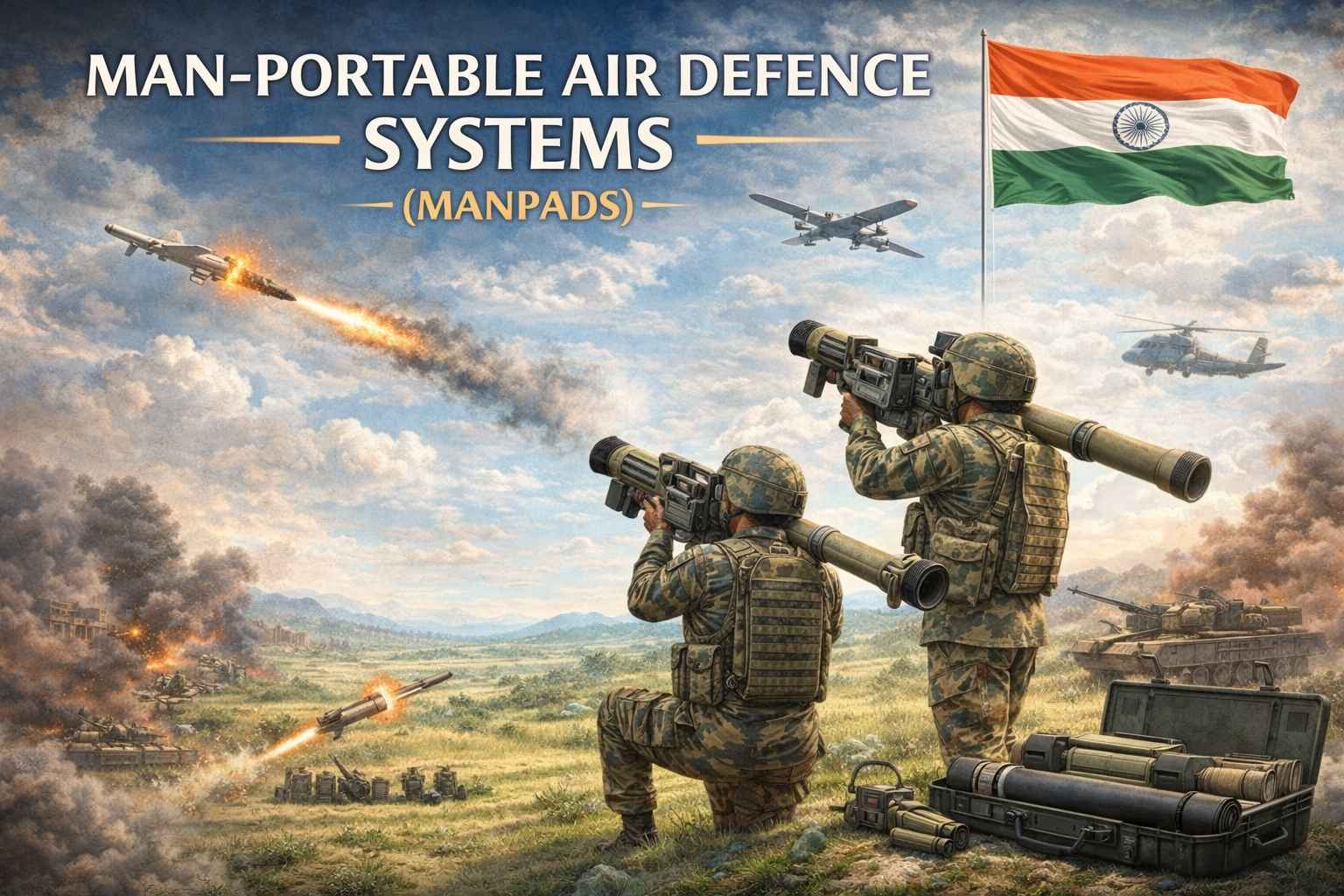
The IRGC are MANPADS afficionados and connoisseurs
MANPADS (Man-Portable Air-Defense Systems) are shoulder-fired, lightweight (10–20 kg) surface-to-air missiles designed for individuals or small teams to destroy low-flying aircraft, helicopters, and UAVs. Using infrared (IR) or laser guidance, they are highly mobile, "fire-and-forget" weapons effective up to roughly 8 - 10 km range
Re: West Asia Crisis — Discussion, Developments, and Bharat’s Strategy
Several things don't sit right on either side regarding the events of the last few days -
- Why did US send 100+ troops to rescue 1 officer? - "No one left behind" could be one reason. They may have piggy backed retrieval of uranium as a secondary mission and this got botched when the C130s got stuck.
- If the Iranis destroyed the aircraft like they would like to claim, where are the bodies? If the US can ingress and egress so easily 30 kms from an Irani nuclear site, it does say a lot about the Irani AD tending towards 0.
Re: West Asia Crisis — Discussion, Developments, and Bharat’s Strategy
This
https://www.calcalistech.com/ctechnews/ ... rkfjlgghzg
Manufactured by Boeing, the CSEL is a compact, 800-gram device integrated into a pilot’s survival vest. It remains attached after ejection, continuously transmitting encrypted location data and preloaded messages such as “injured” or “ready for extraction.” These signals use rapid frequency hopping and ultra-short bursts, making detection by enemy electronic warfare systems extremely difficult.
In short the device is a frequency hopping radio
Re: West Asia Crisis — Discussion, Developments, and Bharat’s Strategy
https://responsiblestatecraft.org/iran- ... of-hormuz/
Why the US Navy won't (or rather can't ) blast the Iranians and 'open' Strait of Hormuz
Back in the Persian Gulf today, the Navy grasps the reality of the circumstances, recognizing that it simply can’t sail into the strait without risk getting blown to smithereens by Iran’s missiles. Today, its carriers are stationed well outside the Gulf and the ranges of Iranian missiles.
These steps have imposed additional costs on war prosecution, necessitating expensive and continuous aerial refueling operations. The Navy has integrated various countermeasures to protect itself from incoming missiles, but the close proximity of Iranian systems in the strait greatly reduces the warning times for any attacks. American vessels are also vulnerable to mines and various unmanned systems both above and underwater. Despite discovering its vulnerability to Iranian mines during Operation Earnest Will in the Iran-Iraq War 40 years ago, the Navy today still has no credible anti-mine ships to mitigate the threat.
Lessons of the Ukraine-Russia war are relevant. Ukraine successfully drove the Russian Black Sea Fleet from its shores through attacks by missiles and unmanned systems. Iran has integrated various of these systems into its tool kit in the strait. These systems aren’t necessarily sophisticated, but their mere existence introduces significant risks into U.S. Navy operations in and around the strait that can’t be discounted for mission planning purposes
Why the US Navy won't (or rather can't ) blast the Iranians and 'open' Strait of Hormuz
Back in the Persian Gulf today, the Navy grasps the reality of the circumstances, recognizing that it simply can’t sail into the strait without risk getting blown to smithereens by Iran’s missiles. Today, its carriers are stationed well outside the Gulf and the ranges of Iranian missiles.
These steps have imposed additional costs on war prosecution, necessitating expensive and continuous aerial refueling operations. The Navy has integrated various countermeasures to protect itself from incoming missiles, but the close proximity of Iranian systems in the strait greatly reduces the warning times for any attacks. American vessels are also vulnerable to mines and various unmanned systems both above and underwater. Despite discovering its vulnerability to Iranian mines during Operation Earnest Will in the Iran-Iraq War 40 years ago, the Navy today still has no credible anti-mine ships to mitigate the threat.
Lessons of the Ukraine-Russia war are relevant. Ukraine successfully drove the Russian Black Sea Fleet from its shores through attacks by missiles and unmanned systems. Iran has integrated various of these systems into its tool kit in the strait. These systems aren’t necessarily sophisticated, but their mere existence introduces significant risks into U.S. Navy operations in and around the strait that can’t be discounted for mission planning purposes
Re: West Asia Crisis — Discussion, Developments, and Bharat’s Strategy
skumar wrote: ↑06 Apr 2026 21:01 Several things don't sit right on either side regarding the events of the last few days -https://x.com/i/status/2041081690769305729
- Why did US send 100+ troops to rescue 1 officer? - "No one left behind" could be one reason. They may have piggy backed retrieval of uranium as a secondary mission and this got botched when the C130s got stuck.
- If the Iranis destroyed the aircraft like they would like to claim, where are the bodies? If the US can ingress and egress so easily 30 kms from an Irani nuclear site, it does say a lot about the Irani AD tending towards 0.
skumar ji,
Here, it's called vote bank politics
trump's approval ratings are almost subterranean and he really needs to burnish his much dented and badly corroded halo
Re: West Asia Crisis — Discussion, Developments, and Bharat’s Strategy
It seems reasonable. from: https://www.twz.com/air/night-stalker-l ... te-in-iranchetak wrote: ↑06 Apr 2026 17:27
Lisa ji,
the story is simply too slick to believe and doesn't sit right
The real target could have been the eyeraanian nuclear stockpile
why use the C-130 when helos alone would have been far more efficient, and why complicate the matter by using the A-10
The IRGC are MANPADS afficionados and connoisseurs
MANPADS (Man-Portable Air-Defense Systems) are shoulder-fired, lightweight (10–20 kg) surface-to-air missiles designed for individuals or small teams to destroy low-flying aircraft, helicopters, and UAVs. Using infrared (IR) or laser guidance, they are highly mobile, "fire-and-forget" weapons effective up to roughly 8 - 10 km range
The force protection role for exactly this kind of mission is a key one for the AH-6. Night Stalker AH-6 crews train heavily for it. The Little Birds can be rapidly delivered to forward locations aboard aircraft as small as a C-130, but it’s their ability to be rolled out and flying in mere minutes that suits them so well for this mission set. The MC-130 can act as transport, weapons hauler and a gas station on the ground for the Little Birds.
So these C-130s were MC-130J, which transported the helis, then allowed them to refuel and also had a command center. Could they have done the same to extract the U? not really as they landed 200 odd miles from IsfahanThe landing zone has been geolocated to just south of Isfahan. This puts it about 200 miles from the Iranian coastline and roughly 230 miles from a land border. It is very unlikely the Little Birds made this trip on their own (can rule it out almost entirely) beyond the tactical issues with doing so.
edit: Looks like I misread. Its not 200 miles from Isfahan, just from the border.
Last edited by pravula on 07 Apr 2026 00:10, edited 1 time in total.
Re: West Asia Crisis — Discussion, Developments, and Bharat’s Strategy
MeidasTouch is hyper partisan and normally I would not post this on BRF. But this 15 minute YouTube dives into this.
https://youtu.be/HhR6qPvUlk0?si=BCXu1BCE-tZhfgxy
Re: West Asia Crisis — Discussion, Developments, and Bharat’s Strategy
https://www.ndtv.com/world-news/us-iran ... n-11319747
By Monday, the account had shifted entirely. Iran's foreign ministry spokesman Esmaeil Baqaei said the operation may not have been a rescue at all.
"The possibility that this was a deception operation to steal enriched uranium should not be ignored at all," he said, adding that there were "many questions and uncertainties" surrounding the mission.
"The area where the American pilot was claimed to be present in Kohgiluyeh and Boyer-Ahmad Province is a long way from the area where they attempted to land or wanted to land their forces in central Iran," Baqaei said. He called the operation "a disaster" for the United States.
Re: West Asia Crisis — Discussion, Developments, and Bharat’s Strategy
The strategic cause of the war is based on egomania - Bibi promises him a victory and a place in history that no US president has had after WW2. His overall approval ratings plunged during the course of the last 6 weeks - it was not great but manageable.
The tactical reason for sending 100+ special forces into a mission to save 1 officer is the thing that does not make sense unless it was combined with another greater objective of retrieval. Probably retrieval was the original mission and it degraded into a CSAR with initial hiccups. Shiv Aroor makes a similar case.
Re: West Asia Crisis — Discussion, Developments, and Bharat’s Strategy
JVL at The Bulwark:
Here are all of the war demands made (so far) by the president of these United States.
February 28: “Our objective is to defend the American people by eliminating imminent threats from the Iranian regime, a vicious group of very hard, terrible people. Its menacing activities directly endanger the United States, our troops, our bases overseas, and our allies throughout the world. . . .
“[T]o the great proud people of Iran, I say tonight that the hour of your freedom is at hand. Stay sheltered. Don’t leave your home. It’s very dangerous outside. Bombs will be dropping everywhere. When we are finished, take over your government. It will be yours to take. This will be probably your only chance for generations.”
March 2: “I don’t want to see it go on too long. I always thought it would be four weeks. And we’re a little ahead of schedule.”
March 4: “One of the things I’m going to be asking for is the ability to work with them on choosing a new leader. . . . I’m not going through this to end up with another Khamenei. I want to be involved in the selection.”
March 5: “We want to go in and clean out everything. . . . We don’t want someone who would rebuild over a ten-year period.”
March 5: “They are wasting their time. Khamenei’s son is a lightweight. I have to be involved in the appointment [of the next Iranian leader].”
March 5: “We’re going to have to choose that person along with Iran. We’re going to have to choose that person.”
March 6, 8:50 a.m. EST: “There will be no deal with Iran except UNCONDITIONAL SURRENDER!”1
March 6, at some point after 8:50 a.m. EST: “Unconditional surrender could be that [the Iranians] announce it. But it could also be when they can’t fight any longer because they don’t have anyone or anything to fight with.”
March 6, 1:43 p.m. EST: Karoline Leavitt says, “What the president means is that when he, as commander-in-chief of the U.S. Armed Forces, determines that Iran no longer poses a threat to the United States of America, and the goals of Operation Epic Fury has been fully realized, then Iran will essentially be in a place of unconditional surrender, whether they say it themselves or not.”
March 7: “He’s [Iranian national-security official, Ali Larijani] already surrendered to all of the Middle Eastern countries.”
March 7: “We don’t need people that join Wars after we’ve already won!”
March 11: “We’ve won. Let me tell you, we’ve won. You know, you never like to say too early you won. We won. We won the—in the first hour, it was over. But we won.”
March 13: “The Fake News Media hates to report how well the United States Military has done against Iran, which is totally defeated and wants a deal - But not a deal that I would accept!”
March 14: “The United States of America has beaten and completely decimated Iran, both Militarily, Economically, and in every other way, but the Countries of the World that receive Oil through the Hormuz Strait must take care of that passage, and we will help — A LOT! The U.S. will also coordinate with those Countries so that everything goes quickly, smoothly, and well. This should have always been a team effort. . .”
March 21: “If Iran doesn’t FULLY OPEN, WITHOUT THREAT, the Strait of Hormuz, within 48 HOURS from this exact point in time, the United States of America will hit and obliterate their various POWER PLANTS, STARTING WITH THE BIGGEST ONE FIRST!”
March 23: “I HAVE INSTRUCTED THE DEPARTMENT OF WAR TO POSTPONE ANY AND ALL MILITARY STRIKES AGAINST IRANIAN POWER PLANTS AND ENERGY INFRASTRUCTURE FOR A FIVE DAY PERIOD.”
March 23: “We are very intent on making a deal with Iran.”
March 23: “They [Iran] want very much to make a deal. We’d like to make a deal, too.”
March 24: “You know, I don’t like to say this — we’ve won this, because this war has been won, the only one that likes to keep it going is the fake news.”
March 25: The Trump administration crafts a fifteen-point peace plan. Conditions include:
Dismantling of nuclear facilities in Natanz, Isfahan, and Fordow
Handover of Iran’s stockpile of enriched uranium
Limits on the range and number of Iran’s missiles
Reopening of the Strait of Hormuz.
March 26: “I am pausing the period of Energy Plant destruction by 10 Days to Monday, April 6, 2026, at 8 P.M.”
March 30: “f the Hormuz Strait is not immediately ‘Open for Business,’ we will conclude our lovely ‘stay’ in Iran by blowing up and completely obliterating all of their Electric Generating Plants, Oil Wells and Kharg Island (and possibly all desalinization plants!). . .”
March 31: “I had one goal: They will have no nuclear weapon, and that goal has been attained.”
March 31: “We’ll be leaving very soon. And if France or some other country wants to get oil or gas, they’ll go up through the strait and—Hormuz Strait. They’ll go right up there, and they’ll be able to fend for themselves. I think it’ll be very safe, actually, but we have nothing to do with that. What happens in the strait we’re not going to have anything to do with.”
April 1: “[T]he countries of the world that do receive oil through the Hormuz Strait must take care of that passage. They must cherish it. They must grab it and cherish it. They can do it easily. . . . Go to the strait and just take it, protect it, use it for yourselves. Iran has been essentially decimated. The hard part is done, so it should be easy. And in any event, when this conflict is over, the strait will open up naturally. It will just open up naturally.”
April 4: “Remember when I gave Iran ten days to MAKE A DEAL or OPEN UP THE HORMUZ STRAIT. Time is running out - 48 hours before all Hell will reign down on them.”
April 5, 8:03 a.m. EDT: “Tuesday will be Power Plant Day, and Bridge Day, all wrapped up in one, in Iran. There will be nothing like it!!! Open the ******’ Strait, you crazy ********, or you’ll be living in Hell - JUST WATCH! Praise be to Allah.”
April 5: “If they don’t come through, if they want to keep it closed, they’re going to lose every power plant and every other plant they have in the whole country.”
Here are all of the war demands made (so far) by the president of these United States.
February 28: “Our objective is to defend the American people by eliminating imminent threats from the Iranian regime, a vicious group of very hard, terrible people. Its menacing activities directly endanger the United States, our troops, our bases overseas, and our allies throughout the world. . . .
“[T]o the great proud people of Iran, I say tonight that the hour of your freedom is at hand. Stay sheltered. Don’t leave your home. It’s very dangerous outside. Bombs will be dropping everywhere. When we are finished, take over your government. It will be yours to take. This will be probably your only chance for generations.”
March 2: “I don’t want to see it go on too long. I always thought it would be four weeks. And we’re a little ahead of schedule.”
March 4: “One of the things I’m going to be asking for is the ability to work with them on choosing a new leader. . . . I’m not going through this to end up with another Khamenei. I want to be involved in the selection.”
March 5: “We want to go in and clean out everything. . . . We don’t want someone who would rebuild over a ten-year period.”
March 5: “They are wasting their time. Khamenei’s son is a lightweight. I have to be involved in the appointment [of the next Iranian leader].”
March 5: “We’re going to have to choose that person along with Iran. We’re going to have to choose that person.”
March 6, 8:50 a.m. EST: “There will be no deal with Iran except UNCONDITIONAL SURRENDER!”1
March 6, at some point after 8:50 a.m. EST: “Unconditional surrender could be that [the Iranians] announce it. But it could also be when they can’t fight any longer because they don’t have anyone or anything to fight with.”
March 6, 1:43 p.m. EST: Karoline Leavitt says, “What the president means is that when he, as commander-in-chief of the U.S. Armed Forces, determines that Iran no longer poses a threat to the United States of America, and the goals of Operation Epic Fury has been fully realized, then Iran will essentially be in a place of unconditional surrender, whether they say it themselves or not.”
March 7: “He’s [Iranian national-security official, Ali Larijani] already surrendered to all of the Middle Eastern countries.”
March 7: “We don’t need people that join Wars after we’ve already won!”
March 11: “We’ve won. Let me tell you, we’ve won. You know, you never like to say too early you won. We won. We won the—in the first hour, it was over. But we won.”
March 13: “The Fake News Media hates to report how well the United States Military has done against Iran, which is totally defeated and wants a deal - But not a deal that I would accept!”
March 14: “The United States of America has beaten and completely decimated Iran, both Militarily, Economically, and in every other way, but the Countries of the World that receive Oil through the Hormuz Strait must take care of that passage, and we will help — A LOT! The U.S. will also coordinate with those Countries so that everything goes quickly, smoothly, and well. This should have always been a team effort. . .”
March 21: “If Iran doesn’t FULLY OPEN, WITHOUT THREAT, the Strait of Hormuz, within 48 HOURS from this exact point in time, the United States of America will hit and obliterate their various POWER PLANTS, STARTING WITH THE BIGGEST ONE FIRST!”
March 23: “I HAVE INSTRUCTED THE DEPARTMENT OF WAR TO POSTPONE ANY AND ALL MILITARY STRIKES AGAINST IRANIAN POWER PLANTS AND ENERGY INFRASTRUCTURE FOR A FIVE DAY PERIOD.”
March 23: “We are very intent on making a deal with Iran.”
March 23: “They [Iran] want very much to make a deal. We’d like to make a deal, too.”
March 24: “You know, I don’t like to say this — we’ve won this, because this war has been won, the only one that likes to keep it going is the fake news.”
March 25: The Trump administration crafts a fifteen-point peace plan. Conditions include:
Dismantling of nuclear facilities in Natanz, Isfahan, and Fordow
Handover of Iran’s stockpile of enriched uranium
Limits on the range and number of Iran’s missiles
Reopening of the Strait of Hormuz.
March 26: “I am pausing the period of Energy Plant destruction by 10 Days to Monday, April 6, 2026, at 8 P.M.”
March 30: “f the Hormuz Strait is not immediately ‘Open for Business,’ we will conclude our lovely ‘stay’ in Iran by blowing up and completely obliterating all of their Electric Generating Plants, Oil Wells and Kharg Island (and possibly all desalinization plants!). . .”
March 31: “I had one goal: They will have no nuclear weapon, and that goal has been attained.”
March 31: “We’ll be leaving very soon. And if France or some other country wants to get oil or gas, they’ll go up through the strait and—Hormuz Strait. They’ll go right up there, and they’ll be able to fend for themselves. I think it’ll be very safe, actually, but we have nothing to do with that. What happens in the strait we’re not going to have anything to do with.”
April 1: “[T]he countries of the world that do receive oil through the Hormuz Strait must take care of that passage. They must cherish it. They must grab it and cherish it. They can do it easily. . . . Go to the strait and just take it, protect it, use it for yourselves. Iran has been essentially decimated. The hard part is done, so it should be easy. And in any event, when this conflict is over, the strait will open up naturally. It will just open up naturally.”
April 4: “Remember when I gave Iran ten days to MAKE A DEAL or OPEN UP THE HORMUZ STRAIT. Time is running out - 48 hours before all Hell will reign down on them.”
April 5, 8:03 a.m. EDT: “Tuesday will be Power Plant Day, and Bridge Day, all wrapped up in one, in Iran. There will be nothing like it!!! Open the ******’ Strait, you crazy ********, or you’ll be living in Hell - JUST WATCH! Praise be to Allah.”
April 5: “If they don’t come through, if they want to keep it closed, they’re going to lose every power plant and every other plant they have in the whole country.”