Indus Water Treaty

The Strategic Issues & International Relations Forum is a venue to discuss issues pertaining to India's security environment, her strategic outlook on global affairs and as well as the effect of international relations in the Indian Subcontinent. We request members to kindly stay within the mandate of this forum and keep their exchanges of views, on a civilised level, however vehemently any disagreement may be felt. All feedback regarding forum usage may be sent to the moderators using the Feedback Form or by clicking the Report Post Icon in any objectionable post for proper action. Please note that the views expressed by the Members and Moderators on these discussion boards are that of the individuals only and do not reflect the official policy or view of the Bharat-Rakshak.com Website. Copyright Violation is strictly prohibited and may result in revocation of your posting rights - please read the FAQ for full details. Users must also abide by the Forum Guidelines at all times.
chetak
BRF Oldie
Posts: 36774
Joined: 16 May 2008 12:00

Re: Indus Water Treaty

Post by chetak »

the pakis are crying hoarse about the IWT because the abrogation of the IWT by India has completely stopped the mandatory sharing of the hydrological and water release data that is of vital importance to the pakis, but whining about the IWT is designed to bring the pakis local and international attention and sympathy, as also to whip up the passions of their crowds of phata pyjama malnourished paki abdoools and overly fertile ayeshaaas.........


since the paki abdoools and ayeshaaas have no electricity, no petrol/diesel, no cooking gas, and no jobs, the only thing left for them to do is to go at it like rabbits


whereas in actual fact, the real issues bothering the pakis are these:


The withholding of hydrological data and unscheduled water releases by India have severely strained transboundary water relations, leaving pakistan deeply concerned.

This disruption of vital information disrupts pakistan's flood forecasting and agricultural planning, creating significant geopolitical and economic friction.


Core Issues Impacting Pakistan:


Lack of Flood Warnings: The absence of advance notice for extraordinary water discharges prevents downstream communities in regions like Punjab and Sindh from preparing for sudden floods.

Agricultural Disruption: Unpredictable water availability during monsoon months impairs crop planning, threatening food and water security for millions.

Suspended Treaties: Citing security concerns, India has placed elements of the 1960 Indus Waters Treaty in abeyance and suspended routine hydrological data sharing.

Climate Amplification: Erratic weather and glacial melting make transboundary water flows highly volatile, increasing the urgency for reliable data sharing.

Current Status:While India occasionally shares high-level flood warnings through diplomatic channels, pakistan consistently urges the restoration of official data-sharing mechanisms under the Indus Waters Treaty to manage shared basins effectively


Pakistan says India not providing detailed river data, urges compliance with Indus Waters Treaty


ISLAMABAD: Pakistan said on Friday India was no longer sharing river-water information in the same detail as in previous years, pointing out that New Delhi should use the official channels under the Indus Waters Treaty (IWT) and comply with all its provisions.

The IWT, brokered by the World Bank in 1960, divides control of the Indus basin rivers between the two nuclear-armed neighbors.

India said in April it would hold the treaty “in abeyance” after a gun attack in Indian-administered Kashmir killed more than 26 tourists, an assault it blamed on Pakistan.

Islamabad denied any involvement and called New Delhi’s suspension of the pact illegal and “an act of war.”

“Indian side has indeed shared some information about the floods in different rivers through diplomatic channels,” foreign office spokesperson Shafqat Ai Khan told reporters at his weekly briefing. “However, it is not as detailed as it was in the past.”

“Besides, the established channel of Indus Water Commissioner has not been used,” he added. “In that context, we reiterate that India should fully comply with all the provisions of the Indus Water Treaty.”

Last month, the Indian High Commission in Islamabad warned of high flood levels in the River Tawi in Indian-administered Kashmir, even though New Delhi had announced in April it had suspended the treaty.

Pakistan quickly accused India of violating the agreement by sending the message through diplomatic channels rather than the IWT’s official mechanism, calling the step a “serious violation of international law.”

India has since shared additional flood warnings through its diplomatic missions, according to Pakistani officials.

Pakistan has repeatedly raised the IWT issue at international forums, arguing that the treaty does not permit either side to withdraw unilaterally.

The dispute comes as Pakistan reels from weeks of heavy monsoon rains that have swollen the Chenab, Ravi and Sutlej rivers that flow into Pakistan’s eastern province of Punjab from India.

Authorities say more than 3.9 million people have been affected in the province, where floodwaters have submerged farmland and forced mass evacuations, with surges now moving south toward Sindh.
bala
BRF Oldie
Posts: 4006
Joined: 02 Sep 1999 11:31
Location: Office Lounge

Re: Indus Water Treaty

Post by bala »

India Dams The Indus: How Ladakh’s Mega Project Is Changing Geopolitics & Water Warfare

India has taken a historic step by building its first-ever rock check dam across the Indus River in Ladakh, triggering massive geopolitical and environmental interest. Conceptualized by UT Ladakh Lieutenant Governor Vinai Kumar Saxena, the innovative "Sindhu Jal Samriddhi Abhiyan" (SJSA) directly addresses a severe "seasonal gap" that leaves high-altitude agricultural villages completely parched during sowing seasons.

Executed at K-Thang Upshi near Leh, the record-breaking pilot project spans 200 feet long, 30 feet wide at the base, and 5 feet high. Built in just seven days using 180 metric tonnes of locally sourced boulders weighing up to 10 MT, this cost-effective, eco-friendly porous structure successfully holds 40 million litres of water without using engineered concrete. The dam creates a massive 500-meter upstream pondage area, naturally raising shallow water levels so local farmers can seamlessly irrigate their fields without relying on failed mechanical suction pumps.

As water flow scales eight-fold from 25 Cusecs to a raging 200 Cusecs in peak summer, this highly resilient, community-owned system safeguards the fragile Himalayan floodplain while maintaining full ecological integrity. With the Irrigation and Flood Control Department already constructing four additional experimental dams on the Indus River, India’s strategic water management blueprint marks a monumental shift in regional resource control and sustainable development. Watch this detailed video analysis to uncover the ground reality of India’s bold engineering masterpiece, its impact on border communities, and the unfolding transboundary water dynamics.

https://www.youtube.com/watch?v=mR3HlPSP83E


// i hope some serious DAMs are constructed to store water during summer/lean seasons.
Manish_P
BRF Oldie
Posts: 7487
Joined: 25 Mar 2010 17:34

Re: Indus Water Treaty

Post by Manish_P »

Nice. Need such local level initiatives which can be completed in a few years and bring immediate benefits to the local populace.
chetak
BRF Oldie
Posts: 36774
Joined: 16 May 2008 12:00

Re: Indus Water Treaty

Post by chetak »

This is just a representational video of the silt that is being dislodged from the dam during de-silting


The accumulation of silt deposits flowing out, following the opening of the Turkish dams toward Iraq.

This is a natural phenomenon that occurs in all dam systems.


watch video


https://x.com/i/status/2060637744032850224


but the devious, deceitful, and vengeful pakis got this malevolent clause included this in the treaty, and the sinister amrikis wrote it in just to keep on troubling India, and hoping that the dams would, over time, get filled with silt, and not be able to store the designed amount of water that it was planned and built for, eventually rendering all of them kaput


neverwho (and mind you, the man as a trained lawyer, qualified in the UK) missed this vital clause, along with so many others, because he was artfully kept busy and diverted by the enthralling and curvaceous flora and fauna that were continually choreographed in his vicinity to keep him otherwise occupied.


Under the original terms of the 1960 Indus Waters Treaty (IWT), India was strictly restricted from building significant storage on the western rivers (Indus, Jhelum, and Chenab). This included stringent design limitations on how, when, and to what extent India could flush out accumulated silt and debris (a process known as reservoir flushing) from its hydroelectric projects to maintain reservoir capacity
SBajwa
BRF Oldie
Posts: 5934
Joined: 10 Jan 2006 21:35
Location: Attari

Re: Indus Water Treaty

Post by SBajwa »

There are two ancient Canals (Upper Bari Doab Canala. Bari means area between Beus and Ravi rivers and Lower Bari Doab Canal) . UBDC takes off from Madhopur beadworks(Ravi, Pathankot) and traverse through Gurdaspur, Amritsar and then there are several branches on the way that go towards Pakistan , some emptying into lower bari doab canal which is entirely in Pakistan and feeds Lahore, etc. River Ravi water was 100% allocated to India these feeder canals were never stopped or diverted.

These canals and their feeders need to be fixed first so that all empty into Hari Pattan or a new lake somewhere South in Rajasthan, where land is available

Instead of creating new canals existing canals need much more attention.

UBDC actually carries more water than many rivers (created about 400+ years to carry water to Lahore under Mughals and later Maharaja Ranjit Singh fixed it and used it to supply water to Amritsar Including Harimandir Sahib(Golden Temple) Sarovar through a covered feeder (called Hasli in Punjabi). These are primarily irrigation canals for the Majha area of Punjab.
SSridhar
Forum Moderator
Posts: 25553
Joined: 05 May 2001 11:31
Location: Chennai

Re: Indus Water Treaty

Post by SSridhar »

Indus Waters Treaty: Centre says Pakistan won't get 'a single drop' in coming years - ToI
Union jal shakti minister CR Patil on Tuesday said that the Narendra Modi government is working to ensure that Pakistan receives no water from the Indus river system in the coming years. Patil said the treaty had not been terminated but suspended, and that efforts were underway to stop water flowing across the border. “It still stands; rather, the treaty has been kept in abeyance. And since Prime Minister Modi took this decision, every effort is being made to ensure not a single drop flows there,” he said.

Patil added that the issue was being closely monitored at the highest levels of government. “Under the Prime Minister's directives, Home Minister Amit Shah is also personally monitoring the matter, and we are actively working on it. I believe the work is proceeding in a time-bound manner. It is certain—not a single drop of water will go in the coming years; I can tell you that much.

His remarks came after heightened tensions between the two countries following the Pahalgam terror attack and India's subsequent decision to place the 1960 treaty in abeyance.

Earlier, the ministry of external affairs rejected the authority of the Court of Arbitration constituted under the treaty.

Responding to a recent award issued by the tribunal on the “maximum pondage” issue, MEA spokesperson Randhir Jaiswal said India regarded the court as illegally constituted and would not recognise any of its decisions.

“India categorically rejects the present so-called award, just as it has firmly rejected all prior pronouncements of the illegally constituted CoA,” Jaiswal said, adding that any proceedings, awards or decisions issued by the tribunal were “null and void”.

India has long argued that the arbitration mechanism was set up in violation of the treaty and has challenged the court's jurisdiction over disputes relating to the Kishenganga and Ratle hydropower projects in Jammu and Kashmir.

Meanwhile, concerns over water availability have intensified in Pakistan. Karachi is currently facing a severe water shortage, with reports suggesting that nearly 70 per cent of the city is experiencing supply disruptions. Political leaders have blamed administrative failures for the crisis, even as Pakistan grapples with growing uncertainty over future water flows under the Indus system.
SBajwa
BRF Oldie
Posts: 5934
Joined: 10 Jan 2006 21:35
Location: Attari

Re: Indus Water Treaty

Post by SBajwa »

https://www.msn.com/en-in/news/insight/ ... 5faf9ffc84

India plans to halt Indus water flow to Pakistan in 2 years
India’s bold move: CR Patil says India will divert all Indus waters to its side within two years, with the treaty in abeyance.

Pakistan’s warning: Islamabad says planned diversion projects would violate the treaty and international law, raising concerns over downstream impacts.
Treaty dispute grows: India rejects Court of Arbitration rulings as 'null and void', escalating a long-standing water-sharing conflict.

India to cut off Indus water to Pakistan within two years
Union Jal Shakti Minister CR Patil said India is working on projects to divert all Indus river water for domestic use, aiming to stop flows to Pakistan within 1.5–2 years. The Indus Waters Treaty has been placed in abeyance since last year’s Pahalgam terror attack, with Home Minister Amit Shah personally monitoring the effort. Patil stressed the plan is proceeding on a time-bound basis and that 'not a single drop' will reach Pakistan in coming years.

Legal and treaty considerations of India’s water diversion]
• Inter-basin transfers like the Chenab-Beas tunnel raise legal and treaty-interpretation questions
• Even small diversions from Chenab tributaries could trigger treaty-related disputes
• Experts call for stronger monitoring and water governance reforms amid diversion projects

What the cut-off could mean for Pakistan's water security
Pakistan’s Foreign Office has objected to India’s proposed Chenab-Beas Link Tunnel, which aims to transfer 1.9 million acre feet of water annually from the Chenab to the Beas system. Officials in Islamabad argue that such inter-basin diversions and silt flushing plans for the Salal Dam would violate the Indus Waters Treaty and other international agreements. These concerns come as Karachi is experiencing severe water shortages, with reports indicating nearly 70% of the city faces supply disruptions. Live Mint + 2

India's defiance of international arbitration
India has categorically rejected the authority of the Court of Arbitration under the Indus Waters Treaty, calling it 'illegally constituted' and its awards 'null and void'. The latest rejection came after a May 15 ruling on 'maximum pondage' related to hydropower projects. New Delhi maintains that the tribunal violates the treaty framework and refuses to recognise any of its decisions. The Times of India + 3
From treaty to tensions: how the Indus dispute escalated
Signed in 1960, the Indus Waters Treaty allocated eastern rivers to India and western rivers to Pakistan, with limited use rights for India. The treaty has survived wars, but tensions escalated after India suspended it in 2025 following the Pahalgam attack. Pakistan and experts like Mohsin Leghari warn that Indian hydropower expansion and inter-basin transfers could undermine the treaty’s stability and alter river flow timing critical for Pakistan’s agriculture.

Leghari argued that even if the diverted volume is relatively small compared to the Chenab’s annual flow, such inter-basin transfers raise important legal and treaty-interpretation questions, as the Indus Waters Treaty was based on the principle of keeping eastern and western river systems largely separate.
Mohsin Leghari,Water policy expert
SBajwa
BRF Oldie
Posts: 5934
Joined: 10 Jan 2006 21:35
Location: Attari

Re: Indus Water Treaty

Post by SBajwa »

https://www.wionews.com/india-news/indi ... 1178144651

Chenab-Beas link tunnel: India's ₹2,600 crore project could reshape Indus water politics


Image
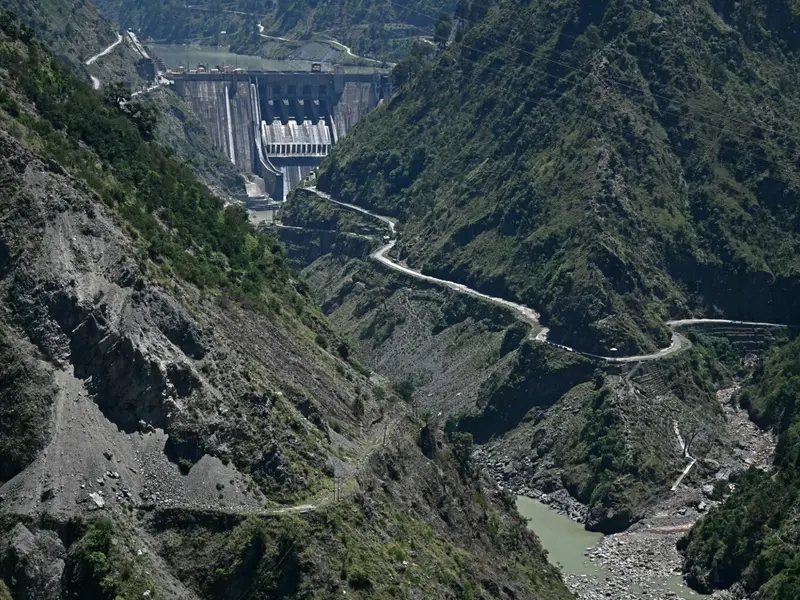
This photograph taken on May 15, 2025 shows a general view of the Baglihar Dam, also known as Baglihar Hydroelectric Power Project, on the river Chenab in the Ramban district of Jammu and Kashmir. Photograph: (AFP)

story highlights
India is accelerating the ₹2,600 crore Chenab-Beas river link project to boost hydropower and water security. The project could have major implications for the Indus Water Treaty and India-Pakistan relations.

India is accelerating the construction of the Chenab-Beas river link project. The government has issued a notification inviting e-tenders for the Chenab–Beas Link Tunnel Project in May 2026. Estimated at around ₹2,600 crore, the 8.7 km long tunnel is likely to pass through the Great Himalayan Watershed. When it emerges, it will carry water from the Chandra and Bhaga, the upper tributaries of the Chenab river, westwards through a 113-kilometre canal into the Beas basin. The project is likely to generate 4,000 MW of additional domestic hydropower.

The project is a revival of the National River Linking Project (NRLP) to interlink around 30 major rivers, initially conceptualised in 1980 and then championed by former Indian Prime Minister Atal Bihari Vajpayee in 2002 to create a national grid. This tunnel falls under the Himalayan Component of NRLP. It is likely to benefit several northern states, including Punjab, Haryana, Rajasthan, Delhi, and Himachal Pradesh. Most of these cities face severe water shortages. The Union Government wants to complete the project by July 31, 2029.

What happens to the Indus Water Treaty?
However, the project could have far-reaching geopolitical consequences beyond the economy and energy. The decision comes in the wake of the Indian abeyance of the Indus Water Treaty of 1960 following the Pahalgam terror attack. It has the potential to create another flashpoint between India and Pakistan. The proposed project could push the Indus treaty into further uncertainty.

The Chenab flows in Himachal Pradesh in the names of Chandra and Bhaga. It then flows through Jammu and Kashmir as the Chenab River before reaching the Punjab province in Pakistan, where it merges with the Indus River, which eventually goes to the Arabian Sea. Whereas the Beas River originates in Himachal Pradesh, passes through Kullu, Manali and Mandi, before entering the Punjab and mixing with the Sutlej River. The link aims to transfer 1.9 million acre feet of surplus water from Chenab annually to the Beas basin.

Under the Indus Water Treaty, the Eastern Rivers like Beas, Sutlej and Ravi are allocated to India for unrestricted use. While the Western Rivers like the Jhelum, Chenab and Indus were allocated to Pakistan. The treaty allows India to construct dams in the upstream along the run of the Western rivers for power generation. However, it prohibits interlinking and the transfer of water from one basin to another.

This project shows a change in India's strategic consideration for the Western Rivers; it appears to look beyond the framework of the treaty and give up restraint. New Delhi is treating the upstreams of the Western Rivers as part of its project for the national grid. Islamabad is rattled; it knows and admits that it will have “dangerous implications” in its economy. It poses a heavy risk in agriculture and food security.

The move can be considered one from the playbook of China, just as India sits on the upstream of three rivers, with Pakistan, China is also sitting at the upstream of rivers like the Yarlung Tsangpo in Tibet, which enters India as the Brahmaputra. China has also recently begun the construction of a 60-gigawatt "super-dam" cascade at the Great Bend before it enters Arunachal Pradesh. However, India-China does not have any water sharing agreement, like the Indus Water Treaty; it had an MOU about sharing hydrological data, which China completely abandoned during the 2017 Doklam border standoff, leaving Indian disaster management teams blind to incoming floods. India is now implementing that playbook with Pakistan; it could use the river flow as a strategic deterrence against Pakistan.
sanjaykumar
BRF Oldie
Posts: 6872
Joined: 16 Oct 2005 05:51

Re: Indus Water Treaty

Post by sanjaykumar »

Most of the catchment area for the Brahmaputra lies within India. I have not seen flows at the bend compared with what enters assam. But their dams will not do much to water availability.

India should build a massive reservoir as the river enters the lowlands to serve as a vast spigot to help the Chinese engaged.

I am concerned about the potential for quakes.
chetak
BRF Oldie
Posts: 36774
Joined: 16 May 2008 12:00

Re: Indus Water Treaty

Post by chetak »

On May 21 — @CNNnews18 reported exclusively on India’s move to build a tunnel to divert surplus Chenab water to Beas & tunnel at Salal Dam

Today, a rattled Pakistan rues & cries that both projects reported by us carry “dangerous implications for pakistan’s economy”

The Centre has set a deadline of July 2029 for a major project to divert surplus Chenab waters to the Beas basin through tunnels and canals


watch the videos ................. they are quite informative


https://x.com/AmanKayamHai_/status/2062 ... 73/video/1


https://x.com/AmanKayamHai_/status/2062 ... 73/video/2
Post Reply