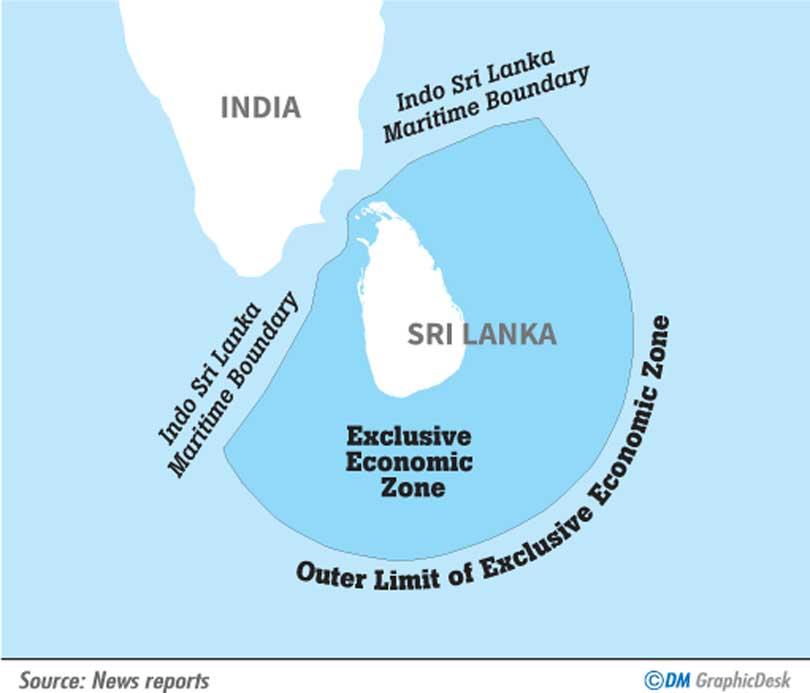
This is not related to the incident because the said incident was not even in our EEZ. The Ship was 74 km below Galle is what is reported. So within the EEZ of Sri Lanka, but not ours. If SL want to lodge protest with the U.S it is upto them. I would say they should.SRajesh wrote: ↑05 Mar 2026 14:33 1. Military Operations in an EEZ During War
In wartime, naval forces of belligerent states may operate in another country’s EEZ.
This can include:
Naval patrols
Surveillance and intelligence gathering
Naval combat operations against enemy vessels
The coastal state cannot automatically prohibit these operations, because the EEZ preserves freedom of navigation and other lawful uses of the sea.
2. Limits: Neutral Coastal State Rights
If the coastal state is neutral in the conflict, it still retains certain rights in its EEZ.
A neutral coastal state may:
Protect its economic resources (e.g., fisheries, offshore platforms)
Prevent military activities that directly threaten those resources
Ensure its EEZ is not used in ways that violate neutrality
However, the coastal state cannot treat the EEZ like territorial waters and completely ban military activity.
3. Combat Between Foreign Warships in an EEZ
If two foreign warships fight each other inside a coastal state’s EEZ, the coastal state generally:
May:
Protest diplomatically
Take measures to protect offshore infrastructure
Conduct search and rescue if ships are damaged
Investigate environmental damage
Usually may not:
Stop the combat directly
Enforce neutrality as strictly as in territorial waters
Arrest belligerent warships
These practices are reflected in the San Remo Manual on International Law Applicable to Armed Conflicts at Sea, a widely used guide to naval warfare law.
4. Absolute Protection Zone: Territorial Waters
The situation is very different inside the territorial sea (within 12 nautical miles).
There:
The coastal state has full sovereignty
Belligerent warships generally cannot fight there
The neutral state may enforce neutrality and expel or intern ships
The ship was in Sri Lankan EEZ.
The distance between Vishakapatnam and Galle 720 Nautical Miles.
Top Speed of Iris Dena 30 knots.
If it was travelling top speed, it would have taken just one day to reach Galle.
At 25 knots 28 hours.to 29 hours
At 15 knots 2 days.
Naval ships especially destroyers do cruising around 15-18 knots, OPERATIONAL TRANSIT 18-22 KNOTS,
So at Operational speed as the country ion conflict would have taken 1.5 days to 2 days max.
So the ship left on 27th ( lets say).
Should have reached Galle in two days.
So what was the ship doing in Indian Ocean for 4 - 5 days loitering.
As per protocol for International Fleet Review: ships can carry weapons and ammunition, but whilst in the Host Country Harbour have to comply with the Harbour Masters orders on handlking the weapons and ammunition!!
All very tasty reading!!
https://kidsnews.top/indias-largest-coa ... igil-2021/

https://www.dailymirror.lk/print/front- ... 238-275174