its wiser to go for niche products in the civil market than take on the big workhorses (B737/A320 or the B767/A330 classes) due to the huge investment and infrastructure plus the massive sales runs required to break even and then turn a profit. the chinese are venturing into teh B737/A320 market - but it will be interesting to see how they get on. they have a number of 'domestic customers' who have signed up for the launch
a more restricted feederliner or regional multi-hopper type aircraft with a very specific operational profile makes a lot more sense in terms of economic viability
Transport Aircraft for IAF
Re: Transport Aircraft for IAF
I was looking at the fleet of IA/AirIndia and they both seem to have a fleet ~ 75 A320/319/321 , right now the Russians are developing the narrow body single aisle MS-21 civil airline which will be competing with the new generation Boeing/Airbus B737-900/A320 N plus the Chinese C919 in the 150 - 200 seater
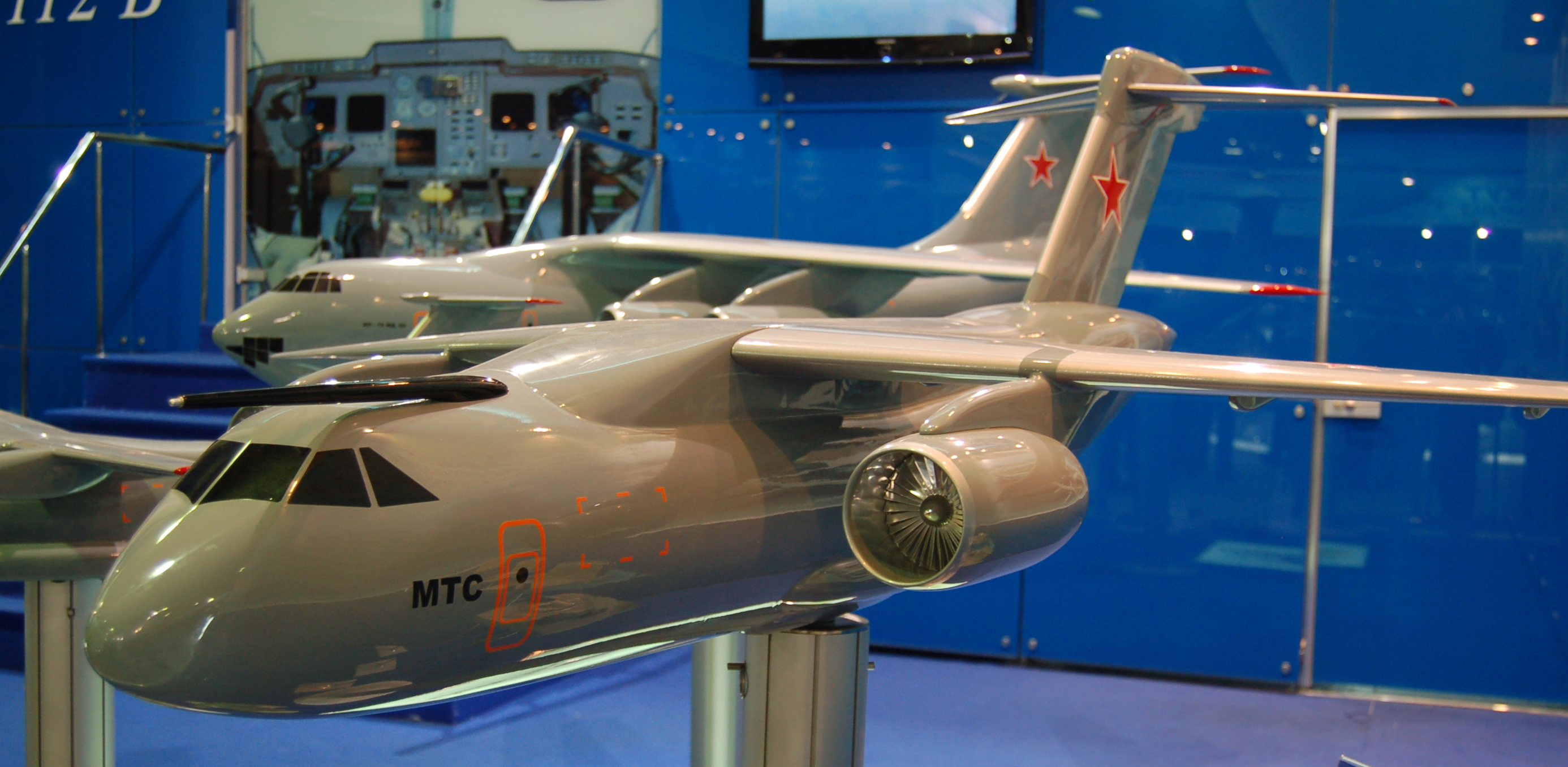
The MS-21 already has a committed customer of 150 aircraft at this stage and in service date of 2016 , it uses a variant of 5 gen engine PD-14 that will power the MTA.
If we could buy a stake of 25 % in this development program it would be a good share of significant work for a competitive design ( better then making door for Airbus that HAL does now ) there is a captive market in the widely used A-320/737 replacement category in State owned and private airlines it would raise HAL competitive scale and generate revenue.
Considering MTA a military aircraft and MS-21 civil type uses the same engine there is a degree of logistics advantage.
I think it will be a good start for Transport aircraft for India in Military and Civil market with an eye to get a small scale of global market and most importantly to rise competitiveness to global standards in the next 2 decades.
Some write up on MS-21
The MS-21 already has a committed customer of 150 aircraft at this stage and in service date of 2016 , it uses a variant of 5 gen engine PD-14 that will power the MTA.
If we could buy a stake of 25 % in this development program it would be a good share of significant work for a competitive design ( better then making door for Airbus that HAL does now ) there is a captive market in the widely used A-320/737 replacement category in State owned and private airlines it would raise HAL competitive scale and generate revenue.
Considering MTA a military aircraft and MS-21 civil type uses the same engine there is a degree of logistics advantage.
I think it will be a good start for Transport aircraft for India in Military and Civil market with an eye to get a small scale of global market and most importantly to rise competitiveness to global standards in the next 2 decades.
Some write up on MS-21
Re: Transport Aircraft for IAF
Won't those also have competitors who are well entrenched with successful products?Lalmohan wrote: a more restricted feederliner or regional multi-hopper type aircraft with a very specific operational profile makes a lot more sense in terms of economic viability
Re: Transport Aircraft for IAF
An-32 are 4T payload, not 6T. There was an upgrade proposal from Ukraine to up-engine to 6.5T payload but that's not happening I think.Austin wrote:Any reason why IAF would replace 100 odd fleet of An-32 that can carry 6T to ~2500 km with 45 odd MTA that can carry 20T at the same range ?
So fewer aircraft with better payload and better maintenance/uptimes are better then larger fleet of small aircraft ?
Re: Transport Aircraft for IAF
Austin wrote:The development of Civil Aircraft has a long and sleepy history , I remember it was during Aero India 1996 that Deve Gowda out of the blue announced a project to develop a 50 seater and a 100 seater civil aircraft project , a budget of 100 cr was announced for both. It was a blot from blue announcement and every one was taken by surprised.
I think this plan is still alive. Wasn't there some recent news of India-Russia collaboration in this field? India and Russia are the two countries who can, with their own internal market, give others a run for their money.
Re: Transport Aircraft for IAF
merlin ji - yes ofcourse, e.g. embraer, dehavilland, ATR, etc. - but not necessarily one that is tailor made for very specific indian condition 'missions', plus barriers to entry are lower
we might need to make some strategic industrial choices rather than just do a me too strategy. not all nations design and build aircraft afterall
we might need to make some strategic industrial choices rather than just do a me too strategy. not all nations design and build aircraft afterall
Re: Transport Aircraft for IAF
Shiv the only plan we have with Russia is to develop a military transport aircraft MTA , at a latter stage they are planning to make 100 seater from MTA but thats probably for the military/vip market.shiv wrote:I think this plan is still alive. Wasn't there some recent news of India-Russia collaboration in this field? India and Russia are the two countries who can, with their own internal market, give others a run for their money.
We can give others a run for their money only if we have a competitive product that is better or equal to others in the race , else it difficult to beat Bombardier or Boeing in their game.
Re: Transport Aircraft for IAF
and the goalposts are constantly shifting....we need strategic partners thats for sure. another 'science project' run by NAL on a shoestring budget will just keep the scientists employed until retirement and having fun tinkering, but never deliver a working and reasonable cost product.
I am not criticising NAL but they are not a product house and have no track record of delivering even something like a ATR72 from scratch.
we need to pull in both desi and bideshi help and reduce risk to make a successful product. NAL can play the role of TsAGI and work on the science and physics behind the design and airframe etc.
I am not criticising NAL but they are not a product house and have no track record of delivering even something like a ATR72 from scratch.
we need to pull in both desi and bideshi help and reduce risk to make a successful product. NAL can play the role of TsAGI and work on the science and physics behind the design and airframe etc.
Re: Transport Aircraft for IAF
What gets my goat is that the aircraft has not been designed with a rear loading ramp, which means that it can never see bulk service with the IAF. True that civil airlines dont have such a configuration - but maybe there could have been an innovative solution? If at all, it may replaced Do-228 the air force and navy operate.
Maybe NAL is best merged with HAL.
Maybe NAL is best merged with HAL.
Re: Transport Aircraft for IAF
I'm not certain about that. Antonov advertises its An-32 at 7.5 tonnes. It think that IAF's older An-32 have a 6.7 tonne payload and that they are being upgraded to 7.5. The lighter An-26s, from which the An-32 was developed, has a 6 tonne payload.merlin wrote: An-32 are 4T payload, not 6T. There was an upgrade proposal from Ukraine to up-engine to 6.5T payload but that's not happening I think.
Re: Transport Aircraft for IAF
Those numbers ^^^ are correct.Gilles wrote:I'm not certain about that. Antonov advertises its An-32 at 7.5 tonnes. It think that IAF's older An-32 have a 6.7 tonne payload and that they are being upgraded to 7.5. The lighter An-26s, from which the An-32 was developed, has a 6 tonne payload.merlin wrote: An-32 are 4T payload, not 6T. There was an upgrade proposal from Ukraine to up-engine to 6.5T payload but that's not happening I think.
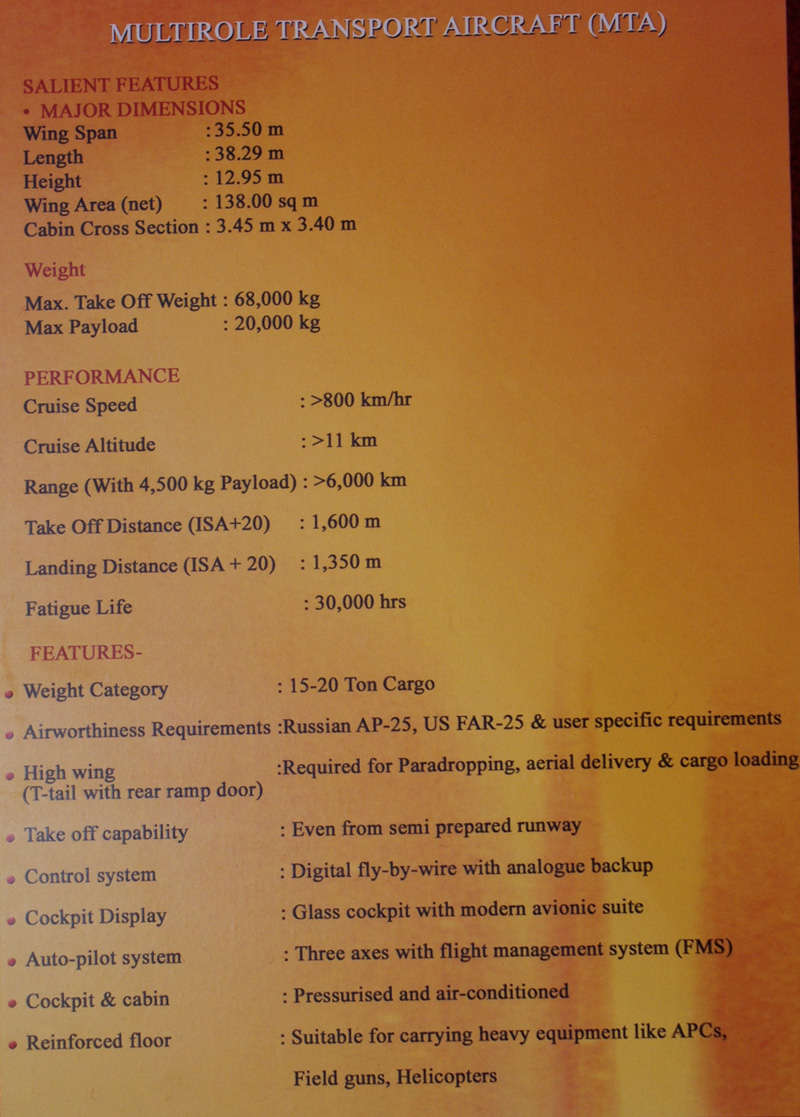
Re: Transport Aircraft for IAF
FWB requires electricity. If all you have is FWB, no matter how many systems, if you lose all electrical power, you lose control of the aircraft. Airbus aircraft have FWB redundancy but the rudder and horizontal stabilizer trim are mechanical/hydraulic, which allow the pilot to maintain control of his aircraft should he lose all FWB computers (can really only be caused by losing all electrical power)Austin wrote:
Any reason why they would opt for Digital FBW with Analog backup and not a full quad FBW ?
Re: Transport Aircraft for IAF
Giles,
Dont aircrafts carry a Small Ram air power turbines to deal with such contingency. So as long as fwd momentum is maintaines the aircraft will have power to control it self.
IIRC there was a case of a Canadian Boeing 767 which ran out of fuel in flight losing all electrical power. The turbine was deployed and the pilots were able to control the aircraft.
JMT
Dont aircrafts carry a Small Ram air power turbines to deal with such contingency. So as long as fwd momentum is maintaines the aircraft will have power to control it self.
IIRC there was a case of a Canadian Boeing 767 which ran out of fuel in flight losing all electrical power. The turbine was deployed and the pilots were able to control the aircraft.
JMT
Re: Transport Aircraft for IAF
^^^^
You are talking about Gimli glider, air transat flight 236 also encountered the same problem albeit the cause was fuel leak. More than electrical power, which incase of emergency is provided by batteries/hydraulic driven generator (HDG), one needs hydraulic power to steer the aircraft. Ram air turbine provides hydraulic and/or electrical power to the aircraft. In case of B 767, the RAT provides limited hydraulic power for flight controls and HDG.
Cheers....
You are talking about Gimli glider, air transat flight 236 also encountered the same problem albeit the cause was fuel leak. More than electrical power, which incase of emergency is provided by batteries/hydraulic driven generator (HDG), one needs hydraulic power to steer the aircraft. Ram air turbine provides hydraulic and/or electrical power to the aircraft. In case of B 767, the RAT provides limited hydraulic power for flight controls and HDG.
Cheers....
Last edited by neerajb on 08 Dec 2010 09:58, edited 1 time in total.
Re: Transport Aircraft for IAF
Gilles wrote:FWB requires electricity. If all you have is FWB, no matter how many systems, if you lose all electrical power, you lose control of the aircraft. Airbus aircraft have FWB redundancy but the rudder and horizontal stabilizer trim are mechanical/hydraulic, which allow the pilot to maintain control of his aircraft should he lose all FWB computers (can really only be caused by losing all electrical power)
Gilles AFAIK all the modern Airbus and Boeing have full quad digital FBW with no mechanical backup , only older aircraft had a mix of both , thats probably because the technology was not mature or they did not want to keep full faith in full FBW , a mechnical backup also added weight to the aircraft and perhaps added complexity , weight is always an issue for any aircraft.
I can think of an aircraft loosing full electric power for couple of reasons , catastrophic all engine failure which would means they may have to rely on limited APU to power critical system or even that could be unavailable , a badly designed power system with no redundancy which will lead to complete failure a rarity these days , a shot-circuit or fire on board electrical system.
MTA has digital FWB with mechanical backup does this mean that mechanical backup is fully independent of FBW and in case of complete failure of FBW the mechanical backup can still fly the aircraft with all control surfaces accessible and functional ?
Re: Transport Aircraft for IAF
Wikileaks informs us that the US Government did not approve the sale and installation of high end LAIRCM missile defence systems on Qatari C-17s.
http://www.wikileaks.ch/cable/2009/08/09DOHA502.html
http://www.wikileaks.ch/cable/2009/08/09DOHA502.html
Re: Transport Aircraft for IAF
The RAT (Ram Air Turbine) is generally a small hydraulic pump that maintains pressure on one of the hydraulic systems. In a FBW aircraft with no mechanical/hydraulic backup, if you loose all electrical power, you loose control, even your hydraulics system is intact and in full working order because is takes electricity to send the pilots control inputs to the hydraulic actuators.Pratyush wrote:Giles,
Dont aircrafts carry a Small Ram air power turbines to deal with such contingency. So as long as fwd momentum is maintaines the aircraft will have power to control it self.
IIRC there was a case of a Canadian Boeing 767 which ran out of fuel in flight losing all electrical power. The turbine was deployed and the pilots were able to control the aircraft.
JMT
The 767 is an aircraft with conventional hydraulic controls. Air Transat's dead stick landing in Portugal was with a FWB A-330 but the aircraft still had battery power and a hydraulically operated generator (The RAT provided Hydraulic pressure to the Green system which is fitted with a small hydraulically powered generator)
Re: Transport Aircraft for IAF
Austin, that is both correct and wrong.Austin wrote:
Gilles AFAIK all the modern Airbus and Boeing have full quad digital FBW with no mechanical backup , only older aircraft had a mix of both , thats probably because the technology was not mature or they did not want to keep full faith in full FBW , a mechnical backup also added weight to the aircraft and perhaps added complexity , weight is always an issue for any aircraft.
Where you are wrong is that the Airbus FBW aircraft do have mechanical/hydraulic rudder as well as a mechanical/hydraulic horizontal stabilizer that allows to control the aircraft in case of full electrical failure (They call it Mechanical backup)
Where you are correct, is that this backup system is only meant for temporary control of the aircraft in the air and while electrical power is being restored. It is not meant to allow landing of the aircraft. In the simulator, I heard that some pilots who tried it successfully landed the aircraft under Mechanical Backup, but that most who attempt it crash it.
Last edited by Gilles on 09 Dec 2010 05:29, edited 1 time in total.
Re: Transport Aircraft for IAF
Air Force C-17s deliver Abrams tanks to Afghanistan

U.S. Air Force C-17 Globemaster III aircraft crew assigned to the 816th Expeditionary Airlift Squadron loads a Marine Corps M1A1 Abrams tank for aerial transport to Afghanistan in support of Operation Enduring Freedom Nov. 28, 2010. The 816th EAS was deployed to an undisclosed location in Southwest Asia. (U.S. Air Force photo by Staff Sgt. Andy M. Kin)
Re: Transport Aircraft for IAF
They airlifted it to Afghanistan fromGaur wrote: The 816th EAS was deployed to an undisclosed location in Southwest Asia
after a boat trip.an undisclosed location in Southwest Asia
Probably from Karachi. Sending the tanks over land would have exposed them to the embarrassment of worldwide front page pictures of 20 Taliban militia taking a joy ride on top of an M-1 Abrams in the Tribal Areas....... Something like this picture but with an M-1 Abrams instead of a Humvee

Re: Transport Aircraft for IAF
well atleast it is just like a mcdonalds drive through, looking at the space on the side after tank enters. bodes well for Arjuns in aksai chin !! (Ahuja sir might be pleased to see this pic)
Re: Transport Aircraft for IAF
Isn't it called as 'Alternate Law' in Airbus lingo. Essentially it is a simpler FBW channel with reduced automation, available in case of emergencies but still it is not mechanical. Quantas flight QF32 was recovered with 'Alternate Law' at Singapore.Gilles wrote:Where you are correct, is that this backup system is only meant for temporary control of the aircraft in the air and while electrical power is being restored. It is not meant to allow landing of the aircraft. In the simulator, I heard that some pilots who tried it successfully landed the aircraft under Mechanical Backup, but that most who attempt it crash it.
Cheers....
Re: Transport Aircraft for IAF
Airbus Flight Control:neerajb wrote:['Alternate Law' i
In Normal Configuration = Normal Law
With some computer Losses = Alternate Law 1
With More computer losses Alternate Law 2
With Minimal electrical power and more computer losses = Direct Law
With No electricl power or with loss of all computers = Mechanical Backup
Re: Transport Aircraft for IAF
Thanks Gilles. Searched on Google and found this. Rudder for roll/yaw control and pitch by horizontal stabalizer trim 
If someone could land an aircraft with such limitations, he/she must be one hell of a pilot.
Cheers....
If someone could land an aircraft with such limitations, he/she must be one hell of a pilot.
Cheers....
Re: Transport Aircraft for IAF
is real direct law and mechanical backup landing part of the training curriculum of military transport pilots or civilian airline pilots ?
or is it restricted to simulator training only?
or is it restricted to simulator training only?
Re: Transport Aircraft for IAF
Thanks for the info , I am assuming Boeing does not have a mechanical backup like Airbus does , any reason for different approaches between the two ?Gilles wrote: Where you are wrong is that the Airbus FBW aircraft do have mechanical/hydraulic rudder as well as a mechanical/hydraulic horizontal stabilizer that allows to control the aircraft in case of full electrical failure (They call it Mechanical backup)
Re: Transport Aircraft for IAF
I am not very familiar with the flight control modes of FBW Boeing transports, which are the B-777 and the C-17. Perhaps someone else could pitch in?Austin wrote:Thanks for the info , I am assuming Boeing does not have a mechanical backup like Airbus does , any reason for different approaches between the two ?Gilles wrote: Where you are wrong is that the Airbus FBW aircraft do have mechanical/hydraulic rudder as well as a mechanical/hydraulic horizontal stabilizer that allows to control the aircraft in case of full electrical failure (They call it Mechanical backup)
Re: Transport Aircraft for IAF
Report faults pilot for deadly Alaska C-17 crash
Washington Post
Los Angeles Times
Washington Post
Military report cites aggressive acrobatics in C-17 crashA pilot's overly aggressive maneuvering and overconfidence were blamed in an investigative report on a C-17 plane crash at an Anchorage military base that killed all four airmen on board. Besides pilot error, the crew on board was also faulted for failing to notice the dangerous situation that culminated with the plane stalling and crashing into some woods
Los Angeles Times
"The mishap pilot violated regulatory provisions and multiple flight manual procedures, placing the aircraft outside established flight parameters at an attitude and altitude where recovery was not possible," the report's executive summary says.
When the stall warning sounded, the co-pilot responded by saying "temperature, altitude lookin' good," according to the report.
"Although the pilot eventually attempted to recover the aircraft, he employed incorrect procedures, and there was not sufficient altitude to regain controlled flight," the report says.
Re: Transport Aircraft for IAF
Aviadvigatel offers re-engining planes with PS-90A2
Should be part of our IL-76 upgrade and new IL-76 buy for awacs
PS-90A2As previously reported, December 29, 2009 Aviation Register of Interstate Aviation Committee gave the developer the type certificate number ST309-AMD in the engine PS-90A2. From previous versions (PS-90A,-90A1, and 90-76), it differs in a number of upgraded parts and systems, thus improving its performance and substantially - by 37% - reducing life cycle costs.
Should be part of our IL-76 upgrade and new IL-76 buy for awacs
Re: Transport Aircraft for IAF
1. The rudder does not influence roll.neerajb wrote:Rudder for roll/yaw control and pitch by horizontal stabalizer trim
If someone could land an aircraft with such limitations, he/she must be one hell of a pilot.
2. Mechanically induced yaw and pitch is controlled on thousands of aircraft everyday using the rudder and stabilizer.
Re: Transport Aircraft for IAF
You are wrong there.Shalav wrote:1. The rudder does not influence roll.neerajb wrote:Rudder for roll/yaw control and pitch by horizontal stabalizer trim
If someone could land an aircraft with such limitations, he/she must be one hell of a pilot.
Check this
Using the rudder causes one wing to move forward faster than the other. Increased speed means increased lift, and hence rudder use causes a roll effect. Also, since rudders generally extend above the aircraft's center of gravity, a torque is imparted to the aircraft resulting in an adverse bank. Pushing the rudder to the right not only pulls the tail to the left and the nose to the right, but it also "spins" the aircraft as if a left turn were going to be made. Out of all the control inputs, rudder input creates the greatest amount of adverse effect. For this reason ailerons and rudder are generally used together on light aircraft: when turning to the left, the control column is moved left, and adequate left rudder is applied.
Re: Transport Aircraft for IAF
Well you are quoting wikipedia as a reference!!
Applying a left or right aileron induces a nose down attitude during the turn which is why one uses the rudder to maintain a level turn instead of loosing altitude on a turn using only ailerons. Your wikipedia quote fails to mention a level turn is the reason why ailerons and rudder are used simultaneously in a turn.
Given its failure to mention the most obvious use of rudder and aileron together for a coordinated turn - I'll ignore wikipedia as being valid reference; thank you very much!
Instead it mentions use of the elevator to "increase the AoA" so as to maintain level flight.
Applying a left or right aileron induces a nose down attitude during the turn which is why one uses the rudder to maintain a level turn instead of loosing altitude on a turn using only ailerons. Your wikipedia quote fails to mention a level turn is the reason why ailerons and rudder are used simultaneously in a turn.
Given its failure to mention the most obvious use of rudder and aileron together for a coordinated turn - I'll ignore wikipedia as being valid reference; thank you very much!
Instead it mentions use of the elevator to "increase the AoA" so as to maintain level flight.
To maintain level flight requires increased positive (up) elevator to increase the angle of attack, increase the total lift generated and keep the vertical component of lift equal with the weight of the aircraft.
Re: Transport Aircraft for IAF
Shalav you are right. But the whatever Wikipedia is saying is not wrong. You both are speaking of different flight control measures.
If you would build a plane with only rudder and elevator, you would notice that the plane banks when you turn it. In fact if you maintain the same speed and keep the rudder at same deviation, your plane won't make circles. It would bank and keep banking further and further. Depends on the the planes CG, but in most cases it will nose dive eventually (for the same reason you quoted when a plane banks, its pitch goes does) It is very simple physics, just like the differentials on a truck.
But you are right it wouldn't just role, it will start turning. So it will be incredibly difficult to control a big/heavy plane with just elevator trims and rudder .
If you would build a plane with only rudder and elevator, you would notice that the plane banks when you turn it. In fact if you maintain the same speed and keep the rudder at same deviation, your plane won't make circles. It would bank and keep banking further and further. Depends on the the planes CG, but in most cases it will nose dive eventually (for the same reason you quoted when a plane banks, its pitch goes does) It is very simple physics, just like the differentials on a truck.
But you are right it wouldn't just role, it will start turning. So it will be incredibly difficult to control a big/heavy plane with just elevator trims and rudder .
Re: Transport Aircraft for IAF
I was specifically talking about Shalav's confident statement that the "Rudder does not influence Roll". That is just plain wrong. I said nothing about using only the rudder to turn the aircraft. That will not work. But the Rudder does cause a secondary banking effect.
In fact a problem with the B737 rudder caused several incidents and three crashes in the 90's. The dual servo valve inside the PCU controlling the rudder would jam under certain conditions and the rudder would either be stuck in a particular position or be actually deflected in the opposite direction to the Pilot's input. The result would be that the aircraft would suddenly roll hard in one direction and cause a near complete loss of control since the ailerons weren't powerful enough to counteract the rolling force.
Anyways this is getting way OT. So I will withdraw before the admins come at me.
In fact a problem with the B737 rudder caused several incidents and three crashes in the 90's. The dual servo valve inside the PCU controlling the rudder would jam under certain conditions and the rudder would either be stuck in a particular position or be actually deflected in the opposite direction to the Pilot's input. The result would be that the aircraft would suddenly roll hard in one direction and cause a near complete loss of control since the ailerons weren't powerful enough to counteract the rolling force.
Anyways this is getting way OT. So I will withdraw before the admins come at me.
Re: Transport Aircraft for IAF
Agreed and agreednachiket wrote:I was specifically talking about Shalav's confident statement that the "Rudder does not influence Roll". That is just plain wrong.
<SNIP>
Anyways this is getting way OT. So I will withdraw before the admins come at me.
 .
.Re: Transport Aircraft for IAF
Gilles wrote:They airlifted it to Afghanistan fromGaur wrote: The 816th EAS was deployed to an undisclosed location in Southwest Asiaafter a boat trip.an undisclosed location in Southwest Asia
Probably from Karachi. Sending the tanks over land would have exposed them to the embarrassment of worldwide front page pictures of 20 Taliban militia taking a joy ride on top of an M-1 Abrams in the Tribal Areas....... Something like this picture but with an M-1 Abrams instead of a Humvee

Gilles, give it up man! It's over!
Re: Transport Aircraft for IAF
This is incorrect --- the nose doesn't drop. Using ailerons causes one wing to develop more lift than the other, causing the bank. However, the lift differential also causes differential in induced drag --- the "high" wing develops more induced drag than the "low" wing. This causes the adverse yaw --- the nose rises a little and yaws towards the high wing, which is away from the direction of the turn, resulting in the aircraft skidding through the turn. The skid causes an unpleasant sensation and is inefficient because the side the fuselage is subjected to the airflow, causing a huge drag increment. As you pointed out, the rudder is applied to counteract this adverse yaw.Applying a left or right aileron induces a nose down attitude during the turn which is why one uses the rudder to maintain a level turn instead of loosing altitude on a turn using only ailerons.
Re: Transport Aircraft for IAF
The rudder does influences a roll, infact yaw always results in a rolling moment. If not, then how do you explain the rudder and aileron input during a crab?Shalav wrote:1. The rudder does not influence roll.neerajb wrote:Rudder for roll/yaw control and pitch by horizontal stabalizer trim
If someone could land an aircraft with such limitations, he/she must be one hell of a pilot.
2. Mechanically induced yaw and pitch is controlled on thousands of aircraft everyday using the rudder and stabilizer.
In commercial planes the rudder is used for yaw/turning during landing/takeoff or at low airspeeds. At low altitudes it is not safe to bank an aircraft to align it with runway, So rudder is used. At cruise ailerons are used and there are many other schemes (mechanical/electronic) available to offset the adverse yaw so the pilots are not bothered about the coordinated turn.
Cheers....
Added later : I never said pitch control by elevator but by the trim tabs.
Last edited by neerajb on 13 Dec 2010 16:18, edited 1 time in total.
Re: Transport Aircraft for IAF
six degrees of freedom
3 force directions
3 moments
first derivative cross effects
second derivative cross effects
everything has a bearing on everything else
welcome to flight mechanics!
3 force directions
3 moments
first derivative cross effects
second derivative cross effects
everything has a bearing on everything else
welcome to flight mechanics!