1962 and 1967 Indo-China War: News & Discussion
Re: 1962 and 1967 Indo-China War: News & Discussion
^^ None of these are hidden or secret. I think i've read all possible versions of these reasons.
Re: 1962 and 1967 Indo-China War: News & Discussion
Battle of Galwan: A lost story from the 1962 India-China war
https://www.indiasentinels.com/opinion/ ... e_vignette
02 March 2024
https://www.indiasentinels.com/opinion/ ... e_vignette
02 March 2024
-
Jayanta Bhattacharya
- BRFite -Trainee
- Posts: 1
- Joined: 05 Mar 2024 02:39
Re: 1962 and 1967 Indo-China War: News & Discussion
Here is a detailed account on the 1962 debacle in Nefa (now Arunachal Pradesh). This article debunks many of the myths going around for decades on the causes of the defeat. It brings to fore some hitherto unknown facts with references to memos, documents, and first-hand accounts of men who actually fought in the war.
https://bit.ly/3rCJNn2
https://bit.ly/3rCJNn2
Re: 1962 and 1967 Indo-China War: News & Discussion
The author is trying to put lipstick on a pig to bail out Nehru.Jayanta Bhattacharya wrote: ↑05 Mar 2024 13:30 Here is a detailed account on the 1962 debacle in Nefa (now Arunachal Pradesh). This article debunks many of the myths going around for decades on the causes of the defeat. It brings to fore some hitherto unknown facts with references to memos, documents, and first-hand accounts of men who actually fought in the war.
https://bit.ly/3rCJNn2
Re: 1962 and 1967 Indo-China War: News & Discussion
VIDEO: https://x.com/Samarth19567493/status/17 ... 37976?s=20 ---> An eye witness account of the Battle of Nurnang fought along the Sela Pass in 1962 war, where Rifleman Jaswantsingh Rawat and his comrades of 4th Garhwal Rifles would repulse several PLA assaults by small arms and grenade and achieve eternal glory. The Interview features a subhedar of the company. It was taken at Tezpur town. The 4th Garhwal Rifles is the only battalion in the disastrous Kameng sector of the 1962 War which got a battle honour. They fought splendidly in the battle and withdrew only after orders.
VIDEO: https://x.com/Samarth19567493/status/17 ... 70929?s=20 ---> An international coverage on state of Tezpur town just after declaration of ceasefire by red china in aftermath of the 1962 Sino-Indian conflict.
VIDEO: https://x.com/Samarth19567493/status/17 ... 00083?s=20 ---> Scenes from Bombay (Mumbai) during the 1962 Sino-Indian war. This is probably the most emotional clip. Women are donating their bangles, ornaments and gold. Children donating piggybank savings and adult boys donating their blood to support troops on frontiers.
VIDEO: https://x.com/Samarth19567493/status/17 ... 70929?s=20 ---> An international coverage on state of Tezpur town just after declaration of ceasefire by red china in aftermath of the 1962 Sino-Indian conflict.
VIDEO: https://x.com/Samarth19567493/status/17 ... 00083?s=20 ---> Scenes from Bombay (Mumbai) during the 1962 Sino-Indian war. This is probably the most emotional clip. Women are donating their bangles, ornaments and gold. Children donating piggybank savings and adult boys donating their blood to support troops on frontiers.
Re: 1962 and 1967 Indo-China War: News & Discussion
VIDEO: https://x.com/jai_samota/status/1765749 ... 61257?s=20 ---> A batch of 160 Indian Prisoners of War, who were captured during first phase of the 1962 War in Ladakh being repatriated by the Chinese at Spanggur Gap. The batch included troops of J&K Militia, 1/8 Gorkha Rifles and 5 Jat. The final scene of the video, a dance that perfectly captures the joy of returning to motherland.
Re: 1962 and 1967 Indo-China War: News & Discussion
In New Faux Pas, Mani Shankar Aiyar Says "Alleged" 1962 Chinese Invasion
https://www.ndtv.com/india-news/in-new- ... on-5767019
28 May 2024
VIDEO of the above statement ---> https://x.com/ANI/status/1795489327323001314
This traitor mentions it in the very first 30 seconds of the video
https://x.com/rishibagree/status/1795499589853692331 ---> When China Attacked India in 1962, Congress leader Mani Shankar Aiyar was in England collecting funds for the Chinese Army. The history we aren't taught.
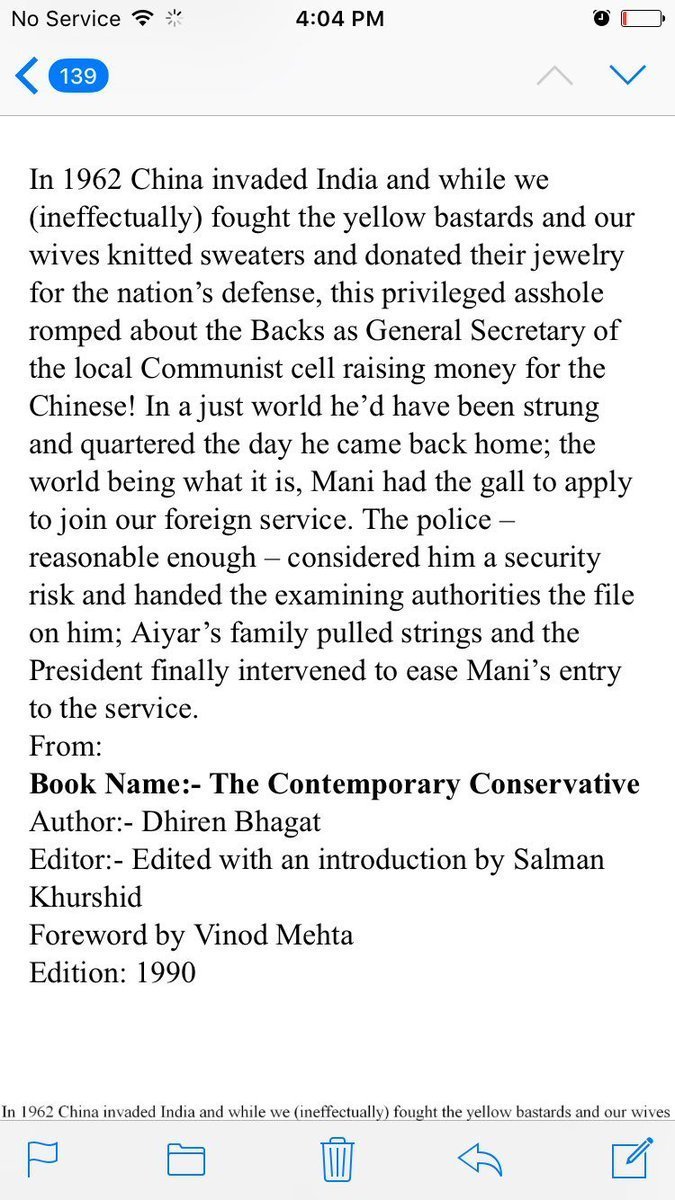
https://www.ndtv.com/india-news/in-new- ... on-5767019
28 May 2024
VIDEO of the above statement ---> https://x.com/ANI/status/1795489327323001314
This traitor mentions it in the very first 30 seconds of the video
https://x.com/rishibagree/status/1795499589853692331 ---> When China Attacked India in 1962, Congress leader Mani Shankar Aiyar was in England collecting funds for the Chinese Army. The history we aren't taught.
Re: 1962 and 1967 Indo-China War: News & Discussion
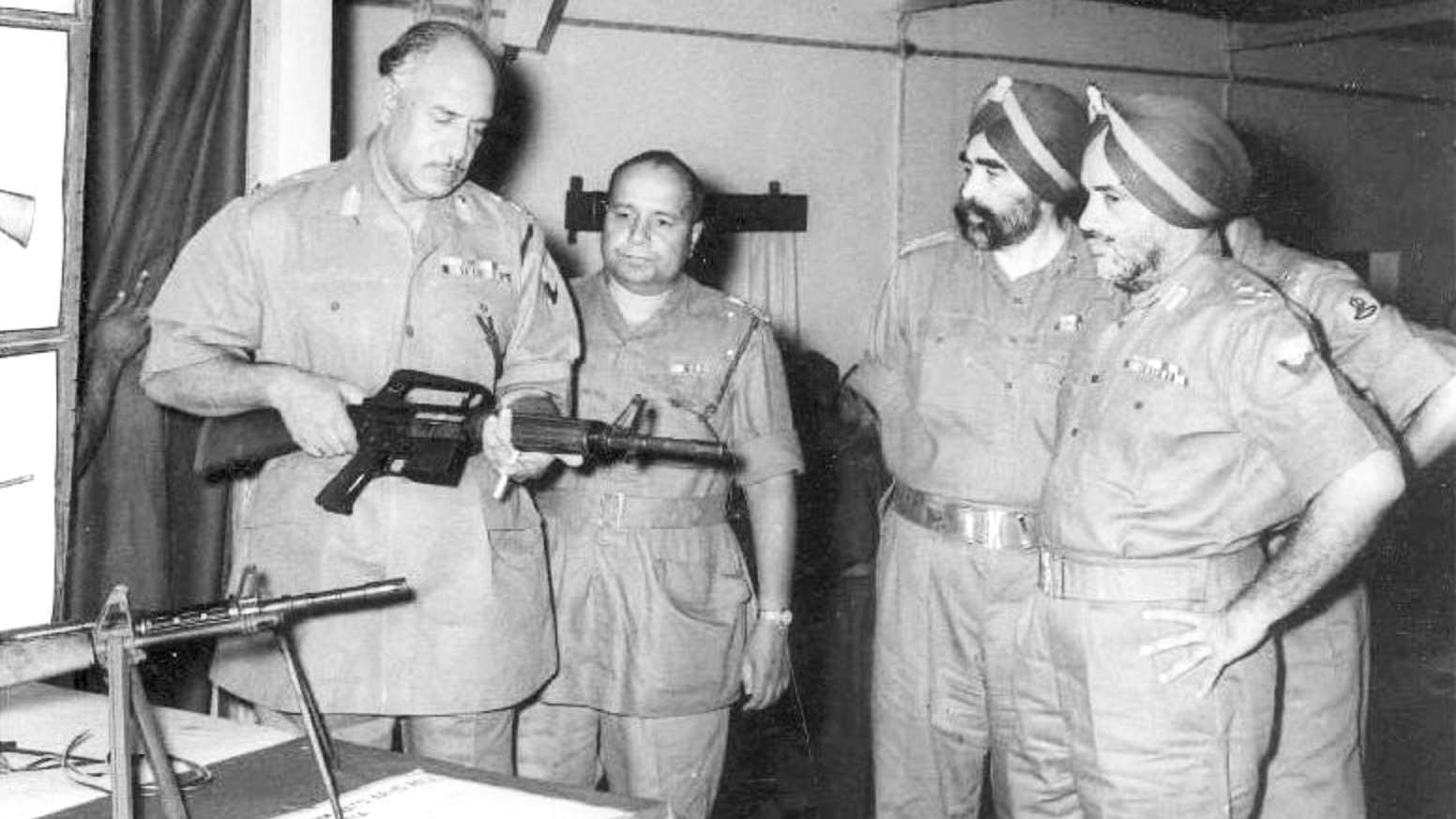
https://x.com/Kunal_Biswas707/status/18 ... 7709976626 ---> Blast From The Past --- General Kodendera Subayya Thimayya inspecting AR-10 prototypes by ArmaLite at MHOW in the 1960s. While he liked the West and wished the Indian Army modernize on the basis of Western armies, but the 1960s Indian politics was pro-Soviet and had deep rooted anti-army sentiments.
https://x.com/Kunal_Biswas707/status/18 ... 5782738400 ---> Timmy Sir, is holding perhaps an Armalite AR-10 Portuguese configured carbine which was also offered to India back in the 1960s. Such infantry weapons would have turned the tide of battles. Sad a lot of our Indian Army soldiers armed with .303 rifles, perished facing PLAGF troops armed with SKS.
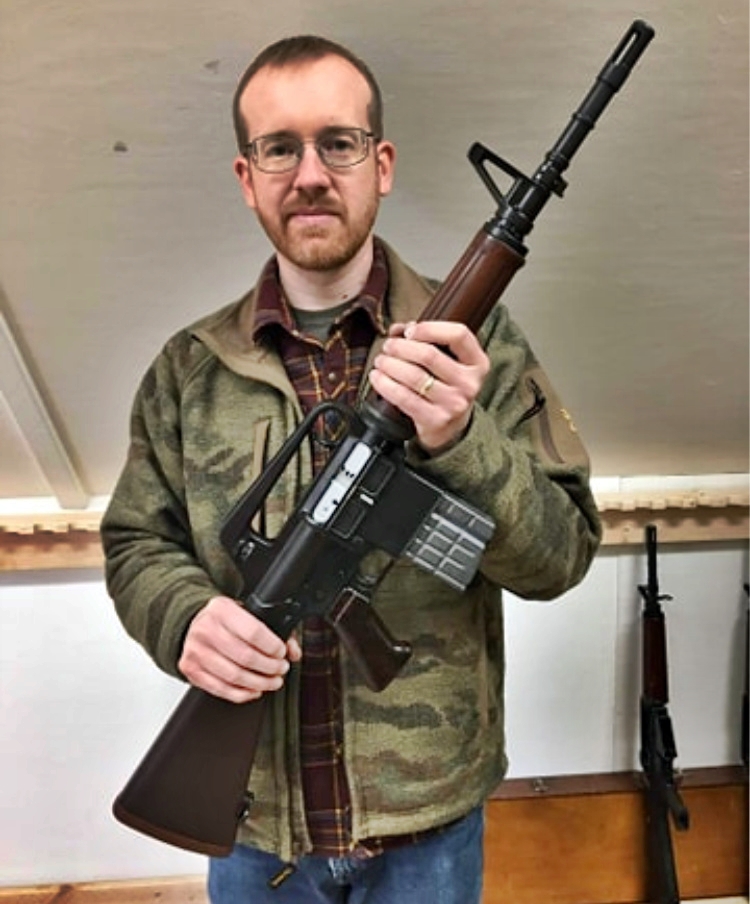
https://x.com/Kunal_Biswas707/status/18 ... 5782738400 ---> Timmy Sir, is holding perhaps an Armalite AR-10 Portuguese configured carbine which was also offered to India back in the 1960s. Such infantry weapons would have turned the tide of battles. Sad a lot of our Indian Army soldiers armed with .303 rifles, perished facing PLAGF troops armed with SKS.
Re: 1962 and 1967 Indo-China War: News & Discussion
https://x.com/SacredScroll/status/20086 ... 93680?s=20 ---> The Reason Arunachal Pradesh is Still on India’s Map. Meet the "One Man Army" who refused to retreat when his commanders gave up hope. In the freezing heights of Arunachal, 10,000 feet above sea level, there is a soldier who has been on duty for 63 years. He is not a myth. Meet Rifleman Jaswant Singh Rawat, the one-man army India forgot.
1. The Dark Winter of 1962: It was November 1962. The Sino-Indian war was nearing its end. The Chinese PLA was advancing rapidly, crushing Indian defenses. The 4th Garhwal Rifles were ordered to retreat from Nuranang due to a lack of ammunition and manpower. But Jaswant refused - "I will not retreat. I will fight." Armed with just an LMG (Light Machine Gun), he stayed back at his post while his unit withdrew. What happened next is the stuff of legends.
2. The 72-Hour Standoff: Jaswant Singh Rawat didn't just stay back; he decided to wage a psychological war. He knew he couldn't fight a battalion alone, so he created an illusion. For THREE DAYS, Rifleman Jaswant held his position against waves of Chinese soldiers. He used guerrilla tactics, changing positions, creating the illusion of multiple soldiers firing from different locations. The Chinese thought they were facing an entire battalion. They halted their advance, terrified of the "heavy resistance."
3. The Unsung Sisters: Sela and Nura: He wasn't entirely alone. Two local Monpa girls, Sela and Nura, risked their lives to help him. They supplied him with food and ammunition, running through the crossfire. They helped him change positions, keeping the illusion alive for three days and three nights. Together, they held back an entire Chinese division.
4. The Betrayal and The End: The Chinese were baffled. How could a few men stop an army? Tragically, a local supplier betrayed Jaswant’s position. The Chinese realized they were fighting just one man. They launched a final, massive assault. Sela died in a grenade burst. Nura was captured. Realizing he was surrounded and refusing to be taken prisoner, Jaswant used his last bullet. He shot himself in the head.
5. The Enemy's Salute: When the Chinese Commander found Jaswant’s body, he couldn't believe it. One man. 300 Chinese casualties. 72 hours. Out of anger, they severed his head and took it to China. But after the ceasefire, impressed by his superhuman bravery, the Chinese returned his head along with a brass bust of him, a rare mark of honor from an enemy.
6. The Soldier Who Never Died: Here is where history ends, and the Legend begins. According to the Indian Army and locals, Jaswant Singh Rawat never left his post.
--> He is revered as "Baba Jaswant Singh."
--> He is still serving - He has received regular promotions even after death. He is now a Major General.
--> He is alive - At Jaswant Garh (the memorial built where he fell), 5 soldiers are detailed to serve him.
7. The Daily Ritual: Every morning at 4:30 AM, bed tea is served to him. His shoes are polished daily. His uniform is ironed. And the most chilling part? Soldiers often find his bedsheets crumpled in the morning and his freshly polished boots muddy by evening. He is still patrolling. He is still guarding the border. The pass nearby is named Sela Pass after the brave girl who stood by him. The Nuranang Falls are often called the Jang Falls, remembering the battle. And Baba Jaswant Singh remains the Guardian Angel of the Eastern Frontier.
Whatever you do today, take a moment to salute the ghost who never sleeps so you can. Jai Hind.
1. The Dark Winter of 1962: It was November 1962. The Sino-Indian war was nearing its end. The Chinese PLA was advancing rapidly, crushing Indian defenses. The 4th Garhwal Rifles were ordered to retreat from Nuranang due to a lack of ammunition and manpower. But Jaswant refused - "I will not retreat. I will fight." Armed with just an LMG (Light Machine Gun), he stayed back at his post while his unit withdrew. What happened next is the stuff of legends.
2. The 72-Hour Standoff: Jaswant Singh Rawat didn't just stay back; he decided to wage a psychological war. He knew he couldn't fight a battalion alone, so he created an illusion. For THREE DAYS, Rifleman Jaswant held his position against waves of Chinese soldiers. He used guerrilla tactics, changing positions, creating the illusion of multiple soldiers firing from different locations. The Chinese thought they were facing an entire battalion. They halted their advance, terrified of the "heavy resistance."
3. The Unsung Sisters: Sela and Nura: He wasn't entirely alone. Two local Monpa girls, Sela and Nura, risked their lives to help him. They supplied him with food and ammunition, running through the crossfire. They helped him change positions, keeping the illusion alive for three days and three nights. Together, they held back an entire Chinese division.
4. The Betrayal and The End: The Chinese were baffled. How could a few men stop an army? Tragically, a local supplier betrayed Jaswant’s position. The Chinese realized they were fighting just one man. They launched a final, massive assault. Sela died in a grenade burst. Nura was captured. Realizing he was surrounded and refusing to be taken prisoner, Jaswant used his last bullet. He shot himself in the head.
5. The Enemy's Salute: When the Chinese Commander found Jaswant’s body, he couldn't believe it. One man. 300 Chinese casualties. 72 hours. Out of anger, they severed his head and took it to China. But after the ceasefire, impressed by his superhuman bravery, the Chinese returned his head along with a brass bust of him, a rare mark of honor from an enemy.
6. The Soldier Who Never Died: Here is where history ends, and the Legend begins. According to the Indian Army and locals, Jaswant Singh Rawat never left his post.
--> He is revered as "Baba Jaswant Singh."
--> He is still serving - He has received regular promotions even after death. He is now a Major General.
--> He is alive - At Jaswant Garh (the memorial built where he fell), 5 soldiers are detailed to serve him.
7. The Daily Ritual: Every morning at 4:30 AM, bed tea is served to him. His shoes are polished daily. His uniform is ironed. And the most chilling part? Soldiers often find his bedsheets crumpled in the morning and his freshly polished boots muddy by evening. He is still patrolling. He is still guarding the border. The pass nearby is named Sela Pass after the brave girl who stood by him. The Nuranang Falls are often called the Jang Falls, remembering the battle. And Baba Jaswant Singh remains the Guardian Angel of the Eastern Frontier.
Whatever you do today, take a moment to salute the ghost who never sleeps so you can.
 Jai Hind.
Re: 1962 and 1967 Indo-China War: News & Discussion
^^^
https://x.com/TGD_06/status/2008698360321147233?s=20 ---> Jaswant Singh Rawat didn’t just delay an advance in Arunachal Pradesh—he imposed uncertainty on a superior force, buying time when it mattered most. Militarily, it’s a lesson in psychological warfare and terrain-led defense; symbolically, it explains why the eastern frontier isn’t just held by deployments and maps, but by a legacy of will that still shapes India’s border ethos.
https://x.com/nkk_123/status/2008951716641951925?s=20 ---> I was there last month, the memorial has amazing energy.


https://x.com/SacredScroll/status/20089 ... 68716?s=20 ---> It doesn’t feel like a memorial for the dead, but a post for the living. You are lucky to have experienced that aura firsthand. Thanks for sharing those pictures. Jai Hind!
https://x.com/nkk_123/status/2008954524116062546?s=20 ---> Well said. One more for your records. Jai Hind.

https://x.com/TGD_06/status/2008698360321147233?s=20 ---> Jaswant Singh Rawat didn’t just delay an advance in Arunachal Pradesh—he imposed uncertainty on a superior force, buying time when it mattered most. Militarily, it’s a lesson in psychological warfare and terrain-led defense; symbolically, it explains why the eastern frontier isn’t just held by deployments and maps, but by a legacy of will that still shapes India’s border ethos.
https://x.com/nkk_123/status/2008951716641951925?s=20 ---> I was there last month, the memorial has amazing energy.
https://x.com/SacredScroll/status/20089 ... 68716?s=20 ---> It doesn’t feel like a memorial for the dead, but a post for the living. You are lucky to have experienced that aura firsthand. Thanks for sharing those pictures. Jai Hind!
https://x.com/nkk_123/status/2008954524116062546?s=20 ---> Well said. One more for your records. Jai Hind.
Re: 1962 and 1967 Indo-China War: News & Discussion
https://x.com/jai_samota/status/2018703 ... 71742?s=20 ---> Lt Col Sardul Singh Randhawa, MVC, AVSM, SM alongwith his men helped to save 900 square miles of Indian Territory. The citation is a must read.


Re: 1962 and 1967 Indo-China War: News & Discussion
https://x.com/jai_samota/status/2018402 ... 87148?s=20 ---> When tanks reached Eastern Ladakh! If the Chinese had done it, there was no reason why we should not be able to do it.


Re: 1962 and 1967 Indo-China War: News & Discussion
VIDEO: https://x.com/jai_samota/status/2020172 ... 38913?s=20 ---> Visuals of Major General Sagat Singh from Natu La, Sikkim, 1967.
https://x.com/jai_samota/status/2019802 ... 30224?s=20 ---> A field commander... Lt Gen Sagat.

https://x.com/jai_samota/status/2019802 ... 30224?s=20 ---> A field commander... Lt Gen Sagat.
Re: 1962 and 1967 Indo-China War: News & Discussion
VIDEO: https://x.com/SushilS27538625/status/20 ... 41993?s=20 ---> This is unbelievable. कोई गोली नहीं चलाएगा. The movie Haqeeqat, based on the Indo-Chinese war, is one of the most authentic depictions of the 1962 war. Watch the video till the end, and you will hear the words "जो उचित समझो वो करो". 62 and 2020, nothing changed. Same situation and same reaction. This exactly the order which General Naravane gave to his forces. Goosebumps.
Re: 1962 and 1967 Indo-China War: News & Discussion
https://x.com/NetramDefence/status/2020 ... 23462?s=20 ---> Thread on Legacy of Gen Sagat Singh.
Twitter Thread on one page ---> https://twitter-thread.com/t/2020117199231623462
Twitter Thread on one page ---> https://twitter-thread.com/t/2020117199231623462
Re: 1962 and 1967 Indo-China War: News & Discussion
https://youtu.be/H87-zTv2BZA?si=HQE2SfKhgIPFca-F
A good description of Se La feature and its tole in 1962. Explains how apparent tactical advantages (location and height) can prove to be an administrative and psychological trap if care is not taken to protect its flanks.
A good description of Se La feature and its tole in 1962. Explains how apparent tactical advantages (location and height) can prove to be an administrative and psychological trap if care is not taken to protect its flanks.