“Civilizations Do Not Fall By Swords”: Gautam Adani Warns Against Attacks On India’s Cultural Memory
At the Adani Global Indology Conclave 2025, Gautam Adani warned that civilizations “do not fall by swords alone” but collapse when cultural memory is attacked. Citing the destruction of Nalanda and other ancient universities, and Macaulay’s colonial overhaul of India’s knowledge systems, Adani said the real damage came from erasing confidence and stealing intellectual heritage. He stressed that safeguarding cultural memory is essential to protecting a civilization’s future.
Tradition, Culture, Religion & Law in Indian Society
Re: Tradition, Culture, Religion & Law in Indian Society
https://x.com/ssaratht/status/1992490911692132784
@ssaratht
This Stalin family is a periyar worshipper.
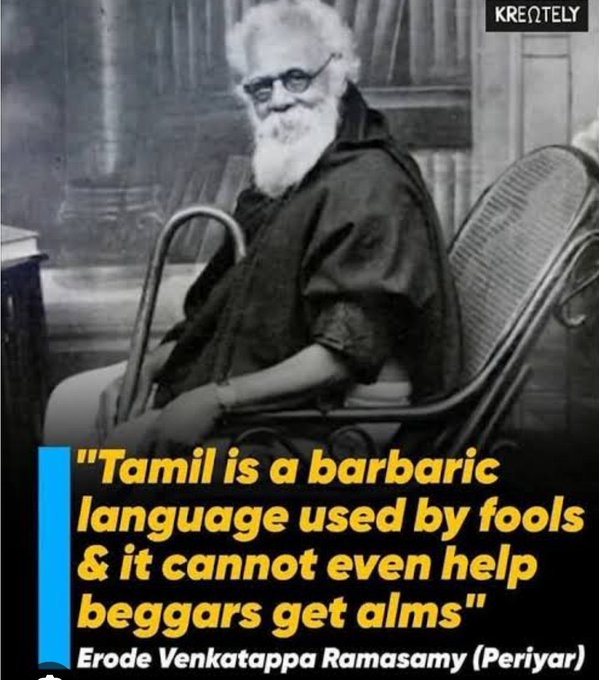
@ssaratht
This Stalin family is a periyar worshipper.
Re: Tradition, Culture, Religion & Law in Indian Society
https://x.com/tapeshyadav_usa/status/19 ... 1698374856
@tapeshyadav_usa
Oh CANADA! – Misrepresenting Hindu Art at Glenbow Museum, Calgary
Some western museums and art dealers grossly misrepresent Hindu art. Example: Below is a photo of original c. 5th/6th-century Ramayana art. Glenbow museum labeled the scene below as "Sita" with Hanuman.
Shocking. Wrong. Gross negligence too, because it has two inscriptions. Left says: "Simhika", Right: Hanu/Ma. Simhika is the demoness who tries to stop Hanuman from crossing over to Lanka. When questioned about this nonsense, Glenbow curators blamed the Art Dealer's info.
Source: Laxshmi Greaves (2018), Locating the Lost Gupta Period Ramayana Reliefs from Katingara, Uttar Pradesh
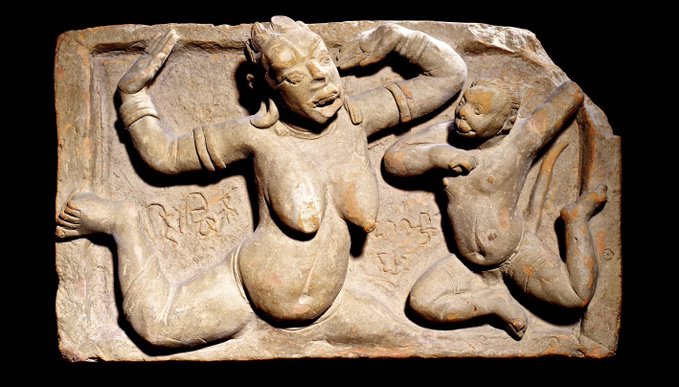
@tapeshyadav_usa
Oh CANADA! – Misrepresenting Hindu Art at Glenbow Museum, Calgary
Some western museums and art dealers grossly misrepresent Hindu art. Example: Below is a photo of original c. 5th/6th-century Ramayana art. Glenbow museum labeled the scene below as "Sita" with Hanuman.
Shocking. Wrong. Gross negligence too, because it has two inscriptions. Left says: "Simhika", Right: Hanu/Ma. Simhika is the demoness who tries to stop Hanuman from crossing over to Lanka. When questioned about this nonsense, Glenbow curators blamed the Art Dealer's info.
Source: Laxshmi Greaves (2018), Locating the Lost Gupta Period Ramayana Reliefs from Katingara, Uttar Pradesh
Re: Tradition, Culture, Religion & Law in Indian Society
https://x.com/MumukshuSavitri/status/19 ... 4039784701
@MumukshuSavitri
It’s a documented fact that the Caste system itself was invented outside India - a purely European invention called “Sistema de Casta“ practiced by them for centuries.
"Casta" is a Spanish word meaning lineage documented since 1417. It is the root of the English word caste. Spanish & Portuguese invented this hierarchical race-based "caste system" rooted in concept of purity of blood called "Limpieza de sangre", to identify anyone with Jewish or Muslim heritage to persecute them during the Christian Inquisition. The OG caste system invented by them was called “Sistema de Casta”.
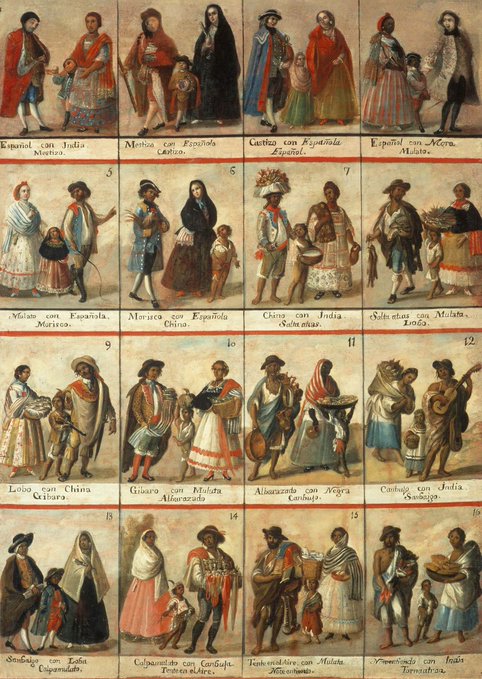
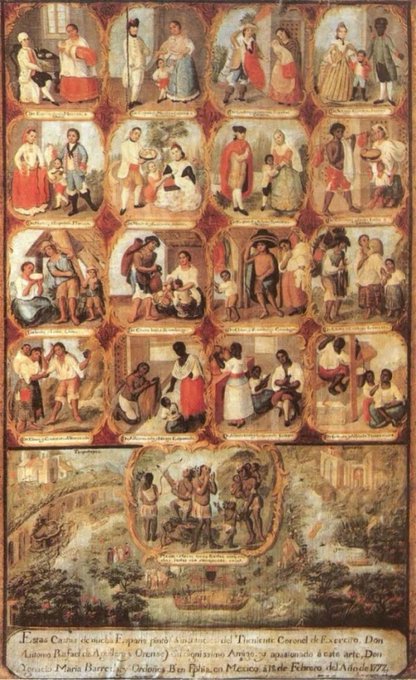
They created an entire genre of disgusting racist Casta paintings to show their racist caste system where they believed the darker your skin, the stupider and more savage you were. Anyone with blood linked to dark skin was classified as a ”stain" by them. Most Indians would be called a “stain” by them because we have the genetic heritage of darker skin than them.
Casta paintings depicted the supposed "innate" character & quality of people connected to their birth and skin color. In a painting by José Joaquín Magón, a mestizo (mixed Indian + Spanish) was labelled “humble, meek, and docile” because of darker skin than Whites. Casta paintings such as this by Ignacio Barreda (1777) showed white Spainards at highest social status & dark skinned as more “uncivilized at a lower status.” Entire categories of vile racist discrimination based on skin color were institutionalized by bigoted Europeans in their Casta system.
When Portuguese came to India they simply transposed their word “Casta” from Sistema De Casta (caste system) to classify Indian endogamous groups with hereditary occupations.
I challenge anyone to find a single Indian text with the word “caste” in it before Portuguese came to India.
Moronic Indians who hate their own civilization perpetuated their utterly stupid lies - & the rest is history.
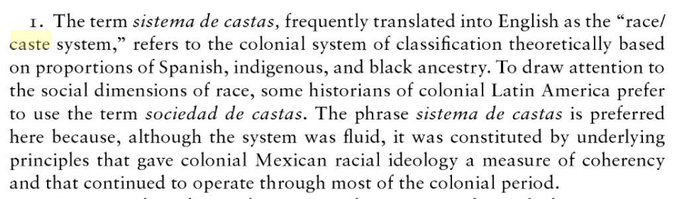
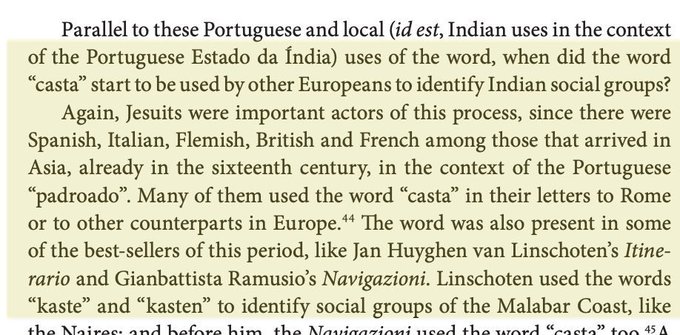
@MumukshuSavitri
It’s a documented fact that the Caste system itself was invented outside India - a purely European invention called “Sistema de Casta“ practiced by them for centuries.
"Casta" is a Spanish word meaning lineage documented since 1417. It is the root of the English word caste. Spanish & Portuguese invented this hierarchical race-based "caste system" rooted in concept of purity of blood called "Limpieza de sangre", to identify anyone with Jewish or Muslim heritage to persecute them during the Christian Inquisition. The OG caste system invented by them was called “Sistema de Casta”.
They created an entire genre of disgusting racist Casta paintings to show their racist caste system where they believed the darker your skin, the stupider and more savage you were. Anyone with blood linked to dark skin was classified as a ”stain" by them. Most Indians would be called a “stain” by them because we have the genetic heritage of darker skin than them.
Casta paintings depicted the supposed "innate" character & quality of people connected to their birth and skin color. In a painting by José Joaquín Magón, a mestizo (mixed Indian + Spanish) was labelled “humble, meek, and docile” because of darker skin than Whites. Casta paintings such as this by Ignacio Barreda (1777) showed white Spainards at highest social status & dark skinned as more “uncivilized at a lower status.” Entire categories of vile racist discrimination based on skin color were institutionalized by bigoted Europeans in their Casta system.
When Portuguese came to India they simply transposed their word “Casta” from Sistema De Casta (caste system) to classify Indian endogamous groups with hereditary occupations.
I challenge anyone to find a single Indian text with the word “caste” in it before Portuguese came to India.
Moronic Indians who hate their own civilization perpetuated their utterly stupid lies - & the rest is history.
Re: Tradition, Culture, Religion & Law in Indian Society
Cross posting from Modi 3.0
India Pushes Gita Diplomacy Worldwide As Jaishankar Highlights Kurukshetra Mahotsav’s Growing Reach
India has launched one of its biggest cultural diplomacy missions yet, and External Affairs Minister S Jaishankar is leading it from the front. Speaking at the International Gita Mahotsav in Kurukshetra, he announced that more than 50 Indian missions across the world are hosting parallel celebrations to take the message of the Bhagavad Gita global. The festival, now a growing international movement, showcases India’s civilizational depth and the modern relevance of Lord Krishna’s teachings. With exhibitions, translated editions, cultural programs, and foreign scholars joining worldwide, the Gita Mahotsav is becoming a platform for unity, harmony, and shared values. As Kurukshetra prepares for massive participation and PM Modi’s visit, India is sending a clear message: the world’s oldest philosophies still shape the world’s newest power.
India Pushes Gita Diplomacy Worldwide As Jaishankar Highlights Kurukshetra Mahotsav’s Growing Reach
India has launched one of its biggest cultural diplomacy missions yet, and External Affairs Minister S Jaishankar is leading it from the front. Speaking at the International Gita Mahotsav in Kurukshetra, he announced that more than 50 Indian missions across the world are hosting parallel celebrations to take the message of the Bhagavad Gita global. The festival, now a growing international movement, showcases India’s civilizational depth and the modern relevance of Lord Krishna’s teachings. With exhibitions, translated editions, cultural programs, and foreign scholars joining worldwide, the Gita Mahotsav is becoming a platform for unity, harmony, and shared values. As Kurukshetra prepares for massive participation and PM Modi’s visit, India is sending a clear message: the world’s oldest philosophies still shape the world’s newest power.
Re: Tradition, Culture, Religion & Law in Indian Society
Rajiv Malhotra Reveals 108 Frameworks
Rajiv Malhotra introduces 108 frameworks of Indian thought - decades of debates, encounters, and challenges crystallized into structured frameworks. Fragmented training data leads to contradiction and why frameworks solve this based on the most important aspects of Indian School of Thought. Drawing on decades’ of experience, Rajiv says these frameworks represent a bold, coherent, and original school of thought rooted in Vedic first principles — yet designed to engage the modern world with intellectual sharpness, strategic clarity, and cultural confidence. The 108 frameworks systematizes Indic knowledge into a living, evolving civilizational toolkit.
Rajiv Malhotra introduces 108 frameworks of Indian thought - decades of debates, encounters, and challenges crystallized into structured frameworks. Fragmented training data leads to contradiction and why frameworks solve this based on the most important aspects of Indian School of Thought. Drawing on decades’ of experience, Rajiv says these frameworks represent a bold, coherent, and original school of thought rooted in Vedic first principles — yet designed to engage the modern world with intellectual sharpness, strategic clarity, and cultural confidence. The 108 frameworks systematizes Indic knowledge into a living, evolving civilizational toolkit.
Re: Tradition, Culture, Religion & Law in Indian Society
https://x.com/Ofer_binshtok/status/1993467333528940780
@Ofer_binshtok
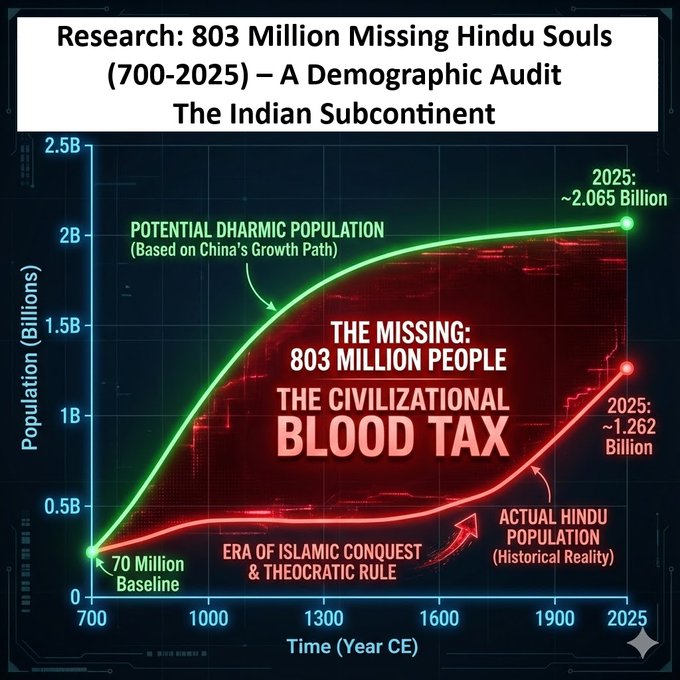
Research: 803 Million Missing Hindu Souls (700-2025) – A Demographic Audit
The Indian Subcontinent
By Ofer Binshtok
They tell you Hindus are 1.26 billion today.
That’s a lie by omission.
Without 1300 years of industrial-scale slaughter and enslavement, we would be almost 2.1 billion today, bigger than China, bigger than the entire Muslim world.
803 million of us are simply gone.
Tens of millions were butchered in cold blood. Millions more were abducted as children, castrated, marched through the Hindu Kush and sold into slavery. The rest, hundreds of millions, were never born because entire bloodlines were exterminated centuries ago.
This is not a “demographic deficit.”
This is the largest Blood Tax ever imposed on any civilization in recorded history.
Every excuse collapses instantly.
British colonialism?
The bloodletting began in 712 CE, one thousand years before the British arrived.
Climate or soil?
The Ganges plain is more fertile than the Yellow River. China still grew ×29.5 since 700 CE despite worse land. We used the most conservative benchmark.
Only one force ruled the Indian Subcontinent, and never China, for eleven straight centuries:
Islamic conquest, Jihad and theocratic domination.
Carried out through three documented mechanisms:
Ghazwa: ritual holy war and mass murder
Hindu-Kush slave trade: millions of breeding-age Hindus erased forever
Jizya: economic strangulation until conversion or death
803 million Hindu souls. Killed. Enslaved. Prevented from ever being born.
The numbers do not lie.
The graph does not lie.
The blood still screams from the earth.
(See attached graph, the final indictment)
Full forensic report and sources in the first comment below.
If you have another explanation, bring it.
We’re waiting.
Note on Statistical Variance:
Historical demography over millennial timescales inherently involves margins of error due to variations in baseline estimates and modeling techniques across different academic sources. A standard statistical deviation range of ±5–10% applies to these projections. However, even accounting for maximum deviation, the scale of the demographic deficit remains catastrophic and in the range of hundreds of millions, reinforcing the fundamental conclusion of systemic suppression.
@Ofer_binshtok
Research: 803 Million Missing Hindu Souls (700-2025) – A Demographic Audit
The Indian Subcontinent
By Ofer Binshtok
They tell you Hindus are 1.26 billion today.
That’s a lie by omission.
Without 1300 years of industrial-scale slaughter and enslavement, we would be almost 2.1 billion today, bigger than China, bigger than the entire Muslim world.
803 million of us are simply gone.
Tens of millions were butchered in cold blood. Millions more were abducted as children, castrated, marched through the Hindu Kush and sold into slavery. The rest, hundreds of millions, were never born because entire bloodlines were exterminated centuries ago.
This is not a “demographic deficit.”
This is the largest Blood Tax ever imposed on any civilization in recorded history.
Every excuse collapses instantly.
British colonialism?
The bloodletting began in 712 CE, one thousand years before the British arrived.
Climate or soil?
The Ganges plain is more fertile than the Yellow River. China still grew ×29.5 since 700 CE despite worse land. We used the most conservative benchmark.
Only one force ruled the Indian Subcontinent, and never China, for eleven straight centuries:
Islamic conquest, Jihad and theocratic domination.
Carried out through three documented mechanisms:
Ghazwa: ritual holy war and mass murder
Hindu-Kush slave trade: millions of breeding-age Hindus erased forever
Jizya: economic strangulation until conversion or death
803 million Hindu souls. Killed. Enslaved. Prevented from ever being born.
The numbers do not lie.
The graph does not lie.
The blood still screams from the earth.
(See attached graph, the final indictment)
Full forensic report and sources in the first comment below.
If you have another explanation, bring it.
We’re waiting.
Note on Statistical Variance:
Historical demography over millennial timescales inherently involves margins of error due to variations in baseline estimates and modeling techniques across different academic sources. A standard statistical deviation range of ±5–10% applies to these projections. However, even accounting for maximum deviation, the scale of the demographic deficit remains catastrophic and in the range of hundreds of millions, reinforcing the fundamental conclusion of systemic suppression.
Re: Tradition, Culture, Religion & Law in Indian Society
https://x.com/GemsOfINDOLOGY/status/1993190199426429037
@GemsOfINDOLOGY
Gaze at these stone reliefs: a warrior dispatching his enemy, a woman methodically tying her hair—evoking 𝐃𝐫𝐚𝐮𝐩𝐚𝐝𝐢'𝐬 grim resolve post-Dushasana's fall in the Mahabharata, or perhaps a kindred tale from ancient lore?
Carvings like these blend vengeance with dharma's shadows, outlasting faded texts yet sparking debates on their true origins. What layered myths do they guard against simplistic retellings?
Hampi
@GemsOfINDOLOGY
Gaze at these stone reliefs: a warrior dispatching his enemy, a woman methodically tying her hair—evoking 𝐃𝐫𝐚𝐮𝐩𝐚𝐝𝐢'𝐬 grim resolve post-Dushasana's fall in the Mahabharata, or perhaps a kindred tale from ancient lore?
Carvings like these blend vengeance with dharma's shadows, outlasting faded texts yet sparking debates on their true origins. What layered myths do they guard against simplistic retellings?
Hampi
Re: Tradition, Culture, Religion & Law in Indian Society
Govt press release
https://www.pib.gov.in/PressReleasePage ... ID=2194540
https://www.pib.gov.in/PressReleasePage ... ID=2194540
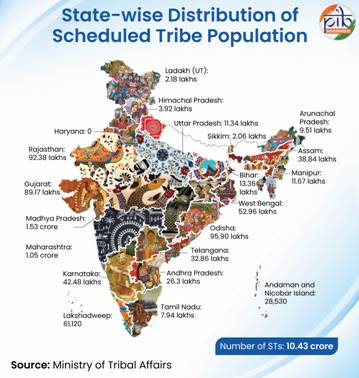
With over 705 unique tribal groups making up 8.6% of its population, India is home to a vibrant heritage of unique traditional arts and handicrafts preserved by these communities.
At the 44th India International Trade Fair in New Delhi, India’s rich tribal artforms are being honoured to commemorate ‘Ek Bharat: Shrestha Bharat’ (‘One India: Great India’).
At the Fair, tribal groups from across the country are exhibiting their work to a wider audience, supported by the Government of India and state governments.
Promotion of India’s tribal art and handicrafts ensures that these age-old traditions survive the test of time and contribute to the inclusive socio-economic development of India, as the country positions itself to be a $5 trillion economy by 2047.
Re: Tradition, Culture, Religion & Law in Indian Society
https://x.com/mishmanaged_/status/1993376576155595230
@mishmanaged_
Gada, a traditional indian training tool used for over 3000 years in martial arts and kusti is now rebranded as “Macebell Training”.
Just like Yoga, Clothes, Food and many more things, even this doesn’t get the right credit.
@mishmanaged_
Gada, a traditional indian training tool used for over 3000 years in martial arts and kusti is now rebranded as “Macebell Training”.
Just like Yoga, Clothes, Food and many more things, even this doesn’t get the right credit.
Re: Tradition, Culture, Religion & Law in Indian Society
https://x.com/MumukshuSavitri/status/19 ... 4683425168
@MumukshuSavitri
Devdutt’s original post against Chanakya:
954.4 K views
3.5 K likes
1.3K RTs
My rebuttal to his lies:
64.6K views
1.7 K likes
772 RTs
It's becoming increasingly clear that the problem lies with the algorithm which ensures that posts by strident Hindu voices like mine are made less visible so that our audience doesn't even get to see them.
Sad that Hindus have to deal with this kind of subtle censorship on SM platforms
@MumukshuSavitri
Devdutt’s original post against Chanakya:
954.4 K views
3.5 K likes
1.3K RTs
My rebuttal to his lies:
64.6K views
1.7 K likes
772 RTs
It's becoming increasingly clear that the problem lies with the algorithm which ensures that posts by strident Hindu voices like mine are made less visible so that our audience doesn't even get to see them.
Sad that Hindus have to deal with this kind of subtle censorship on SM platforms
Re: Tradition, Culture, Religion & Law in Indian Society
https://x.com/LevinaNeythiri/status/1993574340252909754
@LevinaNeythiri
Goosebumps
You are not a SANATANI if your brain doesnt not send out a signal to nod your head with the BEATS of Panchari melam.
Loc: Sree Poornathrayeesa Temple in (Tripunithura, Kerala)
VrishchikalUlsavam— meaning the festival of Vrishchikam month.
Credit: Kshethra_media
@LevinaNeythiri
Goosebumps
You are not a SANATANI if your brain doesnt not send out a signal to nod your head with the BEATS of Panchari melam.
Loc: Sree Poornathrayeesa Temple in (Tripunithura, Kerala)
VrishchikalUlsavam— meaning the festival of Vrishchikam month.
Credit: Kshethra_media
Re: Tradition, Culture, Religion & Law in Indian Society
https://x.com/swamin400/status/1993354171240923367
@swamin400
Even after 3 years of my previous post
When a Hoysala-era temple that stood in the time of King veera Ballala III is reduced to this condition… and that too in Jigani, Bengaluru, right beside a Government Veterinary Hospital…
we are truly at a loss for words.
This is the Varadaraja Swamy Temple — a silent witness to 700+ years of history
Today it stands neglected, vulnerable, and forgotten.
If a Hoysala monument in Namma Bengaluru itself cannot be protected, what message does it send for the rest of Karnataka’s heritage?
Can anyone save this priceless legacy?
Appealing to authorities and heritage lovers to intervene before it vanishes forever.
@swamin400
Even after 3 years of my previous post
When a Hoysala-era temple that stood in the time of King veera Ballala III is reduced to this condition… and that too in Jigani, Bengaluru, right beside a Government Veterinary Hospital…
we are truly at a loss for words.
This is the Varadaraja Swamy Temple — a silent witness to 700+ years of history
Today it stands neglected, vulnerable, and forgotten.
If a Hoysala monument in Namma Bengaluru itself cannot be protected, what message does it send for the rest of Karnataka’s heritage?
Can anyone save this priceless legacy?
Appealing to authorities and heritage lovers to intervene before it vanishes forever.
Re: Tradition, Culture, Religion & Law in Indian Society
https://x.com/GemsOfINDOLOGY/status/1993567951740604885
@GemsOfINDOLOGY
THREAD: How Bengaluru Buried 3,000 Years Under Asphalt
1/ Take a moment. Picture Chikkajala—a megalithic burial site predating empires we revere. Unearthed by Captain Branfil in colonial times, packed with Iron Age cists (500-1000 BCE) and striking black-and-red pottery. Priceless for science. Until we paved it over. What a legacy, eh?
@GemsOfINDOLOGY
THREAD: How Bengaluru Buried 3,000 Years Under Asphalt

1/ Take a moment. Picture Chikkajala—a megalithic burial site predating empires we revere. Unearthed by Captain Branfil in colonial times, packed with Iron Age cists (500-1000 BCE) and striking black-and-red pottery. Priceless for science. Until we paved it over. What a legacy, eh?
Re: Tradition, Culture, Religion & Law in Indian Society
https://x.com/tapeshyadav_usa/status/19 ... 8573839470
@tapeshyadav_usa
INDIA'S PROSPERITY BEFORE ISLAM: Evidence from Cairo Geniza (1060–1260 AD)
Long before the first Sultan sat in Delhi, the Indian Ocean was the highway of world trade. India stood at its heart.
Proof: Jewish papers written in Judeo-Arabic.
In Cairo’s historic Ben Ezra Synagogue, 200,000 pages lay forgotten in a geniza over 1000 years. Among them: contracts, letters, dowry lists, tax receipts—and many folios on India.
Scholars at Cambridge Univ have published some of these India fragments (Goitein's "India Book").
These pages list what India produced and exported before any army crossed the Indus to found the Delhi Sultanate.
What India exported to Aden, Cairo, and beyond?
1⃣Raw and simple goods:
Copper, bronze, iron, rice, wheat, oil, vinegar, lemon, ginger, coconut, ghee, sugar, betel nuts, spices, dyes, lacquer, etc.
2⃣Finished goods
Textiles, ready made clothes, scarves, robes, dyed leather, shoes, furniture, carpets, iron and copper lamps, pots, pans, bowls, glasses, teak boards, locks, bedsteads, table jugs, etc.
3⃣Beauty and fashion
Soap (sabun), perfumes, musk, pearls, gems, bracelets, necklaces, silk robes, ornamented mirrors, silver boxes, belts, earrings, jewelry, etc
4⃣Repair work
Broken luxury items from the Middle East were shipped to Indian craftsmen, mended, and sent back.
What India imported in return?
Walnuts, olives, paper, lead, alkali, coral, raisins, dates, cheese, linseed—and silver and gold ingots to pay the bill. Damaged household goods came too, for Indian hands to fix.
The ports: Bharuch (GJ), Thana-Mumbai (MH), Kollam (KL), Malabar coast.
The people:
Jewish letters mention Hindu partners. Jews call them “brother” or “friend.” They trust them with money and family. A Jewish traveller asks his son to lodge with a certain Hindu household on arrival. Hindu names appear as witnesses on Jewish legal contracts.
Hindus and Jews co-own ships. Hindus build ships, repair ships, sail them.
More evidence waits elsewhere: Ajanta and Bagh paintings, temple reliefs, copper-plate grants—all tell the same story of wealth and skill (futures).
Conclusions:
Before 1200 AD, India was the workshop and fashion house of the known world.
If silk robes, jewellery, soap, and fine steel already left Indian ports for Cairo and Aden centuries before Babur was born, what exactly did the Sultanates or Mughals bring that India did not already have? from where did they bring it?
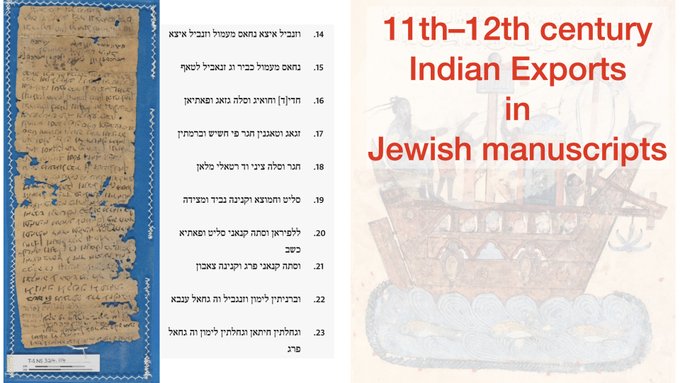
@tapeshyadav_usa
INDIA'S PROSPERITY BEFORE ISLAM: Evidence from Cairo Geniza (1060–1260 AD)
Long before the first Sultan sat in Delhi, the Indian Ocean was the highway of world trade. India stood at its heart.
Proof: Jewish papers written in Judeo-Arabic.
In Cairo’s historic Ben Ezra Synagogue, 200,000 pages lay forgotten in a geniza over 1000 years. Among them: contracts, letters, dowry lists, tax receipts—and many folios on India.
Scholars at Cambridge Univ have published some of these India fragments (Goitein's "India Book").
These pages list what India produced and exported before any army crossed the Indus to found the Delhi Sultanate.
What India exported to Aden, Cairo, and beyond?
1⃣Raw and simple goods:
Copper, bronze, iron, rice, wheat, oil, vinegar, lemon, ginger, coconut, ghee, sugar, betel nuts, spices, dyes, lacquer, etc.
2⃣Finished goods
Textiles, ready made clothes, scarves, robes, dyed leather, shoes, furniture, carpets, iron and copper lamps, pots, pans, bowls, glasses, teak boards, locks, bedsteads, table jugs, etc.
3⃣Beauty and fashion
Soap (sabun), perfumes, musk, pearls, gems, bracelets, necklaces, silk robes, ornamented mirrors, silver boxes, belts, earrings, jewelry, etc
4⃣Repair work
Broken luxury items from the Middle East were shipped to Indian craftsmen, mended, and sent back.
What India imported in return?
Walnuts, olives, paper, lead, alkali, coral, raisins, dates, cheese, linseed—and silver and gold ingots to pay the bill. Damaged household goods came too, for Indian hands to fix.
The ports: Bharuch (GJ), Thana-Mumbai (MH), Kollam (KL), Malabar coast.
The people:
Jewish letters mention Hindu partners. Jews call them “brother” or “friend.” They trust them with money and family. A Jewish traveller asks his son to lodge with a certain Hindu household on arrival. Hindu names appear as witnesses on Jewish legal contracts.
Hindus and Jews co-own ships. Hindus build ships, repair ships, sail them.
More evidence waits elsewhere: Ajanta and Bagh paintings, temple reliefs, copper-plate grants—all tell the same story of wealth and skill (future
s). Conclusions:
Before 1200 AD, India was the workshop and fashion house of the known world.
If silk robes, jewellery, soap, and fine steel already left Indian ports for Cairo and Aden centuries before Babur was born, what exactly did the Sultanates or Mughals bring that India did not already have? from where did they bring it?
Re: Tradition, Culture, Religion & Law in Indian Society
Sadhguru SCHOOLS This Leftist Anchor So BADLY | Ram Mandir Flag Hoisting
sadhguru on ram mandir, sadhguru on ram mandir issue, sadhguru thuglife, 25th november ram mandir flag hoisting by narendra modi
sadhguru on ram mandir, sadhguru on ram mandir issue, sadhguru thuglife, 25th november ram mandir flag hoisting by narendra modi
Re: Tradition, Culture, Religion & Law in Indian Society
Priyanka, @AstroAmigo posted in X on 04 April, 2024 predicting on judicial reforms. See below.
https://x.com/AstroAmigo/status/1775725 ... wdvsQ&s=19
https://www.newindianexpress.com/nation ... ium-system
https://x.com/AstroAmigo/status/1775725 ... wdvsQ&s=19
Considering the justice Gavai's anti Hindu remarks and Modi's sky high praise of him just recently I was wondering if any meaningful reforms will happen in near future. Now it looks like it will happen.India will see a plethora of judicial reforms after November 2026.
Please note that I do not target (or intend to target) the judiciary in this tweet.
https://www.newindianexpress.com/nation ... ium-system
Also there are several posts in X about astrologer Punya Prakop's successful predictions of when Ram Mandir verdict and even the time period to the minutes were given. I may find it and post it here some time later.The Supreme Court on Wednesday said that it will consider a plea to revive the National Judicial Appointments Commission (NJAC) to replace the current collegium system for appointment of judges in the higher judiciary.
..
The Supreme Court in 2015 had rejected the NJAC Act and the 99th Constitutional amendment, which sought to give politicians and civil society a final say in the appointment of judges to the higher courts.
Re: Tradition, Culture, Religion & Law in Indian Society
From journalist Rakesh Krishnan,
https://x.com/i/status/2004197384629506235
https://x.com/i/status/2004197384629506235
Below post also from Rakesh Krishnan quoting Sadhguru,My 3 day stay at Sadhguru's Isha Foundation in Coimbatore. Thread:
1. Day 1. I had expected it to be a quiet place with maybe some traffic. But I wasn't prepared for what seemed like a mini Kumbh Mela. I reached in the night and cars and buses were coming in at the rate of one every 30 seconds. There were literally hundreds of buses from all over India parked there. And the cars were beyond count.
2. The moment I stepped into the ashram premises, it felt like I was transported to a different world. The architecture, the materiald used and the absolute cleanliness of the place were impressive. Coimbatore is a pretty liveable city, quite green and much cleaner than most Indian cities, yet the contrast between the inside of Isha Foundation and the outside is unmissable.
3. Now add Indian spirituality into it, and the aura of the place is lifted. Once you are in, it's like living in a mini self-contained city with almost everything provided for. Sadhguru has done an immense service to India by developing this ashram.
4. The first stop is the evening sound and light show at the Adiyogi statue. The massive statue dominates the grounds. I'm not much of a sound and light person but Sadhguru's commentary is spellbinding.
5. Morning, Day 2. The ashram feels like a buzzing, busy, happening place with people from all over India and perhaps 10% from overseas. And unlike the images of Europeans chanting slokas in Iskcon or Osho, at Isha most of the foreigners are East Asian. Indresha, my point of contact at Isha, said pre-Covid, there were literally thousands of visitors from China. I felt the foreigners had more bhakti compared with the Indian visitors. This could be because we Indians are more touristy whereas the Chinese, Vietnamese and Cambodians came here specifically to seek peace.
6. Perhaps the most remarkable aspect of Isha is the young crowd. The average age of the ashram residents couldn't be more than 25. These youth don't come here to network or hook up; their gaze isn't wandering but instead fixed inwards. I felt most of them were greatly in turmoil and had found peace here. There was a sense of contentment on their faces. I'm sure, had they not come to Isha, many of them may have taken to drugs. This is why I thank Sadhguru from the bottom of my heart for saving the our young people - whether they be Indians or foreigners.
7. Food. All meals are free for those attending the various programmes. It's simple, healthy, sattvic and tasty vegetarian fare. Plus, it’s all you can eat. If you want something different, there are a couple of restaurants that offer tea, coffee, snacks and Indian and Western cuisine.
8. Isha School. If Sadhguru had only established the school and nothing more, I would still be eternally grateful to him. The school, attended mostly by tribal children, is located in a tranquil village a few km away from Isha. It's surrounded by trees and has a peaceful ambience. The best part is that the education is completely in English like any school in Delhi or Chennai. It blows your mind to see little tribal children speaking in perfect English like any Delhi kid (minus the fake accent and uppity attitude). All children are given wholesome, tasty food daily by the school free of cost. There are computer classes and science labs that are as good as any quality school in India. The red brick building is well maintained like a private school.
9. Shopping. I like that Isha doesn't act like a tourist trap that rips you off. Everything that I bought (saffron dhoti-pant, sukku coffee, copper bracelet) was reasonably priced and of a superior quality.
10. Accommodation. I chose the Nalanda rooms which are located in a beautiful garden/cove like space. The rooms are as good or better than 4 star quality. The ambience is unmistakably superior.
11. Day 3. Pre-dawn group meditation. You can come in and join the chanting or you can sit quietly and soak in the spirituality. It was amazing, but for me, the most unique and uplifting experience was the evening aarti which was held in a giant space age rotunda built entirely of stone. You can feel the energy there. There are several sessions of around 30 minutes each but it's best to be early and be in the first session which begins around 7pm.
12. The ashram has a gaushala where abandoned, old and sick cows are cared for. There is also a handsome bull who was once reportedly quite hot tempered and unruly but became gentle as a fawn in Sadhguru’s presence. I fed the bull and he seemed quite friendly.
13. Leaving was hard. A deep feeling of homesickness hit me in the tummy. In just three days, I had got attached to a place where I have no family or friends.
14. Even as I write this, I'm feeling nostalgic and want to visit again. The place has a strong pull - it's sattvic and I envy the volunteers who live there full time and are lucky to be part of a mini paradise. Although I had to get up at 4.00 am daily, I was full of energy all day. I guess, it's when we encounter such places as Isha that we realise what we are missing in our lives.
Sadhguru:
Sunday holiday does not work for Hindus in India. It is a hangover from the British colonial era.
 Sunday holiday does not work for Hindus in India. It is a hangover from the British colonial era.
Re: Tradition, Culture, Religion & Law in Indian Society
Thank you.
If you are interested, a quiz that we prepared for Guru Purnima, Gurus and Upanishads, three quizzes
https://indiyatra.in/upanishads-quiz/
https://indiyatra.in/guru-purnima-quiz/
https://indiyatra.in/quiz-guru-purnima/
If you are interested, a quiz that we prepared for Guru Purnima, Gurus and Upanishads, three quizzes
https://indiyatra.in/upanishads-quiz/
https://indiyatra.in/guru-purnima-quiz/
https://indiyatra.in/quiz-guru-purnima/
Re: Tradition, Culture, Religion & Law in Indian Society
AI summary: P. C. Saidalavi's Seeking Allah's Hierarchy: Caste, Labour, and Islam in India
P. C. Saidalavi's Seeking Allah's Hierarchy: Caste, Labour, and Islam in India (Nov 2025, Penn Press) is an ethnographic study of Muslim barbers in South India, revealing how they navigate religious ideals of equality with lived hierarchies, challenging notions that Muslim hierarchy merely mirrors Hindu caste by showing its unique Islamic framework and transformation through labor unionization and market forces, arguing for understanding Islam as a "lived tradition".
Key Themes & Arguments:
Muslim Hierarchy is Distinct: Saidalavi argues against viewing Muslim social hierarchy as a watered-down version of Hindu caste; instead, it operates on its own Islamic terms, using piety, genealogy, morality, and wealth, while influenced by broader culture.
Lived Tradition: The book emphasizes that Islam isn't just abstract rules but a lived experience where Muslims negotiate status and identity through daily practices, infusing Islamic values into their work and lives.
Labor & Dignity: It explores how barbers transformed their traditional, often devalued, labor (haircutting) from a patronage system into market-based relations, challenging perceptions of inferiority and gaining dignity through unionization and economic self-sufficiency.
Challenging Norms: The barbers' efforts, including forming unions and demanding fair payment, were seen as radical, disrupting traditional power structures and allowing some to attain political positions, notes the journal article.
Author: P. C. Saidalavi is an Assistant Professor of Sociology at Shiv Nadar University.
Re: Tradition, Culture, Religion & Law in Indian Society
https://x.com/i/status/2011457947931693362
@IndiaHistorypic
30000 Years Old Cave Paintings In Bhimbetka , Madhya Pradesh

@IndiaHistorypic
30000 Years Old Cave Paintings In Bhimbetka , Madhya Pradesh
Re: Tradition, Culture, Religion & Law in Indian Society
Before the Stitched ship set sail to Oman, they prayed here.
https://x.com/sanjeevsanyal/status/1701593524637188526
@sanjeevsanyal
In a sacred grove in the inland forests of Goa, there is an ancient shrine to Nau Devi - the goddess of ocean voyages. We went there today to seek her blessings for our stitched ship project


https://x.com/sanjeevsanyal/status/1701593524637188526
@sanjeevsanyal
In a sacred grove in the inland forests of Goa, there is an ancient shrine to Nau Devi - the goddess of ocean voyages. We went there today to seek her blessings for our stitched ship project
Re: Tradition, Culture, Religion & Law in Indian Society
https://x.com/LoneWolfKaAdda/status/2011390283301433657
@LoneWolfKaAdda
Commentary account
Samadhi of Rajendra Chola, Raja Raja Chola and Shri Krishnadeva Raya, 3 of the greatest emperors of Southern India.
Instead of blowing up crores on large statues, it would be much better if we can have a decent samadhi for these great kings, with a small museum, on their life.
We don't know how to preserve our existing heritage properly, but will blow up money on large vanity projects that mean nothing.


@LoneWolfKaAdda
Commentary account
Samadhi of Rajendra Chola, Raja Raja Chola and Shri Krishnadeva Raya, 3 of the greatest emperors of Southern India.
Instead of blowing up crores on large statues, it would be much better if we can have a decent samadhi for these great kings, with a small museum, on their life.
We don't know how to preserve our existing heritage properly, but will blow up money on large vanity projects that mean nothing.
Re: Tradition, Culture, Religion & Law in Indian Society
https://x.com/AskAnshul/status/2011626594247623150
@AskAnshul
This is INSV Kaundinya, a stitched wooden ship inspired by descriptions from ancient Indian texts, sculptures, and archaeological findings, especially from the Ajanta caves.
It is built without nails, its wooden planks are stitched together using traditional techniques, just as ships were constructed in ancient India over 2000 years ago.
It has now successfully reached Oman. This is more than a naval journey. It is a reminder that India’s maritime strength is not new, but deeply rooted in its civilisational history.

@AskAnshul
This is INSV Kaundinya, a stitched wooden ship inspired by descriptions from ancient Indian texts, sculptures, and archaeological findings, especially from the Ajanta caves.
It is built without nails, its wooden planks are stitched together using traditional techniques, just as ships were constructed in ancient India over 2000 years ago.
It has now successfully reached Oman. This is more than a naval journey. It is a reminder that India’s maritime strength is not new, but deeply rooted in its civilisational history.
Re: Tradition, Culture, Religion & Law in Indian Society
Sahasra Baahu Temple gets called as Sas-Bahu temple by ASI.
https://x.com/ShefVaidya/status/2012817304598524403
@ShefVaidya
It is सहस्रबाहू, a name that means a thousand armed one, an epithet for Shri Vishnu. Why is
@ASIGoI
normalising the illiterate colloquial ******** of the original name of this temple? Seriously, WHO operates this handle? Some 18 year old woke intern from Ashoka university?
@MinOfCultureGoI
@gssjodhpur
https://x.com/ASIGoI/status/2012137351263429048
@ASIGoI
The ASI brings forth a wholesome view of the very beautiful Sas-Bahu temple complex in Nagda, near Udaipur in Rajasthan and presents a 360° virtual tour of the same.
Carved in the late 10th century CE, the temple complex belongs to the Nagara architectural style, defined by sculptural precision and intricate ornamentation.
Sas-Bahu temple appears to be a corruption of the original name, Sahasra Bahu (thousand-armed) Temple, dedicated to Lord Vishnu in his Sahasra Bahu form.
https://x.com/ShefVaidya/status/2012817304598524403
@ShefVaidya
It is सहस्रबाहू, a name that means a thousand armed one, an epithet for Shri Vishnu. Why is
@ASIGoI
normalising the illiterate colloquial ******** of the original name of this temple? Seriously, WHO operates this handle? Some 18 year old woke intern from Ashoka university?
@MinOfCultureGoI
@gssjodhpur
https://x.com/ASIGoI/status/2012137351263429048
@ASIGoI
The ASI brings forth a wholesome view of the very beautiful Sas-Bahu temple complex in Nagda, near Udaipur in Rajasthan and presents a 360° virtual tour of the same.
Carved in the late 10th century CE, the temple complex belongs to the Nagara architectural style, defined by sculptural precision and intricate ornamentation.
Sas-Bahu temple appears to be a corruption of the original name, Sahasra Bahu (thousand-armed) Temple, dedicated to Lord Vishnu in his Sahasra Bahu form.
Re: Tradition, Culture, Religion & Law in Indian Society
https://x.com/MumukshuSavitri/status/20 ... 8693799262
@MumukshuSavitri
This mosaic at Villa Romana del Casale (Filosofiana), Italy (4th c.) shows Mother India personified as a lovely goddess adorned with a Tilak, holding an elephant tusk, surrounded by a tiger, an elephant & a "phoenix" (peacock?). She also holds a tree like the classical Hindu Salabhanjika. The specific presence of the tiger which was not found in Africa, clinches that this image represents India.
Grant Parker's book "The making of Roman India" describes how this is a composite personification of Mother India. He identifies the animals & Salabhanjika theme as clear evidence of its Indian origin. The iconography is also similar to that of Hindu goddess Shakhambari Devi.
His book also describes a 1st-2nd c. silver dish found at Lampsacos, Greece. The artifact again depicts a personification of India as a beautiful turbaned goddess holding a bow, seated on a chair of elephant tusks, with parrots, monkeys, tiger, panther & turbaned attendants.
Aelian (175 – 235 AD) a Roman author described tame monkeys & panthers in India. Several exotic animals from India were exported to Rome for use in circuses & gladiatorial contests during that era. The long bow is also a famous weapon of Shakhambari devi & Hindu warriors as described by Greeks.
These artifacts prove that the concept of India as a unified civilization personified as a Hindu goddess was depicted in ancient Roman art. Maybe some degreed distorians should look at such authentic art history like this, before ranting lies about how India never existed before the 19th c.
References:
The Making of Roman India - by Grant Parker


@MumukshuSavitri
This mosaic at Villa Romana del Casale (Filosofiana), Italy (4th c.) shows Mother India personified as a lovely goddess adorned with a Tilak, holding an elephant tusk, surrounded by a tiger, an elephant & a "phoenix" (peacock?). She also holds a tree like the classical Hindu Salabhanjika. The specific presence of the tiger which was not found in Africa, clinches that this image represents India.
Grant Parker's book "The making of Roman India" describes how this is a composite personification of Mother India. He identifies the animals & Salabhanjika theme as clear evidence of its Indian origin. The iconography is also similar to that of Hindu goddess Shakhambari Devi.
His book also describes a 1st-2nd c. silver dish found at Lampsacos, Greece. The artifact again depicts a personification of India as a beautiful turbaned goddess holding a bow, seated on a chair of elephant tusks, with parrots, monkeys, tiger, panther & turbaned attendants.
Aelian (175 – 235 AD) a Roman author described tame monkeys & panthers in India. Several exotic animals from India were exported to Rome for use in circuses & gladiatorial contests during that era. The long bow is also a famous weapon of Shakhambari devi & Hindu warriors as described by Greeks.
These artifacts prove that the concept of India as a unified civilization personified as a Hindu goddess was depicted in ancient Roman art. Maybe some degreed distorians should look at such authentic art history like this, before ranting lies about how India never existed before the 19th c.
References:
The Making of Roman India - by Grant Parker
Re: Tradition, Culture, Religion & Law in Indian Society
https://x.com/i/status/2015779369780957272
@GemsOfINDOLOGY
51,200 years. That's how far back Indonesia dates their cave art. India? We stop at 10,000.
Indian historians cap our own estimates at 10,000 YBP. Meanwhile, Indonesia publishes dates pushing past 50,000 years.
We have caves. We have rock shelters. We have peninsulas older than most continents. What we don't have: funding to dig deeper than colonial assumptions.
Who decided how far back India's memory is allowed to reach?
@GemsOfINDOLOGY
51,200 years. That's how far back Indonesia dates their cave art. India? We stop at 10,000.
Indian historians cap our own estimates at 10,000 YBP. Meanwhile, Indonesia publishes dates pushing past 50,000 years.
We have caves. We have rock shelters. We have peninsulas older than most continents. What we don't have: funding to dig deeper than colonial assumptions.
Who decided how far back India's memory is allowed to reach?
Re: Tradition, Culture, Religion & Law in Indian Society
Months ago in Kerala: 27 RSS workers were booked for an 'Operation Sindoor' pookalam at Parthasarathy Temple.
Now: RSS-backed panel has won ALL 27 seats in the same temple committee election, defeating Cong-Left combine.

https://www.facebook.com/deepak86dxb/po ... 916263875/
The tide is turning!!
https://www.thehindu.com/news/national/ ... 019564.ece
Now: RSS-backed panel has won ALL 27 seats in the same temple committee election, defeating Cong-Left combine.
https://www.facebook.com/deepak86dxb/po ... 916263875/
The tide is turning!!
https://www.thehindu.com/news/national/ ... 019564.ece
Re: Tradition, Culture, Religion & Law in Indian Society
https://x.com/ASIGoI/status/2017209713713422643
@ASIGoI
Bolosan is presently known as Nuchubunglo, meaning “hill of stone jars.” This name was recently given to the village by the Zemi Nagas, who are the present inhabitants of the area. In 1932, several unique stone jars were discovered at different sites in the North Cachar Hills.
These jars are believed to have been used as ancestral bone repositories by an ancient tribe; however, no tribe currently living in the district claims authorship of these jars. Similar stone jars have also been reported from Laos, Vietnam, and the Philippines.
At all these locations, the jars were made of sandstone, a locally available material, and were shaped using metal tools, most likely iron chisels. The jars vary in form and include elongated bi-conical shapes, bi-conical forms, cylindrical structures, convex bi-conical shapes, barrel-like forms, and almost globular shapes with bulbous cavities.

@ASIGoI
Bolosan is presently known as Nuchubunglo, meaning “hill of stone jars.” This name was recently given to the village by the Zemi Nagas, who are the present inhabitants of the area. In 1932, several unique stone jars were discovered at different sites in the North Cachar Hills.
These jars are believed to have been used as ancestral bone repositories by an ancient tribe; however, no tribe currently living in the district claims authorship of these jars. Similar stone jars have also been reported from Laos, Vietnam, and the Philippines.
At all these locations, the jars were made of sandstone, a locally available material, and were shaped using metal tools, most likely iron chisels. The jars vary in form and include elongated bi-conical shapes, bi-conical forms, cylindrical structures, convex bi-conical shapes, barrel-like forms, and almost globular shapes with bulbous cavities.
Re: Tradition, Culture, Religion & Law in Indian Society
India’s Civilizational Ethos and Its Strategic Approach | S Gurumurthy, Chairman, VIF (Vivekananda International Foundation New Delhi)
This YT discusses India's basic strategic approach and the need to understand outside environments. In the Vedas it talks about achieving peace for not only the 2-legged kind but also the 4-legged kind. Ethics and engagement in war are discussed. Also the need to re-examine kautilya's arthashastra in the Indian context. Gurumurthy believes Gandhi used a strategy to flummox the British into leaving India by using satyagraha. However post independence several mistakes were made. Pokran - II and Op sindhoor corrected many of the mistakes.
https://www.youtube.com/watch?v=8pXgV5I7ASI
This YT discusses India's basic strategic approach and the need to understand outside environments. In the Vedas it talks about achieving peace for not only the 2-legged kind but also the 4-legged kind. Ethics and engagement in war are discussed. Also the need to re-examine kautilya's arthashastra in the Indian context. Gurumurthy believes Gandhi used a strategy to flummox the British into leaving India by using satyagraha. However post independence several mistakes were made. Pokran - II and Op sindhoor corrected many of the mistakes.
https://www.youtube.com/watch?v=8pXgV5I7ASI
Re: Tradition, Culture, Religion & Law in Indian Society
https://x.com/GemsOfINDOLOGY/status/2018721579568611504
@GemsOfINDOLOGY
A Dutch colonial cemetery in India is “of national importance.”
Centrally protected. Maintained. Guarded.
A sub-shrine of the Ramappa temple complex—built by the same civilisation that mastered floating bricks and star-mapped geometry—has “no importance.”
Not protected. Left to decay.
This is not a funding problem.
This is a values problem.
You cannot chant “$10 trillion economy” while your heritage policy still bows to colonial memory and shrugs at indigenous genius.
GDP measures cash flow.
Civilisation is measured by what you choose to remember—and what you allow to rot.
Modernity without self-respect is just a rented costume.

https://x.com/i/status/2018889773683991032
@GemsOfINDOLOGY
A 900-year-old Shiva temple swallowed by a banyan tree in Tamil Nadu.
Not unearthed by ASI.
Not listed in official surveys.
Discovered by a local teacher.
Jeyalakshmi—archaeology researcher, village educator—reported led the work that brought this to record.
The sanctum looted. Original Shiva Lingam gone. Nandi vandalised. A nearby Neerazhi Mandapam crumbling into soil. The main structure half-buried.
A 200-year-old banyan has cloaked the temple completely, holding it in botanical custody while the State slept.
The village name itself whispers location: Begili, meaning "Adik Karadu"—at the foot of the hill.
So ask plainly.
Who preserves heritage when institutions don't look?
Who documents what bureaucracy ignores?
A teacher with a notebook did what a Centrally Protected Monument system did not.
Stone survives.
But only if someone remembers to look.

@GemsOfINDOLOGY
A Dutch colonial cemetery in India is “of national importance.”
Centrally protected. Maintained. Guarded.
A sub-shrine of the Ramappa temple complex—built by the same civilisation that mastered floating bricks and star-mapped geometry—has “no importance.”
Not protected. Left to decay.
This is not a funding problem.
This is a values problem.
You cannot chant “$10 trillion economy” while your heritage policy still bows to colonial memory and shrugs at indigenous genius.
GDP measures cash flow.
Civilisation is measured by what you choose to remember—and what you allow to rot.
Modernity without self-respect is just a rented costume.
https://x.com/i/status/2018889773683991032
@GemsOfINDOLOGY
A 900-year-old Shiva temple swallowed by a banyan tree in Tamil Nadu.
Not unearthed by ASI.
Not listed in official surveys.
Discovered by a local teacher.
Jeyalakshmi—archaeology researcher, village educator—reported led the work that brought this to record.
The sanctum looted. Original Shiva Lingam gone. Nandi vandalised. A nearby Neerazhi Mandapam crumbling into soil. The main structure half-buried.
A 200-year-old banyan has cloaked the temple completely, holding it in botanical custody while the State slept.
The village name itself whispers location: Begili, meaning "Adik Karadu"—at the foot of the hill.
So ask plainly.
Who preserves heritage when institutions don't look?
Who documents what bureaucracy ignores?
A teacher with a notebook did what a Centrally Protected Monument system did not.
Stone survives.
But only if someone remembers to look.
Re: Tradition, Culture, Religion & Law in Indian Society
https://x.com/TheGopalan/status/2018663262427009297
@TheGopalan
This is something serious we need to be concerned of!
Carefully look at these pictures of the same sculpture.
Pic - 1. Is photographed by me on 4-9-2016
Pic - 2. Taken from the blog of Mr. Kevin Standage dated 2-4-2020 (kevinstandagehotography)
Subsequent to my photograph someone has disfigured this sculpture - blackened her face & broken what she is holding in her left hand!
How can this happen?
Mahamaya Mandir (Chausathi Yogini temple) Hirapur


@TheGopalan
This is something serious we need to be concerned of!
Carefully look at these pictures of the same sculpture.
Pic - 1. Is photographed by me on 4-9-2016
Pic - 2. Taken from the blog of Mr. Kevin Standage dated 2-4-2020 (kevinstandagehotography)
Subsequent to my photograph someone has disfigured this sculpture - blackened her face & broken what she is holding in her left hand!
How can this happen?
Mahamaya Mandir (Chausathi Yogini temple) Hirapur
Re: Tradition, Culture, Religion & Law in Indian Society
https://x.com/OpIndia_com/status/2018691942687637647
@OpIndia_com
Hindu rights under threat
Kerala HC scraps Shastra-based norms for temple priest appointments.
Now, the SC will examine pleas challenging the dilution of age-old religious traditions.
Who decides temple rituals: sacred texts or the judiciary?
@OpIndia_com
Hindu rights under threat
Kerala HC scraps Shastra-based norms for temple priest appointments.
Now, the SC will examine pleas challenging the dilution of age-old religious traditions.
Who decides temple rituals: sacred texts or the judiciary?
Re: Tradition, Culture, Religion & Law in Indian Society
This is what the commies and woke BIF did to nepal.
Now, in India, they are going the SC route to try to fulfill their long pending colonial and civilizational objectives.
The commies had rammed the words socialist and secular into the Indian constitution during the emergency days
The BJP seems scared to tackle the commies, despite their majority. Case in point: indra jaising single handedly poisoned the caste in the education ecosystem well by ensuring that only her POV in toto was reflected in the latest UGC rules.
and we had to watch a bleating "education minister" trying to justify what the woke commies had done while he was fast asleep at the wheel
National Council of Churches moves SC to dilute anti-conversion laws.
the nation is plagued by the virus of illegal conversions by missionaries
https://timesofindia.indiatimes.com/ind ... 872897.cms
https://www.thehindu.com/news/national/ ... 582766.ece
Now, in India, they are going the SC route to try to fulfill their long pending colonial and civilizational objectives.
The commies had rammed the words socialist and secular into the Indian constitution during the emergency days
The BJP seems scared to tackle the commies, despite their majority. Case in point: indra jaising single handedly poisoned the caste in the education ecosystem well by ensuring that only her POV in toto was reflected in the latest UGC rules.
and we had to watch a bleating "education minister" trying to justify what the woke commies had done while he was fast asleep at the wheel
National Council of Churches moves SC to dilute anti-conversion laws.
the nation is plagued by the virus of illegal conversions by missionaries
https://timesofindia.indiatimes.com/ind ... 872897.cms
https://www.thehindu.com/news/national/ ... 582766.ece
Re: Tradition, Culture, Religion & Law in Indian Society
It’s a well thought strategy from the white man to the brown sahibs.
With caste based lollipops, things don’t seem to be getting any better.
Current and successive govts have used the caste based angle to punish the General category, using the poisonously entrenched commie ecosystem that allegedly represents the intelligentsia.

The UGC's new rules was just another divisive nail to be hammered in
With caste based lollipops, things don’t seem to be getting any better.
Current and successive govts have used the caste based angle to punish the General category, using the poisonously entrenched commie ecosystem that allegedly represents the intelligentsia.
The UGC's new rules was just another divisive nail to be hammered in
Re: Tradition, Culture, Religion & Law in Indian Society
https://www.newindianexpress.com/states ... april-2027
After Mahamagham, Malappuram set to host rare Somayagam in April 2027
After Mahamagham, Malappuram set to host rare Somayagam in April 2027
Re: Tradition, Culture, Religion & Law in Indian Society
Sanskrit, Tamil, Prakrit inscriptions found in Egyptian royal tombs point to strong Indian trade and community networks......
Read more at: https://organiser.org/2026/02/13/339971 ... -networks/

Read more at: https://organiser.org/2026/02/13/339971 ... -networks/
Re: Tradition, Culture, Religion & Law in Indian Society
Can I ask a question:
What has been the major fallout from the multiple recent papers and theories disputing the Aryan Invasion Theory or Single voilent invasion and displacement??
I read something about : Oh more complex people to people contact, cultural exchange yada yada.
Two tbings has caoght my attention :
Keeladi and the usual suspects claming to it be older and separate entity from North Indian cradles and languange developed de novo there!1
Second, this intense SM bombardment of claims that all things Indus, Vedas, Dancing Girl Pottery, seals, script etc all Originated in Pakistan and the Name India should be for people living around present day Indus.
And add to this our own idiots claiiming Ghauri and Ghazni as Indic!!
There is something that is being Dog Whistled!!!
What has been the major fallout from the multiple recent papers and theories disputing the Aryan Invasion Theory or Single voilent invasion and displacement??
I read something about : Oh more complex people to people contact, cultural exchange yada yada.
Two tbings has caoght my attention :
Keeladi and the usual suspects claming to it be older and separate entity from North Indian cradles and languange developed de novo there!1
Second, this intense SM bombardment of claims that all things Indus, Vedas, Dancing Girl Pottery, seals, script etc all Originated in Pakistan and the Name India should be for people living around present day Indus.
And add to this our own idiots claiiming Ghauri and Ghazni as Indic!!
There is something that is being Dog Whistled!!!
Re: Tradition, Culture, Religion & Law in Indian Society
https://x.com/MumukshuSavitri/status/20 ... 9255322993
@MumukshuSavitri
This ignorant claim that the East is “amoral” just exposes your warped mindset. Why are you monotheists so addicted to validation that you cannot discuss spirituality without turning it into a battlefield?Perhaps that is why you struggle to grasp the radical implication of infinite manifestations integrated in universal Oneness.
For the Hindu, the Bhagavad Gita goes far beyond right and wrong not to deny morality, but to reveal that all morality begins within oneself. Śrī Krishna speaks on a battlefield. Arjuna trembles. The Lord commands action - to fight and uphold dharma - yet without attachment to hatred, ego, or the intoxication of moral superiority. That is transcendence, not moral confusion.
When your so-called “fighting religion” baptized genocidal conquests, justified racist colonization, burned innocents as witches, and sanctioned bloody “Holy” Inquisitions under the banner of “righteous Crusades” - did it ever pause to confront the violence its own moral certainty unleashed? Or was morality just a mask for unleashed greed - the lust for empire dressed up as virtue?
The moral superiority of self-righteousness is the most seductive form of evil - a narcotic that feeds the childish fantasy that branding others as idolaters and sinners somehow makes you pure. True victory is not domination. Those obsessed with the delusion of their own superiority will never have the courage to confront the boldest question Hinduism asks - how does the warrior conquer oneself? Without that victory, every crusade is nothing more than a monstrous ego rotting beneath a knight’s armor. True victory lies in destroying the ignorance within, until you realize that the light of divinity you sought to defend was a reflection of your own Self all along.
https://x.com/NancyRPearcey/status/2026363707819983061
@NancyRPearcey
Why Eastern religions do not provide moral guidance:
"Many Eastern religions are amoral. They teach that everything must be accepted as parts of the One, the Whole—both yin and yang, both good and evil. The goal is the balance or union of opposites.
The rituals associated with these religions do not aim at achieving holiness but enlightenment: the recognition that everything is equally part of the Whole.
When I was a college student during the countercultural 1970s, I was deeply impressed by Hermann Hesse’s novel Siddhartha, about a Brahmin’s son who undergoes a search for spiritual wisdom. In the end, he learns that “everything that exists is good—death as well as life, sin as well as holiness, wisdom as well as folly.”
Pantheism teaches that it is a mistake to draw any moral distinctions. Everything merges into the One. The end result, however, is that you cannot distinguish good from evil—which means you have no basis for fighting against evil.
One of the oldest of Zen poems says:
“Be not concerned with right and wrong
The conflict between right and wrong
Is the sickness of the mind.”
The same pantheism is promoted today in movies like Avatar. On the mythical planet Pandora, all the flora and fauna are connected by a vast neural network that functions as a kind of collective unconscious, personified by a Gaia-like goddess called Eywa.
Significantly, Eywa is portrayed as beyond good and evil. One of the natives says, “Our great mother does not take sides. She protects only the balance of life.”
As journalist Arthur Koestler observed, the Eastern view leads to the “denial of a universal moral law” and finally to “passive complicity” with evil.
By contrast, C.S. Lewis writes that "Christianity is a fighting religion." It teaches "that a great many things have gone wrong with the world that God made and that God insists, and insists very loudly, on our putting them right again.”
(From Finding Truth)
@MumukshuSavitri
This ignorant claim that the East is “amoral” just exposes your warped mindset. Why are you monotheists so addicted to validation that you cannot discuss spirituality without turning it into a battlefield?Perhaps that is why you struggle to grasp the radical implication of infinite manifestations integrated in universal Oneness.
For the Hindu, the Bhagavad Gita goes far beyond right and wrong not to deny morality, but to reveal that all morality begins within oneself. Śrī Krishna speaks on a battlefield. Arjuna trembles. The Lord commands action - to fight and uphold dharma - yet without attachment to hatred, ego, or the intoxication of moral superiority. That is transcendence, not moral confusion.
When your so-called “fighting religion” baptized genocidal conquests, justified racist colonization, burned innocents as witches, and sanctioned bloody “Holy” Inquisitions under the banner of “righteous Crusades” - did it ever pause to confront the violence its own moral certainty unleashed? Or was morality just a mask for unleashed greed - the lust for empire dressed up as virtue?
The moral superiority of self-righteousness is the most seductive form of evil - a narcotic that feeds the childish fantasy that branding others as idolaters and sinners somehow makes you pure. True victory is not domination. Those obsessed with the delusion of their own superiority will never have the courage to confront the boldest question Hinduism asks - how does the warrior conquer oneself? Without that victory, every crusade is nothing more than a monstrous ego rotting beneath a knight’s armor. True victory lies in destroying the ignorance within, until you realize that the light of divinity you sought to defend was a reflection of your own Self all along.
https://x.com/NancyRPearcey/status/2026363707819983061
@NancyRPearcey
Why Eastern religions do not provide moral guidance:
"Many Eastern religions are amoral. They teach that everything must be accepted as parts of the One, the Whole—both yin and yang, both good and evil. The goal is the balance or union of opposites.
The rituals associated with these religions do not aim at achieving holiness but enlightenment: the recognition that everything is equally part of the Whole.
When I was a college student during the countercultural 1970s, I was deeply impressed by Hermann Hesse’s novel Siddhartha, about a Brahmin’s son who undergoes a search for spiritual wisdom. In the end, he learns that “everything that exists is good—death as well as life, sin as well as holiness, wisdom as well as folly.”
Pantheism teaches that it is a mistake to draw any moral distinctions. Everything merges into the One. The end result, however, is that you cannot distinguish good from evil—which means you have no basis for fighting against evil.
One of the oldest of Zen poems says:
“Be not concerned with right and wrong
The conflict between right and wrong
Is the sickness of the mind.”
The same pantheism is promoted today in movies like Avatar. On the mythical planet Pandora, all the flora and fauna are connected by a vast neural network that functions as a kind of collective unconscious, personified by a Gaia-like goddess called Eywa.
Significantly, Eywa is portrayed as beyond good and evil. One of the natives says, “Our great mother does not take sides. She protects only the balance of life.”
As journalist Arthur Koestler observed, the Eastern view leads to the “denial of a universal moral law” and finally to “passive complicity” with evil.
By contrast, C.S. Lewis writes that "Christianity is a fighting religion." It teaches "that a great many things have gone wrong with the world that God made and that God insists, and insists very loudly, on our putting them right again.”
(From Finding Truth)