naval assets are heavy..unless we are delivering lotus petals from smiling buddha, woudl make sense to deliver a full punch for each
Indian Missiles News & Discussions - 30 June 2022
-
ArjunPandit
- BRF Oldie
- Posts: 4072
- Joined: 29 Mar 2017 06:37
Re: Indian Missiles News & Discussions - 30 June 2022
Re: Indian Missiles News & Discussions - 30 June 2022
https://x.com/detresfa_/status/1998311052065271851
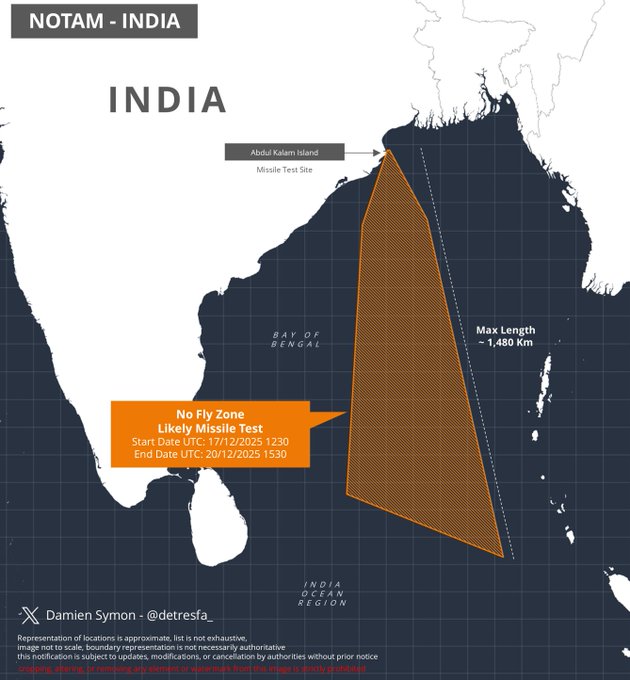
India issues a notification for a likely missile test in the Bay of Bengal region
Date | 17-20 December 2025
Re: Indian Missiles News & Discussions - 30 June 2022
I think the author of the article has mixed up the LR-AShM (which from the pictures seemed very clearly non-air breathing) with the air breathing HSTDV which probably is going to be Prj Vishnu..uddu wrote: ↑03 Dec 2025 20:28 The heading says Serial production. Content says limited production for Operational trials and deployment by 2027-28..
India’s LR-AShM Hypersonic Missile Moves Into Serial Production After Successful Trials
https://www.thedefensenews.com/news-det ... ul-Trials/
The system is based on technologies derived from DRDO’s earlier Hypersonic Technology Demonstrator Vehicle (HSTDV) project, which validated India’s indigenous hypersonic flight and scramjet propulsion technology in 2020 and 2021
Parallel efforts continue within DRDO’s Hypersonic Technology Division to refine scramjet propulsion for reusable flight systems, potentially leading to a family of hypersonic weapons for land and sea-based applications.
Re: Indian Missiles News & Discussions - 30 June 2022
One step forward for Self Reliance, while one Rona-Dhona moment for the MUTUs of BRF.
https://x.com/ajitkdubey/status/1998406 ... 56807?s=20 ---> Big success for the @DRDO_India as its QRSAMS, VSHORADS would be responsible for the protection of the Delhi NCT instead of the American NASAMS-2 planned to be bought earlier.
India to deploy indigenous air defence weapon system to protect Delhi from enemy aerial threats
https://aninews.in/news/national/genera ... 209193601/
09 Dec 2025
https://x.com/ajitkdubey/status/1998406 ... 56807?s=20 ---> Big success for the @DRDO_India as its QRSAMS, VSHORADS would be responsible for the protection of the Delhi NCT instead of the American NASAMS-2 planned to be bought earlier.
India to deploy indigenous air defence weapon system to protect Delhi from enemy aerial threats
https://aninews.in/news/national/genera ... 209193601/
09 Dec 2025
Re: Indian Missiles News & Discussions - 30 June 2022
https://x.com/detresfa_/status/1998803519726588146
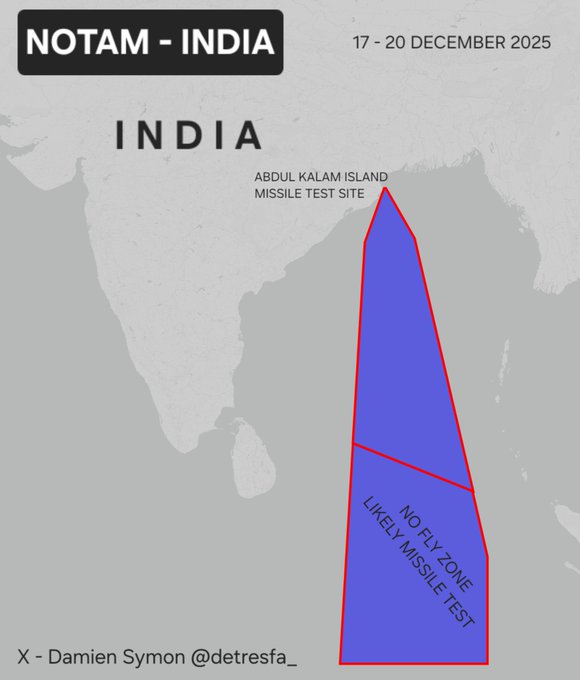
India issues a notification extending its danger zone for a likely missile test, the range is near 2,520-km
Date | 17-20 December 2025
Re: Indian Missiles News & Discussions - 30 June 2022
https://x.com/detresfa_/status/1999450760707473934
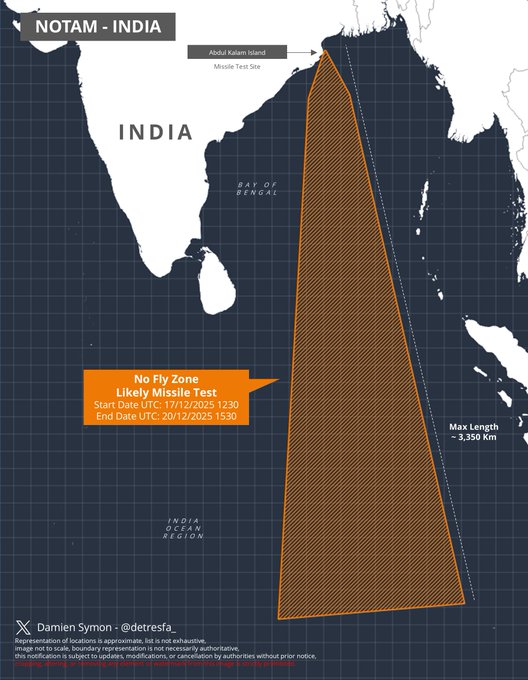
India issues a notification extending its danger zone for a likely missile test, the range is now near 3,550-km
Date | 17-20 December 2025
Re: Indian Missiles News & Discussions - 30 June 2022
This is becoming new routine after those Prithvi missile test. Someone at someplace has wicked sense of humor
On a serious note, IF we have to cancel every time whenever chinese enter into IOR then doesn't it affect our development time.

Re: Indian Missiles News & Discussions - 30 June 2022
It costs nothing to put out random notifications i presume

-
sanjaykumar
- BRF Oldie
- Posts: 6868
- Joined: 16 Oct 2005 05:51
Re: Indian Missiles News & Discussions - 30 June 2022
Yeah the Indians call it PDKL.
Re: Indian Missiles News & Discussions - 30 June 2022
DRDO Fast-Tracks Missiles And Torpedoes As India Prepares For A Major Near-Term Firepower Leap
India is preparing for a major leap in battlefield capability. DRDO chief Dr Samir V Kamat has outlined a near-term induction plan that includes new missiles, torpedoes, air defence systems and anti-tank weapons. Speaking at the Air Chief Marshal P C Lal Memorial Lecture, Kamat revealed that multiple indigenous systems will enter service within the next one to three years. These include guided Pinaka rockets, Dhruvastra anti-tank missiles, advanced torpedoes, short-range naval strike missiles and air defence systems. The roadmap reflects India’s push towards defence self-reliance by 2047, even as Kamat flags the urgent need to raise R&D spending to match global competitors. As warfare evolves across land, sea, air, space and cyber domains, India is quietly building the firepower needed to dominate future conflicts.
India is preparing for a major leap in battlefield capability. DRDO chief Dr Samir V Kamat has outlined a near-term induction plan that includes new missiles, torpedoes, air defence systems and anti-tank weapons. Speaking at the Air Chief Marshal P C Lal Memorial Lecture, Kamat revealed that multiple indigenous systems will enter service within the next one to three years. These include guided Pinaka rockets, Dhruvastra anti-tank missiles, advanced torpedoes, short-range naval strike missiles and air defence systems. The roadmap reflects India’s push towards defence self-reliance by 2047, even as Kamat flags the urgent need to raise R&D spending to match global competitors. As warfare evolves across land, sea, air, space and cyber domains, India is quietly building the firepower needed to dominate future conflicts.
Re: Indian Missiles News & Discussions - 30 June 2022
https://x.com/DRDO_India/status/2003512302113554783
User evaluation trials of Akash NG missile successfully completed today meeting all PSQR requirements. During the trials, the missiles successfully intercepted aerial targets at different range & altitude including the near-boundary-low-altitude and Long Range, high altitude scenarios.
Akash-NG equipped with indigenous RF seeker and propelled by solid rocket motor is a potent system for ensuring air defense against different types of aerial threats
Re: Indian Missiles News & Discussions - 30 June 2022
https://english.mathrubhumi.com/news/in ... e-nm3096km
Akash-NG ready for induction into Indian Armed Forces . the trial was conducted at Chandipur, Odisha
Akash-NG ready for induction into Indian Armed Forces . the trial was conducted at Chandipur, Odisha
systems of Akash NGThe trials demonstrated the Akash-NG's ability to intercept aerial targets across varying ranges and altitudes, including challenging near-boundary low-altitude and long-range high-altitude scenarios,
the system features an indigenous radio frequency seeker, dual-pulse solid rocket motor, and fully homegrown radars and command-and-control systems.
Re: Indian Missiles News & Discussions - 30 June 2022
AKASH NG Mass production ready | Range 30km or 80 km?
Defence Research and Development Organisation (DRDO) has successfully completed the User Evaluation Trials (UET) of Next Generation Akash missile (Akash-NG) system. During the trials, the missiles successfully intercepted aerial targets at different range & altitude including the near-boundary-low-altitude and Long Range, high altitude scenarios. Akash-NG, equipped with indigenous RF seeker and propelled by solid rocket motor, is a potent system for ensuring air defense against different types of aerial threats. All the systems & sub-systems including the Multi Function Radar (MFR), Command and Control Unit, Missile Launch vehicle (MLV) etc. have been designed by various laboratories of DRDO with the help of Indian industries. The trials were witnessed by Senior Scientists of DRDO & User Reps from the Indian Air Force (IAF).
Defence Research and Development Organisation (DRDO) has successfully completed the User Evaluation Trials (UET) of Next Generation Akash missile (Akash-NG) system. During the trials, the missiles successfully intercepted aerial targets at different range & altitude including the near-boundary-low-altitude and Long Range, high altitude scenarios. Akash-NG, equipped with indigenous RF seeker and propelled by solid rocket motor, is a potent system for ensuring air defense against different types of aerial threats. All the systems & sub-systems including the Multi Function Radar (MFR), Command and Control Unit, Missile Launch vehicle (MLV) etc. have been designed by various laboratories of DRDO with the help of Indian industries. The trials were witnessed by Senior Scientists of DRDO & User Reps from the Indian Air Force (IAF).
Re: Indian Missiles News & Discussions - 30 June 2022
Great, now when will the orders be placed?
Re: Indian Missiles News & Discussions - 30 June 2022
https://x.com/nazistaditya001/status/20 ... 89606?s=20 ---> New Delhi’s ‘Iron Dome’ is Here: Why India Ditched the US NASAMS for Homegrown Tech. It’s a bold move. India scrapped a near-finalized deal for the American NASAMS-II to bet the security of its capital on homegrown technology. Here is why the 'Capital Dome' is a massive geopolitical statement.
1. Scrapping the NASAMS Deal: For years, India negotiated to buy the National Advanced Surface-to-Air Missile System (NASAMS-II) from the US to protect Delhi. The price tag was hovering around $1.9 billion. Buying foreign means reliance on external supply chains, potential sanctions leverage, and zero intellectual property gain for India.
2. The New Threat Matrix: The conflict in Ukraine has taught military planners a brutal lesson: expensive air defense missiles can be depleted by cheap, expendable drones. You cannot fire a $1 million interceptor at a $500 drone forever. Delhi’s new shield is designed specifically for this reality.
3. The "Atmanirbhar" Gamble: The government made a strategic pivot: Why import security when DRDO has matured its technology? The success of the Akash missile program gave planners the confidence that India could build a better, cheaper, and entirely sovereign shield.
4. The Game Changer: Directed Energy Weapons (DEWs). This is the most critical upgrade. DRDO is integrating high-powered lasers (like the DURGA-II project) into the capital's inner defense ring. The Economics: Firing a laser costs merely the price of electricity—a few dollars per shot. It engages at the speed of light and Instantaneously frying the electronics of incoming drone swarms or loitering munitions.
5. The Hypersonic Answer: Project Kusha. While lasers handle the close-in swarms, the outer layer needs brute force and speed. The "Indian S-400", Project Kusha isn't just copy-paste. It’s designed with a 350km range to specifically hunt high-value targets like AWACS and aerial refuelers, blinding the enemy before they can launch an attack. Crucially, this system is being geared to intercept high-speed threats that older systems can't track.
6. The Integrated Battle Network: A shield is only as good as its eyes. The 'Capital Dome' connects multiple radar spectrums into a single picture. If the long-range radar misses a low-flying cruise missile, the Akash-NG's active seeker picks it up. If that fails, the close-in weapon system (CIWS) and lasers engage.
The 'Capital Dome' is more than just defense hardware. It is a declaration that India has graduated from being the world's largest arms importer to a power capable of securing its own skies on its own terms.

1. Scrapping the NASAMS Deal: For years, India negotiated to buy the National Advanced Surface-to-Air Missile System (NASAMS-II) from the US to protect Delhi. The price tag was hovering around $1.9 billion. Buying foreign means reliance on external supply chains, potential sanctions leverage, and zero intellectual property gain for India.
2. The New Threat Matrix: The conflict in Ukraine has taught military planners a brutal lesson: expensive air defense missiles can be depleted by cheap, expendable drones. You cannot fire a $1 million interceptor at a $500 drone forever. Delhi’s new shield is designed specifically for this reality.
3. The "Atmanirbhar" Gamble: The government made a strategic pivot: Why import security when DRDO has matured its technology? The success of the Akash missile program gave planners the confidence that India could build a better, cheaper, and entirely sovereign shield.
4. The Game Changer: Directed Energy Weapons (DEWs). This is the most critical upgrade. DRDO is integrating high-powered lasers (like the DURGA-II project) into the capital's inner defense ring. The Economics: Firing a laser costs merely the price of electricity—a few dollars per shot. It engages at the speed of light and Instantaneously frying the electronics of incoming drone swarms or loitering munitions.
5. The Hypersonic Answer: Project Kusha. While lasers handle the close-in swarms, the outer layer needs brute force and speed. The "Indian S-400", Project Kusha isn't just copy-paste. It’s designed with a 350km range to specifically hunt high-value targets like AWACS and aerial refuelers, blinding the enemy before they can launch an attack. Crucially, this system is being geared to intercept high-speed threats that older systems can't track.
6. The Integrated Battle Network: A shield is only as good as its eyes. The 'Capital Dome' connects multiple radar spectrums into a single picture. If the long-range radar misses a low-flying cruise missile, the Akash-NG's active seeker picks it up. If that fails, the close-in weapon system (CIWS) and lasers engage.
The 'Capital Dome' is more than just defense hardware. It is a declaration that India has graduated from being the world's largest arms importer to a power capable of securing its own skies on its own terms.
Re: Indian Missiles News & Discussions - 30 June 2022
India Achieves Successful Salvo Launch Of Indigenous Pralay Missile
https://swarajyamag.com/defence/india-a ... ay-missileThe Defence Research and Development Organisation (DRDO) on Wednesday (31 December) successfully conducted a salvo launch of two Pralay missiles in quick succession from the same launcher off the coast of Odisha.
Re: Indian Missiles News & Discussions - 30 June 2022
DRDO Launches Two Pralay Missiles, To Boost India's Arsenal
The Defence Research & Development Organisation (DRDO) successfully conducted the salvo launch of two Pralay missiles off the coast of Odisha. The launch, which took place around 10:30 AM, was part of user evaluation trials. Both missiles were fired in quick succession from the same launcher, following their intended flight paths and meeting all set objectives.
The Defence Research & Development Organisation (DRDO) successfully conducted the salvo launch of two Pralay missiles off the coast of Odisha. The launch, which took place around 10:30 AM, was part of user evaluation trials. Both missiles were fired in quick succession from the same launcher, following their intended flight paths and meeting all set objectives.
Re: Indian Missiles News & Discussions - 30 June 2022
Pralay did a lungi dance
Double Dhamaka | Pralay Missile Salvo launches
Double Dhamaka | Pralay Missile Salvo launches
Re: Indian Missiles News & Discussions - 30 June 2022
Nowadays BRF seems abandoned by people who do technical analysis. Analysis is only on politics and civilian projects. Mostly copy paste of headlines seems the sole activity in military threads. If you you decide to do a quick glance through X for quality military posts and other popular short summaries of politics, hours will quickly pass instead of some 15 minutes. I don't know how long BRF military threads will survive.
Some interesting points on Pralay missile by retd army man Vijainder Thakur's blogpost. Can anyone explain the significance of the maps described here? For over 2 decades I didn't remember reading about maps in missile thread.
https://thumkar.blogspot.com/2026/01/sa ... n.html?m=1
Some interesting points on Pralay missile by retd army man Vijainder Thakur's blogpost. Can anyone explain the significance of the maps described here? For over 2 decades I didn't remember reading about maps in missile thread.
https://thumkar.blogspot.com/2026/01/sa ... n.html?m=1
Indigenous Targeting System
It has recently been reported that Pralay uses INDIGIS, a fully indigenous mapping and location system developed by DRDO’s Centre for Artificial Intelligence and Robotics (CAIR), Bengaluru.
CAIR transferred the INDIGIS platform technology to Bengaluru-based Microgenesis Techsoft Pvt Ltd through a commercial transfer-of-technology (ToT) agreement. Microgenesis subsequently modified and upgraded the INDIGIS software suite to meet the specific requirements of the Pralay missile.
Enhanced Variant
On September 28, 2024, The Times of India reported that DRDO is working on enhancing the range, accuracy, and lethality of the conventional Pralay ballistic missile.
Re: Indian Missiles News & Discussions - 30 June 2022
India Unleashes ‘Apocalypse’ Weapon – Pralay! Here’s Why The Quasi Ballistic Missile May Emerge DRDO’s Deadliest
https://www.eurasiantimes.com/pralay-qu ... c-missile/
31 Dec 2025
https://www.eurasiantimes.com/pralay-qu ... c-missile/
31 Dec 2025
Re: Indian Missiles News & Discussions - 30 June 2022
Can someone please confirm this?
https://x.com/Resonant_News/status/2009 ... 76810?s=20 ---> 𝗗𝗥𝗗𝗢 𝗖𝗼𝗻𝗱𝘂𝗰𝘁𝘀 𝗙𝗶𝗿𝘀𝘁 𝗙𝗹𝗶𝗴𝗵𝘁 𝗧𝗲𝘀𝘁 𝗼𝗳 𝗣𝗿𝗼𝗷𝗲𝗰𝘁 𝗞𝘂𝘀𝗵𝗮 𝗠𝟭.

 Project Kusha: India’s next-generation long-range air defence system
 M1 interceptor successfully tested, validating core flight parameters
 Designed to counter fighter jets, cruise missiles & aerial threats
 Uses advanced radar, guidance & command-control integration
 Part of a layered air defence architecture alongside Akash & S-400
 Strengthens indigenous BMD & air defence capability
 Marks a major step toward self-reliant strategic air security.
https://x.com/Resonant_News/status/2009 ... 76810?s=20 ---> 𝗗𝗥𝗗𝗢 𝗖𝗼𝗻𝗱𝘂𝗰𝘁𝘀 𝗙𝗶𝗿𝘀𝘁 𝗙𝗹𝗶𝗴𝗵𝘁 𝗧𝗲𝘀𝘁 𝗼𝗳 𝗣𝗿𝗼𝗷𝗲𝗰𝘁 𝗞𝘂𝘀𝗵𝗮 𝗠𝟭.

 Project Kusha: India’s next-generation long-range air defence system
  M1 interceptor successfully tested, validating core flight parameters
  Designed to counter fighter jets, cruise missiles & aerial threats
  Uses advanced radar, guidance & command-control integration
  Part of a layered air defence architecture alongside Akash & S-400
  Strengthens indigenous BMD & air defence capability
  Marks a major step toward self-reliant strategic air security.
-
sanjaykumar
- BRF Oldie
- Posts: 6868
- Joined: 16 Oct 2005 05:51
Re: Indian Missiles News & Discussions - 30 June 2022
Pralay in fact carries a hypersonic terminal stage likely a scramjet.Rakesh wrote: ↑02 Jan 2026 01:56 India Unleashes ‘Apocalypse’ Weapon – Pralay! Here’s Why The Quasi Ballistic Missile May Emerge DRDO’s Deadliest
https://www.eurasiantimes.com/pralay-qu ... c-missile/
31 Dec 2025
Re: Indian Missiles News & Discussions - 30 June 2022
I would say a boosted RV is more likely... It would be interesting to understand the terminal velocity of this RVsanjaykumar wrote: ↑08 Jan 2026 20:35Pralay in fact carries a hypersonic terminal stage likely a scramjet.Rakesh wrote: ↑02 Jan 2026 01:56 India Unleashes ‘Apocalypse’ Weapon – Pralay! Here’s Why The Quasi Ballistic Missile May Emerge DRDO’s Deadliest
https://www.eurasiantimes.com/pralay-qu ... c-missile/
31 Dec 2025
Ukraine is probably the only country that faces a hypersonic strike every other week (Kinzhal, Tsirkon etc), as per their feedback Unkil's Patriots can handle the Kinzhal once its terminal velocity dips below M4-5..
Re: Indian Missiles News & Discussions - 30 June 2022
There is no official release or any report in mainstream media. Test might happen in a couple of weeks.Rakesh wrote: ↑08 Jan 2026 20:15 Can someone please confirm this?
https://x.com/Resonant_News/status/2009 ... 76810?s=20 ---> 𝗗𝗥𝗗𝗢 𝗖𝗼𝗻𝗱𝘂𝗰𝘁𝘀 𝗙𝗶𝗿𝘀𝘁 𝗙𝗹𝗶𝗴𝗵𝘁 𝗧𝗲𝘀𝘁 𝗼𝗳 𝗣𝗿𝗼𝗷𝗲𝗰𝘁 𝗞𝘂𝘀𝗵𝗮 𝗠𝟭.
Re: Indian Missiles News & Discussions - 30 June 2022
DRDO conducts successful ground test of full scale actively cooled long duration Scramjet Engine for Hypersonic Missile Programme
Posted On: 09 JAN 2026 7:15PM by PIB Delhi
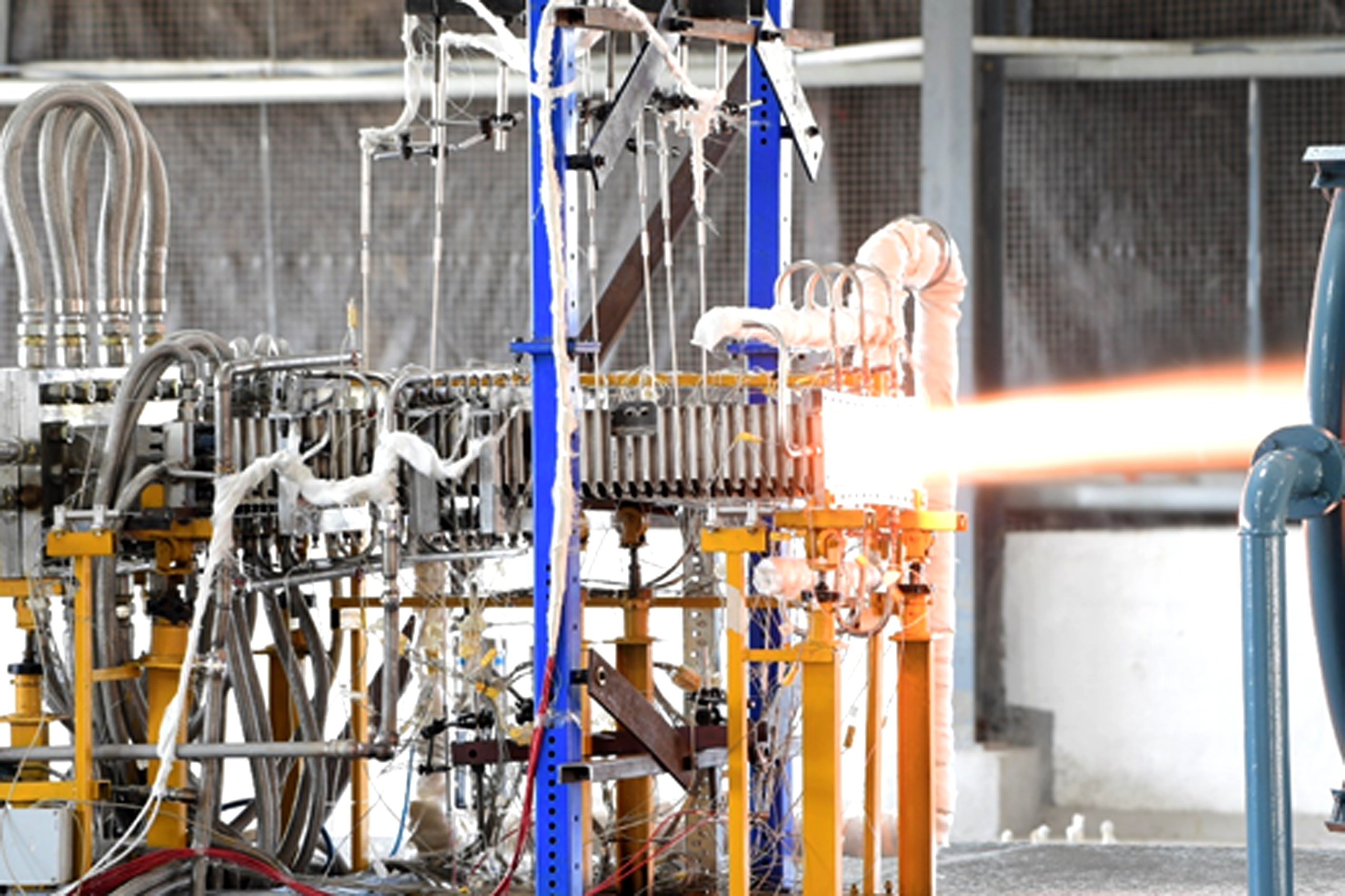
Defence Research & Development Laboratory (DRDL), the Hyderabad-based laboratory of the Defence Research and Development Organisation (DRDO), has achieved a path-breaking milestone in the development of Hypersonic Missiles. The DRDL successfully conducted an extensive long-duration ground test of its Actively Cooled Scramjet Full Scale Combustor, achieving a run time of over 12 minutes at its state-of-the-art Scramjet Connect Pipe Test (SCPT) Facility on January 09, 2026.
This significant achievement builds upon the earlier subscale test conducted on April 25, 2025, for long duration, marking a crucial step forward in Hypersonic Missiles development. The Combustor and test facility were designed and developed by the DRDL and realised by industry partners. The successful test positions India at the forefront of advanced aerospace capabilities.
Hypersonic Cruise Missile is capable of exceeding five times the speed of sound (over 6,100 km/hr) for extended periods. The remarkable feat is achieved through cutting-edge air-breathing engine, which utilises supersonic combustion to sustain long-duration flight. The ground-tests conducted at SCPT facility have successfully validated the design of advanced scramjet combustor, as well as the capabilities of state-of-art test facility.
Raksha Mantri Shri Rajnath Singh complimented DRDO, industry partners and academia on the successful ground test of Full Scale Actively Cooled Long Duration Scramjet Engine. He stated that the achievement is a solid foundation for the nation’s Hypersonic Cruise Missile Development Program.
Secretary, Department of Defence R&D and Chairman DRDO Dr Samir V Kamat congratulated the teams associated with the test for the commendable achievement.
Posted On: 09 JAN 2026 7:15PM by PIB Delhi
Defence Research & Development Laboratory (DRDL), the Hyderabad-based laboratory of the Defence Research and Development Organisation (DRDO), has achieved a path-breaking milestone in the development of Hypersonic Missiles. The DRDL successfully conducted an extensive long-duration ground test of its Actively Cooled Scramjet Full Scale Combustor, achieving a run time of over 12 minutes at its state-of-the-art Scramjet Connect Pipe Test (SCPT) Facility on January 09, 2026.
This significant achievement builds upon the earlier subscale test conducted on April 25, 2025, for long duration, marking a crucial step forward in Hypersonic Missiles development. The Combustor and test facility were designed and developed by the DRDL and realised by industry partners. The successful test positions India at the forefront of advanced aerospace capabilities.
Hypersonic Cruise Missile is capable of exceeding five times the speed of sound (over 6,100 km/hr) for extended periods. The remarkable feat is achieved through cutting-edge air-breathing engine, which utilises supersonic combustion to sustain long-duration flight. The ground-tests conducted at SCPT facility have successfully validated the design of advanced scramjet combustor, as well as the capabilities of state-of-art test facility.
Raksha Mantri Shri Rajnath Singh complimented DRDO, industry partners and academia on the successful ground test of Full Scale Actively Cooled Long Duration Scramjet Engine. He stated that the achievement is a solid foundation for the nation’s Hypersonic Cruise Missile Development Program.
Secretary, Department of Defence R&D and Chairman DRDO Dr Samir V Kamat congratulated the teams associated with the test for the commendable achievement.
Re: Indian Missiles News & Discussions - 30 June 2022
K-4 Missile Test And India’s Sea-Based Nuclear Deterrence
India’s recent test of its K-4 Submarine-Launched Ballistic Missile (SLBM) marks a key moment in the regional strategic calculus. Said to have a range of 3500 km, the missile allows India’s submarines to stay in 'safe' zones but still be able to hit targets in Pakistan and China.
“The sea-based nuclear component of India’s architecture of nuclear deterrence is well on its way to an operational status. And part of that was the testing of the K4 missile,” says RAdm Sudarshan Shrikhande (Retd), who has headed the Naval Intelligence.
India's decision to acquire a sea-based nuclear deterrent is quite old. And the driver for acquiring nuclear weapon capability was China's nuclear test in 1964, which has been the big reason why India needs to develop its own triad, RAdm Shrikhande told Bharat Shakti Editor-in-Chief Nitin A. Gokhale.
The former Navy officer feels with two SSBNs and a third/fourth one getting ready India is now better positioned to have Continuous At-Sea Deterrent (CASD). And that will effectively mean at least one SSBN at sea, thereby making a first strike by the enemy tough.
No wonder Pakistan is worried. The narrative emanating from there suggests India’s K-4 test puts South Asia’s nuclear balance in jeopardy. “The whole commentary is designed to actually justify their military expenditure, justify their build-up. Pakistan's nuclear sabre rattling is related to a deep sense of insecurity that it has vis-a-vis India,” says RAdm Shrikhande (Retd).
In contrast, China’s reaction has been largely muted. The driver for China's nuclear weapons was as much the former Soviet Union and perhaps Russia today, as it is the United States of America, he says. And India doesn’t really fit into that scheme of things. But China tends to deploy research ships to keep a tab on India’s actions.
Tune in to this discussion where RAdm Sudarshan Shrikhande (Retd) also talks about why Pakistan’s recent constitutional amendment that makes Army Chief Asim Munir all powerful does lower the nuclear threshold.
India’s recent test of its K-4 Submarine-Launched Ballistic Missile (SLBM) marks a key moment in the regional strategic calculus. Said to have a range of 3500 km, the missile allows India’s submarines to stay in 'safe' zones but still be able to hit targets in Pakistan and China.
“The sea-based nuclear component of India’s architecture of nuclear deterrence is well on its way to an operational status. And part of that was the testing of the K4 missile,” says RAdm Sudarshan Shrikhande (Retd), who has headed the Naval Intelligence.
India's decision to acquire a sea-based nuclear deterrent is quite old. And the driver for acquiring nuclear weapon capability was China's nuclear test in 1964, which has been the big reason why India needs to develop its own triad, RAdm Shrikhande told Bharat Shakti Editor-in-Chief Nitin A. Gokhale.
The former Navy officer feels with two SSBNs and a third/fourth one getting ready India is now better positioned to have Continuous At-Sea Deterrent (CASD). And that will effectively mean at least one SSBN at sea, thereby making a first strike by the enemy tough.
No wonder Pakistan is worried. The narrative emanating from there suggests India’s K-4 test puts South Asia’s nuclear balance in jeopardy. “The whole commentary is designed to actually justify their military expenditure, justify their build-up. Pakistan's nuclear sabre rattling is related to a deep sense of insecurity that it has vis-a-vis India,” says RAdm Shrikhande (Retd).
In contrast, China’s reaction has been largely muted. The driver for China's nuclear weapons was as much the former Soviet Union and perhaps Russia today, as it is the United States of America, he says. And India doesn’t really fit into that scheme of things. But China tends to deploy research ships to keep a tab on India’s actions.
Tune in to this discussion where RAdm Sudarshan Shrikhande (Retd) also talks about why Pakistan’s recent constitutional amendment that makes Army Chief Asim Munir all powerful does lower the nuclear threshold.
Re: Indian Missiles News & Discussions - 30 June 2022
^ China has long held the view that India possesses the nuclear-weapons more for prestige and that it lacked the political stomach to order a nuclear strike if and when the time came.
-
Prem Kumar
- BRF Oldie
- Posts: 4753
- Joined: 31 Mar 2009 00:10
Re: Indian Missiles News & Discussions - 30 June 2022
And that view I am sure, was shared by the US and Pakis too. We encouraged such thinking when, under Mousemohan Singh (with Sonia as handler), we didn't even avenge 26/11
But Surgical Strikes 1, 2 & 3 against Pakistan (especially 3: Op Sindoor), changed the calculus. Though conventional, it signaled that we were ready for a full-on military confrontation against a nuclear armed state, to the extent of bombing their air bases. Not even the US has done this
This demonstrated a level of resolve/brutality that signaled to the world that we *will* use nukes, if the need arose. Deterrence was achieved by displaying a stomach for escalation that might have spiraled into the nuclear domain
The US State Dept, WH, CIA etc would have had to rapidly redo their war-gaming plans vis-a-vis how India would react to any given situation. Op Sindoor made their previous war-games useless. This, at least partly, explains why the WH reacted so negatively to Op Sindoor, though initially supportive
This is one of those game-theory scenarios where conventional actions have implications for nuke-deterrence
But Surgical Strikes 1, 2 & 3 against Pakistan (especially 3: Op Sindoor), changed the calculus. Though conventional, it signaled that we were ready for a full-on military confrontation against a nuclear armed state, to the extent of bombing their air bases. Not even the US has done this
This demonstrated a level of resolve/brutality that signaled to the world that we *will* use nukes, if the need arose. Deterrence was achieved by displaying a stomach for escalation that might have spiraled into the nuclear domain
The US State Dept, WH, CIA etc would have had to rapidly redo their war-gaming plans vis-a-vis how India would react to any given situation. Op Sindoor made their previous war-games useless. This, at least partly, explains why the WH reacted so negatively to Op Sindoor, though initially supportive
This is one of those game-theory scenarios where conventional actions have implications for nuke-deterrence
Re: Indian Missiles News & Discussions - 30 June 2022
https://x.com/DRDO_India/status/2010622503979561078
@DRDO_India
Third Generation Fire & Forget Man Portable Anti-Tank Guided Missile (MPATGM) with top attack capability was flight tested successfully against moving target
Fire-And-Forget Missile: DRDO Successfully Tests Man Portable Anti-Tank Guided Missile Against Moving Target
https://www.republicworld.com/defence/f ... ing-target
12 Jan 2026
Ahilya Nagar: The Defence Research and Development Organisation (DRDO) on Sunday successfully tested a Man Portable Anti-Tank Guided Missile (MPATGM) against a moving target. The successful flight test of the third generation fire-and-forget missile was conducted in Kharjuna Khare (KK) Ranges of Maharashtra's Ahilya Nagar.
DRDO Chairman and Secretary of Department of Defence R&D, Dr Samir V Kamat, said that the trial target was successfully conducted, thereby leading the weapon system for induction into the Indian Army.
@DRDO_India
Third Generation Fire & Forget Man Portable Anti-Tank Guided Missile (MPATGM) with top attack capability was flight tested successfully against moving target
Fire-And-Forget Missile: DRDO Successfully Tests Man Portable Anti-Tank Guided Missile Against Moving Target
https://www.republicworld.com/defence/f ... ing-target
12 Jan 2026
Ahilya Nagar: The Defence Research and Development Organisation (DRDO) on Sunday successfully tested a Man Portable Anti-Tank Guided Missile (MPATGM) against a moving target. The successful flight test of the third generation fire-and-forget missile was conducted in Kharjuna Khare (KK) Ranges of Maharashtra's Ahilya Nagar.
DRDO Chairman and Secretary of Department of Defence R&D, Dr Samir V Kamat, said that the trial target was successfully conducted, thereby leading the weapon system for induction into the Indian Army.
Re: Indian Missiles News & Discussions - 30 June 2022
VIDEO: https://x.com/DefenceDecode/status/2010 ... 76975?s=20 ---> India today successfully flight-tested its third-generation Fire-and-Forget Man-Portable Anti-Tank Guided Missile (#MPATGM) with top-attack capability against a moving target.
https://x.com/DefenceDecode/status/2010 ... 83523?s=20 ---> The MPATGM consists of state-of-the-art indigenous technologies like IIR Homing Seeker, all electric Control Actuation System, FCS, Tandem Warhead, propulsion system and high performance sighting system, which are developed by DRDO's sister laboratories. Chairman DRDO, Dr Samir V Kamat said that the trial target was successfully conducted, thereby leading the weapon system for induction into the Indian Army.

https://x.com/DefenceDecode/status/2010 ... 83523?s=20 ---> The MPATGM consists of state-of-the-art indigenous technologies like IIR Homing Seeker, all electric Control Actuation System, FCS, Tandem Warhead, propulsion system and high performance sighting system, which are developed by DRDO's sister laboratories. Chairman DRDO, Dr Samir V Kamat said that the trial target was successfully conducted, thereby leading the weapon system for induction into the Indian Army.
-
Prem Kumar
- BRF Oldie
- Posts: 4753
- Joined: 31 Mar 2009 00:10
Re: Indian Missiles News & Discussions - 30 June 2022
The last point is key. If MANPATGM is a replacement for 2nd gen Konkurs & Milans, then we should see massive orders for these. For reference, our Konkur holdings are 25,000+
Just replacement for that alone will boost this weapon's induction & future variants like crazy!
Later, a Spike/Javelin shoulder-fired, lightweight version can be created, that can be carried by 2 infantrymen & doesn't need to be vehicle mounted. Lets call it MANPATGM 2.0
We should hopefully see bulk orders for the 1.0 version. Its better than Konkurs and Milans in every way
1) Fire & forget: doesn't expose operator because its IIR imaging and LOBL
2) Both direct & top attack
3) Lighter missile/system weight
P.S. Hoping that this doesn't go the NAG way, where, after 2+ decades, a paltry order of 13 Namicas & 293 missiles were placed earlier last year, with an AoN later in the year for a supposedly larger order for Namis-2 (surprise, surprise!)
Just replacement for that alone will boost this weapon's induction & future variants like crazy!
Later, a Spike/Javelin shoulder-fired, lightweight version can be created, that can be carried by 2 infantrymen & doesn't need to be vehicle mounted. Lets call it MANPATGM 2.0
We should hopefully see bulk orders for the 1.0 version. Its better than Konkurs and Milans in every way
1) Fire & forget: doesn't expose operator because its IIR imaging and LOBL
2) Both direct & top attack
3) Lighter missile/system weight
P.S. Hoping that this doesn't go the NAG way, where, after 2+ decades, a paltry order of 13 Namicas & 293 missiles were placed earlier last year, with an AoN later in the year for a supposedly larger order for Namis-2 (surprise, surprise!)
Re: Indian Missiles News & Discussions - 30 June 2022
“India’s 1st micro-missile based system”, Rajnath SIngh on Solar Industries developing Bhargavastra
“India’s 1st micro-missile based system”, Rajnath SIngh on Solar Industries developing Bhargavastra
“India’s 1st micro-missile based system”, Rajnath SIngh on Solar Industries developing Bhargavastra
Re: Indian Missiles News & Discussions - 30 June 2022
DRDO’s new Long-range Anti-Ship Hypersonic Glide Missile to debut at 77th Republic Day Parade
India is set to showcase a major leap in indigenous defence capability as DRDO prepares to debut its newly built long-range anti-ship hypersonic glide missile at the 77th Republic Day Parade. Designed for dominance in the Indo-Pacific, the missile combines extreme speed, stealth, high accuracy, advanced flight dynamics, and a range of up to 1,500 km, significantly enhancing India’s naval strike and deterrence capabilities. The system reflects rapid progress in hypersonic missile technology and underscores India’s push toward next-generation warfare readiness. According to the ASL Project Director at DRDO, A Prasad Goud, the new weapon not only strengthens India’s strategic posture but also presents a formidable challenge for adversaries operating across the region, marking a decisive step in India’s advance into the future of missile technology.
Why China’s Navy Isn’t Ready For This DRDO Surprise
The DRDO Long Range Anti-Ship Missile (LRASHM) is a cutting-edge hypersonic weapon system designed to redefine maritime warfare. Often dubbed a "carrier killer," this missile utilizes a hypersonic glide vehicle (HGV) capable of speeds exceeding Mach 5, making it nearly impossible for current air defense systems to intercept.
With an operational range of over 1,500 km, the LRASHM empowers the Indian Navy to enforce a formidable Anti-Access/Area Denial (A2/AD) zone in the Indian Ocean Region. Its advanced maneuverability allows it to change trajectory mid-flight, evading enemy radar and striking high-value targets like aircraft carriers with pinpoint precision.
Launchable from both ground-based mobile launchers and naval platforms, this indigenous system acts as a critical strategic deterrent, ensuring that any hostile force entering Indian waters faces an immediate and unstoppable threat. It stands as a pivotal addition to India's arsenal, specifically engineered to neutralize large-scale naval threats effectively.
India is set to showcase a major leap in indigenous defence capability as DRDO prepares to debut its newly built long-range anti-ship hypersonic glide missile at the 77th Republic Day Parade. Designed for dominance in the Indo-Pacific, the missile combines extreme speed, stealth, high accuracy, advanced flight dynamics, and a range of up to 1,500 km, significantly enhancing India’s naval strike and deterrence capabilities. The system reflects rapid progress in hypersonic missile technology and underscores India’s push toward next-generation warfare readiness. According to the ASL Project Director at DRDO, A Prasad Goud, the new weapon not only strengthens India’s strategic posture but also presents a formidable challenge for adversaries operating across the region, marking a decisive step in India’s advance into the future of missile technology.
Why China’s Navy Isn’t Ready For This DRDO Surprise
The DRDO Long Range Anti-Ship Missile (LRASHM) is a cutting-edge hypersonic weapon system designed to redefine maritime warfare. Often dubbed a "carrier killer," this missile utilizes a hypersonic glide vehicle (HGV) capable of speeds exceeding Mach 5, making it nearly impossible for current air defense systems to intercept.
With an operational range of over 1,500 km, the LRASHM empowers the Indian Navy to enforce a formidable Anti-Access/Area Denial (A2/AD) zone in the Indian Ocean Region. Its advanced maneuverability allows it to change trajectory mid-flight, evading enemy radar and striking high-value targets like aircraft carriers with pinpoint precision.
Launchable from both ground-based mobile launchers and naval platforms, this indigenous system acts as a critical strategic deterrent, ensuring that any hostile force entering Indian waters faces an immediate and unstoppable threat. It stands as a pivotal addition to India's arsenal, specifically engineered to neutralize large-scale naval threats effectively.
-
sanjaykumar
- BRF Oldie
- Posts: 6868
- Joined: 16 Oct 2005 05:51
Re: Indian Missiles News & Discussions - 30 June 2022
Does it come in Darth Vader black?
Re: Indian Missiles News & Discussions - 30 June 2022
Do they want to test such a hypothesis seriously.. those hundreds of billions spend on boomers are for show

-
Prem Kumar
- BRF Oldie
- Posts: 4753
- Joined: 31 Mar 2009 00:10
Re: Indian Missiles News & Discussions - 30 June 2022
That skepticism by China/USA was warranted. In deterrence too, like in many other systems, its the weakest link in the chain that we need to be worried about
India has had a sordid history of weak political leadership that sacrificed on the negotiating table hard-won victories by our Armed Forces. Inaction against 26/11 was actually a very dangerous move for our nuclear-deterrence. It invited a first-strike or a dirty-bomb, because the enemy would be justified in thinking that India could be dissuaded from reacting even to a nuclear-strike (by persuading us that further casualties on both sides should be prevented). Our media, liberal ecosystem, compromised IFS, the C-system & MMS would have tried to sell this snake oil to the public, even after a dirty-bomb attack
We lived in dangerous times, because we projected toothlessness. There is no point in nukes or delivery mechanisms if the leadership wouldn't use them. Its to strengthen weak links (like the leadership getting decapitated) that the USSR & USA even contemplated (perhaps even deployed) dead-man-switch doomsday nukes
By the Grace of God, Modi happened & surgical strikes happened. The civilian leadership is no longer the weak link
India has had a sordid history of weak political leadership that sacrificed on the negotiating table hard-won victories by our Armed Forces. Inaction against 26/11 was actually a very dangerous move for our nuclear-deterrence. It invited a first-strike or a dirty-bomb, because the enemy would be justified in thinking that India could be dissuaded from reacting even to a nuclear-strike (by persuading us that further casualties on both sides should be prevented). Our media, liberal ecosystem, compromised IFS, the C-system & MMS would have tried to sell this snake oil to the public, even after a dirty-bomb attack
We lived in dangerous times, because we projected toothlessness. There is no point in nukes or delivery mechanisms if the leadership wouldn't use them. Its to strengthen weak links (like the leadership getting decapitated) that the USSR & USA even contemplated (perhaps even deployed) dead-man-switch doomsday nukes
By the Grace of God, Modi happened & surgical strikes happened. The civilian leadership is no longer the weak link
Re: Indian Missiles News & Discussions - 30 June 2022
Says Kusha covers distance from 60 km to 350 km and efforts are on to do the development trials conducted before starting the user trials.
https://x.com/i/status/2015260856721015289
@manishindiatv
Project #Kusha is set to redefine next gen warfare a game changer for India’s #SudarshanChakra. Must listen A Raju, Director of DRDO,DRDL leading cutting-edge innovation in strategic defence systems. #ProjectKusha #DRDO
https://x.com/i/status/2015260856721015289
@manishindiatv
Project #Kusha is set to redefine next gen warfare a game changer for India’s #SudarshanChakra. Must listen A Raju, Director of DRDO,DRDL leading cutting-edge innovation in strategic defence systems.
#ProjectKusha #DRDORe: Indian Missiles News & Discussions - 30 June 2022
Akash-NG Missile: दुश्मनों का होश उड़ाने को तैयार आकाश-NG मिसाइल, जानिए कितना खतरनाक? DRDO
Akash showcased its performance during Operation Sindoor. As you know Akash is 25km range missile. While Akash Prime gives higher attitude performance over Akash and will be productionised. Akash NG has completed user trials and can defeat air targets at 30km. The number of vehicles needed to operate Akash NG is less. Dual pulse propulsion system. Highly maneuverable and low RCS targets can be engaged. Due to usage of dual pulse motor, we have increased the range from 30 km to 50 km. Sudarshan Chakra will have all missiles from Akash/Prime, Akash NG, MRSAM, M1, M2, M3.
DR. U Raja Babu Exclusive: हथियारों में DRDO कैसे बना रहा भारत को आत्मनिर्भर? DR. U. Raja से जानिए
DR. U Raja Babu Exclusive: हथियारों में DRDO कैसे बना रहा भारत को आत्मनिर्भर? DR. U. Raja से जानिए प्रधानमंत्री नरेंद्र मोदी ने सुदर्शन चक्र के लिए देश को तैयारी करने की बात कही है और इसीलिए अब आत्मनिर्भरता के साथ DRDO पूरी मुस्तैदी के साथ अलग-अलग बड़े प्रोजेक्ट्स पर काम कर रहा है। मिसाइल फ़ोर्स रॉकेट फोर्स में शामिल होने वाली मिसाइल चौकी सुदर्शन चक्र का एक सबसे महत्वपूर्ण हिस्सा होगा। DRDO के DG DR. U Raja Babu ने क्या कहा?
Astra Missile By DRDO: दुश्मनों के होश उड़ाने को वाले DRDO द्वारा निर्मित स्वदेशी अस्त्र मिसाइले
Akash showcased its performance during Operation Sindoor. As you know Akash is 25km range missile. While Akash Prime gives higher attitude performance over Akash and will be productionised. Akash NG has completed user trials and can defeat air targets at 30km. The number of vehicles needed to operate Akash NG is less. Dual pulse propulsion system. Highly maneuverable and low RCS targets can be engaged. Due to usage of dual pulse motor, we have increased the range from 30 km to 50 km. Sudarshan Chakra will have all missiles from Akash/Prime, Akash NG, MRSAM, M1, M2, M3.
DR. U Raja Babu Exclusive: हथियारों में DRDO कैसे बना रहा भारत को आत्मनिर्भर? DR. U. Raja से जानिए
DR. U Raja Babu Exclusive: हथियारों में DRDO कैसे बना रहा भारत को आत्मनिर्भर? DR. U. Raja से जानिए प्रधानमंत्री नरेंद्र मोदी ने सुदर्शन चक्र के लिए देश को तैयारी करने की बात कही है और इसीलिए अब आत्मनिर्भरता के साथ DRDO पूरी मुस्तैदी के साथ अलग-अलग बड़े प्रोजेक्ट्स पर काम कर रहा है। मिसाइल फ़ोर्स रॉकेट फोर्स में शामिल होने वाली मिसाइल चौकी सुदर्शन चक्र का एक सबसे महत्वपूर्ण हिस्सा होगा। DRDO के DG DR. U Raja Babu ने क्या कहा?
Astra Missile By DRDO: दुश्मनों के होश उड़ाने को वाले DRDO द्वारा निर्मित स्वदेशी अस्त्र मिसाइले
Re: Indian Missiles News & Discussions - 30 June 2022
https://x.com/Rethik_D/status/2015749825564934572
@Rethik_D
LEAVE METEOR!!!
Astra is officially battle tested and in Active duty.
https://x.com/Rethik_D/status/2015746965217378396
@Rethik_D
What a Visuals of Deployed AAMs During #OperationSindoor !
1.Rafale with it's Meteor.
2. SU-30 MKI with Indigenous ASTRA .
(A perfect end to all the Befuddlement)


https://x.com/BLACKTIGER1612/status/2015771983590679021
@BLACKTIGER1612
The Strike Package


@Rethik_D
LEAVE METEOR!!!
Astra is officially battle tested and in Active duty.
https://x.com/Rethik_D/status/2015746965217378396
@Rethik_D
What a Visuals of Deployed AAMs During #OperationSindoor !
1.Rafale with it's Meteor.
2. SU-30 MKI with Indigenous ASTRA .
(A perfect end to all the Befuddlement)
https://x.com/BLACKTIGER1612/status/2015771983590679021
@BLACKTIGER1612
The Strike Package
Re: Indian Missiles News & Discussions - 30 June 2022
India’s New Hypersonic Anti-Ship Missile Shown Off During Military Parade
https://www.twz.com/land/indias-new-hyp ... ary-parade
26 Jan 2026
https://www.twz.com/land/indias-new-hyp ... ary-parade
26 Jan 2026
The Long-Range Anti-Ship Missile has an intriguing configuration and is focused on Chinese and Pakistani naval threats.