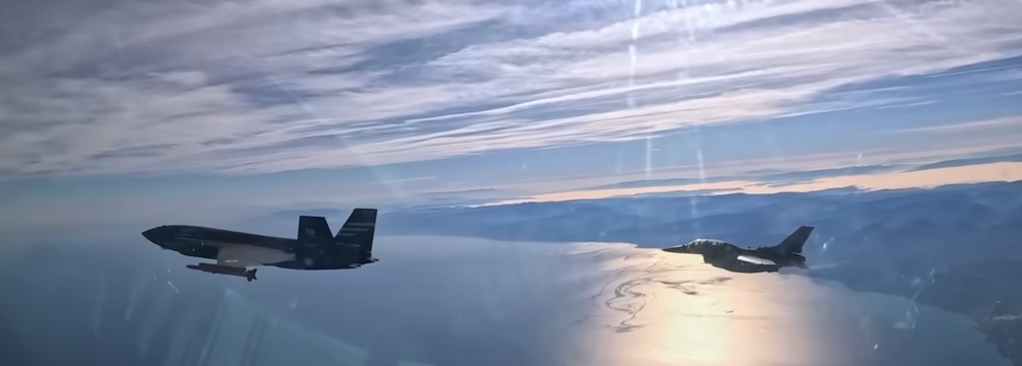
Beautiful bird whose conformal tanks make it look like a toad.. same for the MiG 29.
But then these are not for show... function must come over form.
Diplomat says U.S. fighter jets would enter Canadian airspace more often to address threats
Vietnam’s reported interest in the Dassault Rafale highlights Hanoi’s accelerating effort to diversify combat aviation sources amid sanctions-driven disruptions to Russian military supply chains and intensifying strategic competition in the South China Sea.
(DEFENCE SECURITY ASIA) — A French publication L’Express has claimed that Vietnam is reportedly considering the French-made Rafale fighter as it looks to diversify away from Russian military equipment.
Such a move would mark a fundamental shift in Southeast Asia’s evolving airpower balance, as Hanoi quietly recalibrates its long-standing reliance on Russian combat aviation toward diversified, sanctions-resilient Western platforms capable of sustaining high-tempo operations in one of the world’s most militarised maritime theatres.
“Le Vietnam pourrait être l’un des prochains clients du Rafale” (“Vietnam could be one of the next customers for the Rafale”), a senior French defence assessment states, encapsulating Hanoi’s deliberate search for strategic autonomy as supply-chain disruptions and geopolitical realignments undermine the reliability of Moscow-origin combat aircraft support across Asia.
“Jusqu’à présent équipée de Sukhoï russes, l’armée vietnamienne cherche à diversifier ses approvisionnements” (“Until now equipped with Russian Sukhoi aircraft, the Vietnamese military is seeking to diversify its sources of supply”), the assessment further emphasises, underscoring that Vietnam’s airpower recalibration is driven less by prestige than by hard operational imperatives tied to fleet readiness, interoperability, and escalation control in the South China Sea.
The confirmation that a Vietnamese pilot has already flown the Rafale signals a transition from exploratory diplomacy to practical force-integration assessment, suggesting that Hanoi is now evaluating sortie generation rates, cockpit philosophy, sensor fusion, and electronic warfare survivability under conditions approximating real combat scenarios.
“En 2018, dans le cadre d’un déploiement de l’armée de l’Air en Indo-Pacifique, deux Rafale avaient fait escale au Vietnam” (“In 2018, as part of an Indo-Pacific deployment by the French Air Force, two Rafale fighters made a stopover in Vietnam”), the historical record notes, highlighting that early exposure to French expeditionary airpower laid the groundwork for trust-based technical engagement rather than transactional arms sales.
“Un tel contrat serait historique pour les deux pays, plus de soixante-dix ans après la fin de la guerre d’Indochine” (“Such a contract would be historic for both countries, more than seventy years after the end of the Indochina War”), the assessment stresses, framing the Rafale not merely as a weapons platform but as a strategic symbol of reconciliation, post-colonial pragmatism, and converging Indo-Pacific security interests.
Vietnam’s consideration of the Rafale emerges as maritime coercion intensifies around the Spratly and Paracel Islands, where airpower persistence, sensor dominance, and long-range precision strike increasingly define deterrence credibility rather than numerical fleet size alone.
This prospective acquisition unfolds as Southeast Asian states reassess their force structures amid sharpening U.S.–China rivalry, declining Russian export reliability, and growing demand for multirole aircraft capable of seamlessly transitioning between air superiority, maritime strike, and electronic attack missions.
If realised, Vietnam’s Rafale decision would not only transform the Vietnam People’s Air Force’s operational doctrine but also accelerate the region’s quiet shift toward Western aerospace ecosystems, reshaping Southeast Asia’s defence-industrial, training, and alliance architectures for decades.
Beyond platform capability, Vietnam’s Rafale consideration reflects a strategic calculation that airpower credibility in the South China Sea is increasingly defined by sustained readiness, electronic resilience, and coalition interoperability rather than sheer aircraft numbers or legacy deterrence narratives.
By signalling openness to high-end European combat aviation, Hanoi is also reshaping its defence-industrial relationships, positioning itself to access longer-term technology transfer, diversified sustainment ecosystems, and greater strategic insulation from geopolitical shocks that have increasingly constrained Russia-centric force structures across the Indo-Pacific.
From Soviet Legacy to Strategic Recalibration in Vietnam’s Airpower Doctrine
Vietnam’s airpower trajectory remains inseparable from its Soviet legacy, with the Vietnam People’s Air Force having been shaped by Cold War combat doctrines that prioritised interception, attrition, and massed sorties using rugged, centrally controlled aircraft optimised for homeland defence rather than expeditionary deterrence.
Established in 1955, the VPAF earned enduring symbolic legitimacy during the Vietnam War, when MiG-17s and MiG-21s contested U.S. air dominance, embedding a cultural preference for proven kinetic resilience over technologically fragile platforms.
Following national reunification in 1975, Hanoi’s continued reliance on Soviet and later Russian aircraft reflected geopolitical alignment, cost efficiency, and doctrinal continuity rather than a lack of interest in Western technology.
The acquisition of Su-27 fighters in the 1990s and subsequent procurement of Su-30MK2 multirole aircraft provided Vietnam with credible long-range maritime patrol and strike capability, enabling sustained presence across its vast exclusive economic zone.
Today, Vietnam operates approximately 36 Su-27s and 34 Su-30MK2s, aircraft that remain aerodynamically formidable but increasingly constrained by ageing avionics, analogue-centric mission systems, and escalating maintenance burdens.
These platforms have been instrumental in asserting Vietnamese sovereignty in the South China Sea, where overlapping claims with China have transformed air patrols into strategic signalling instruments rather than routine sovereignty missions.
However, Western sanctions imposed on Russia since 2022 have disrupted spare-parts flows, overhaul cycles, and technical support pipelines, progressively eroding the operational availability of Vietnam’s Russian-built fighters.
The resulting readiness erosion has compelled Hanoi to prioritise supply-chain resilience, lifecycle sustainability, and systems interoperability as central pillars of future force planning rather than supplementary considerations.
Vietnam’s procurement of 12 L-39NG advanced jet trainers for approximately US$400 million (around RM1.88 billion) reflects this recalibration, providing a Western-standard training bridge for pilots transitioning away from Soviet-era cockpit ergonomics and mission philosophies.
This shift signals that Vietnam’s airpower modernisation is no longer evolutionary but structural, setting the conditions for high-end Western combat aircraft integration.
The Dassault Rafale occupies a distinct operational niche as a 4.5-generation multirole fighter designed not around single-mission optimisation but around sustained dominance across contested, sensor-dense environments.
Powered by twin Snecma M88 engines, the Rafale combines high thrust-to-weight performance with long endurance, enabling rapid response across Vietnam’s extended maritime frontiers without reliance on vulnerable forward basing.
Its Thales RBE2 AESA radar provides simultaneous air-to-air and air-to-surface tracking, allowing Rafale pilots to prosecute maritime strike missions while maintaining situational awareness against hostile fighters.
The SPECTRA electronic warfare suite integrates radar warning, jamming, decoy deployment, and threat geolocation, dramatically enhancing survivability against modern surface-to-air missile systems deployed across artificial islands.
Armed with Meteor beyond-visual-range missiles, the Rafale offers Vietnam an unprecedented air-denial envelope, enabling engagement well before adversary aircraft can threaten Vietnamese airspace or maritime assets.
The platform’s compatibility with SCALP long-range cruise missiles introduces a standoff strike option capable of holding high-value targets at risk without exposing pilots to layered air-defence networks.
With a combat radius exceeding 1,000 kilometres, Rafale sorties could cover virtually the entire South China Sea from mainland bases, altering escalation dynamics by compressing adversary reaction timelines.
Vietnam’s interest in Rafale therefore reflects not prestige acquisition but recognition that future deterrence hinges on sensor dominance, electronic attack resilience, and integrated strike depth.
This capability set aligns precisely with Vietnam’s defensive doctrine of denial and persistence rather than power projection, making Rafale a doctrinal fit rather than a disruptive outlier.
In a region where airpower increasingly substitutes for naval mass, Rafale offers Vietnam a cost-effective strategic equaliser.
Regional Precedent and Southeast Asia’s Quiet Rafale Effect
Vietnam’s Rafale consideration unfolds against a regional backdrop already shaped by Indonesia’s landmark decision to procure 42 Rafale fighters for approximately US$8.1 billion, equivalent to roughly RM38.3 billion.
Indonesia’s deliveries beginning in January 2026 demonstrated that Western European combat aircraft can be integrated into Southeast Asian air forces without destabilising domestic political balances.
This precedent has normalised Rafale as a regional benchmark, reducing political risk for subsequent adopters while reinforcing Dassault’s credibility as a long-term partner.
Indonesia’s Rafale deployment strengthens deterrence around the Natuna Islands, implicitly validating Rafale’s maritime strike and air-superiority utility in archipelagic theatres.
Thailand’s Gripen fleet, Malaysia’s Su-30MKM upgrade considerations, and Singapore’s F-35B integration collectively illustrate Southeast Asia’s accelerating technological stratification.
For Vietnam, acquiring an estimated 24 to 36 Rafales would provide force parity within ASEAN while avoiding overextension of its defence budget.
Such a fleet size would allow rotational readiness, pilot proficiency sustainability, and surge capacity during crisis periods without excessive lifecycle costs.
Interoperability with Indonesian Rafales during joint exercises would further enhance ASEAN-level airpower cohesion.
This emerging Rafale network subtly shifts Southeast Asia toward a European-anchored combat aviation ecosystem, diversifying away from exclusive U.S. or Russian dependence.
Vietnam’s entry into this ecosystem would amplify its diplomatic leverage within ASEAN defence frameworks.
Geostrategic Balancing Among China, Russia, the United States, and France
Vietnam’s Rafale calculus is inseparable from its nuanced balancing strategy amid intensifying great-power competition in the Indo-Pacific.
China’s expanding militarisation of the South China Sea has transformed airspace into a contested strategic domain rather than a passive surveillance environment.
Rafale’s long-range sensors and standoff weapons would allow Vietnam to contest air and maritime access without crossing escalation thresholds.
Simultaneously, Vietnam’s reported pursuit of up to 24 F-16V fighters from the United States reflects a parallel diversification track rather than a binary alignment choice.
The coexistence of Rafale and F-16 platforms would complicate adversary planning by introducing heterogeneous sensor, weapon, and electronic warfare profiles.
However, such a mixed fleet would demand significant investment in training pipelines, maintenance infrastructure, and doctrinal integration.
Russia’s declining role as a reliable supplier has created strategic space for France, whose Indo-Pacific posture emphasises sovereignty protection and freedom of navigation.
A Rafale deal would align Vietnam with France’s broader regional strategy while preserving Hanoi’s non-aligned foreign policy posture.
Financially, a two-squadron Rafale package valued between US$4–6 billion (approximately RM18.8–28.3 billion) would constitute a major but manageable investment within Vietnam’s US$6.2 billion defence budget.
This investment would prioritise long-term deterrence stability over short-term numerical expansion.
From Colonial Memory to Strategic Partnership: The Future Trajectory
France–Vietnam defence relations have evolved from historical antagonism into pragmatic strategic convergence driven by shared Indo-Pacific interests.
France’s provision of EC725 helicopters and expanding naval cooperation established the foundation for trust-based defence engagement.
A Rafale contract would elevate this relationship into the highest tier of strategic partnership, encompassing technology transfer, industrial offsets, and long-term sustainment cooperation.
Potential offsets could include maintenance, repair, and overhaul facilities in Vietnam, strengthening local aerospace capacity.
Such arrangements would mirror India’s Rafale experience while adapting to Vietnam’s industrial base and strategic priorities.
China’s likely reaction would involve diplomatic signalling rather than immediate escalation, given Vietnam’s consistent emphasis on defensive intent.
Operational integration challenges remain significant, with full combat readiness potentially requiring several years post-delivery.
Nonetheless, industry assessments suggest negotiations could culminate in formal agreements by late 2026, with initial deliveries between 2028 and 2030.
For Dassault, Vietnam represents both a strategic and symbolic market expansion in Asia.
Ultimately, Vietnam’s Rafale trajectory encapsulates Southeast Asia’s broader transformation toward diversified, resilient, and strategically autonomous airpower architectures. — DEFENCE SECURITY ASIA
buy with what ?Rakesh wrote: ↑09 Feb 2026 21:23 Only a commitment to buy, not a confirmed order....
Ukraine secures 150 Swedish Gripens and 100 French Rafales in twin fighter jet deals
https://euromaidanpress.com/2026/02/09/ ... e_vignette
09 Feb 2026
How did you conclude Europe will struggle with tech ?
Odd thing to suggest in that it is common knowledge that NATO asks nations to provide aircrafts to carry American nukes. German has proved such aircraft for many years.uddu wrote: ↑22 Feb 2026 09:47
France and Germany are at odds over a new generation of fighter aircraft still in development. The French armed forces insist the jet must be able to carry nuclear arms, but for the Germans that's irrelevant because they don't have the weapons. A German-dominated aerospace firm has expressed doubts about the future of the multi-billion euro project.
Anduril just became the first company in history to build an aircraft the US Air Force classified as a "Fighter Jet" without a human inside it.
Not Lockheed. Not Boeing. Not Northrop. A private company founded by a kid who made his fortune selling VR headsets walked into the most consequential weapons program of the century and delivered an armed AI combat aircraft in 556 days.
The F-35 has been running since 1994, costs $2.1 trillion through 2088, and delivers jets an average of 238 days late. Fury went from paper to carrying an AIM-120 air-to-air missile before most defense programs finish their first review meeting.
Two days ago at the Air and Space Forces Association Warfare Symposium, General Wilsbach showed the world a photograph that belongs in history books.
The YFQ-44A Fury. No cockpit. No ejection seat. No pulse. Carrying a missile designed to kill manned aircraft.
The same "F" letter worn by the F-15, the F-22, the F-35. Eighty years of air superiority taxonomy just got handed to a machine.
Anduril is valued at $30.5 billion. Generated over $1 billion in revenue last year. Still private. Building a 5 million square foot factory to mass produce tens of thousands of autonomous systems. When this company goes public it will be the most significant defense IPO in a generation. The addressable market is not its backlog. The addressable market is every manned fighter program on earth that just became obsolete.
Now here is what nobody is connecting.
Every chip powering Fury's AI brain requires gallium and germanium. China produces 98% of the world's refined gallium and 60% of germanium. In December 2024 Beijing banned these minerals from export to US military end-users. That ban was never lifted. The November 2025 trade truce explicitly excluded military applications. It expires November 27, 2026.
The minerals required to build America's autonomous air force are prohibited from export by the country it was designed to fight.
The cost of the bullet just went to zero. The cost of the gun just went to Beijing.
556 days to armed flight. Zero days of mineral independence. 274 days until the truce expires.
The arms race that decides the Pacific will not be won by whoever writes the best algorithm. It will be won by whoever controls the atoms that algorithms are made from.
Video here -Turkish industry and media alike have heralded the recent live-fire test in which a Kizilelma uncrewed combat air vehicle (UCAV) used a Turkish-made air-to-air missile to destroy a target drone. Turkey claims the test marks the first occasion a UCAV has launched a radar-guided air-to-air missile.
A video released by Baykar, manufacturer of the Kizilelma, shows the UCAV — specifically aircraft PT-5 — taking off, together with four Turkish Air Force F-16s. In all, five F-16s were involved in the live-fire test, including one that served as a safety chase plane. An Akinci high-altitude long-endurance UCAV also flew chase duties.
The Kizilelma was fitted with two Gökdoğan air-to-air missiles on external pylons. One of these was apparently inert, while the other, a powered missile (under the starboard wing), was fired at a target drone. It should be noted that external weapons carriage would degrade the radar signature reduction measures that the manufacturer says it has built into the UCAV. However, the drone is also planned to carry stores in an internal weapons bay, which would preserve such measures.
Developed by TÜBİTAK SAGE, the beyond-visual-range (BVR) Gökdoğan — which means peregrine — features radar guidance and reportedly has a range of around 40 miles. The Gökdoğan is slated to eventually replace the AIM-120 Advanced Medium-Range Air-to-Air Missile (AMRAAM) in the Turkish Air Force inventory.
The video shows the Gökdoğan missile climbing after launch, putting it on a lofted trajectory, which improves its kinetic energy and allows it to hit targets at longer ranges. Footage captured from the target drone then records an almost-direct head-on impact with the incoming missile.
VIDEO: https://x.com/OpexNews/status/2029175331756642485?s=20 --->Dassault Aviation SA said it would look for other partners if Airbus SE doesn’t want to work with them on Europe’s next-generation fighter jet — the Future Combat Air System — as the project is mired in a battle for control between the two companies.
“What I can tell you today is that Airbus said that they didn’t want to work with Dassault. I didn’t say that. They said that,” Dassault’s Chief Executive Officer Eric Trappier said at a post-earnings news conference. “If we need to look for other partners, then we will do so if need be.”
Nuclear, aircraft carriers, stealth drone: the Rafale F5 meets all the requirements that the SCAF has never been able to reconcile between Paris and Berlin in nine years of negotiations.
https://x.com/BabakTaghvaee1/status/204 ... 41989?s=20 ---> A few months ago, the United Arab Emirates once again trained Top Gun–level and fighter pilot instructors of the People’s Liberation Army Air Force (Chinese Air Force) on how to counter the Taiwanese Air Force. For this purpose, they provided their Mirage 2000-9EAD/DAD aircraft to China again. This is why France and the United States have refused to provide the UAE access and technology transfer of systems and components of advanced fighter jets such as the Rafale F5 and F-35A Lightning II. If UAE wants fighter jets, better to buy from China. No one in the west will sell you advanced fighter jets anymore.Rakesh wrote: ↑09 Apr 2026 19:50 https://x.com/saif_aldareei/status/2040 ... 24195?s=20 ---> The UAE has withdrawn from funding the development of the new Rafale F5 after France refused to transfer advanced technology. The message is clear: Real partnership with genuine technology transfer — or no deal.

France has successfully tested its advanced MICA NG missile from a Rafale fighter jet. This new weapon is designed to counter stealth aircraft and drones. The test marks a significant step towards integrating the missile with the Rafale. India is also advancing plans to acquire 114 Rafale fighter jets, with manufacturing potentially happening in India.

 Following the failure of the Franco-German SCAF project, France is strategically pivoting toward Sweden to develop its next-generation 6th-generation combat aircraft.
 Dassault Aviation and Saab mutually respect each other and share a similar industrial culture centered on technological sovereignty.
 The two countries are strengthening their alliance, particularly through advanced nuclear cooperation and synergies in defense.
 A Dassault-Saab partnership could allow France to retain industrial leadership while avoiding the blockages encountered with Airbus.