Raj Malhotra @bheemmz :
A new Airframe is just 10% of the cost, so why not just build new Su-30MKIs and keep old ones in storage. For just 10% more cost we get 25 yrs extra airframe life
Su-30MKI: News and Discussion - 24 July 2021
-
Manish_Sharma
- BRF Oldie
- Posts: 5167
- Joined: 07 Sep 2009 16:17
Re: Su-30MKI: News and Discussion - 24 July 2021
https://x.com/bheemmz/status/2021631044873793872?s=20
Re: Su-30MKI: News and Discussion - 24 July 2021
Not sure if this gent knows that every modern fighter is an unique example of high tech, some even say a sort of finger print code runs through every example identifying each and every fighter. Of course they can be rebuilt but not at 10 % ! It's not exactly car manufacturing !Manish_Sharma wrote: ↑16 Feb 2026 03:35 https://x.com/bheemmz/status/2021631044873793872?s=20Raj Malhotra @bheemmz :
A new Airframe is just 10% of the cost, so why not just build new Su-30MKIs and keep old ones in storage. For just 10% more cost we get 25 yrs extra airframe life
-
Manish_Sharma
- BRF Oldie
- Posts: 5167
- Joined: 07 Sep 2009 16:17
Re: Su-30MKI: News and Discussion - 24 July 2021
What is your take? If not 10% then how much?drnayar wrote: ↑16 Feb 2026 04:30Not sure if this gent knows that every modern fighter is an unique example of high tech, some even say a sort of finger print code runs through every example identifying each and every fighter. Of course they can be rebuilt but not at 10 % ! It's not exactly car manufacturing !
Re: Su-30MKI: News and Discussion - 24 July 2021
I guess I would contradict myself but depends on damage Vs normal wear and tear ( upto 50 to 70% for damaged fighters)Manish_Sharma wrote: ↑16 Feb 2026 13:58What is your take? If not 10% then how much?drnayar wrote: ↑16 Feb 2026 04:30
Not sure if this gent knows that every modern fighter is an unique example of high tech, some even say a sort of finger print code runs through every example identifying each and every fighter. Of course they can be rebuilt but not at 10 % ! It's not exactly car manufacturing !
In the military aviation world, a "fresh rebuild" for an aircraft that isn't damaged but has reached the end of its structural life is called a Service Life Extension Program (SLEP) or a Service Life Modification (SLM).
If the jet is just "worn out" from thousands of flight hours, a comprehensive rebuild generally costs between 3% and 15% of a new aircraft's price, depending on the generation of the jet and the depth of the upgrade.
1. Rebuild Cost Benchmarks
Unlike the 50–75% threshold for damage repair, a planned rebuild for wear and tear is much more economical because the "fingerprint" (the main fuselage and wings) is still basically sound, even if it needs reinforcement.
F-16 Fighting Falcon: A standard SLEP to add 2,000 extra flight hours costs roughly $2.4 million to $3.5 million per aircraft. Compared to a new F-16 Block 70 (approx. $60M–$70M), this is roughly 4–5% of the new unit cost.
F/A-18 Super Hornet: The Navy's SLM program, which extends life from 6,000 to 10,000 hours, was initially budgeted at about $5.5 million per jet. For a $70M aircraft, this is about 8% of the replacement cost.
Engine Overhaul: A "rebuild" of just the engine is a different story. If an overhaul costs more than 80% of a new engine, the military typically swaps it for a fresh unit.
2. What a "Fresh Rebuild" Actually Includes
When a jet goes in for a total overhaul (Depot-Level Maintenance), it isn't just cleaned; it is literally taken apart:
Structural Beef-up: Technicians replace "life-limited" parts like wing attachment points or bulkheads that have developed microscopic fatigue cracks.
Skin & Coating: For stealth jets like the F-35, the radar-absorbent skin is stripped and reapplied.
The "Mid-Life Update" (MLU): Usually, a rebuild for wear is combined with a tech upgrade (new radar, computers, or Link-16 communication systems). This is where the cost creeps up from 5% to 15% or more.
3. The Efficiency of Rebuilding
The reason air forces love these programs is the "ROI" (Return on Investment). For a few million dollars, they get another 10–15 years of service.
Turnaround Time: A full SLEP typically takes about 9 months of "hangar time" per aircraft.
Strategic Bridge: These rebuilds are often used as a "bridge" to keep a fleet flying while waiting for next-generation fighters like the F-35 to be delivered.
Summary Table: Rebuild vs. New
Jet Type Rebuild (SLEP/SLM) Cost Est. New Unit Cost Rebuild %
F-16 ~$2.4M - $3.5M ~$65M ~4-5%
F/A-18 ~$5.5M - $15M* ~$70M ~8-20%
So there might indeed be a case for rebuilding fighters much like Super Sukhoi program.
The Service Life Extension Program (SLEP) for the Indian Air Force (IAF) Su-30MKI, often referred to as the "Super Sukhoi" upgrade, is expected to cost approximately $94–$95 million (approx. ₹700–800 crore) per aircraft. This program aims to upgrade around 84 to 150+ aircraft, with total project costs estimated between $2.4 billion and $7.8 billion (around ₹66,829 crore).
Key Details of the Su-30MKI Upgrade/SLEP:
Objective: The upgrade extends the service life of the Su-30MKI fleet until 2055, providing a 20-year life extension and upgrading them to 4.5+ generation capability.
Upgrades Included:
Radar: Replacement of the current PESA radar with the indigenous Virupaksha AESA radar.
Avionics & EW: Advanced mission computers, electronic warfare suites, and new cockpit displays.
Weapons: Integration of BrahMos-A missiles and Rudram-II anti-radiation missiles.
Engine: While initially focused on avionics, the project is part of a wider effort to maintain the fleet, including a separate, massive 240+ engine procurement contract.
Implementation: The upgrade is to be carried out locally by Hindustan Aeronautics Limited (HAL).
Related Costs:
New Aircraft Acquisition: In December 2024, India signed a contract for 12 new Su-30MKI aircraft at a cost of roughly ₹13,500 crore, or approximately $127 million per aircraft.
Total "New" Unit Cost: With the upgrade, a new, upgraded Su-30MKI is estimated to cost around $222 million.
As you see it is not just a matter of swapping skins but also tech upgrades as required.
-
Manish_Sharma
- BRF Oldie
- Posts: 5167
- Joined: 07 Sep 2009 16:17
Re: Su-30MKI: News and Discussion - 24 July 2021
Thank you for such detailed reply, wow such a comprehensive eye opening answer!
Re: Su-30MKI: News and Discussion - 24 July 2021
^^^ thanks!
Re: Su-30MKI: News and Discussion - 24 July 2021
that is a great detailed reply!
is it a simple addition of 127+95 -> the cost of the parts in that 95 million will be saved from the 127 mil cost right? if the new aircraft is 30% more - isnt that better than upgrade?
This seems to be the logic that led to M2K upgrade which at this point seems like a waste and we could have bought Rafales with that money!
is it a simple addition of 127+95 -> the cost of the parts in that 95 million will be saved from the 127 mil cost right? if the new aircraft is 30% more - isnt that better than upgrade?
This seems to be the logic that led to M2K upgrade which at this point seems like a waste and we could have bought Rafales with that money!
Re: Su-30MKI: News and Discussion - 24 July 2021
again consider lead times for procurement of materials , labour machinery and financial aspects for new., if the requirement is now , stick to what is available right away., its usually what you have now ., in case of high tech products.V_Raman wrote: ↑16 Feb 2026 17:13 that is a great detailed reply!
is it a simple addition of 127+95 -> the cost of the parts in that 95 million will be saved from the 127 mil cost right? if the new aircraft is 30% more - isnt that better than upgrade?
This seems to be the logic that led to M2K upgrade which at this point seems like a waste and we could have bought Rafales with that money!
but indian procurement process is not known to consider "time" in their procurement , High tech "evolves" or matures with time ., then it becomes a reliable one. The armed forces often want the end result without going through that often painful process .. its called "disease of plenty of options"
If the RM was a tech person things might have evolved differently , just a thought
Re: Su-30MKI: News and Discussion - 24 July 2021
Engines also don't last long. They are replaced more often depending on usage.
-
Manish_Sharma
- BRF Oldie
- Posts: 5167
- Joined: 07 Sep 2009 16:17
Re: Su-30MKI: News and Discussion - 24 July 2021
Good tweet on upgrade of Su 30 & some methods to somewhat dilute its huge rcs by Austin Saar countering prodyut das:
https://x.com/AustinAJoseph76/status/20 ... 20538?s=20
Sir! MKI cant be converted into Stealth as we know it for 5th Fifth gen stealth, it lacks the planform and like any 80's designed fighter be Flanker , F-15 , Rafale or other basic LO characteristic are missing which can't be added later.
What they can do to reduce MKI RCS and improve its capability
1> Engines Fan of MKI are directly exposed quite likely because it's a Mach 2 + fighter it needs variable geometry intake like its peer F-15 not a fixed intake like Tejas or Rafale.
Use a Radar Blocker to reduce Engine Fan return , in F-18 they use Engine Face Obscuration Device (EFOD) which is a blocker , Even Su-57 uses Radar Blocker for its variable intake
2 > Make use of New Gen RAM to reduce Broad Band Return, use Ceramic materials in Engine Exhaust to reduce Thermal Signature.
Even if this basic measure reduces RCS this would be a good gain , Like DRDO developed RAM reduces Jagur RCS
3 > Make use of MKI Big Size , DRDO can develop Spectra like Jammer using Ga/N module using internal Jammer plus external for Broad band Jamming , use Towed Decoy, LPI ESM , DRDO MAWS.
Develop powerful External mounted Broadband Jammer based on Ga/N AESA , DRDO has competencies.
4 > Make use of DRDO Uttam AESA Radar and interface and integrate all weapons IAF uses Indian and Foreign weapons.
Replace all internal electronics be it Russian or French with Indian one may be from Tejas Mk2 program
Make a New Cockpit with Big Flat Panel Display and advanced MMI.
5 > Use more modern engine 177S with increased Dry and Wet thrust to give be more power for flight and for modern electronic and reduce fuel consumption by 15 % or more. The current engine is an 80's engine of Flanker ! There have been 2 , 3 gen advancement inpast 25 years since AL-31FP engine improving Thrust , TBO , Life and Maintenance.
6 > Try to use maximum Indian system , Reverse engineer MKI and make it 100 % Indian including Engine. Try to pay Russian some money get MKI 100 % today its around 70 % indiginous.
The above upgrade will keep Super 30MKI competitive for next 25 years against any fighter within the competencies of DRDO/HAL and we have to pay far less then any modern fighter we pay today.
Re: Su-30MKI: News and Discussion - 24 July 2021
The US tried to convert the 4th gen F-15 Eagle into a lower RCS Silent Eagle and tried to push it's to export customers but met with no success.. for themselves they concentrated on true all aspect 5th Gen and 6th Gen and sensor and armament improvements to their legacy 4th gen aircraft.Manish_Sharma wrote: ↑17 Feb 2026 14:35 Good tweet on upgrade of Su 30 & some methods to somewhat dilute its huge rcs by Austin Saar countering prodyut das:
...
Apparently the improvements came at a cost which was not that far off from the true 5th Gen aircraft. So no huge savings as such, unless one considered the already sunk costs in the infrastructure.
Article in theaviationgeekclub.com - By Dario Leone, Aug 11 2023
The F-15SE Silent Eagle could have an RCS less than one-fifth of the original F-15 Eagle but it was never built. Here’s why.
In early 2009, Boeing put on display its F-15SE demonstrator which amalgamated certain elements of a 5th-generation fighter into the proven Eagle airframe.
Reducing the radar cross-section (RCS) of the Eagle was the number one factor in the Silent Eagle’s tweaked design. To this end, Boeing found that a canting out those huge twin vertical tails by 15° helped reduce the F-15’s RCS. Other technology, such as the use of radar-absorbing materials (RAM) as used in 5th-generation fighters and four conformal weapons bays (CWB) which would be in the same location as the former FAST conformal fuel tanks, would reduce the big fighter’s radar signature still further. For `non-stealthy’ missions, weapons could still be hung from the various wing and fuselage hard-points.
Under the skin other advances included a full fly-by-wire system, the Raytheon APG-82 AESA radar as well as an up-to-the-minute electronic warfare suite packaged in the main airframe. The aircraft would also field advanced targeting pods, including an infrared search and track system. The end result was an F-15 that — compared to the original machine could (and let’s stress the ‘could’ here) have an RCS one-fifth, or less than one-fifth of the original F-15 Eagle. This is of course dependent on the aspect of the airframe to the radar that is looking at it: impressive, but not in the same league of a 5th-generation fighter with stealth ‘built in’ to the aircraft’s blueprints.
Despite possible customers at home and abroad (Israel, Japan and Saudi Arabia especially could have benefitted from a ‘stealthy’ Eagle on charge), no orders were forthcoming. This was despite the fact that the conformal weapons bay was tested with a live firing from an F-15E demonstrator in 2010 which also trialled various RAM coatings and paint finishes.
The flyaway cost of the SE was thought to have approached $100 million dollars per aircraft, including spares and support which compares to $150 million for an F-22.
Some aspect of the Silent Eagle programme found their way into export F-15E variants, notably some of the RCS reduction material and some of the electronic and warfare equipment which found its way onto South Korea’s F-15 Strike Eagle fleet.
-
Manish_Sharma
- BRF Oldie
- Posts: 5167
- Joined: 07 Sep 2009 16:17
Re: Su-30MKI: News and Discussion - 24 July 2021
Even reducing by a factor of two is a huge improvement in my book. Don't have any idea about the proportion it will reduce the detection range but for sure the silent eagle would have been able to get undetected much closer & fire AAMs with higher kill probability. Now it may not have been enough for King Khan who likes platinum coated solutions but for us it is certainly worth thinking about.
That's why i am willing to bet the Su-57, with it's canted fins & it's internal weapons bay will have a much lower RCS than the Su-30. Consequently the Su-57 MKI if/when it happens will have the edge over the Su-30 MKI
Re: Su-30MKI: News and Discussion - 24 July 2021
Su-57 (Felon): Estimated frontal RCS ranges between 0.1 and 1.0 m². Some simulations suggest a tighter median frontal range of 0.008–0.05 m² depending on the radar bandManish_P wrote: ↑17 Feb 2026 21:43Even reducing by a factor of two is a huge improvement in my book. Don't have any idea about the proportion it will reduce the detection range but for sure the silent eagle would have been able to get undetected much closer & fire AAMs with higher kill probability. Now it may not have been enough for King Khan who likes platinum coated solutions but for us it is certainly worth thinking about.
That's why i am willing to bet the Su-57, with it's canted fins & it's internal weapons bay will have a much lower RCS than the Su-30. Consequently the Su-57 MKI if/when it happens will have the edge over the Su-30 MKI
baseline Su-30MKI's frontal RCS between 4 and 12 m²
"Super Sukhoi" program includes specific efforts to reduce its signature:
RAM Coating: The DRDO's Defence Laboratory Jodhpur (DLJ) has developed a specialized polyurethane-based Radar Absorbent Material (RAM) paint.This coating is applied to high-RCS zones, including the engine nacelles, leading edges, canards, and pylon fairings. These upgrades aim to reduce the RCS by approximately three times, potentially bringing it down to a range of 1–3 m².
for sake of comparison Rafale F.3, F.4 typically range from 0.1 m² to 1.0 m².
F-22 Raptor: Estimated at 0.0001 m².
F-35 Lightning II: Estimated at 0.0015 m² to 0.005 m².
Re: Su-30MKI: News and Discussion - 24 July 2021
Has HAL done this upgrade on a su-30 to validate them or that will be done only after contract is signed?drnayar wrote: ↑16 Feb 2026 19:17
again consider lead times for procurement of materials , labour machinery and financial aspects for new., if the requirement is now , stick to what is available right away., its usually what you have now ., in case of high tech products.
but indian procurement process is not known to consider "time" in their procurement , High tech "evolves" or matures with time ., then it becomes a reliable one. The armed forces often want the end result without going through that often painful process .. its called "disease of plenty of options"
If the RM was a tech person things might have evolved differently , just a thought
If the first super-30 comes after 5 years - will Su-57 take the same time - or even 7 years - with indian additions including radar? if yes, what is the value of these super-30s if the cost of su-57 is only 25% more?
this is looking more and more like the m2k upgrade which turned out to be a lemon!
-
Manish_Sharma
- BRF Oldie
- Posts: 5167
- Joined: 07 Sep 2009 16:17
Re: Su-30MKI: News and Discussion - 24 July 2021
Rafale's 0.1 m² to 1.0 m² seems (even without payload hanging out) bit hard to digest, with warts all over and fuel probe sticking outdrnayar wrote: ↑17 Feb 2026 23:38
Su-57 (Felon): Estimated frontal RCS ranges between 0.1 and 1.0 m². Some simulations suggest a tighter median frontal range of 0.008–0.05 m² depending on the radar band
baseline Su-30MKI's frontal RCS between 4 and 12 m²
.......
for sake of comparison Rafale F.3, F.4 typically range from 0.1 m² to 1.0 m².
F-22 Raptor: Estimated at 0.0001 m².
F-35 Lightning II: Estimated at 0.0015 m² to 0.005 m².
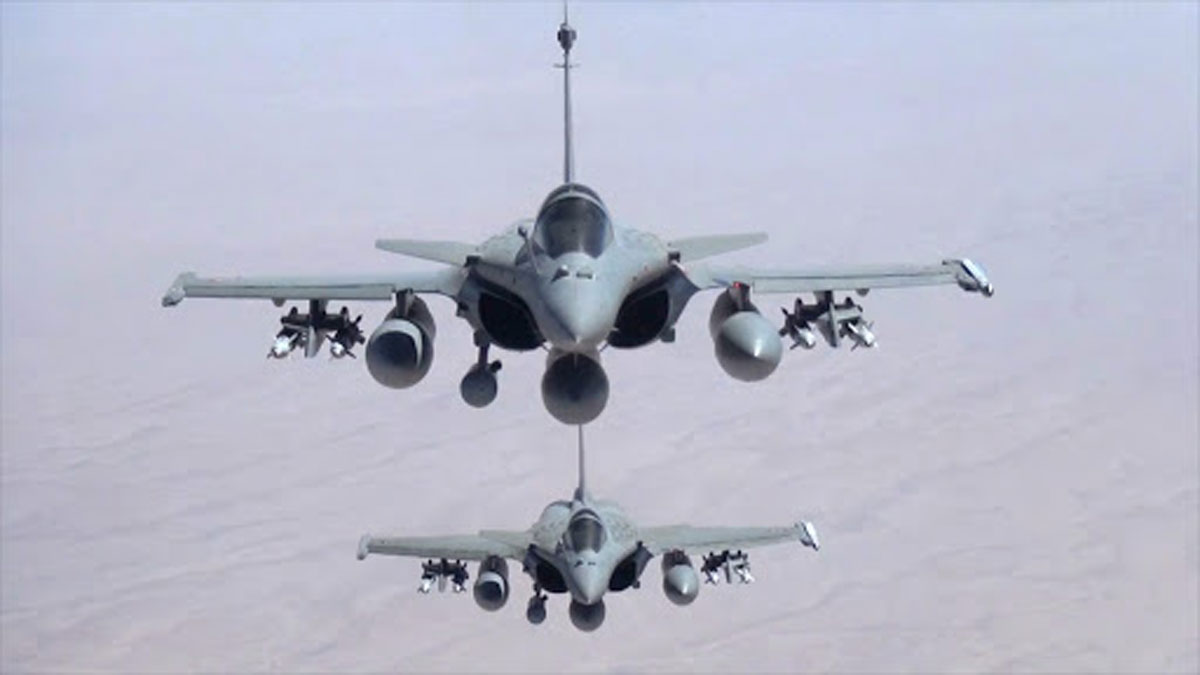
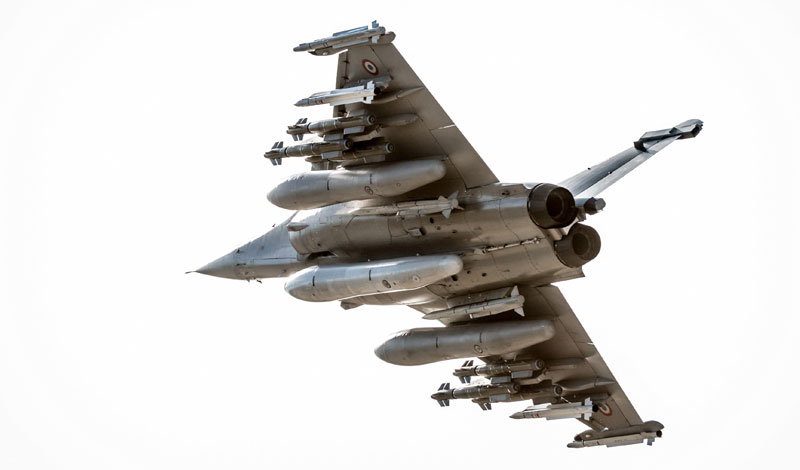
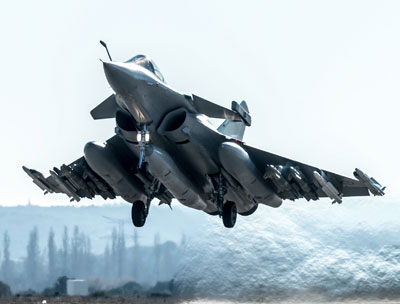
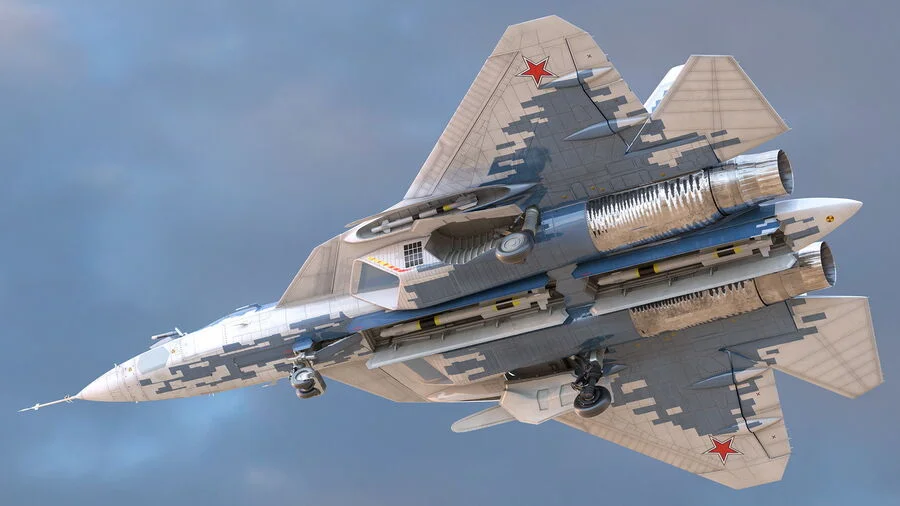
Su 57 understandable that its mostly seen a deep upgrade of flanker's stealthy version, but never full fledged in league of f22/35

Re: Su-30MKI: News and Discussion - 24 July 2021
Not being skeptical but IMVHO it seems unlikely that the worst of the Su57 at 1 sq. Mtr, will be matched by the potential best of the Super Su30 without changing it's shaping & still carrying weapons on external hardpoints.drnayar wrote: ↑17 Feb 2026 23:38 ...
Su-57 (Felon): Estimated frontal RCS ranges between 0.1 and 1.0 m². Some simulations suggest a tighter median frontal range of 0.008–0.05 m² depending on the radar band
...
"Super Sukhoi" program includes specific efforts to reduce its signature: ...
These upgrades aim to reduce the RCS by approximately three times, potentially bringing it down to a range of 1–3 m².
...
The planned upgrades will no doubt reduce the RCS and that is still a win. Getting it down to 3 sq mtr. is still very good.
Re: Su-30MKI: News and Discussion - 24 July 2021
As Super Sukhoi awaits clearance, IAF turns to Russia for parallel Su-30MkI upgrade
https://www.newindianexpress.com/nation ... ki-upgrade
24 Feb 2026

https://www.newindianexpress.com/nation ... ki-upgrade
24 Feb 2026
https://x.com/javariaranaa/status/20264 ... 79941?s=20 ---> As Super Sukhoi awaits clearance, IAF turns to Russia for parallel Su-30MkI upgrade.A Russian team has recently visited Hindustan Aeronautics Limited’s Nashik facility, signalling deeper engagement between the two sides.
Re: Su-30MKI: News and Discussion - 24 July 2021
https://x.com/AdithyaKM_/status/2026519 ... 43241?s=20 ---> Even as IAF's plan to upgrade 84 Su-30 MKI indigenously awaits CCS clearance, IAF is eyeing "parallel upgrade of a similar or larger number of aircraft with Russia to sustain operational readiness"
- Intended to offset long execution timelines associated with the HAL-led upgrade (7 years from CSS sanction).
- Concerns in establishment whether projected FOC timeline will be met.
- Source: "Relying solely on the indigenous upgrade could push timelines well into the next decade. A parallel track is therefore being considered to ensure operational readiness is not affected. Moreover, with the Super Sukhoi upgrade limited to 84 aircraft, a parallel route is needed for the remaining Su-30MKI fleet of around 175 aircraft.”
- Russian track expected to focus on radar, EW suite & potentially AL-41 engines.
- DRDO has been progressing work under the homegrown upgrade programme using internal funding, but substantial financial support, expected only after CCS clearance, is required for full-scale development and integration.
https://x.com/AdithyaKM_/status/2026525 ... 30040?s=20 ---> This is hopeless. I absolutely am not privy to any detail not reported in public, but the overall logic described does not make sense to me. Particularly this quote by the source:
"Relying solely on the indigenous upgrade could push timelines well into the next decade. A parallel track is therefore being considered to ensure operational readiness is not affected. Moreover, with the Super Sukhoi upgrade limited to 84 aircraft, a parallel route is needed for the remaining Su-30MKI fleet of around 175 aircraft.”
Open to discussion:
- There is no indigenous upgrade until it's formally sanctioned & funded. The article notes that currently it's run using DRDO's internal funds & needs substantial funds post sanction for full scale dev. We haven't even really started & this makes it seem like Air HQ is giving up already? This is not how things are supposed to be done. This is not how we must work towards aatmanirbharta.
- I'd speculated earlier that the parallel Russian project could be due to timelines. And we know Russia is in no state to be trusted with sticking to timelines.
- When we can't even get CCS sanction & fund the indigenous upgrade project affter DAC AoN, on what basis are we trying to wake up to timelines now? Is this justifiable? I'm not sure.
- Except for the AL-41 engine, Russia really has nothing better to offer that DRDO isn't offering.
- HAL may have various constraints that can delay execution, I agree completely. Then why not bring in private players? India has multiple firms which can manufacture the systems required for the upgrade. Bring in private players for the integration too? Nobody is asking HAL to be the sole final integration authority here? HAL can be mandated to outsource that part to an extent?
- Why is Super Sukhoi "limited" to 84 in the first place? The quote makes it seem as if that's some figure that cannot be crossed which is funny.
So yeah overall imo:
- IAF - MoD should focus on doing their part in ensuring sanction, funding, personnel & aircraft for the IDDM upgrade asap. Current arguments by sources aren't convincing to me (Not that it should be, I'm nobody. Just doesn't look good.)
- Parallel upgrade can certainly be explored, particularly reg. engines.
- IAF should try a way to ensure HAL is not the only lead integrator. That should help assuage capacity & quality concerns. Rope in multiple DcPPs & suppliers for subsystems.
- We should stop pretending as if someone else will somehow provide us with good enough things on time, particularly when that nation is at war.
- Intended to offset long execution timelines associated with the HAL-led upgrade (7 years from CSS sanction).
- Concerns in establishment whether projected FOC timeline will be met.
- Source: "Relying solely on the indigenous upgrade could push timelines well into the next decade. A parallel track is therefore being considered to ensure operational readiness is not affected. Moreover, with the Super Sukhoi upgrade limited to 84 aircraft, a parallel route is needed for the remaining Su-30MKI fleet of around 175 aircraft.”
- Russian track expected to focus on radar, EW suite & potentially AL-41 engines.
- DRDO has been progressing work under the homegrown upgrade programme using internal funding, but substantial financial support, expected only after CCS clearance, is required for full-scale development and integration.
https://x.com/AdithyaKM_/status/2026525 ... 30040?s=20 ---> This is hopeless. I absolutely am not privy to any detail not reported in public, but the overall logic described does not make sense to me. Particularly this quote by the source:
"Relying solely on the indigenous upgrade could push timelines well into the next decade. A parallel track is therefore being considered to ensure operational readiness is not affected. Moreover, with the Super Sukhoi upgrade limited to 84 aircraft, a parallel route is needed for the remaining Su-30MKI fleet of around 175 aircraft.”
Open to discussion:
- There is no indigenous upgrade until it's formally sanctioned & funded. The article notes that currently it's run using DRDO's internal funds & needs substantial funds post sanction for full scale dev. We haven't even really started & this makes it seem like Air HQ is giving up already? This is not how things are supposed to be done. This is not how we must work towards aatmanirbharta.
- I'd speculated earlier that the parallel Russian project could be due to timelines. And we know Russia is in no state to be trusted with sticking to timelines.
- When we can't even get CCS sanction & fund the indigenous upgrade project affter DAC AoN, on what basis are we trying to wake up to timelines now? Is this justifiable? I'm not sure.
- Except for the AL-41 engine, Russia really has nothing better to offer that DRDO isn't offering.
- HAL may have various constraints that can delay execution, I agree completely. Then why not bring in private players? India has multiple firms which can manufacture the systems required for the upgrade. Bring in private players for the integration too? Nobody is asking HAL to be the sole final integration authority here? HAL can be mandated to outsource that part to an extent?
- Why is Super Sukhoi "limited" to 84 in the first place? The quote makes it seem as if that's some figure that cannot be crossed which is funny.
So yeah overall imo:
- IAF - MoD should focus on doing their part in ensuring sanction, funding, personnel & aircraft for the IDDM upgrade asap. Current arguments by sources aren't convincing to me (Not that it should be, I'm nobody. Just doesn't look good.)
- Parallel upgrade can certainly be explored, particularly reg. engines.
- IAF should try a way to ensure HAL is not the only lead integrator. That should help assuage capacity & quality concerns. Rope in multiple DcPPs & suppliers for subsystems.
- We should stop pretending as if someone else will somehow provide us with good enough things on time, particularly when that nation is at war.
Re: Su-30MKI: News and Discussion - 24 July 2021
Why is Indian Air Force exploring a parallel route for Su-30MKI fighter jet upgrade?
https://www.theweek.in/news/defence/202 ... grade.html
25 Feb 2026
https://www.theweek.in/news/defence/202 ... grade.html
25 Feb 2026
Alongside the planned 'Super Sukhoi' upgrade for 84 jets, which has a long timeline, the IAF is exploring a parallel, faster upgrade path for the remaining 175 aircraft.
Re: Su-30MKI: News and Discussion - 24 July 2021
In what universe do people assume Russia will deliver on time?
Re: Su-30MKI: News and Discussion - 24 July 2021
I fail to understand discussion on Su-30MKI upgrade. Why are the options and other details being openly discussed in media. Isn't there a program manager in charge of the Su-30MKI upgrade? The public does not need to know who, what, why etc. There is a budget and tech involved with suppliers. Just hash out these things in private meetings and get the optimal path going. Whoever is in-charge of the program gives a high level status update, that is it. Private, HAL, Russia, etc is none of our business.
IAF, HAL and MOD need to be in sync with each other. This business of I want this, that and the other should be in private discussions not for public consumption. Get to work and make things happen, who cares of minutiae?
IAF, HAL and MOD need to be in sync with each other. This business of I want this, that and the other should be in private discussions not for public consumption. Get to work and make things happen, who cares of minutiae?
Re: Su-30MKI: News and Discussion - 24 July 2021
The "Frankenstein" Jet: Why NATO Respects India’s Su-30MKI
Have you ever wondered what kind of monster you'd get if you combined Russia's most aggressive fighter jet airframe with the most sophisticated avionics from the West and Israel? Welcome back to Pacific Steel! Today, we are doing a deep dive into the legendary Sukhoi Su-30MKI—the backbone of the Indian Air Force and a jet that completely tore up the Cold War rulebook. This isn't just a standard arms purchase. In the 1990s, India effectively saved the bankrupt Russian aerospace giant Sukhoi by bankrolling a project that forced Russian engineers to integrate NATO-standard technology into their prized airframe. The result? The "Frankenstein of the Skies."
In this episode, we break down what makes the Su-30MKI one of the deadliest hybrid fighters on the planet:
 The insane engineering behind merging Russian brute force with French displays, Israeli electronic warfare, and Indian mission computers.
The unmatched agility of its thrust-vectoring nozzles and the legendary Cobra Maneuver—and why it still matters in modern Beyond Visual Range (BVR) combat.
Real-world combat records, including how it successfully evaded incoming AMRAAM missiles during the 2019 Balakot Airstrike.
A head-to-head comparison with the American Boeing F-15EX Eagle II. We look at speed, payload, and the massive price difference that makes the Su-30MKI an undeniable strategic advantage.
The future of the fleet: The multi-billion dollar "Super Sukhoi" upgrade featuring the indigenous Virupaksha AESA radar and Mach 3 BrahMos cruise missiles.
In the world of military aviation, India proved that you don't always have to pick a side. By daring to blend the best features from rival camps, they created a unique, highly capable fighter that is incredibly hard to replicate.
Have you ever wondered what kind of monster you'd get if you combined Russia's most aggressive fighter jet airframe with the most sophisticated avionics from the West and Israel? Welcome back to Pacific Steel! Today, we are doing a deep dive into the legendary Sukhoi Su-30MKI—the backbone of the Indian Air Force and a jet that completely tore up the Cold War rulebook. This isn't just a standard arms purchase. In the 1990s, India effectively saved the bankrupt Russian aerospace giant Sukhoi by bankrolling a project that forced Russian engineers to integrate NATO-standard technology into their prized airframe. The result? The "Frankenstein of the Skies."
In this episode, we break down what makes the Su-30MKI one of the deadliest hybrid fighters on the planet:
 The insane engineering behind merging Russian brute force with French displays, Israeli electronic warfare, and Indian mission computers. The unmatched agility of its thrust-vectoring nozzles and the legendary Cobra Maneuver—and why it still matters in modern Beyond Visual Range (BVR) combat. Real-world combat records, including how it successfully evaded incoming AMRAAM missiles during the 2019 Balakot Airstrike. A head-to-head comparison with the American Boeing F-15EX Eagle II. We look at speed, payload, and the massive price difference that makes the Su-30MKI an undeniable strategic advantage. The future of the fleet: The multi-billion dollar "Super Sukhoi" upgrade featuring the indigenous Virupaksha AESA radar and Mach 3 BrahMos cruise missiles.
In the world of military aviation, India proved that you don't always have to pick a side. By daring to blend the best features from rival camps, they created a unique, highly capable fighter that is incredibly hard to replicate.
Re: Su-30MKI: News and Discussion - 24 July 2021
India Plans Purchase of Hundreds of Russian R-37M Air-to-Air Missiles to Revolutionise Su-30MKI Fighters’ Long Range Firepower
https://militarywatchmagazine.com/artic ... ssian-r37m
10 March 2026
https://militarywatchmagazine.com/artic ... ssian-r37m
10 March 2026
-
Cain Marko
- BRF Oldie
- Posts: 5684
- Joined: 26 Jun 2005 10:26
Re: Su-30MKI: News and Discussion - 24 July 2021
High effin time! I'm shocked that they didn't do this earlier. I thought they would use the brahmos as an a2a weapon vs slow movers.Rakesh wrote: ↑13 Mar 2026 01:56 India Plans Purchase of Hundreds of Russian R-37M Air-to-Air Missiles to Revolutionise Su-30MKI Fighters’ Long Range Firepower
https://militarywatchmagazine.com/artic ... ssian-r37m
10 March 2026
Re: Su-30MKI: News and Discussion - 24 July 2021
What about Astra Mk2, what is Astra Mk2 Vs R37, what is the difference in range?
Re: Su-30MKI: News and Discussion - 24 July 2021
Su-30MKI (especially Super Sukhoi with Virupaksha) + R-37M will be a game changer for BVR scenarios till Astra SFDR becomes available.
Phalcon/Netra AWACS + Su-30MKI/Super Sukhoi + R37M + BNET Data link + Rafale F4 + Meteor + Rafale Data links + Backed by Ground based radars (MFSTAR or S-400 or Project Kusha). Add UCAV with air to air and air to ground modes this is a deadly combo till AMCA and any 6th Gen arrives.
Phalcon/Netra AWACS + Su-30MKI/Super Sukhoi + R37M + BNET Data link + Rafale F4 + Meteor + Rafale Data links + Backed by Ground based radars (MFSTAR or S-400 or Project Kusha). Add UCAV with air to air and air to ground modes this is a deadly combo till AMCA and any 6th Gen arrives.