UAVs, Drones, Remote Surveillance Tech
Re: UAVs, Drones, Remote Surveillance Tech
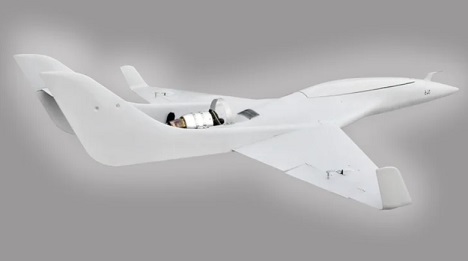
Very advanced wing form design by Amateur Drone designers. This type of AI simulations for better design of aircraft is the future. China is probably using far more advanced methods for their own programs
Re: UAVs, Drones, Remote Surveillance Tech
SVAYATT-M1: Autonomous Drone Redefining Air Combat
Future air warfare is shifting from standalone fighter jets to integrated networks of manned and unmanned systems, where AI-powered drones handle surveillance, electronic warfare, and strike roles while supporting human pilots. India is advancing in this space with platforms like the SVAYATT-M1 autonomous drone, the stealth-focused Ghatak UCAV for deep-penetration missions, and the Prachand attack helicopter optimized for high-altitude combat. Alongside global developments in loyal wingman technologies, these systems will enhance the Indian Air Force’s reach and reduce pilot risk. However, despite rapid progress in AI, drones, and robotics, technology is expected to act as a force multiplier rather than replace soldiers, as India’s complex security environment, ranging from Himalayan deployments to potential two-front conflicts, still demands a strong human presence supported by advanced military innovation.
Future air warfare is shifting from standalone fighter jets to integrated networks of manned and unmanned systems, where AI-powered drones handle surveillance, electronic warfare, and strike roles while supporting human pilots. India is advancing in this space with platforms like the SVAYATT-M1 autonomous drone, the stealth-focused Ghatak UCAV for deep-penetration missions, and the Prachand attack helicopter optimized for high-altitude combat. Alongside global developments in loyal wingman technologies, these systems will enhance the Indian Air Force’s reach and reduce pilot risk. However, despite rapid progress in AI, drones, and robotics, technology is expected to act as a force multiplier rather than replace soldiers, as India’s complex security environment, ranging from Himalayan deployments to potential two-front conflicts, still demands a strong human presence supported by advanced military innovation.
Re: UAVs, Drones, Remote Surveillance Tech
India mandates 20-point security testing for military drones to root out Chinese hardware
New Delhi: The Ministry of Defence has unveiled a comprehensive security vulnerability testing framework for drones procured by Indian armed forces, making it mandatory for vendors to clear a 20-point evaluation before their systems can advance through the defence acquisition pipeline.
The move directly addresses a growing concern in the Indian defence establishment -- drones carrying “Made in India” labels while housing hardware or firmware of Chinese origin, effectively functioning as Trojan horses within the armed forces' inventory.
Last year, an Indian drone operating near the eastern sector of the border with China veered into Chinese-controlled territory.
As per the report, the China’s PLA took control of the UAV, operated it briefly, and then returned it. The drone is believed to be of Israeli origin with an encrypted data link -- yet the PLA still managed to seize control, raising serious questions about existing encryption measures.
New Delhi: The Ministry of Defence has unveiled a comprehensive security vulnerability testing framework for drones procured by Indian armed forces, making it mandatory for vendors to clear a 20-point evaluation before their systems can advance through the defence acquisition pipeline.
The move directly addresses a growing concern in the Indian defence establishment -- drones carrying “Made in India” labels while housing hardware or firmware of Chinese origin, effectively functioning as Trojan horses within the armed forces' inventory.
Last year, an Indian drone operating near the eastern sector of the border with China veered into Chinese-controlled territory.
As per the report, the China’s PLA took control of the UAV, operated it briefly, and then returned it. The drone is believed to be of Israeli origin with an encrypted data link -- yet the PLA still managed to seize control, raising serious questions about existing encryption measures.
The 20-Test Regime
Vendors will have to clear ten hardware validation checks and ten software penetration tests.
Hardware tests cover integrated circuit analysis, tamper resistance, secure boot verification, PCB layer inspection, inter-board communication encryption, and design traceability.
Software tests examine cryptographic key uniqueness, operating system memory protections, trusted execution environment integrity, TLS data transit security, firmware pinning, and anti-rollback verification, among others.
Eight components are designated critical -- the electronic speed controller, flight controller, FC firmware, transmission unit, INS/GPS module, sensors, ground data terminal, and ground control station software.
The framework currently applies to all low, slow, and small (LSS) drone categories -- nano, micro, and small platforms such as quadcopters and hexacopters and is explicitly positioned as a precursor to a broader regime covering MALE and HALE platforms
Testing and Compliance
Testing must be conducted by NABL-accredited or internationally recognised laboratories within India.
The Quality Council of India is currently the only agency capable of running the full test matrix; the Directorate General of Quality Assurance is separately establishing a dedicated facility at Secunderabad.
Vendors who falsify component documentation face immediate suspension or debarment.
The Department of Defence Production will maintain a centralised database of validated vendors, with cleared models exempt from repeat testing unless modifications are made.
The framework acknowledges that domestic chip-level manufacturing remains a long-term goal.
Notably, MeITy's CHIMS software -- previously used to verify hardware bills of materials was discontinued in November 2024, leaving supply chain traceability as an unresolved gap.
Re: UAVs, Drones, Remote Surveillance Tech
Ghatak UCAV with Kaveri Approved
Re: UAVs, Drones, Remote Surveillance Tech
DRDO's Laser Leap: 30kW DEW downs drones, Surya scales to 300kW supremacy
https://www.indiandefensenews.in/2026/0 ... rones.html
30 March 2026
https://www.indiandefensenews.in/2026/0 ... rones.html
30 March 2026
Re: UAVs, Drones, Remote Surveillance Tech
A Sharma wrote: ↑08 Apr 2026 01:31 Indian Army adds 'hundreds' of suicide drones amid evolving battlefield threats
Good. But we need them in the tens of thousands.
Scale will help bring costs down. Can help develop multiple vendors across the length and breadth of the country.
Increased competition might also bring in greater emphasis on R&D to stay in the race.
I know this is happening. Have read different reports of different companies getting orders. Just need to speed it up significantly and increase the scope. Get export orders too beating chinese products.
Re: UAVs, Drones, Remote Surveillance Tech
https://edition.cnn.com/2026/04/14/worl ... ng-hnk-spc
Hopping drones are a novel idea mimicking locust swarms. More efficient traverse by hops assisted with Rotor like helicopter.
Hopping drones are a novel idea mimicking locust swarms. More efficient traverse by hops assisted with Rotor like helicopter.
Re: UAVs, Drones, Remote Surveillance Tech
VIDEO: https://x.com/ShivAroor/status/2044424095111205038?s=20 ---> Good to see the Sheshnaag-150 swarming attack drone tested in Pokhran today. Final seconds captured here. Obviously no warhead, if you're wondering about explosion. Was launched out to a 700 km range (max: 1,000 km). Congratulations, @NS_FutureReady & @joe_sameer!
Re: UAVs, Drones, Remote Surveillance Tech
VIDEO: https://x.com/AugadhBhudeva/status/2043 ... 56615?s=20 ---> India’s Private Sector Built This Deadly Drone (SHESHNAAG-150).
The Sheshnaag-150 is a long-range swarming attack drone (loitering munition) developed by NewSpace Research and Technologies (NRT), a Bengaluru-based private sector defence startup. Designed as India’s indigenous answer to low-cost suicide drones like Iran’s Shahed-136, it offers deep-strike capabilities at a fraction of the cost of traditional missiles.
Key Specifications & Features: The drone is designed to operate in sophisticated swarms, overwhelming enemy air defences through numbers and coordinated intelligence.
* Range: Over 1,000 km, allowing for strategic strikes deep inside enemy territory.
* Endurance: Capable of remaining airborne for more than 5 hours to loiter and hunt for high-value targets.
* Payload: Can carry a warhead weighing between 25 kg and 40 kg, sufficient for targeting radar stations, command centres, and armoured vehicles.
* Swarm Intelligence: Multiple units communicate in real-time, using proprietary AI algorithms to coordinate strikes autonomously.
* GPS-Denied Navigation: Features a visual navigation system that allows it to operate even in heavily jammed environments where satellite signals are unavailable.
* Mobile Deployment: Designed for rapid deployment; more than 20 units can be carried by a single truck and launched from mobile platforms or even highways.
The development of the Sheshnaag program gained urgency following Operation Sindoor, where the effectiveness of loitering munitions in modern warfare was highlighted. It represents a shift in India's defence doctrine toward "attritable" warfare using mass-produced, expendable systems to achieve high-impact results while minimizing operational costs. By utilizing a "mother-code" architecture, one drone can act as a command node, guiding an entire fleet through complex mission profiles.
The Sheshnaag-150 is a long-range swarming attack drone (loitering munition) developed by NewSpace Research and Technologies (NRT), a Bengaluru-based private sector defence startup. Designed as India’s indigenous answer to low-cost suicide drones like Iran’s Shahed-136, it offers deep-strike capabilities at a fraction of the cost of traditional missiles.
Key Specifications & Features: The drone is designed to operate in sophisticated swarms, overwhelming enemy air defences through numbers and coordinated intelligence.
* Range: Over 1,000 km, allowing for strategic strikes deep inside enemy territory.
* Endurance: Capable of remaining airborne for more than 5 hours to loiter and hunt for high-value targets.
* Payload: Can carry a warhead weighing between 25 kg and 40 kg, sufficient for targeting radar stations, command centres, and armoured vehicles.
* Swarm Intelligence: Multiple units communicate in real-time, using proprietary AI algorithms to coordinate strikes autonomously.
* GPS-Denied Navigation: Features a visual navigation system that allows it to operate even in heavily jammed environments where satellite signals are unavailable.
* Mobile Deployment: Designed for rapid deployment; more than 20 units can be carried by a single truck and launched from mobile platforms or even highways.
The development of the Sheshnaag program gained urgency following Operation Sindoor, where the effectiveness of loitering munitions in modern warfare was highlighted. It represents a shift in India's defence doctrine toward "attritable" warfare using mass-produced, expendable systems to achieve high-impact results while minimizing operational costs. By utilizing a "mother-code" architecture, one drone can act as a command node, guiding an entire fleet through complex mission profiles.
Re: UAVs, Drones, Remote Surveillance Tech
Rajnath Singh, Indian Army and DRDO should be reviving all the Unmanned Ground Vehicle projects urgently and need to get the BMP to be fielded in similar style as drones for ground warfare. Already Ukrainian UGV are turning the tide against the Russians in certain sectors. Our planners are in Comatose mode and don't even think of the advantage that we can have. Chalta hai attitude.
Technology has advanced so much from the times the Muntra tech was unveiled. BMP's can be updated to UGV as new FICV get inducted. Also customized smaller, nimble dedicated UGV for new roles can be build and fielded.
DRDO Muntra UGV - India's First Unmanned Tank | First Unmanned Armored Vehicle Of India - Muntra
Technology has advanced so much from the times the Muntra tech was unveiled. BMP's can be updated to UGV as new FICV get inducted. Also customized smaller, nimble dedicated UGV for new roles can be build and fielded.
DRDO Muntra UGV - India's First Unmanned Tank | First Unmanned Armored Vehicle Of India - Muntra
Re: UAVs, Drones, Remote Surveillance Tech
https://x.com/UTobyM/status/2038162032391053574
@UTobyM
The Cheel is unique.
Designed from the ground up in Bangalore, for the World.
Mission Critical: With proprietary software, algorithms, AI, onboard computers, electronics, sensors and an entire suite of specialised payloads, the brain, senses, nervous system and muscle are all our own. This is the foundation of a truly adaptive ecosystem—powering the future of autonomy across Land, Sea, Air and Space.
@UTobyM
The Cheel is unique.
Designed from the ground up in Bangalore, for the World.
Mission Critical: With proprietary software, algorithms, AI, onboard computers, electronics, sensors and an entire suite of specialised payloads, the brain, senses, nervous system and muscle are all our own. This is the foundation of a truly adaptive ecosystem—powering the future of autonomy across Land, Sea, Air and Space.
Re: UAVs, Drones, Remote Surveillance Tech
https://edition.cnn.com/2026/04/19/chin ... n-intl-hnk
Nothing really prevents this Humanoid Robot (and other quadriped robots) from carrying armaments into a battlefield
Nothing really prevents this Humanoid Robot (and other quadriped robots) from carrying armaments into a battlefield
Re: UAVs, Drones, Remote Surveillance Tech
Sophisticated robots, which are able to mimic human movement, might be cutting edge... and costly. But cheaper robots, often the simpler wheeled or tracked kind are making a mark on the battlefield even today.tandav wrote: ↑20 Apr 2026 15:37 https://edition.cnn.com/2026/04/19/chin ... n-intl-hnk
Nothing really prevents this Humanoid Robot (and other quadriped robots) from carrying armaments into a battlefield
‘Robots don’t bleed’: Ukraine sends machines into the battlefield in place of human soldiers
The scene is as old as warfare itself. Two soldiers, hands in the air, surrendering and carefully following the orders barked at them by the other side.
Except in this case, there were no human captors in sight. Instead, the two Russians were submitting to Ukrainian land robots and drones controlled by a pilot from the safety of a position miles away from the front line.
This is the future of warfare – and it’s happening now.
...
The skies above the front lines in Ukraine have been swarming with drones for years now, posing a grave threat to infantry. As a result, Ukrainians started to experiment with land drones – remotely controlled vehicles that run on wheels or tracks – and ground robotic systems. They were originally used mostly to evacuate casualties and resupply troops, but increasingly also to conduct combat assault missions.
...
Land drones are much harder to spot and intercept than larger military vehicles. Compared with their aerial counterparts, they can operate in all weather conditions and carry much larger payloads.
They are also more durable and have a much longer battery life. Late last year, the Third Army Corps, of which the Third Separate Assault Brigade is part, said a single land robot equipped with a machine gun had managed to hold off a Russian advance for 45 days while needing only light maintenance and a battery recharge every two days.
(even discounting possible propaganda, a machine halting an infantry advance for say even a day would be a huge headache. It would give an opportunity to build up strong defense and even counter-attack)
“We must understand that we will never have more personnel, and we will never have a numerical advantage over the enemy,” Zinkevych said, highlighting Russia’s far larger military force. “So, we need to achieve this advantage through technology.” The current goal, he said, was to replace a third of infantry with drones and robots this year.
(imagine the reduction in pensions outgo)
Re: UAVs, Drones, Remote Surveillance Tech
https://edition.cnn.com/2026/04/20/worl ... one-digvid
PLA is already training with Drones, Robots (Wheeled, Tracked and Walking).
PLA is already training with Drones, Robots (Wheeled, Tracked and Walking).
Re: UAVs, Drones, Remote Surveillance Tech
As does the Indian Army. But i think the chinese are at another level altogether due to their width of innovation (fully supported by the Chinese government) and their deep scale of manufacturing
Re: UAVs, Drones, Remote Surveillance Tech
https://arstechnica.com/ai/2026/04/robo ... ew-record/
The robot ran faster than a human can for 50 mins. Last year the same time was more than 2 hours, so you can see the improvement. The Chinese are way ahead on this front as compared to us. The only saving grace for now is that our border with them is not exactly conducive to this. But give it 5 years… Its a great multiplier as a load carrier at the very least.
Meanwhile our Generals will still be conducting ATAG trials and rejecting the same for not being able to fire underwater…
The robot ran faster than a human can for 50 mins. Last year the same time was more than 2 hours, so you can see the improvement. The Chinese are way ahead on this front as compared to us. The only saving grace for now is that our border with them is not exactly conducive to this. But give it 5 years… Its a great multiplier as a load carrier at the very least.
Meanwhile our Generals will still be conducting ATAG trials and rejecting the same for not being able to fire underwater…
Re: UAVs, Drones, Remote Surveillance Tech
Babus in Ministry of defence can't differentiate between Kg and Km for payload. They are in charge of our defence. We must start with a Defence Minister who is from the Fauj and Ministry with majority of people from the Fauj.
I wonder whether those of our political masters who have been put in charge of the defence of the country can distinguish a mortar from a motor; a gun from a howitzer; a guerrilla from a gorilla, although a great many resemble the latter.
Sam Manekshaw
https://x.com/i/status/2046477547433844764
@DefProdnIndia
India’s long-range indigenous strike capability takes flight
SHESHNAAG-150 — a next-generation loitering munition by #NewSpace Research & Technologies is engineered for deep-strike missions with precision and persistence.
With an endurance of up to 5 hours and a range exceeding 1000 km, it brings swarm-enabled, #AI-powered targeting along with #ISR & #EW capabilities redefining modern #battlefield operations.
A powerful step towards strengthening India’s #AatmanirbharDefence and future-ready warfare systems.

I wonder whether those of our political masters who have been put in charge of the defence of the country can distinguish a mortar from a motor; a gun from a howitzer; a guerrilla from a gorilla, although a great many resemble the latter.
Sam Manekshaw
https://x.com/i/status/2046477547433844764
@DefProdnIndia
India’s long-range indigenous strike capability takes flight

SHESHNAAG-150 — a next-generation loitering munition by #NewSpace Research & Technologies is engineered for deep-strike missions with precision and persistence.
With an endurance of up to 5 hours and a range exceeding 1000 km, it brings swarm-enabled, #AI-powered targeting along with #ISR & #EW capabilities redefining modern #battlefield operations.
A powerful step towards strengthening India’s #AatmanirbharDefence and future-ready warfare systems.
Re: UAVs, Drones, Remote Surveillance Tech
IMHO, for Pakistan even Sheshnaag is also not worthwile. Cardboard based expendable drones ( approx $3500 per unit) ranging up to 300 kms would suffice to overwhelm their air defences ?
https://woodcentral.com.au/aussie-cardb ... aine-raid/
https://woodcentral.com.au/aussie-cardb ... aine-raid/
Re: UAVs, Drones, Remote Surveillance Tech
India already fooled the Pakis in Op sindoor using decoy aircrafts and such. BTW India also jammed the Beidou system of China. What India can do with Sheshnaag is create software to coordinate drones and take out high value targets in Pukeland. Using the AkashTeer air defence system create a coordinated defence/offence package for drones. This is the real value add which is required.
Re: UAVs, Drones, Remote Surveillance Tech
Sheshnag-150 and it's further development variants will be very much needed against China and these need mass manufactured.
Re: UAVs, Drones, Remote Surveillance Tech
+1Avinandan wrote: ↑21 Apr 2026 22:09 IMHO, for Pakistan even Sheshnaag is also not worthwile. Cardboard based expendable drones ( approx $3500 per unit) ranging up to 300 kms would suffice to overwhelm their air defences ?
https://woodcentral.com.au/aussie-cardb ... aine-raid/
We need all sorts.
Swarms of cheap, smaller drones can be used to take out AAA defense guns (fixed and mobile) and SAM radar/launcher systems on the paki front. Once those are decimated or even degraded to a large extent, more advanced and capable drones & manned aircraft can go in to deliver the killing blows.
The costly tip of the spear stuff we can keep reserved for the others.
Re: UAVs, Drones, Remote Surveillance Tech
Assembled in India/Make in India (Probably)
Indian Company Challenging American MQ-9! | 40 Hour Endurance Drone | हिंदी में
Aerodata unveils AeroForce X MALE drone for next-generation ISR missions
https://www.aerotime.aero/articles/aero ... male-drone
https://x.com/rohantantia/status/2047346541585928407
@rohantantia
Dynamatic Technologies is quietly attempting one of the most important shifts in India’s defence ecosystem!!
Through Dynauton, its UAV arm, Dynamatic Technologies Ltd. is moving beyond aerostructures (Airbus, Dassault supply chain) into full-stack unmanned systems, and the recent partnership with Aerodata AG is the clearest signal yet. This isn’t just another drone story.
Dynauton has built a layered UAV portfolio:
PATANG → tethered, persistent surveillance (border/security infra)
KAAVA → tactical, short-range field ops
CHEEL → long-endurance ISR ambitions
KAATIL → loitering munition (precision strike capability)
Now, with Aerodata:
Entry into MALE UAV segment (40-hr endurance)
Focus on land + maritime ISR (Himalayas + Indian Ocean)
Access to advanced mission systems + sensor integration

Indian Company Challenging American MQ-9! | 40 Hour Endurance Drone | हिंदी में
Aerodata unveils AeroForce X MALE drone for next-generation ISR missions
https://www.aerotime.aero/articles/aero ... male-drone
https://x.com/rohantantia/status/2047346541585928407
@rohantantia
Dynamatic Technologies is quietly attempting one of the most important shifts in India’s defence ecosystem!!
Through Dynauton, its UAV arm, Dynamatic Technologies Ltd. is moving beyond aerostructures (Airbus, Dassault supply chain) into full-stack unmanned systems, and the recent partnership with Aerodata AG is the clearest signal yet. This isn’t just another drone story.
Dynauton has built a layered UAV portfolio:
PATANG → tethered, persistent surveillance (border/security infra)
KAAVA → tactical, short-range field ops
CHEEL → long-endurance ISR ambitions
KAATIL → loitering munition (precision strike capability)
Now, with Aerodata:
Entry into MALE UAV segment (40-hr endurance)
Focus on land + maritime ISR (Himalayas + Indian Ocean)
Access to advanced mission systems + sensor integration
Re: UAVs, Drones, Remote Surveillance Tech
Heading towards 1st flight | Progress on CATS Warrior | हिंदी में
This is a video on Heading towards 1st flight | Progress on CATS Warrior
This is a video on Heading towards 1st flight | Progress on CATS Warrior
Re: UAVs, Drones, Remote Surveillance Tech
Indian Army gets indigenous FPV kamikaze drones, UAV-launched precision munitions
New Delhi [India], May 11 (ANI): The Indian Army has received two new indigenous combat systems under Emergency Procurement (EP-6), including the UAV-Launched Precision Guided Munition (ULPGM) and the AGNIKAA VTOL-1 First-Person View (FPV) Kamikaze Drone.
Defence sources said that the systems were handed over in Hyderabad in the presence of officials from the Army's Western Command following successful high-altitude, electronic warfare (EW) and precision-guided munition firing trials.
The two systems, ULPGM and AGNIKAA VTOL-1, have been designed, developed and manufactured indigenously.
The ULPGM, co-developed by the Defence Research and Development Organisation (DRDO) and Adani Defence & Aerospace, is India's first indigenous loitering munition in its category. The system is equipped with an Imaging Infrared (IIR) seeker and can be launched from UAVs to target both stationary and moving targets.
The UAV has an operational range of up to 20 kilometres, while the munition itself has a strike range of 2.5 kilometres.
The system is designed to operate in all weather conditions, during both day and night. It is also capable of functioning in GPS-denied and communication-jammed environments due to its anti-jamming and anti-spoofing capabilities.
The ULPGM carries a two-kg warhead capable of neutralising both soft and hard targets and has an accuracy of one metre CEP (Circular Error Probable).
The missile has also been integrated with retractable UAV platforms, providing greater operational flexibility in contested electronic warfare environments.
The second system, AGNIKAA VTOL-1, has been described as India's first FPV (First-Person View) kamikaze drone in its class.
The drone has been developed as an anti-personnel precision-strike platform designed for urban warfare, confined spaces and open battlefield operations. It is capable of operating in GPS-denied and electronic warfare environments.
The AGNIKAA VTOL-1 has also undergone successful high-altitude and EW trials, validating its readiness for deployment in difficult operational terrains, sources added.
The drone has a range of up to five kilometres, an endurance of 30 minutes and a top speed of 60 kmph.
The system has a lethality radius of five metres against human targets and soft-skinned vehicles. It is also equipped with a three-layered trigger mechanism and a four-layer trigger safety system aimed at ensuring operator safety and mission reliability.
Defence sources further said that the system is highly agile, can be rapidly deployed and remains resilient in GPS-denied electronic warfare environments. (ANI)
-
Manish_Sharma
- BRF Oldie
- Posts: 5401
- Joined: 07 Sep 2009 16:17
Re: UAVs, Drones, Remote Surveillance Tech
https://x.com/Tracking_Live/status/2050 ... 61395?s=20
Ghatak UCAV will be ready by next 6-7yrs (2033-34) says DRDO chief Samir V. Kamat.
Thoughts on this ?
This is getting more n more Delayed!
Re: UAVs, Drones, Remote Surveillance Tech
Defence News | Sky Reaper Drone Unveiled: India’s New High-Speed Combat UCAV
Cutting-edge drones are being developed for the Indian Army at IIT Jammu with the support of DRDO. Their unique features are making these drones exceptionally lethal. NDTV's Pradeep Dutta gathered these details by speaking with the drone development team, who revealed that these drones—being built through the collaboration of IIT Jammu and DRDO—can currently fly at speeds ranging from 400 km/h to 550 km/h. There are further plans to increase this speed, with the team confirming preparations are underway to push the drone's capabilities even further.
Re: UAVs, Drones, Remote Surveillance Tech
https://www.youtube.com/watch?v=4TtoMcQezCs
Beijing clamps down on Drones ! DJI stops selling drones in China
Beijing clamps down on Drones ! DJI stops selling drones in China
Re: UAVs, Drones, Remote Surveillance Tech
Zulu Defence 'Stark' Anti-Armour Kamikaze Drone developed
Light weight, top attack capable
Speed - 200 kph
Coverage Area (Range? Radius?) - 100 kms
Helicopter launch available
Light weight, top attack capable
Speed - 200 kph
Coverage Area (Range? Radius?) - 100 kms
Helicopter launch available
Re: UAVs, Drones, Remote Surveillance Tech
Divyastra Mk-1 UAV launch from Thar SUV tested successfully
(maybe Anand Mahendra will tell his team to offer all Thar SUVs with UAV launch rails as optional extra )
)
(maybe Anand Mahendra will tell his team to offer all Thar SUVs with UAV launch rails as optional extra
)Re: UAVs, Drones, Remote Surveillance Tech
India eyes largest-ever drone order! $2 billion military purchase to boost domestic industry
From WIONIndia is likely to place its largest-ever military drone order, with planned purchases from domestic manufacturers expected to exceed $2 billion, according to an industry body working closely with the government. The move reflects New Delhi's growing focus on unmanned warfare capabilities as global conflicts reshape military planning and battlefield tactics.
Speaking to Reuters, Smit Shah, President of the Drone Federation India (DFI), said procurement plans were at an advanced stage and could surpass 200 billion rupees ($2 billion) in the next phase of acquisitions. The proposed order would represent a sharp increase from recent government contracts worth around 30 billion rupees ($313 million) for tactical-class drones.
"In the next phase, tactical drone procurements in India may exceed 200 billion rupees, or more than $2 billion," Shah told Reuters. He added that deliveries are expected over the next 18 to 24 months and could be executed through a fast-track procurement route designed to meet urgent operational requirements.
Re: UAVs, Drones, Remote Surveillance Tech
India bets big on domestic drones for future warfare
https://www.dw.com/en/india-bets-big-on ... a-77523962
12 June 2026
https://www.dw.com/en/india-bets-big-on ... a-77523962
12 June 2026
Re: UAVs, Drones, Remote Surveillance Tech
Army receives 100 indigenous ‘Peacekeeper’ kamikaze drones
https://www.tribuneindia.com/news/india ... ze-drones/
12 June 2026
https://www.tribuneindia.com/news/india ... ze-drones/
12 June 2026
Re: UAVs, Drones, Remote Surveillance Tech
PeacekeeperRakesh wrote: ↑12 Jun 2026 19:47 Army receives 100 indigenous ‘Peacekeeper’ kamikaze drones
https://www.tribuneindia.com/news/india ... ze-drones/
12 June 2026
If at all it was needed to be anglicized then better to have it named it as FireSpeed (Agniveg - Agni (Fire), Veg (speed) )
And the Print article image shows a stock VTOL style mini drone while the actual Agniveg looks like below
Update from the actual manufacturer website -
https://smgroupindia.com/smpp-completes ... abilities/